
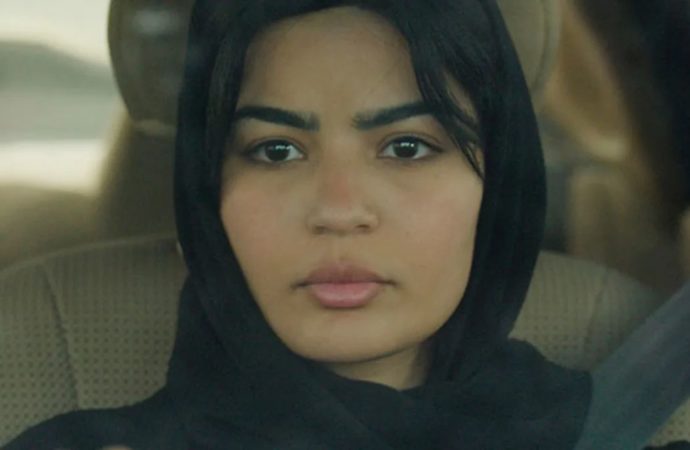
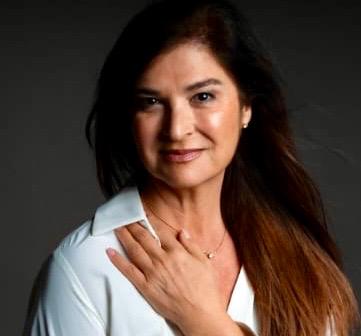
Since breaking onto the international scene with Wadjda (2012), the first Saudi film directed by a woman, Haifaa Al-Mansour has established herself as one of the most important voices not only in contemporary Arab cinema. Her career, developed between Saudi Arabia—where cinema was banned for thirty-five years—and the United States, alternates international productions such as Mary Shelley and episodes of The Walking Dead with films deeply rooted in the social transformations of her country. In Unidentified, her new feature film, presented as a crime thriller, she once again addresses themes that run throughout her work: identity, the weight of tradition, the place of women, and the tensions of a society in transition. We spoke with the Los Angeles-based director about the evolution of Saudi Arabia, the complexity of her characters, and the role of cinema as an agent of cultural transformation.
EVA PEYDRÓ: You work between Saudi Arabia and the United States, from independent films to major series like The Walking Dead. How do you navigate these different worlds?
HAIFAA AL-MANSOUR: I enjoy the story. When I was offered a film, for example, Mary Shelley, they sent me a story about an English woman, and I connected very strongly with the character because she has personality, she is combative. At first, I was surprised when they sent me the script, and I asked my agent, “Do they know I’m from Saudi Arabia?” But the character unlocked something in me. In the end, it is always the characters that guide you.
That said, it is always something intimate and very special to go home and make films in Saudi Arabia. It is like returning to your mother, you know? The food, the culture, the warmth, everything… I enjoy it enormously. I love telling stories from Saudi Arabia.
Do you think those two worlds influence each other?
Absolutely. For women directors, it is difficult to work continuously. This is my fifth feature, and I have also directed a lot of television. Staying connected to my craft is very important.
You learn so much by working on sets, observing different acting methods, and collaborating with different cinematographers and writers. All of that allows you to master your craft better. And I think it is more difficult for women because they often lack the opportunity to gain that experience in the field. That is why, when a major production comes along, we almost always find men ready to direct it, because they have had time to work and accumulate experience.
So I feel very grateful to be able to move between both worlds.
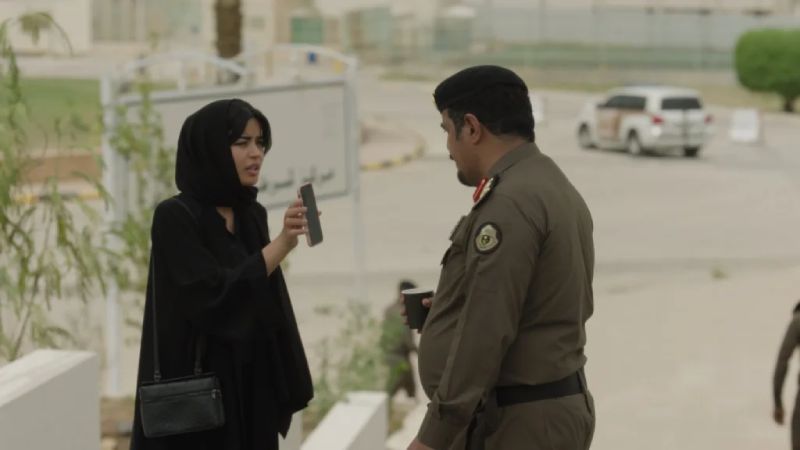
From Wadjda to Unidentified, your films seem to reflect the changes taking place in Saudi society. Looking back, do you feel you have documented that transformation? Was it intentional or unintentional?
Unintentional. My stories are not meant to document a specific period, but simply to tell a story. Naturally, though, that story is influenced by its environment.
In Wadjda (2012), the country was segregated, which is why I directed from inside a van. In later films, I was able to be out in the streets with the crew. And with Unidentified, we were able to secure Saudi financing and produce the film entirely there thanks to the public funds that now exist. So much has changed.
I feel much more empowered as a producer. So even if the change does not appear directly in the films, it is documented through the way they are made and through the environment that surrounds them.
How did Unidentified come about? Did the social issue come first, or the thriller?
Both. I have always been fascinated by thrillers and I wanted to make one with a woman at the centre of the story.
It was difficult to write because we got stuck for a while. We couldn’t make the pieces of the puzzle fit together. I write with my husband, and in the end we started writing from the ending backwards in order to connect all the elements.
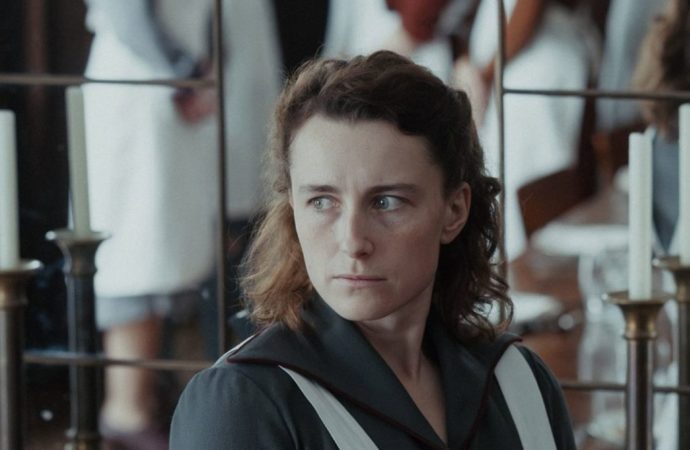
Nawal, the protagonist, is a very complex character. She is wounded, manipulative, funny and even unsettling at times. What interested you most about her?
I think what defines her is that she never gives up. She refuses to be marginalized, to be pushed aside, to become nobody. In her own way, whether healthy or not, she refuses to disappear.
For women, it is difficult because society places so much emphasis on being a wife, a mother, and all those identities. And when you stop being one of those things, you feel as though you cease to exist as a person. Someone takes that identity away from you and suddenly you are nobody.
I think that explains the anger she carries. She is a very complex character, and I like her very much.
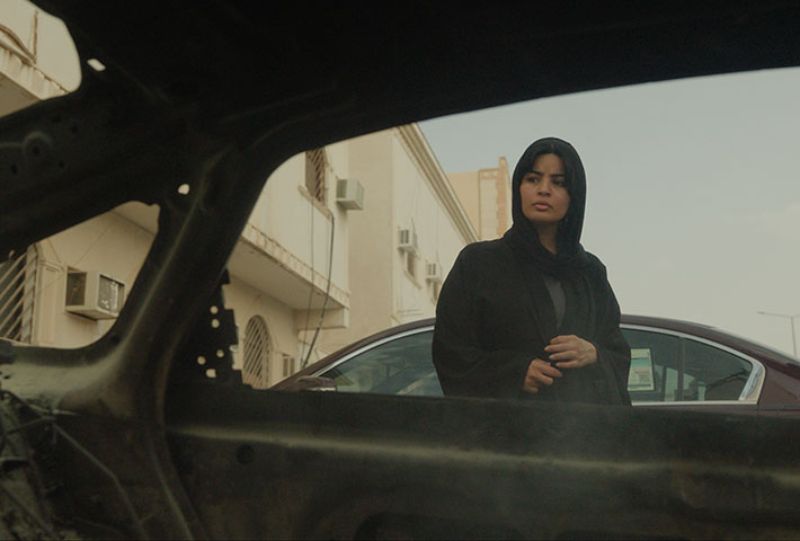
Mila Al Zahrani has become an important collaborator for you. What makes her so special?
Mila is a very transparent actress. You can see her soul. Sometimes you only see the performance, but with her that barrier disappears.
She is incredibly professional, an extraordinary collaborator. Everyone on the crew loves her. She always comes to set with wonderful energy.
She also comes from a small town and is self-made. I come from a small town too and I am self-made. Seeing a woman succeed on her own terms is something fascinating and deeply rewarding for me. I adore her.
Do you think you will work with her again?
I am still trying to come out of a creative block, but I would love to work with Mila again. She is wonderful.
I was struck by the younger male characters. They seem torn between loyalty to their families and traditions they no longer fully accept. Were you interested in portraying a different kind of masculinity?
Absolutely. Films are like mirrors. When you make a film for Saudis, they want to see themselves reflected.
For example, the police chief is kind to her, supportive, and interested in her career. Normally, in that kind of situation, one would expect a romantic storyline. But I liked the fact that there wasn’t one. She is simply a colleague, and he wants to help her.
We want to show men: “This is how it’s done.”
The victim’s cousin also seems to belong to a different generation.
Exactly. I wanted to portray someone divided. In Saudi Arabia, it is difficult to stop being traditional or religious because we are a tribal society. But small changes can be introduced. You can remain traditional and religious and, at the same time, respect women and see them as equals, not as someone to be controlled.
The title Unidentified suggests something more than an unidentified body. Is it also about women deprived of identity?
Absolutely. There is a scene during the funeral prayer. The extras told me that when prayers are said for a woman, her name is not pronounced. I asked them whether that was contrary to Islam and they replied that it was not, that it was simply custom.
So I told them: “Well, in the film we are going to say her name.” Because part of restoring dignity to that girl is identifying her by her name.
In fact, it is a very moving scene.
It was a very emotional scene. I cried while filming it. We are conditioned in certain ways, and we need more films that question these small ways of denying women the place they deserve.
Your films portray a society in transition. Are you optimistic about the future of Saudi Arabia?
Yes, I am very optimistic. Bringing art into a conservative society —cinema, music, literature— changes people’s hearts and brings them closer to modernity.
I attended the Riyadh Critics Conference last year and I was really impressed by the level of the professionals and the film culture.
It was incredible! I’m happy to hear that because when I say that, people don’t understand. For a long time, we were a simple society. We come from the desert, and there is something beautiful about simplicity. But now many new things are emerging that are making society more sophisticated.
We look forward to your next film.
Thank you very much. Thank you, truly.
Throughout the conversation, Haifaa Al-Mansour conveys a mixture of lucidity, optimism and a profound belief in the transformative power of culture. Keeping her distance from any rhetoric of confrontation, her films question social inertia from within, giving voice to characters who refuse to disappear. In Unidentified, the criminal mystery is also a meditation on identity and dignity, but above all a reminder that the deepest changes do not necessarily come through spectacular ruptures, but through small transformations capable of changing the way an entire society sees itself.

Nadie ha publicado ningún comentario aún. ¡Se tú la primera persona!