

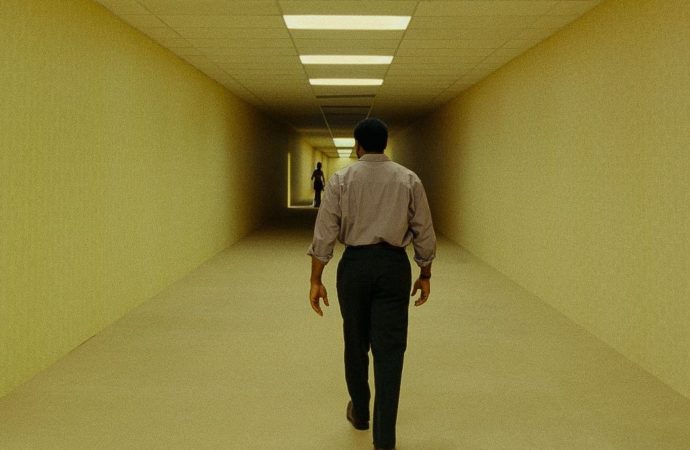

At just sixteen years old, Kane Parsons revolutionized the internet with a short film lasting only a few minutes. Four years later, that YouTube experiment has become Backrooms. This A24 production confirms one of the most significant shifts in contemporary audiovisual culture: some of today’s most promising filmmakers no longer emerge from film schools, but from the internet.
Parsons is a unique case. Entirely self-taught, he learned visual effects using Blender and After Effects through online tutorials. He began designing virtual environments at the age of ten while playing LittleBigPlanet, and before going viral, he had already created nearly 400 videos that were never released. He also composes the original scores for his projects under the name Kane Pixels, making his creative universe a remarkably auteur-driven body of work.
From Viral Phenomenon to Feature Film
During the international press conference held on July 31, Parsons explained that he never saw the transition to feature filmmaking as a break from his YouTube series, but rather as its natural evolution. “I’ve always viewed Backrooms as a tree that’s still growing,” he said. “Its branches can extend into different worlds and different mediums.”
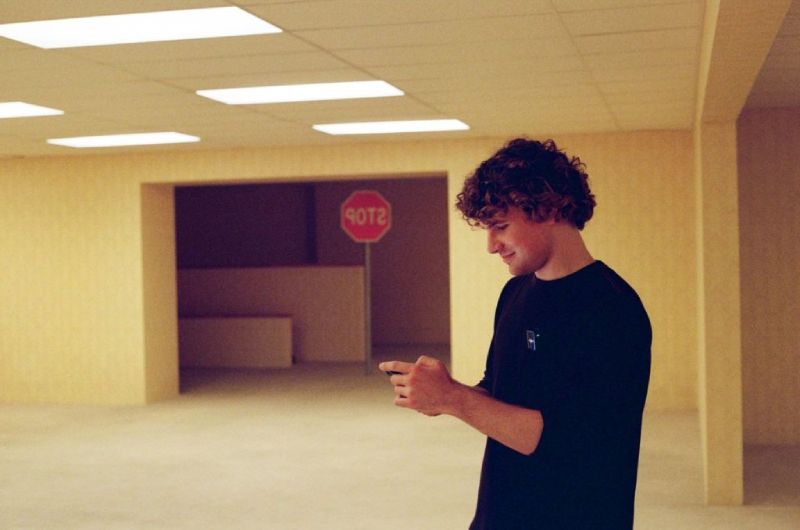
Kane Parsons on the set of Backrooms.
The original series invited viewers to decipher the logic of its universe, reconstructing its rules from scattered fragments. The feature film, by contrast, shifts its focus toward a much more defined emotional thread. Parsons acknowledges that cinema demands a different approach to pacing and audience attention: a twenty-minute walk down a hallway may work on YouTube, where viewers control the rhythm, but not within the structure of a ninety-minute feature.
Paradoxically, having a much larger budget did not alter his creative philosophy. For Parsons, the greatest advantage was not having better cameras or visual effects, but being able to physically build some of those impossible spaces that had previously existed only through digital animation.
Architecture as the Main Character
The true protagonist of Backrooms is architecture itself, transformed into a character.
Parsons revealed that he has been fascinated since childhood by the emotional power of spaces. As he explained, he is interested in capturing “strangely universal details” that every viewer recognizes without knowing exactly why. Forgotten childhood rooms, corridors walked through decades ago, or seemingly ordinary buildings become triggers for a collective memory that is difficult to explain rationally.
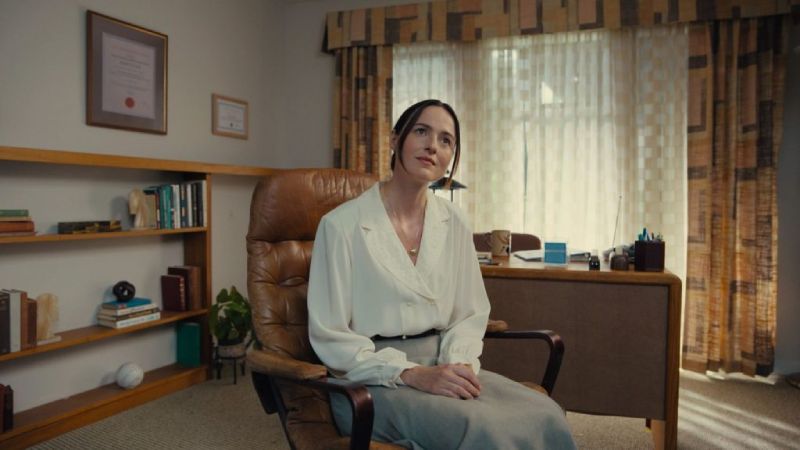
Renate Reinsve in Backrooms.
This fascination connects directly to the aesthetics of so-called analog horror, a genre of which Parsons has become one of its leading voices. His images resemble half-forgotten memories from the late 1990s and early 2000s, with VHS textures that evoke the imperfections of memory rather than an objective reconstruction of the past.
In fact, he revealed one of the film’s technical secrets: the sequences were shot digitally on a RED Komodo, then transferred onto real VHS tapes and digitized once again to achieve the analog imperfections that define the visual universe of Backrooms.
Much More Than a Horror Film
Although audiences and the film’s marketing campaign place Backrooms within the horror genre, Parsons rejects that definition.
“I’ve never really thought of it as a horror film,” he said during the press conference. “I’m not trying to scare the audience—I want to provoke introspection.”
The significance of this statement is undeniable, and it helps explain the phenomenon’s success. Rather than relying on jump scares, Parsons uses a framework closer to science fiction to explore existential questions, examining the relationship between the individual and the systems they inhabit, as well as memory, grief, nostalgia, and the search for meaning.
I’m not trying to scare the audience. I want to provoke introspection.
In this sense, Backrooms belongs more to the tradition of philosophical science fiction than to conventional horror. Parsons insists that the film never seeks to provide definitive answers. Ambiguity is central to the way he understands both art and life.
“In life, you never get a final summary telling you what you got right and what you got wrong,” he explained. “That’s why ambiguity is present in everything I do.”
The Language of a Generation
One of the most interesting moments of the conversation came when Kane Parsons was asked about the relationship between the new generation of filmmakers emerging from YouTube and Generation Z audiences.

Kane Parsons on the set of Backrooms.
Parsons avoided offering any kind of formula. According to him, there is no recipe for connecting with that audience. What he does acknowledge is that those who have grown up constantly navigating the internet have developed an almost instinctive ability to anticipate how an online community will react to a work.
That sensitivity, more than a conscious strategy, forms part of his creative upbringing. Growing up reading comment sections, following memes, and participating in online communities has shaped a different way of constructing images and telling stories.
From the Algorithm to the Auteur
In recent years, Hollywood seems to have discovered that YouTube is an extraordinary incubator for new filmmaking talent. The Philippou brothers (Talk to Me), Zach Cregger, and Parsons himself represent a generation that learned to experiment directly in front of an audience long before entering the film industry.
The director believes this phenomenon is almost inevitable. Forty years ago, he explains, these same creators would simply have followed different paths into filmmaking. Today, the internet accelerates the process, making it possible to see almost instantly which ideas resonate with millions of people.

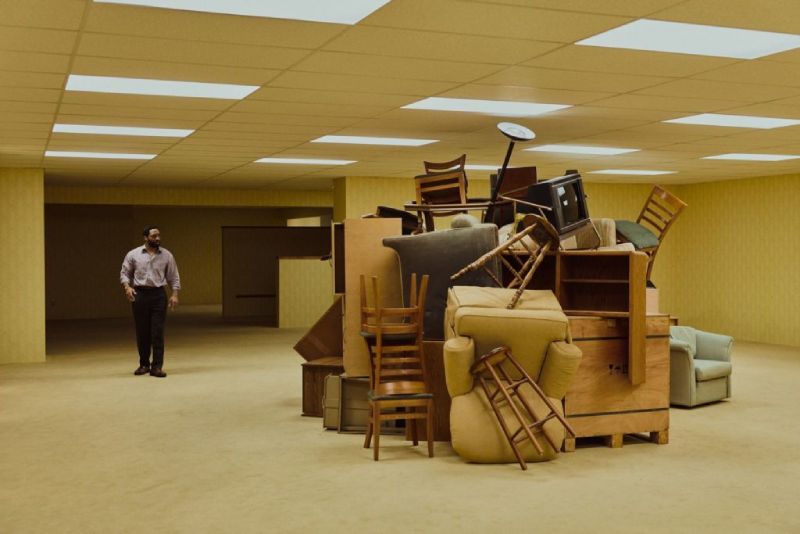
Chiwetel Ejiofor in Backrooms.
Parsons insists, however, that viral success can never replace a strong idea. Some of his favorite works, he says, are still the zero-budget videos he made for YouTube. Resources certainly help, but they are never a guarantee of a better film.
Thinking Through Spaces
Toward the end of the conversation, Parsons shared one of the interview’s most fascinating ideas when he admitted that he has always had a strange tendency to attribute human qualities to buildings and architectural spaces. During the creative process, he even came to imagine the Backrooms as a kind of living organism—a silent parasite coexisting with humanity.
It may sound almost delusional, he said with a laugh, but it is precisely this kind of emotional immersion that allows him to create images unlike those of any other filmmaker.
There is little doubt that Kane Parsons represents the consolidation of a new way of understanding cinema: that of a generation shaped by game engines, digital communities, self-taught visual effects, and internet culture, which has managed to transform a meme, an impossible architectural space, and an endless hallway into one of the most singular cinematic works of recent years.



Nadie ha publicado ningún comentario aún. ¡Se tú la primera persona!