
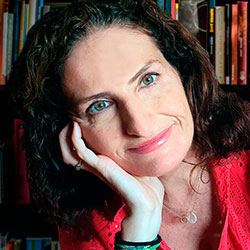
I start here, says May Sarton. It is raining. I start here, I say, as August dries the tops of the pine trees.
Through her window, she gazes at the maple, some of whose leaves have turned yellow. The poet writes in Nelson, the New England village that has adopted her as one of its own. Through my window, I write, I look out over the green mass of the forest from the eighth floor, seeing it billowing and luminous, growing flatter as it reaches the sea. The afternoon garbí ripples the horizon and fills the blue with little white clouds. If I hear the cicadas, she hears Punch, the parrot, talking to himself, and the rain softly pattering against the windows.
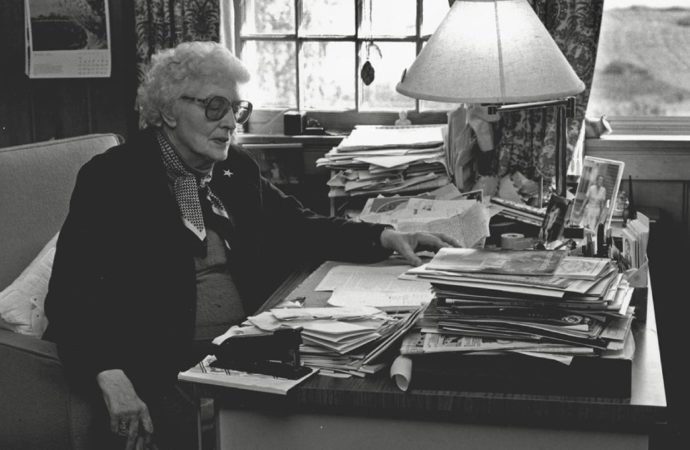
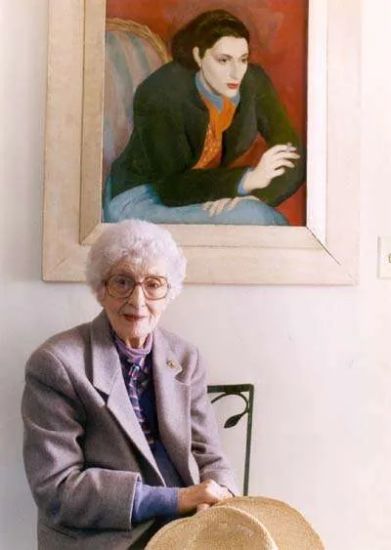
It was around 1972 for May Sarton; she was beginning her Journal of a Solitude. More than fifty years later, in another forest, on the Mediterranean, I look out from an angle both similar and different. Here, the cicadas weigh heavily on the afternoon, making us drowsy until the light fades. I write it down. I want to be her. Last night I dreamed that I was in her house, crossed by bands of light and filled with bouquets. As I remember it, this elderly woman with eighties-style glasses and a gentle gaze led me to the edge of her meadow and promised to teach me how to grow her orchids, flowers on giant stems standing in rows like a strange field of corn. They were exotic and delicate, but their edges looked scorched, and I nodded silently because I was her new disciple. Something was bubbling inside me, something charged with faith and a strange terror.
How does a woman in the 1950s confront the act of writing? How much courage does it take if she is single, a lesbian, if she settles in a village, if she does not even know whether she belongs here or there, to Europe or the United States, to prose or poetry? Carolyn Holbrook, in her compendium of women memoirists, singles out Sarton as an original precursor, a “turning point for modern women’s autobiography.”
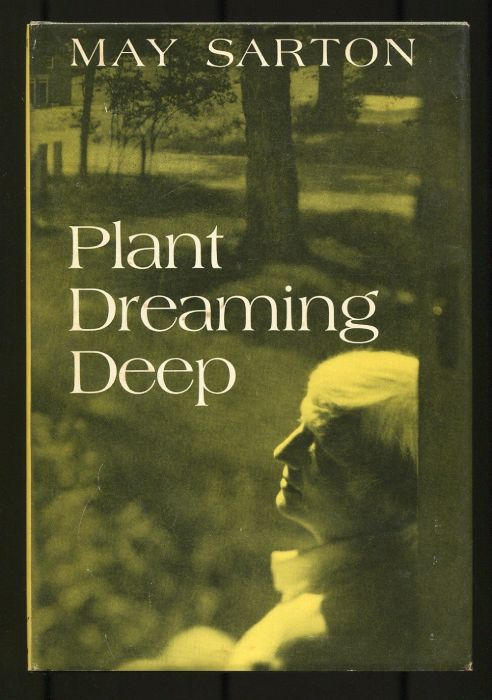
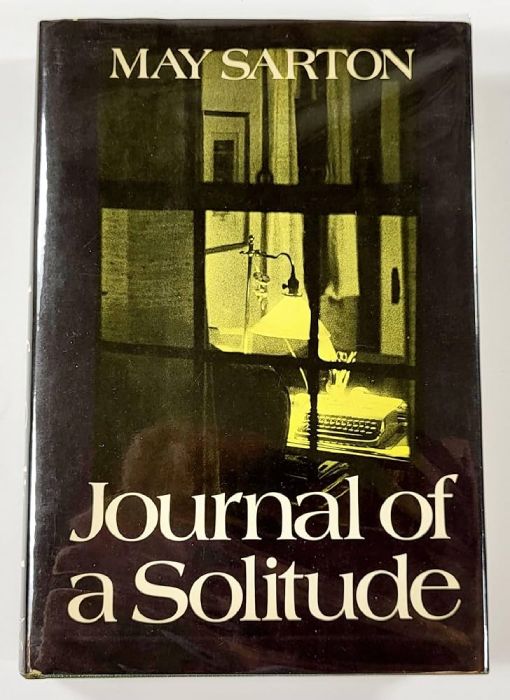
In Plant Dreaming Deep, published in 1968, the longing to gain power and control over one’s own life was already present, a desire that had until then been denied to women writers, but there was no room for the anger and helplessness provoked by that search or, in other words, for the “encounter with the shadow” proposed by Jung (an author Sarton frequently turned to and whom she reserved for the second instalment of her journals). In keeping with the traditional canon of women’s memoirs, pain seemed not to exist in her first published volume, though it pulsed beneath a mantle of flowers, of make-up. Plant Dreaming Deep reads like a prose poem, but Journal of a Solitude, which appeared five years later, would be a raw and masterful confession. At the beginning of the latter, Sarton refers to her first volume and reflects: “the book presents a false version which I did not even intend to give, for it hardly mentions the anguish—or fits of rage—of my life in this place.”
Readers idealised May Sarton’s life and made pilgrimages to the home of the “gentle hermit”, and she realised that she had been dishonest. Journal of a Solitude appeared in 1972, but covered the same period of her life as the first volume; it offered those same readers the reverse side of her search, narrated with complete freedom: depression, the struggle with success that never arrives, tantrums and even the idea of suicide. The two volumes of memoirs thus complete the circle, one becoming the yin and the other the yang. We are left with the polished, ostentatious face and its discarded material, its B-side, because every act of creation produces its own debris, but the creator is not always generous enough to share it.
I too want to write, to arrive at my own truth, to be painfully honest. That is why I read her and so easily find myself at that solid wooden desk of hers, designed by her English mother before she had fled the war in Europe. To write and fail and grow stronger through my failure. To set aside, as she says, “the lives and needs of others before I can approach my work with some freshness and pleasure.” Not even she, with no family responsibilities, no social media, no salary, was free from the residue of ordinary life. And yet Sarton was aware that the modest success of her books worked in her favour; she was an endurance athlete, she suffered the ambivalence of desire and, better still, knew how to describe it like no one else.
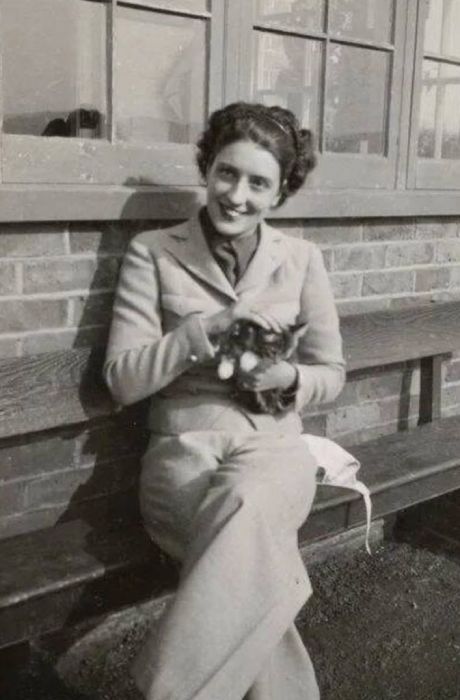
We all want, one day, to smile at the camera with the same dignity I find in those photographs of her that float like spectres through Google. I do not envy her for having welcomed Louise Glück into her home or taken tea with Virginia Woolf. I envy her Zen mastery, and I want to grow old in the same way, without panic. To wear a white, fluffy cap of hair like a cloud. Her journals were translated half a century later and drunk like water during the pandemic. They taught people how to live, like a modest gardening manual.
The Sarton universe offers no novelties or dazzling discoveries, yet it is no less captivating for that. Perhaps her recent success in Spain lies in the fact that she became a kind of mindfulness manual for people confined to their homes, but her spell reaches further. I encounter her in an August of traffic-clogged roads and Martian temperatures, of crowded tourism, queues, demanding and weary children, foul moods and hands sticky with sweat and ice cream. I encounter her when the need resurfaces in me for someone to give me shelter in a monastery. Or to employ me as a lighthouse keeper on some barren, isolated rock, because “it is a comfort to know that there are lighthouse keepers living on the rocky islets that fringe the coast.” Ever since the world finally went mad, we have all longed for a passport to that islet.
In either of her two journals, May Sarton lists the poet’s pleasures (“light, solitude, nature, time and the creative process”), and it is impossible not to feel a sense of wonder as she explores each of these visions and reflections in minute detail. Through that house, which becomes a kind of nurturing womb, pass genuine friends and people of the old school, people of integrity, equally cherished whether they are artists or craftsmen, farmers or cultivated people, women ahead of their time or rooted in tradition, even rough men in whom she knows how to discern a hidden poet, as in the tender and gruff Perley, with whom she is gradually “tamed” as they tame one another. Together, they elevate rudimentary tasks into an act of grace, a kind of religion in which the reward lies not so much in praise or money as in “self-respect and love of the work.”
But none of this is original, and the poet knows it. She simply bears witness to her descent into herself, a commitment filled with renunciations and offering few guarantees, because “I cannot even always believe in my work,” she confesses. She wants to “learn to let go” and has taken the time to find the knot at the core of herself, her own bulb. She is not seeking happiness, but “a life of greater awareness and intensity,” like the roses that grow for her in granite. And she shares it. “Do not deprive me of age, I have earned it,” one of her characters proclaims with mock arrogance. For her, “we grow at any age as we broaden our awareness and learn a new language, or a new art or craft—gardening?—that involves a new way of looking at the universe.”
Ultimately, both books are a guide towards the grotto of the self, offering direction to the traveller. “That is a luxury,” she admits, “the greatest luxury. I have time to be. Hence my enormous responsibility: to use time well and to be all that I can be in the years I still have ahead of me.” And this guide abounds in close-up images of stamens and petals, columns of light, and the imprint left by the seasons and all their cycles, both outside and within. We wander through a female imaginary that places the smallest things under a magnifying glass and elevates them, making literature out of the infinitesimal: a new vein in the Western literary canon, traditionally devoted to the masculine epic, to the grand scale, to substance over emptiness, to the epic itself.



Nadie ha publicado ningún comentario aún. ¡Se tú la primera persona!