

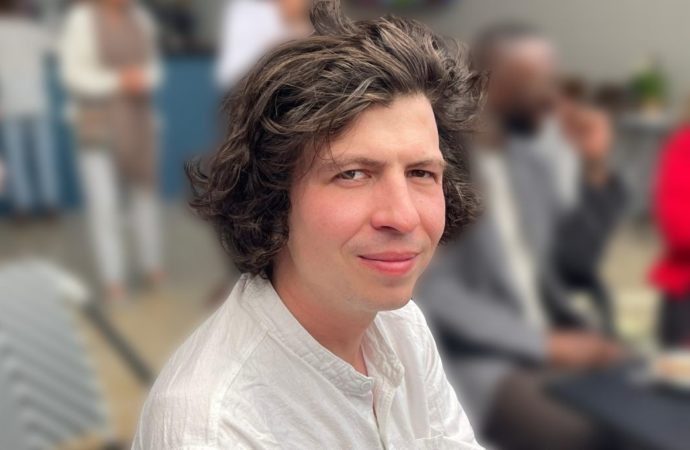

Ugo Bienvenu represents one of the most compelling trajectories among a new generation of European creators. An illustrator, graphic novelist, producer and filmmaker, his formative years unfolded across several continents—from Guatemala and Chad to Mexico and France—a cultural diversity that has profoundly shaped his imagination. With Arco, his first animated feature, which premiered in Cannes in 2025, he achieved remarkable international recognition, culminating in awards at Annecy, the Lumières, the César Awards and the European Film Awards, as well as an Academy Award nomination. His career embodies the figure of the contemporary creator: an artist who moves effortlessly between formats and disciplines, guided by a distinctly global outlook.
Selected among the “10 to Watch 2026,” a list of emerging French film talents chosen by leading international journalists from outlets such as Screen International, Cineuropa, The Hollywood Reporter and France Inter, and presented annually by UNIFRANCE at the Cannes Film Festival, Bienvenu continues to establish himself as a truly multifaceted artist.
We spoke with Ugo Bienvenu, who is also in Cannes this year for the premiere of Adieu, monde cruel, directed by Félix de Givry and selected in Critics’ Week, for which he served as producer.
EVA PEYDRÓ: You have lived in Guatemala, Mexico City, the United States, and France. Has that geographical displacement influenced your worldview and your work in any way?
UGO BIENVENU: Absolutely. I am made up of different cultures, and I’m a rather strange mixture. I’m European, but I grew up in the Americas and in Africa. When I turned eighteen, I went to China because I wanted to discover the East. What affected me most was Japanese culture. As a child, I already had a fairly deep understanding of Western, African, and Latin cultures, and then I discovered Asia. So I’m a kind of globalised author, what people once called “happy globalization.”
Ugo Bienvenu’s work is ultimately about the human condition, where imagination, doubt, and sensitivity remain valuable and irreplaceable forms of knowledge.
At what point did you realise that Arco had to become a film rather than remain in another form?
Ideas already arrive with their own form. Sometimes I have an idea, and I know it is a drawing. Other times, I know it will be a book. I am not the one who chooses; the ideas themselves choose, because they are made up of signs, symbols, and forms that fit better in one medium than another.
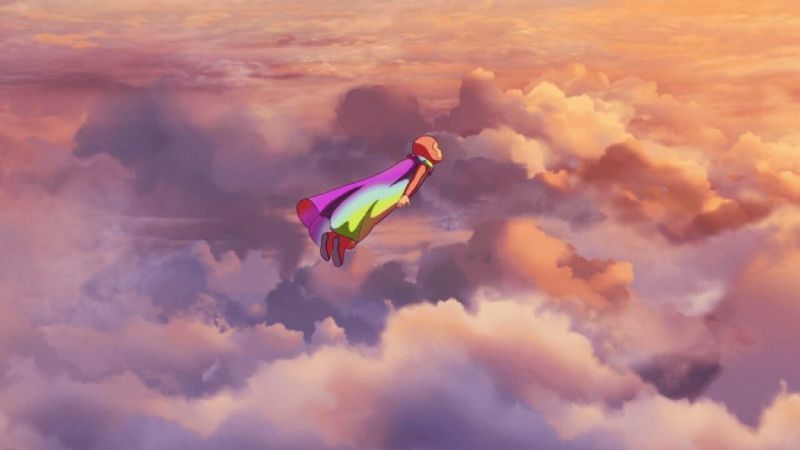
With Arco, I needed the wind. I needed space. I could not find that either in comics or in literature. Besides, it is a film about sharing, and cinema is the place of sharing.
What can animation express today that other forms of cinema can barely reach?
Magic. I believe animation is the best place to talk about sensory reality rather than objective reality. Everything passes through the body of the artist and through the teams working on the film. It is also the realm of error. It is the realm of humanity. Because to err is human, but human beings are also error itself. What we recognise in others are precisely those imperfections. That is why we recognise ourselves less in large-scale productions that strive for perfection: they reduce the space for error. And I believe that human beings recognise themselves precisely in the quality of their mistakes.
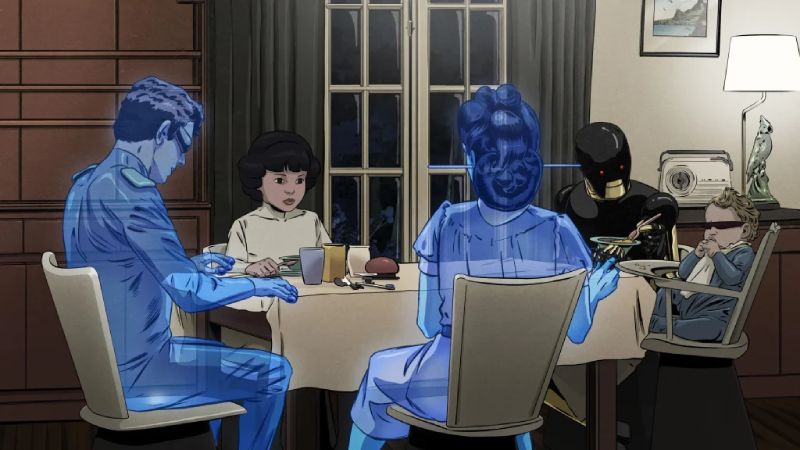
Arco (Ugo Bienvenu, 2025).



Nadie ha publicado ningún comentario aún. ¡Se tú la primera persona!