
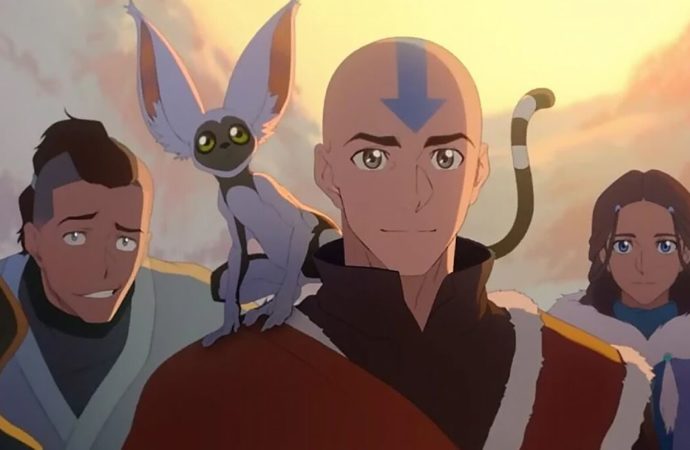

There are two kinds of people in this world, and it only takes one word to tell them apart: Avatar. Some immediately think of James Cameron’s Na’vi, and those of us who grew up eagerly awaiting each new episode of Avatar: The Last Airbender, the series that, since 2005, redefined Western animation and ultimately became one of the most beloved stories of an entire generation.
Twenty years after its debut, Team Avatar returns in a new animated feature released on 25 July on Paramount+, a project developed by Michael Dante DiMartino and Bryan Konietzko through Avatar Studios and directed by Lauren Montgomery. Its return has not been without controversy: months before the premiere, a massive leak of the film forced Paramount to bring forward its release, altering the original plans, which had pointed to an October 2026 debut. The film was screened only in two U.S. cities—Los Angeles and New York—with three screenings a day in order to qualify for the Academy Awards.
Setting aside all the noise surrounding its release, however, the real question was a different one: did the story deserve to continue after Sozin’s Comet? The answer is yes.
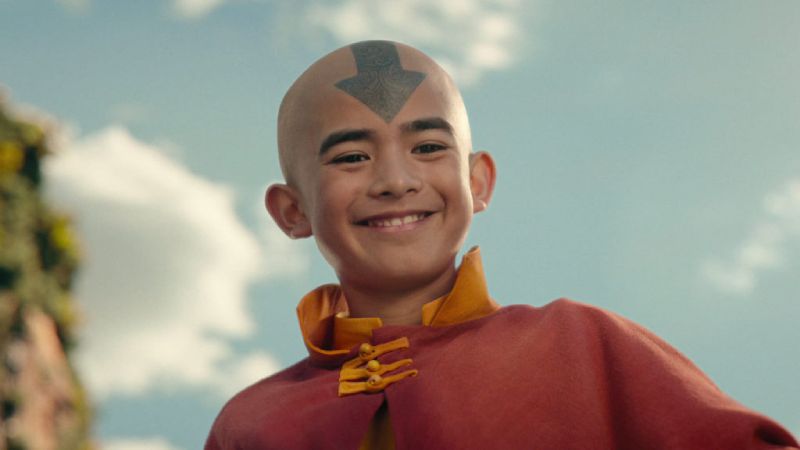
Avatar: The Last Airbender (TV series 2024- )
Rather than attempting to surpass the ending of the original series, the film opts for something far more compelling: it presents an adult Aang who continues to carry the guilt of the Air Nomads’ extinction. Defeating the Fire Lord did not bring an end to his inner conflicts. World peace does not always bring personal peace, and that idea becomes the true emotional core of the story.
Visually, the production accomplishes something that seemed difficult: it remains faithful to the artistic identity of the original series while updating its animation. Flying Bark Productions and Studio Mir preserve the distinctive aesthetic that made the Water, Earth and Fire books so unforgettable, making a return to this universe feel genuinely like coming home.
The film also takes the opportunity to show how its characters have evolved after the war. Katara, Sokka, Toph and Zuko all appear exactly where one would expect to find them, never feeling like different versions of themselves. Their personalities remain intact, now simply shaped by the passing years and the responsibilities of rebuilding the world they fought so hard to save.
The familiar imagery also evokes a powerful sense of nostalgia, reminding us that Republic City is not merely a setting but the most visible legacy of Team Avatar’s victory. Those of us who grew up watching The Legend of Korra already know what that city will eventually become, making it especially moving to witness its early years, when it was still an ambitious project born out of hope and driven by a group of friends. In this way, the film does more than look back—it builds the bridge that connects the two generations.
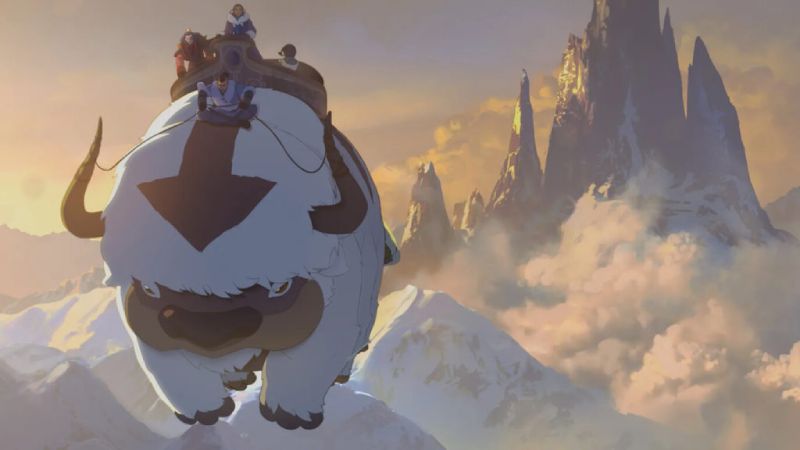
Avatar Aang: The Last Airbender (Steve Ahn, William Mata, Lauren Montgomery).
One of the screenplay’s greatest strengths, written by Tim Hedrick, Bryan Konietzko and Christopher Yost, is its understanding that the true conflict at the heart of Avatar has never been purely political. The balance between Raava and Vaatu remains the spiritual axis of the universe, and the emergence of a new antagonistic group known as The Denied once again calls into question the Avatar’s role in maintaining that fragile equilibrium.
The film’s defining achievement, however, lies in its exploration of the legacy of the Air Nomads. Aang devotes much of his life to preserving their culture, collecting relics, visiting ancient temples and keeping alive the memory of a people who vanished before he was able to save them. This quest connects directly with another of the franchise’s enduring themes: the importance of past lives.
The introduction of new Avatars such as Xian and Sonam further expands the mythology of the saga and provides some of the film’s most compelling moments. They serve not merely as nostalgic callbacks, but as a reminder that every Avatar inherits both the mistakes and the wisdom of those who came before.
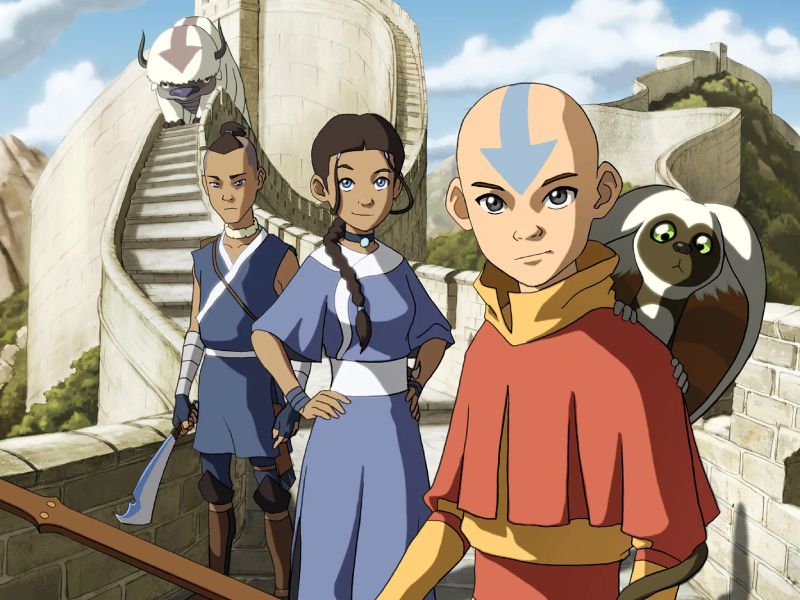
Avatar Aang: The Last Airbender (Steve Ahn, William Mata, Lauren Montgomery).
Being the Avatar is not simply about mastering the four elements. It means serving as the bridge between the physical and spiritual worlds, listening to the voices of the past, and preserving balance even when one is broken oneself—because some stories never stop feeling like home.
Avatar: The Last Airbender leaves us with the sense that there are still many stories waiting to be told within this universe. It does not rely solely on nostalgia; instead, it uses its characters to explore loss, identity, memory and hope—themes that remain just as meaningful today as they were twenty years ago. And if this return also opens the door to future stories about the Avatars who came before Aang and Korra, many longtime fans will be more than happy to journey once again to the Earth Kingdom, the Water Tribes, the Fire Nation and the Air Temples.




Nadie ha publicado ningún comentario aún. ¡Se tú la primera persona!