
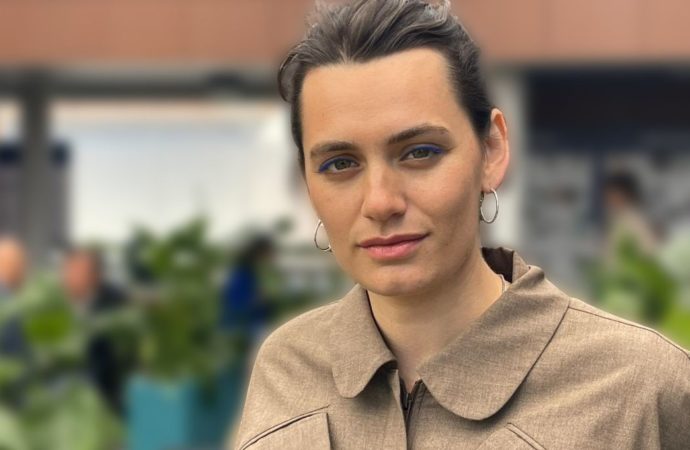
Few European actresses of her generation have built such a diverse and daring career in such a short time as Ella Rumpf. Born in France and raised in Switzerland, she first gained international recognition with Raw (2016), Julia Ducournau’s striking debut feature, which premiered at Cannes Critics’ Week before becoming a cult phenomenon. Since then, she has moved effortlessly between European auteur cinema and major international productions, collaborating with filmmakers as varied as Jakob Lass, Guillaume de Fontenay, Anna Novion and Alice Douard, while also appearing in acclaimed television series such as Succession and Tokyo Vice.
Her performance in Marguerite’s Theorem (Le Théorème de Marguerite, Anna Novion, 2023) firmly established her as one of the most compelling actresses of her generation, earning her both the Lumières Award and the César Award for Most Promising Actress in 2024. Since then, her screen presence has continued to combine fragility, intelligence and remarkable emotional intensity.
We met Ella Rumpf during the Cannes Film Festival, where she was selected by Unifrance as one of its 10 to Watch, an annual initiative highlighting the most promising emerging talents in French cinema. She was also in Cannes to present L’espèce explosive, Sarah Arnold’s new feature, selected for the Directors’ Fortnight. We spoke with her about female characters who challenge conventions, artistic freedom, the place of auteur cinema today, and a career that continues to grow beyond borders.
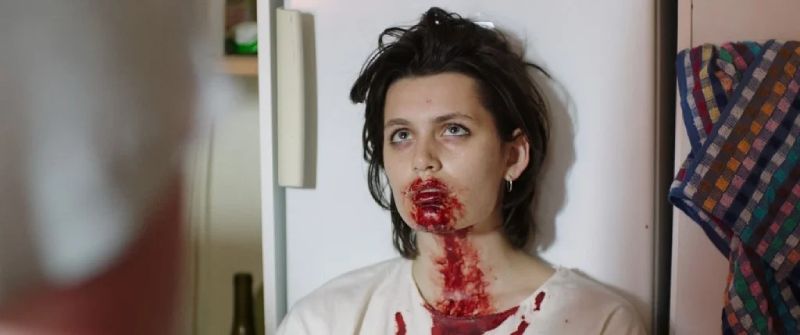
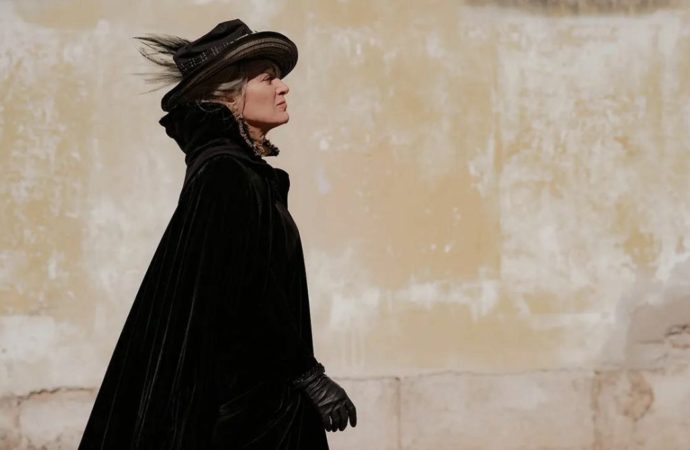
Raw (Julia Julia Ducournau , 2016).
When did you first know that you wanted to become an actress?
I think it happened little by little. I started doing theatre at school and later went to auditions for fun because I found them exciting. Then I met established actors who showed me that this profession was much deeper than I had imagined, or at least that it was a possible profession. Until then, it had never seemed possible to me.
And then, all of a sudden, I realised that it was actually an art form, one that connects to so many fascinating things. It’s a practical way of studying the world; a kind of applied anthropology. And it’s also an adventure.
Was there any actress in particular who inspired you?
There has always been something about actresses that fascinated me. At first, I discovered them through older films, and later through contemporary performers. There have been so many actresses I have admired. Some inspired me, while others moved me deeply in specific roles—women who felt intensely alive.
I admire actresses such as Scarlett Johansson and Cate Blanchett. There are so many extraordinary performers. And in France, Marion Cotillard, for example.
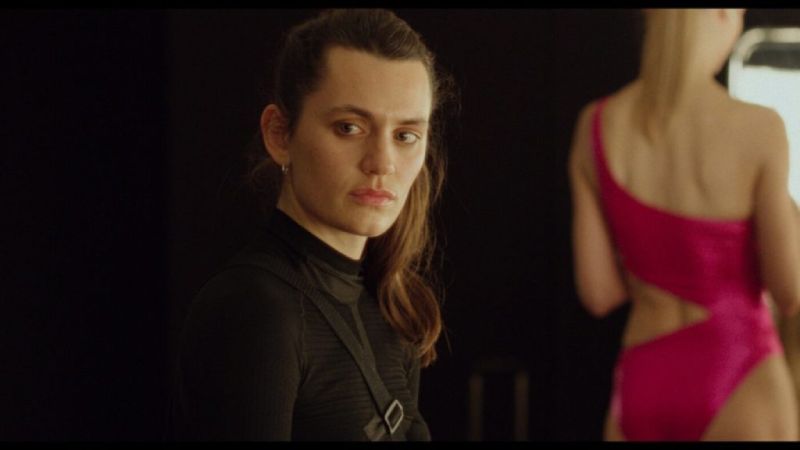
Couture (Alice Winocour, 2025)
Raw was a major breakthrough when it was released. It was such a physical, radical film. Did that role influence the way directors perceived you afterwards?
Yes, definitely. And I also tried to free myself from that. I didn’t want to be boxed into one thing and be offered the same kinds of roles over and over again. That’s why I tried, from the very beginning, to do very different projects, to send that message.
I think we sometimes trap ourselves inside a single identity.
Acting is a practical way of studying the world; it is a form of applied anthropology.
After winning the César, did you experience new freedoms or new pressures?
Not really. I thought it would change more things, but it didn’t. There was a moment when I asked myself: “What am I supposed to do now? Should I change the way I work?” And then I thought: “No. I’ve been doing things well up to now. Why should I change just because I have a César?”
For me, it’s important to stay true to my own path, to listen to myself, to make both big films and small films, and above all to do things I genuinely believe in. I don’t have a career plan. I don’t have a life plan.
But awards do confirm that you were on the right path.
Exactly. That is reassuring.
I didn’t want to be boxed into one thing and be offered the same kinds of roles over and over again.
European cinema often allows for the creation of complex, ambiguous, morally opaque characters. Do you think that same freedom exists in major productions or large television series?
Complex characters exist everywhere, of course. But in large productions there is sometimes less space and less time to really explore a character’s depth. In big productions or television series, you often have to build the character yourself. You are responsible for giving them a personality, for shaping them. In a way, you become the captain of your own ship.
In auteur cinema, on the other hand, there is usually a director with a very strong vision, and you work within that vision.
Do you think we tend to over-psychologise characters today? It often feels as though everything needs to be explained.
I try to explain everything during the preparation process and then forget it. I think about a great many things, and then I try to work in a more intuitive and unconscious way.
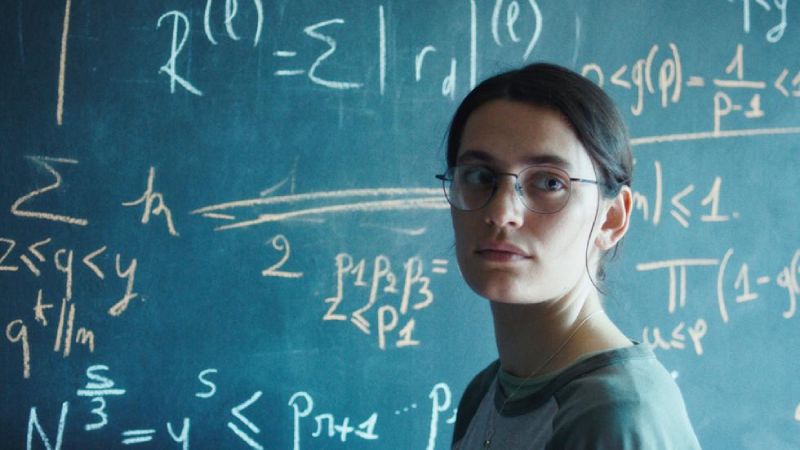
Marguerite’s Theorem (Anna Novion, 2023).
Do you discuss the characters a lot with directors?
It depends on the director. But lately I’ve had many very interesting conversations. A lot of dialogue, negotiation and exchanges of ideas about what we want to do. It’s a deeply collaborative process.
You work in French, German and English. Does each language change the way you act?
Yes, completely. Acting in German is not the same as acting in French. French invites a great deal of subtlety; it’s a language that allows for many nuances. In German, I need more time to find those nuances, perhaps because it isn’t my native language. And English has something different again.
I really enjoy acting in English—it’s a lot of fun for me. In fact, I’d like to work more in English or German again. Lately I’ve been filming a lot in French, which has been wonderful, but now I feel like changing.
You have worked with very different directors such as Julia Ducournau and Anna Novion. How have they influenced the way you work?
I made my first feature film with Julia Ducournau, and at the time I didn’t really know how to do this job. I let myself be guided by her a great deal. She had an extremely clear vision of the film. I learned how to put my energy at the service of a director’s vision. With Anna Novion, it was different. She gave me a great deal of freedom. She would constantly tell me: “Do it. Try it. Search for it.” With her, I had to find something much more organic and realistic. She wanted me to master the technical aspects of the character perfectly, while at the same time searching for powerful emotions within highly structured situations.
Julia, on the other hand, works more through excess, extreme intensity and a form of storytelling that pushes things to their limits.
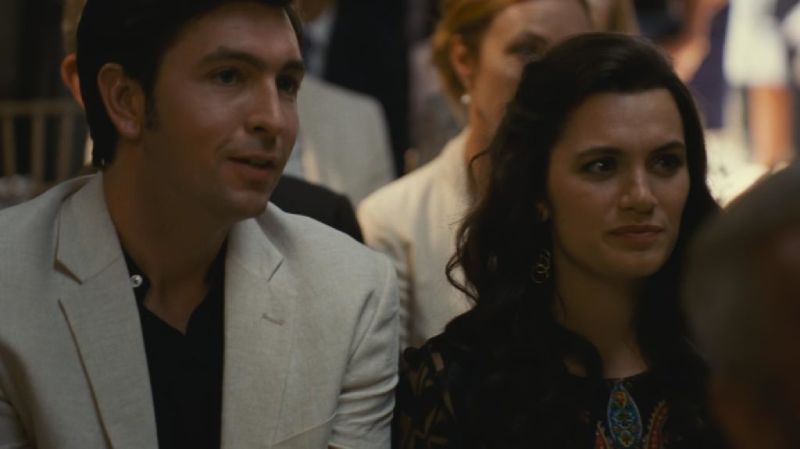
Succession (Jesse Armstrong, 2018).
Nadie ha publicado ningún comentario aún. ¡Se tú la primera persona!