
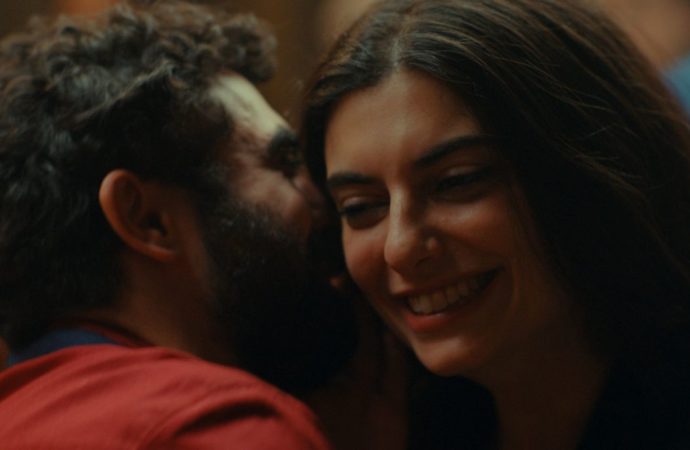

A Sad and Beautiful World speaks of a country without turning itself into a thesis, while at the same time remaining a love story that, without losing its intimacy, captures the moral temperature of an entire era. Cyril Aris’s film tells the story of Nino (Hassan Aqil) and Yasmina (Mounia Akl)—born on the same day in a bombarded Beirut, childhood companions who reunite as adults—which unfolds over three decades as a meditation on love, loss, and the impossibility—or stubborn insistence—of imagining a future in a country shaped by collapse.
Aris, one of the most internationally prominent Lebanese filmmakers today, has developed a singular vision capable of capturing the fragility of the human condition through a visually powerful aesthetic. A member of the Academy of Motion Picture Arts and Sciences and trained at Columbia University, where he earned an MFA, he established his reputation on the international festival circuit with works such as The President’s Visit—premiered at the Toronto International Film Festival—and documentaries like Dancing on the Edge of a Volcano, where the tension between raw reality and lyricism that defines his cinema was already evident.
Awarded the Audience Prize in Venice, at SEMINCI, and at the Middle East Now Film Festival, and further recognized at festivals such as Arte Mare and CINÉMED, the film compellingly demonstrates that a work can be both delicate and political, deeply local and universal. Through the performances of Hasan Akil and Mounia Akl—whose chemistry sustains the film’s emotional core—A Sad and Beautiful World uses a love story to reflect on survival, belonging, and escape. We spoke with Cyril Aris about love as a form of resistance and about how cinema can capture the fragility of a world in collapse without renouncing its beauty.
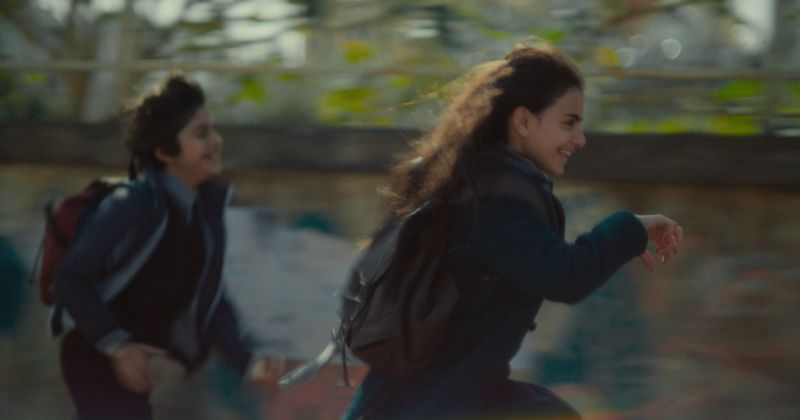
A Sad and Beautiful World tells the story of two characters bound together from birth, at the heart of a tragedy in Beirut. Aris chose to extend the narrative over thirty years rather than confine it to a single moment in time, so we began our conversation by asking him about this decision: “From the very first version, I knew I wanted to tell a story that unfolds over time, where a true love is confronted with reality and ultimately survives despite all those years. But also because I wanted to speak about different periods in Lebanon—I wanted to show a Beirut marked by drama, wars and tragedies, but also a Lebanon that goes through moments of peace, moments of prosperity, where one feels it is a truly wonderful country.” The director sought to contrast this love story—this almost mad love—with that of a country constantly shifting through radically different states. “That idea was always at the origin of the project: my desire to speak about a couple and a country at the same time.”
The relationship between Nino and Yasmina appears inseparable from the condition of the country itself. It reflects a constant risk, a kind of existential collapse that extends across generations. In such circumstances, how can one live in a world of extreme instability? How can one plan a life, parenthood, a profession, a future? According to the director, this was the very essence of the film: “How can one continue to believe in that country—and in this world more broadly? How can one dare to believe in a future? And is it really worth bringing children into this kind of world? These were questions I was asking myself personally. And it is precisely this desire to respond to those questions through two very antagonistic characters—two deeply contradictory forces. One person who clings to optimism and to the will to believe in the future, and another who is more pragmatic, more realistic, someone capable of facing things head-on. So yes, it is that question, in the end, that gave birth to everything else in the film.”
In A Sad and Beautiful World, love can be read either as a form of resistance that carries hope, or conversely as proof of the impossibility of a stable life—as if loving one another had become incompatible with survival. Aris is unequivocal in his position: “I believe it is precisely hope, because in the end it is all we have left. If we think rationally about the country, if we look at its history, we might conclude that it is not really worth continuing to believe in it or to try to imagine a future there. And yet, I think love is a prism that offers a certain distortion of reality, allowing us to keep believing through it. Ultimately, that is what allows this country to survive: love—love between friends, between families, between partners. It is the main engine that keeps this country alive.”
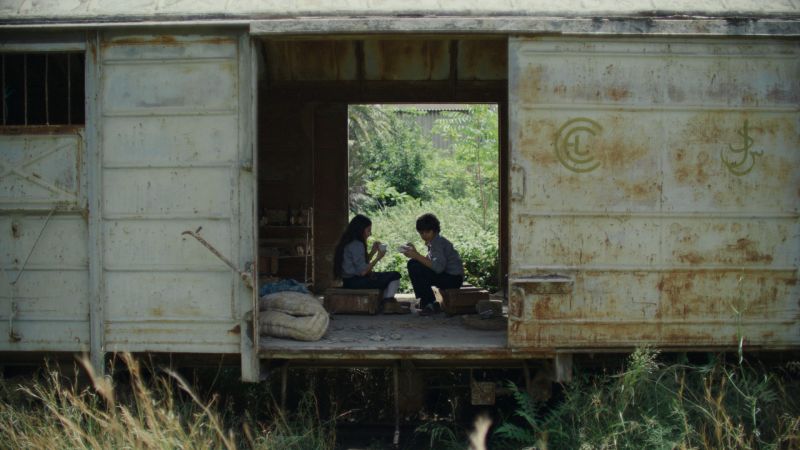
One of Cyril Aris’s key creative choices—co-writing the screenplay with Bane Fakih—was to introduce a symbolic, almost mythical mental space that helps young Nino cope with the loss of his parents. This imaginary island becomes a recurring motif throughout the film. “We see in the story,” the director explains, “that it is the grandfather who first uses this concept to explain death to Nino. This imaginary place is paradise—it’s where your parents are, and they are happy. In reality, they transform something quite dark and macabre into something absolutely beautiful. Later, young Yasmina hears about this island and appropriates it, turning it into a place where families—hers, whose parents have separated—remain intact, united and happy. And in the end, as you said, this island becomes a kind of imaginary escape, a refuge when the world around them grows too harsh. And I think the final shot, where they meet again on the island and we see that postcard image of Beirut and Lebanon, suggests that this island could be Lebanon—if one chooses to see it that way.”
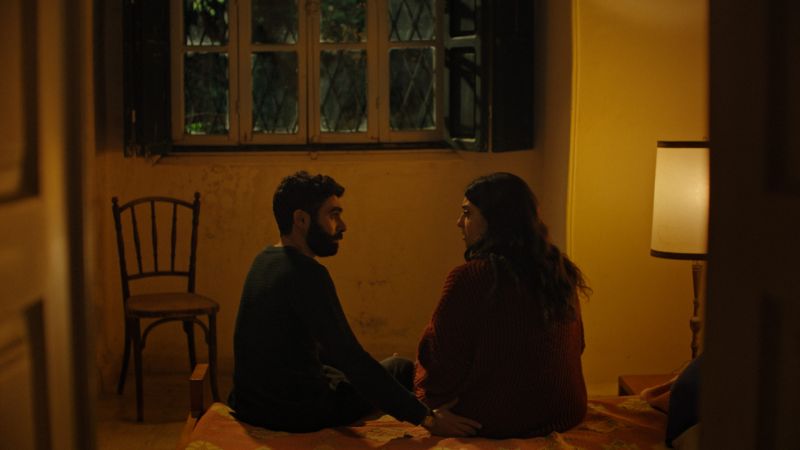
The direction of actors achieves a remarkable alchemy between the leads. The chemistry between Hassan Aqil and actress-director Mounia Akl (Costa Brava, Lebanon, 2021)—with whom Aris had previously collaborated—is striking precisely because it feels both spontaneous and meticulously constructed. As Aris explains, “Everything was very tightly written—every line of dialogue, every scene—we knew exactly what was going to happen. But once we were on set, I would ask them to fully appropriate the scenes and to reinterpret the dialogue in their own way—how Hassan speaks, how Mounia speaks. I do this with all my actors, not just them. It’s my way of achieving that sense of naturalness, of making sure nothing feels forced, nothing feels written, that everything unfolds in a more spontaneous way.”
He adds a distinctive approach to directing: “When I work with actors, I tend to direct the person who is off-camera. So if the camera is on Mounia, I direct Hassan—I change the energy of his entrance, I adjust his lines—and that means Mounia, who is on camera, has no idea what he’s going to do. She doesn’t know how the scene will shift from one take to another, so she is constantly listening, constantly reacting in a very spontaneous way. Then when the camera turns to Hassan, I do the same with Mounia. This creates a continuous sense of spontaneity and surprise between takes. The same applies to the children, to the supporting roles. So even though everything is carefully written, it is ultimately reinvented on set, shaped by the actors’ own way of speaking, reacting, and, above all, by their natural impulses.”
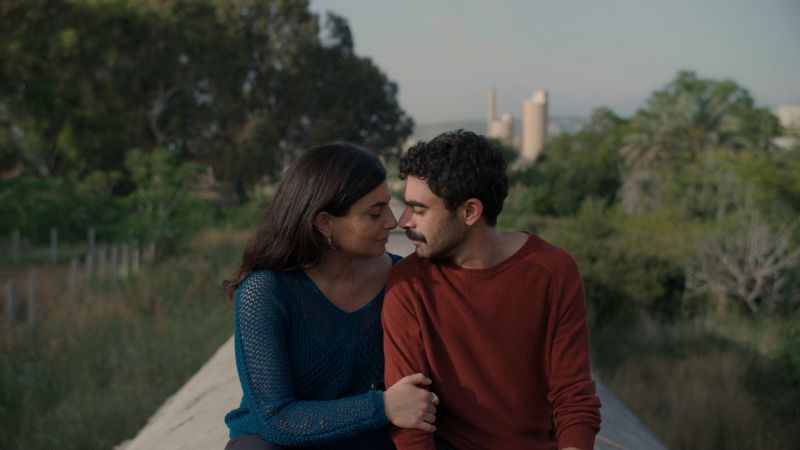
The fluidity with which this method operates is undeniable, but what stands out even more is the play of glances. In close-up, the gaze becomes a true language. The narrative shifts toward the look itself, which functions as the primary vector of desire, complicity, and also distance—it does not serve a single purpose. “Yes, absolutely,” the director confirms. “I think that in a couple in love, what is left unsaid is often far more powerful than words. There is an entire universe created within that very small distance between two faces, within that gaze. We wanted to explore that idea—that a whole world can exist between two people, even when there is chaos all around them, when so many things are happening externally. And even if only for a moment, you feel that there is truly a world within those looks. The same applies to a relationship in decline, one that is unraveling. Even without words, everything is expressed through the gaze—whether it is distance or rupture. So we kept returning to silent close-ups, placing the camera within that intimate space between two gazes, positioning the viewer inside that world where everything is coming apart, even without dialogue.”
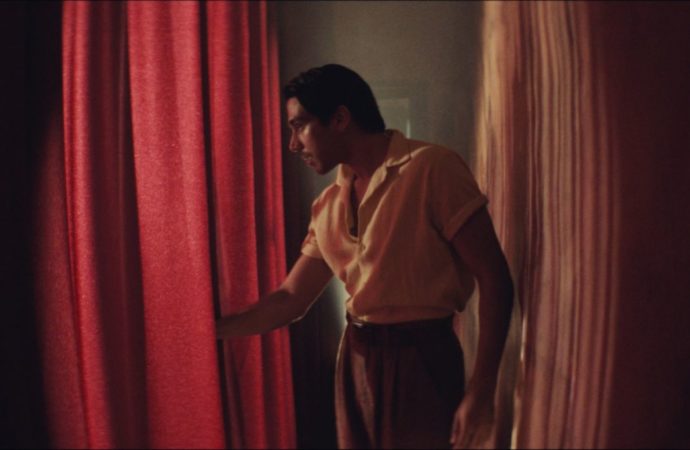
The aesthetic approach of A Sad and Beautiful World moves between fragility, luminosity and opacity. The title itself suggests a constant duality, yet visually the film gradually shifts toward darker, greyer, almost suffocated tones. Cinematographer Jaouz Saad achieves what could be described as an aesthetic of disappearance, where beauty persists, albeit altered. “That’s a great question, and very well put,” Aris agrees. “In the first part, when they are falling in love, Beirut feels like a city full of light and vibrancy. The colours are saturated, the camera moves in all directions, trying to convey Nino’s energy—chaotic, spellbound, full of charm. We pushed the colours to their limits. You can feel a real energy behind the camera movements, because it is a time of peace, prosperity, construction and love.”
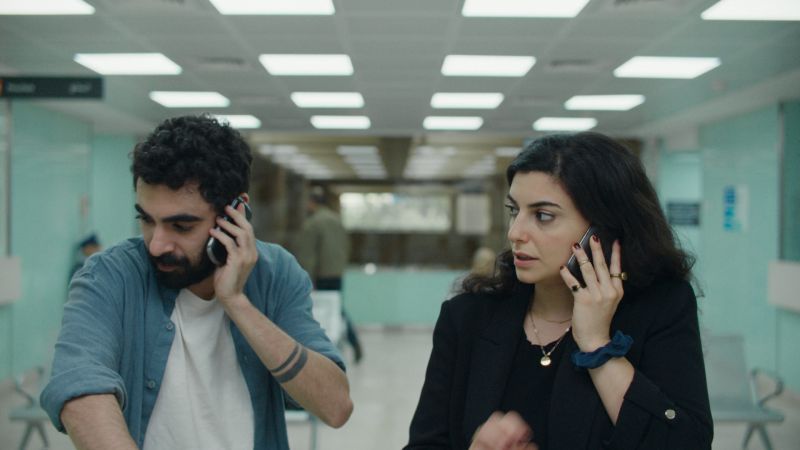
“In the second part,” Aris continues, “we drew heavily from our own perception of Beirut between 2019 and 2022. During the power cuts, as people were leaving, as everyday life in the city began to collapse, we felt Beirut becoming much darker. That’s when Jaouz Saad started dimming the lights, softening the atmosphere. Even in the restaurant, you no longer see vibrant, colourful, saturated food. It was our way of showing the city’s disintegration—something rooted in our own lived experience of that period—translated visually into a much colder atmosphere. The contrast between the two allows us to play with dual tones: one of beauty and charm, and another of sadness and fragility, embodied by Nino and Yasmina and echoed in the film’s very title.”
Aris also points to the restaurant—Nino’s emotional anchor—as a central space in the film. The kitchen, in particular, functions as a living core, evolving over time and setting the rhythm of the narrative through shifts in tempo and atmosphere. Here, the contribution of editor Nath Sanders becomes especially evident. “He’s the editor of Barry Jenkins’s films—Moonlight (2016), If Beale Street Could Talk (2018)—very emotional films. He’s an extraordinary editor,” Aris notes. Together, they shaped the film’s temporal structure: “We had this idea of conveying a sense of chaos in the first part, and then really taking our time in the second. Given his experience, especially with stories that unfold over long periods, we were able to find that balance together.” Their collaboration worked despite linguistic and cultural differences: “There was a real harmony between us. Even though he doesn’t speak Arabic and doesn’t know Lebanese culture, he worked very instinctively—focusing on gesture, on the musicality of the language, on the rhythm of the characters in different scenes. When someone doesn’t know the culture or the language, their first impressions become incredibly important.”
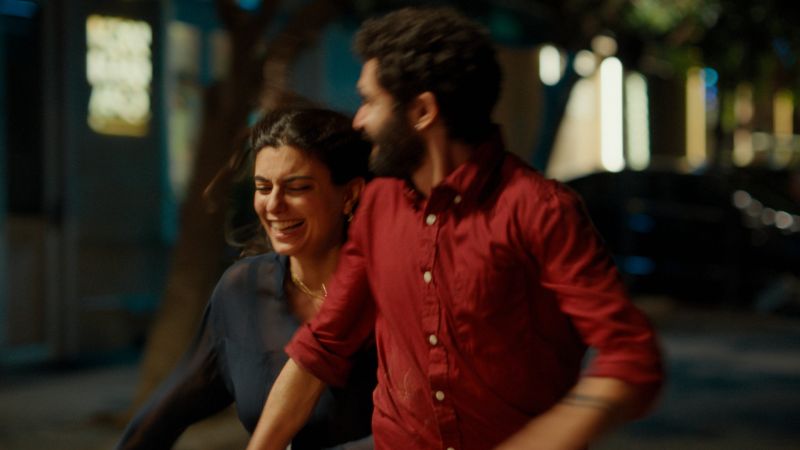
The inspired choices in A Sad and Beautiful World, which create a seamless harmony between image, sound and narrative, also extend to its music—perceived throughout the film almost like the rhythm of breathing. The electronic score takes on an almost spellbinding quality, intricately interwoven with traditional sounds, creating what could be described as an inner space for the characters, as if it were a substitute for what cannot be spoken. Aris agrees with this reading: “Yes, that’s actually very well put. I worked with a Lebanese composer, Anthony Sahyoun, who embodies this duality. He is deeply rooted in Lebanese musical heritage—traditional chants, ancient music, very Eastern sounds—but he also creates highly experimental, electronic, digital music. That duality reflects Lebanese culture itself: we are deeply anchored in our traditional, Arab heritage, but there is always this gaze toward the West, toward European cultures. It is often said that among Arab countries, Lebanon is the most Westernised.”
“And I think this duality is present not only in the music but also in Nino’s character and his approach to cooking. He takes the recipes of his grandfather and his parents, but reinterprets them through a more contemporary, more Western lens. In our conversations, I told Anthony that the guiding line had to be Nino’s character. So the same musical themes from the first part—quite chaotic and energetic—reappear in the second, but stripped down, transformed, with instruments removed, to reflect this evolution. When you listen to the full score, you feel that arc: something very energetic at the beginning that gradually becomes more bare, almost losing its vitality, until in the end it is reduced essentially to voices. It becomes just the harmonizer, transforming into Anthony’s voice alone.”
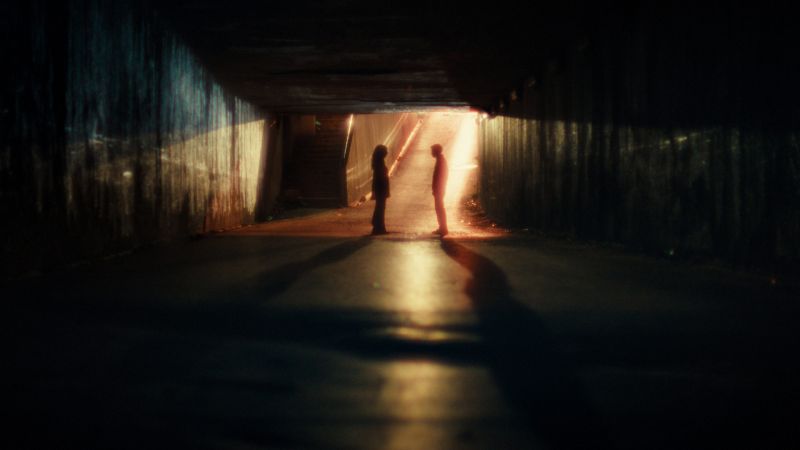
The work on the score—awarded at the Montpellier Festival—was itself a singular process. “Yes, we probably spent five or six months just finding the tone we were looking for,” Aris explains. “And once we found it, the musical work itself was relatively fast. But it took a long time to identify the right instruments, the right tone—to create something that wouldn’t meet the expectations of a romantic comedy, with piano, violins and orchestras, but something newer, more original, more unique.”
Despite the gravity of its context, a distilled sense of humour runs throughout A Sad and Beautiful World, most visibly through Nino, but also more subtly through Yasmina. This dimension—as a personal form of resistance or survival—was essential for Aris. “Yes, exactly—you put it very well,” he says. “In Lebanon, despite the dramas, despite the tragedies, we laugh a lot. There is a great deal of humour, a strong tradition of comedy, even during times of war. It’s not about escaping reality, but rather, as you said, it’s a survival tool. It’s what allows us to endure those difficult periods. Otherwise, life would simply collapse. That humour is always present—whether the country is doing well or not.”
“In moments like the present, it becomes almost a form of resistance that persists in times of crisis. For me, to remain faithful to that atmosphere, it was essential to integrate this sense of comedy. And for example, the character of the chef (Tino Karam) improvised a great deal, adding many of his own jokes and touches of humour. I chose actors who are genuinely funny, even in their everyday lives, and that was important for bringing that tone into the film.”
Before concluding, we asked Cyril Aris how he has experienced the overwhelming international reception of his film—widely praised and awarded across major festivals—and, in particular, how he reconciles this success with the fact that his country is currently under military aggression, in part by some of those same nations that have embraced his work. “It’s terrible, it’s very difficult,” he admits. “Since October 2023, with these devastating wars initiated by Israel in the Arab world, and now the escalation between Israel and Iran, with Iran bombing Arab countries… I appreciate you asking this question. There is a growing sense of disillusionment with Western democracies, and also a sense of hypocrisy—countries that give moral lessons while remaining silent in the face of this tragedy.”
“I would make an exception for Spain,” he adds. “Between us, I think Spain is the only country that is genuinely trying to confront, even if symbolically but still in a meaningful way, this war machine that is taking hold of the Middle East.” As for the film’s reception, Aris notes that it is now being distributed internationally, including a strong run in France. What has moved him most is the response from Lebanese audiences: “They say they are proud of the film because it represents us—our problems, our daily lives, but also our humour, our desire, our love and attachment to this country, as well as our despair and sadness in seeing it collapse. That is what makes me happiest—that Lebanese viewers tell me, ‘Yes, this is what it means to be Lebanese.’ A French viewer of Lebanese origin told me that if anyone ever asked her what it means to be Lebanese, she would tell them: go and see this film. That made me blush.”
Throughout the conversation, Aris returns to a central conviction: in contexts where everything seems to be falling apart, love endures as a form of insistence—perhaps the most vital response to desolation. A Sad and Beautiful World ultimately asks what it means to build a home—emotional, personal, even national—when the conditions make it nearly impossible. Between fading light and persistent beauty, the film finds its truth in that fragile tension, in that unstable balance where loving may be the last act of resistance.
Nadie ha publicado ningún comentario aún. ¡Se tú la primera persona!