


The Cannes Classics section once again takes center stage at the 79th edition of the Cannes Film Festival with a program that confirms the extent to which film preservation has become a form of cultural resistance. Created nearly twenty years ago, at a moment when the digital revolution was beginning to radically transform cinema’s relationship with its own memory, Cannes Classics was conceived as a space devoted to restorations undertaken by cinematheques, national archives, laboratories, and production companies from around the world. Today, having become an essential part of the Official Selection, it continues to champion the collective experience of images from the past, returning them to the big screen with unexpected vitality.
The 2026 edition, dedicated to the memory of legendary production designer Dean Tavoularis, will bring together 22 restored feature films, three short films, six documentaries, and two contemporary works. Guests will include names as diverse as Guillermo del Toro, Dario Argento, Jerzy Skolimowski, Bruce Dern, Laura Dern, and Armenian filmmaker Artavazd Pelechian. More than a nostalgic retrospective, the program offers a living journey through film history, where canonical works, rediscovered rarities, and new ways of thinking about the relationship between archive, restoration, and contemporaneity coexist.

Pan’s Labyrinth (Guillermo del Toro, 2006).
Restoring Films to Watch Again
One of the most anticipated events will be the screening of the 4K restoration of Pan’s Labyrinth, presented by Guillermo del Toro twenty years after its world premiere in Cannes, where it received a historic 22-minute standing ovation. Personally supervised by the Mexican director from the original 35 mm negative, the restoration restores the full visual splendor of one of the defining works of contemporary fantasy cinema. The screening will take place as the festival’s pre-opening event, in the presence of del Toro himself.
Another highlight is the restoration of The Stranger by Orson Welles, the result of a collaboration between the Cinémathèque française and the U.S. Library of Congress. The restoration was carried out from the original negative and will be presented by Frédéric Bonnaud. This is complemented by a particularly rich lineup of restored European and Asian cinema: The Innocent by Luchino Visconti; Farewell My Concubine by Chen Kaige, with Gong Li in attendance; Moonlighting by Skolimowski; and the restoration of Sanshiro Sugata, Akira Kurosawa’s debut film, whose new version reincorporates a sequence lost for decades.
The selection also includes lesser-known but essential titles for rethinking the history of world cinema: Eva by Maria Plyta; Tilai by Burkinese filmmaker Idrissa Ouedraogo; and The House of the Angel by Leopoldo Torre Nilsson. Cannes Classics thus insists on an increasingly necessary idea: preserving cinema also means expanding the canon and revisiting the margins of official history.

Farewell My Concubine (Chen Kaige, 1993).
Documenting Cinema and Those Who Made It
The section will once again devote special attention to documentary filmmaking, with works dedicated to essential figures in film history. Among them stands out DERNSIE: The Amazing Life of Bruce Dern by Mike Mendez, an intimate portrait of the American actor built from more than fifty hours of filmed conversations over four years. The documentary traces Bruce Dern’s career and life, both marked by constant reinvention and by a complex relationship with his daughter Laura Dern, who occupies the emotional center of the film. Figures such as Quentin Tarantino, Alexander Payne, and Patty Jenkins also take part.
Another major highlight will be Maverick: The Epic Adventures of David Lean by Barnaby Thompson, narrated by Cate Blanchett and featuring Kenneth Branagh voicing David Lean. The documentary explores both the British director’s monumental aesthetic vision and the personal tensions that accompanied his career. Meanwhile, Vittorio De Sica – Staging Life by Francesco Zippel revisits the great Italian master through previously unseen family materials and contemporary testimonies.
More experimental in nature is Nostalgia for the Future by Belgian filmmaker Brecht Debackere, dedicated to Chris Marker. Narrated by Charlotte Rampling, the documentary transforms the French filmmaker’s archives into genuine “time machines,” interrogating memory and identity through a deeply Markerian essayistic logic. This is joined by The Story of Documentary Film (The 70s), Mark Cousins’ latest monumental work on the evolution of documentary cinema.
New Films and Memory as Creation
Although centered on preservation, Cannes Classics also makes room for contemporary works that engage with film history from the present. Among them is Une vie manifeste by Jean-Gabriel Périot, a documentary dedicated to Michèle Firk—critic for Positif, aspiring filmmaker, and revolutionary activist whose life was shaped by political struggle and the defense of freedom. The film reconstructs the trajectory of a singular figure who experienced cinema and militancy as inseparable pursuits.
Also premiering will be L’Âge d’Or, the debut feature by Bérenger Thouin, starring Souheila Yacoub, Vassili Schneider, and Yile Yara Vianello. Through an original blend of fiction and archival footage, the film reconstructs the life of Jeanne Lavaur across the twentieth century, amid wars, revolutions, and geographic displacement.
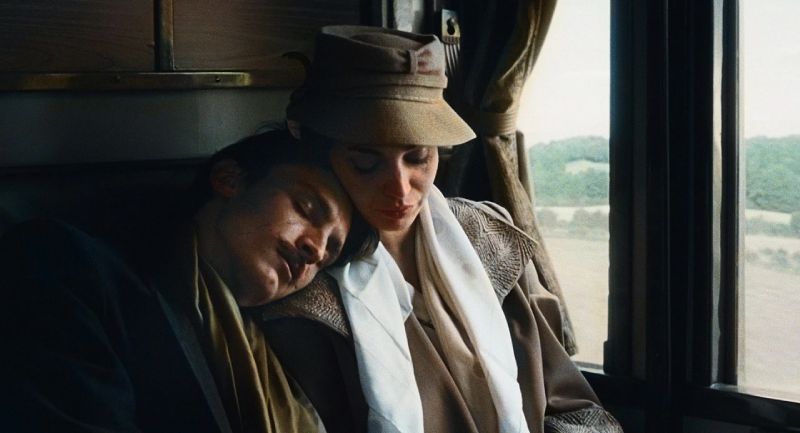
L’Âge d’Or (Bérenger Thouin, 2026)
The program is rounded out by a special showcase of recent short films by filmmakers such as Jia Zhang-ke, Darren Aronofsky, and Amirhossein Shojaei. Particularly striking is Torino Shadow, in which Jia Zhang-ke follows a Chinese woman traveling to Turin in search of her husband, only to encounter cinema itself as a space for reconstructing identity.
Far from limiting itself to a celebration of cinematic heritage, Cannes Classics thus reaffirms a fundamental idea: cinema of the past does not belong to the museum, but to the present, because restoring a film restores its ability to provoke new ways of seeing.



Nadie ha publicado ningún comentario aún. ¡Se tú la primera persona!