

Running parallel to the media glare of the Festival de Cannes, the Directors’ Fortnight once again asserts itself as one of the most necessary and coherent spaces for understanding where contemporary cinema is heading. From May 13 to 26, its 58th edition will unveil a selection that, more than ever, questions the festival from within—through a programme that privileges formal freedom, narrative risk, and the emergence of new voices.
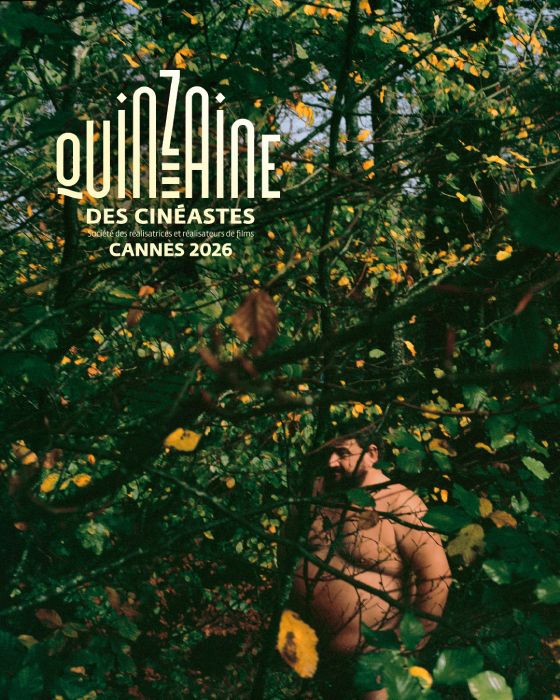
Under the inspiration of Alain Guiraudie, this year’s selection brings together 19 feature films and 9 short films from 19 countries across five continents. This is no incidental figure: it reflects a clear intention to decentralise the cinematic map by including film cultures with little international visibility, such as Nigeria, Sudan, Guatemala, Venezuela, and Cyprus. In a context where aesthetic homogenisation seems to dominate certain circuits, the Fortnight insists on diversity.
Between the established and the emerging
The 2026 programme strikes a precise balance between established filmmakers, emerging voices—including six feature debuts—and directors whose artistic language is still taking shape. This coexistence is not driven by generational turnover, but by a vision of cinema as a territory in constant construction.
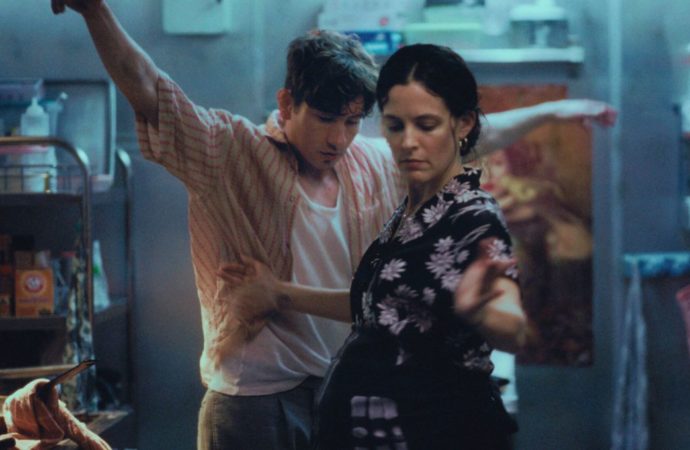
The opening film, Butterfly Jam by Kantemir Balagov, starring Barry Keoghan and Monica Bellucci, sets a tone of aesthetic and emotional intensity from the outset. From there, the selection expands to include works as diverse as Double Freedom by Lisandro Alonso and a new take on The Diary of a Chambermaid by Radu Jude, one of the most incisive voices in European cinema today.
Perhaps one of the most stimulating aspects of this edition is the strong presence of documentary and animation—three features and two shorts in each category—which un78th Festival de Cannes, derscores the vitality of languages traditionally considered peripheral. Far from marginal genres, they are presented here as spaces of formal and political experimentation.
Cinema in expansion
The Fortnight will also host the premiere of the latest film by Alain Cavalier, a key figure in the section’s origins. His new work, Merci d’être venu, continues his filmed diary and operates, in a sense, as a gesture of continuity: a cinema that reflects on itself as it unfolds.
This dialogue between past and present will be reinforced on May 13 with the awarding of the Carrosse d’Or to Claire Denis, one of the most significant honours within the Fortnight. Created by the Société des réalisatrices et réalisateurs de films, the prize recognises filmmakers whose freedom of vision and strength of mise-en-scène have left a lasting mark on cinema. In Denis’s case, her work—radically free, deeply attentive to the singularity of bodies and human trajectories—embodies that spirit with precision.
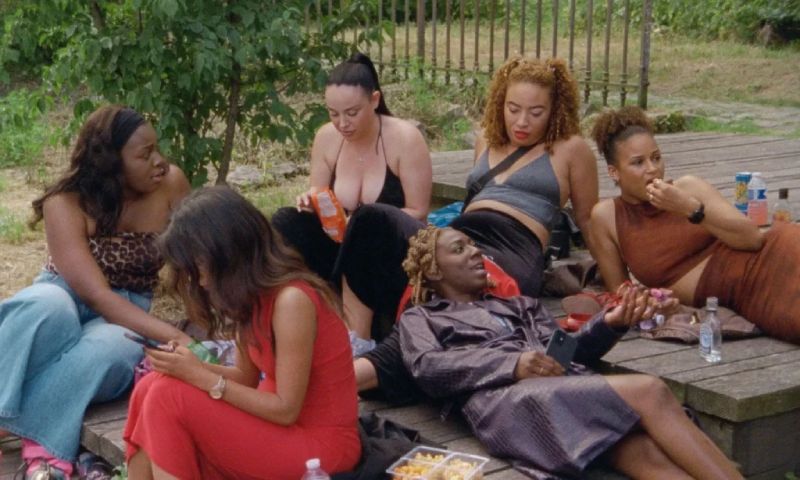
Shana (Lila Pinell, 2025)
Cinema as a space of risk
Beyond names and titles, what defines Directors’ Fortnight is a position. In contrast to the growing spectacularisation of global cinema, this space defends a more demanding idea: cinema as an autonomous creative act, free from formulas and open to uncertainty.
The inclusion of peripheral film cultures, the commitment to first features, and the focus on forms such as animation and documentary are not neutral curatorial decisions, but a statement of principles. Here, cinema is not understood as industry, but as possibility.
In this sense, more than half a century after its creation, the Fortnight remains one of the few places where cinema can still surprise and redefine itself. A space where, far from the noise, the freest heartbeat of Cannes can still be heard.
Special Screening
The Fortnight will also host a special screening of Red Rocks, the latest film by Bruno Dumont, marking a new turn in a filmography defined precisely by constant transformation. Shot on the French Riviera and featuring very young children, the film adopts a documentary-like approach, reinforced by the deliberate use of wide-angle lenses. Once again, Dumont appears interested in exploring that strange and unexpected form of grace that only cinema can sometimes reveal.
From this new work, it becomes possible to trace, in perspective, three decades of a body of work that is both free and deeply singular. Closely linked to the Quincena de los Cineastas since 1997—when La vie de Jésus received a special mention for the Caméra d’Or—Dumont has built a career in constant motion, shaped by a wide range of registers, tones, and formal experiments, without ever losing a distinct and unmistakable identity.
The movies
Feature films
Butterfly Jam by Kantemir Balagov (opening film)
9 Temples to Heaven by Sompot Chidgasornpongse (debut feature)
L’Apaisement (Atonement) by Reed Van Dyk (debut feature)
Carmen, l’oiseau rebelle (Viva Carmen) by Sébastien Laudenbach (animation)
Clarissa by Arie Esiri & Chuko Esiri
Death Has No Master by Jorge Thielen Armand
Dora by July Jung
Double Freedom by Lisandro Alonso
L’Espèce explosive (Too Many Beasts) by Sarah Arnold (debut feature)
Gabin by Maxence Voiseux (documentary, debut feature)
I See Buildings Fall Like Lightning by Clio Barnard
The Diary of a Chambermaid by Radu Jude
Low Expectations by Eivind Landsvik (debut feature)
Merci d’être venu by Alain Cavalier (documentary)
Once Upon a Time in Harlem by William Greaves & David Greaves (documentary)
La Perra by Dominga Sotomayor
Shana by Lila Pinell
We Are Aliens by Kohei Kadowaki (animation, debut feature)
Le Vertige (Vertiginous) by Quentin Dupieux (animation, closing film)
Short and medium-length films
In Search of the Grey Bird with Green Stripes by Saïd Hamich Benlarbi (documentary)
Daughters of the Late Colonel by Elizabeth Hobbs (animation)
Madrugada by Sebastián Lojo
Eri by Yano Honami (animation)
Free Eliza (Notes on an Anatomical Imperfection) by Alexandra Matheou
The Joyless Economy by Marjorie Conrad (documentary)
Nothing Happens After Your Absence by Ibrahim Omar
Oh Boys by Antonio Donato
Pithead by Wannes Vanspauwen & Pol De Plecker



Nadie ha publicado ningún comentario aún. ¡Se tú la primera persona!