

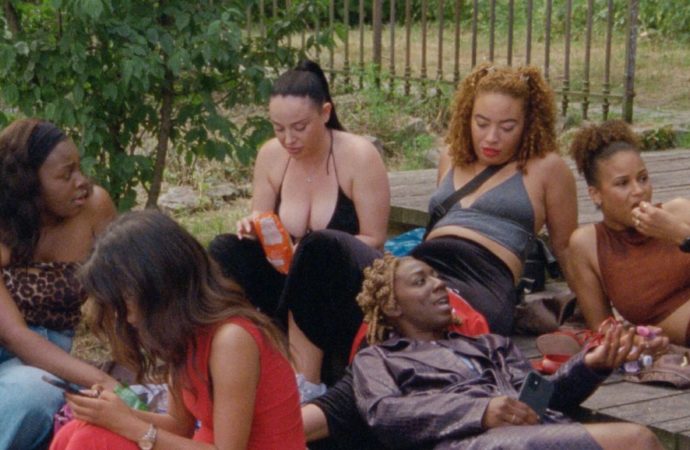
In Le Roi David (2023), the César-nominated short film in which Lila Pinell first began shaping Shana’s universe, there was already a distinctive sensitivity toward emotional and familial margins. Now, the French filmmaker expands that story into the feature-length Shana, presented at the Directors’ Fortnight of the 79th Cannes Film Festival and once again starring Eva Huault alongside Noémie Lvovsky. The result is a vibrant and painful portrait of a young woman caught between the desire for emancipation and the impossibility of finding a place of her own.
Pinell describes her protagonist as a body in constant motion. “Her character moves around, like the ring, from one story, world or situation to the next,” the director explains. And indeed, Shana functions as a centrifugal force: she moves through family, romantic, and social spaces without ever fully belonging to any of them. Every scene captures that continuous friction between the impulse to escape and the desperate need to be accepted.
Shana is a vibrant and painful portrait of a young woman caught between the desire for emancipation and the impossibility of finding a place of her own.
Shana is a fighter, even if she lacks the tools to survive. She is trapped in an abusive relationship with a small-time drug dealer who is serving a prison sentence, and while he is away, she tries to keep his business afloat on her own. When the supply runs out and the money disappears, she begins a desperate downward spiral. What could have remained just another story about precarious youth with no future gradually reveals itself as something far more complex: a drama of invisible wounds narrated with the bitter lightness of tragicomedy.
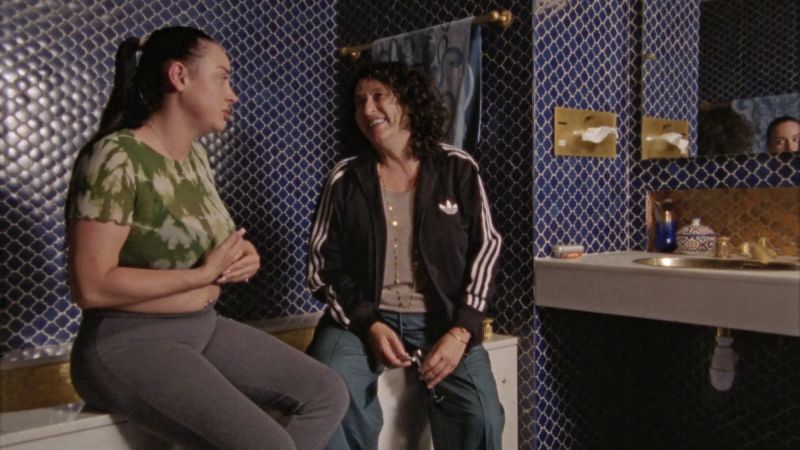
Because the film quickly broadens its scope. Beyond economic or emotional survival, Pinell places Shana within an emotional landscape marked by familial detachment and fractured identity. From the very first family gathering — where we see her displaced, anxious to fit in yet simultaneously proud of her difference — the cracks of an unexplained alienation begin to emerge. Tradition, cultural inheritance, Jewish practices and family rituals all become spaces in which Shana always seems slightly out of tune.
At the bar mitzvah, at her grandmother’s funeral, or during small domestic celebrations, the protagonist desperately tries to be one of them. Yet something in her never fully aligns with the rest. Pinell films that distance with remarkable delicacy, avoiding any overt psychological emphasis. The camera stays close to Shana, capturing her vulnerability, her almost adolescent impulsiveness and, above all, the permanent discomfort she feels within her own skin.
In her emotional wandering, Shana discovers a strange and moving form of resistance.
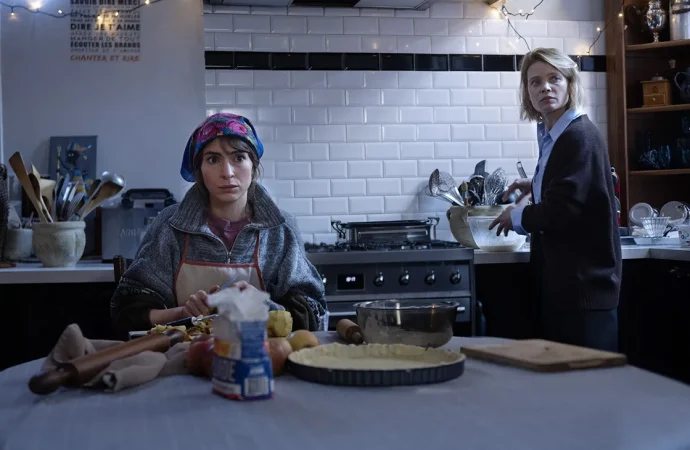
Eva Huault’s performance carries much of that emotional truth. Her portrayal moves constantly between fragility and insolence, tenderness and disaster. Shana accumulates small failures and everyday humiliations that the film transforms into episodes of melancholy comedy: climbing onto a balcony after forgetting her keys, gifting a scarf stolen from a cloakroom, or embarking on the odyssey of recovering her grandmother’s inherited ring. Like so many anti-heroines of contemporary cinema, Shana stumbles forward, improvising, surviving however she can.
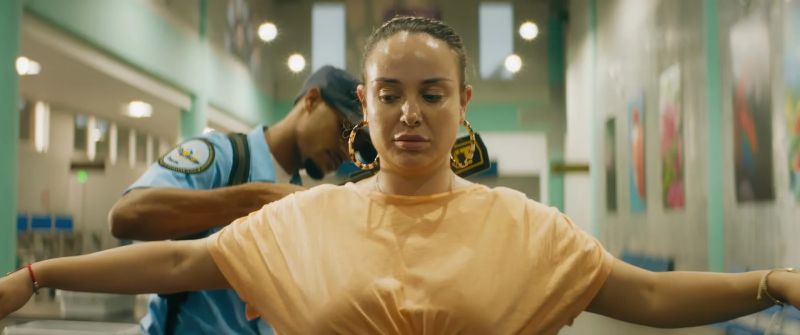
But it is during the decisive confrontation between mother and daughter that the film reveals the true dimension of her wound. The family emigrated from Morocco and, after rebuilding her life with another man, Shana’s mother moved south. Unable to accept this new family, Shana stayed behind at just twelve years old and spent the rest of her childhood and adolescence in foster care. Suddenly, everything makes sense: the anger, the insecurity, the pathological need for affection, the inability to belong.
Pinell wisely avoids turning this revelation into a therapeutic resolution. On the contrary, she understands that such fractures do not disappear; one simply learns how to live with them. This is why the ring that travels throughout the film becomes so important: a magnificent gold-and-emerald bird-shaped jewel that once belonged to Shana’s grandmother. More than an inherited object, it functions as a talisman, a silent promise of continuity and emancipation. It is also an unmistakable symbol of freedom, of the possibility of flight.
What Shana ultimately decides to do with it reveals her intimate evolution — small, yet decisive. Because Shana is ultimately about precisely that: how to survive when nobody ever taught you how. About resilience stripped of heroism. About abandonment turned into identity. And about those women who stumble through life, making mistakes over and over again, while still preserving a fierce need to be loved.
With an apparent lightness that never trivializes pain, Lila Pinell creates an imperfect and deeply human heroine, a figure capable of generating immediate empathy even at her worst moments. In her emotional wandering, Shana discovers a strange and moving form of resistance.
Nadie ha publicado ningún comentario aún. ¡Se tú la primera persona!