


From major Italian retrospectives to Cézanne’s legacy in Paris, the Bayeux Tapestry, the opening of George Lucas’s museum in Los Angeles and the long-awaited Guggenheim Abu Dhabi, autumn 2026 offers a journey through nine of the most significant events on the international art calendar.
Autumn is one of the most exciting seasons on the international art calendar. Museums unveil major exhibitions, cities come alive with cultural activity, and retrospectives offer fresh perspectives on the careers of influential artists. This year, the season also brings exceptional events: the opening of two museums set to transform the cultural landscapes of their respective cities, and the journey of one of the Middle Ages’ most celebrated artworks beyond France’s borders.
Italy hosts three particularly compelling exhibitions dedicated to Luciano Fabro, Henri Matisse and Marisa Merz. Berlin revisits the provocations of Maurizio Cattelan, while Tokyo surveys three decades of artistic experimentation by Mariko Mori. London, Los Angeles and Abu Dhabi complete an itinerary spanning almost a thousand years of visual history, inviting us to reflect on how art shapes our collective memory.
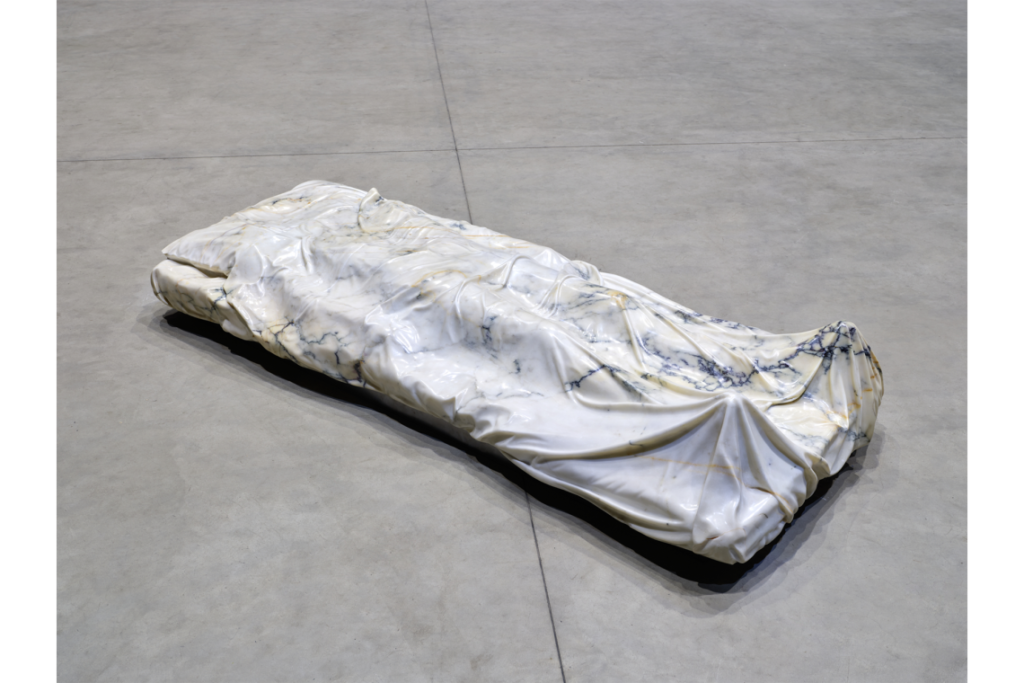
Io rappresento l’ingombro dell’oggetto nella vanità dell’ideologia. Lo spirato. (Luciano Fabro, 1968-1973)
Luciano Fabro: Inhabiting Space in Milan
Pirelli HangarBicocca, Milan | 8 October 2026 – 21 February 2027
The relationship between an artwork and the space it occupies is one of the central themes in the work of Luciano Fabro (1936–2007), a key figure in the Italian Arte Povera movement. His retrospective at Pirelli HangarBicocca, entitled Abitare lo spazio. Inhabiting Space, revisits his career through approximately fifty sculptures and installations.
It is the first museum retrospective devoted to the artist in Italy since his death, offering an opportunity to appreciate the extent to which his work transformed the relationships between materials, architecture and perception.
Fabro turned seemingly humble materials into instruments of conceptual exploration. His works challenge the traditional notion of sculpture as an autonomous object, establishing shifting relationships with both the spaces in which they are displayed and the viewers who encounter them.
The exhibition takes on particular significance in Milan, the city to which Fabro moved in 1959 and where he carried out much of his artistic and teaching career. HangarBicocca’s monumental industrial architecture provides an especially fitting setting in which to experience his conception of space as an inseparable part of the artwork.

Jeunes filles au jardin (Henri Matisse, 1919).
Henri Matisse: The World in a Room
MUDEC, Milan | 8 October 2026 – 21 February 2027
Also in Milan, the Museum of Cultures (MUDEC) presents Matisse. Il mondo in una stanza, an exhibition that invites visitors to reconsider the French painter’s work through his encounters with non-European artistic traditions.
Curated by Ellen McBreen and Chiara Gatti, the exhibition brings together around a hundred paintings, sculptures and works on paper from major international collections.
Moving beyond conventional interpretations of Matisse solely as a master of colour, the exhibition explores how African, Islamic, Russian, Chinese and Pacific cultures helped shape his visual language.
Arabesques, African masks, textiles and religious icons emerge as essential references for understanding an artistic modernity shaped by encounters between different traditions.
Organised into eight sections, the exhibition invites visitors to examine his celebrated interiors and decorative compositions from a more nuanced perspective. Beneath their apparent formal harmony lies a network of cultural influences that encourages a reassessment of the relationship between Western modernism and artistic traditions from other parts of the world.

Cézanne and Us. Grand Palais.
Cézanne and Us: The Legacy of a Revolutionary in Paris
Grand Palais, Paris | 23 September 2026 – 17 January 2027
Few artists have exerted such a decisive influence on the development of modern art as Paul Cézanne (1839–1906). Regarded as one of the principal forerunners of Cubism and the twentieth-century avant-garde, the French painter transformed the representation of nature through his relentless exploration of form, colour and perception.
The Grand Palais in Paris pays tribute to him with Cézanne et nous, an exhibition bringing together 180 works to explore the extraordinary influence of his painting on subsequent generations.
More than a conventional retrospective, the exhibition examines Cézanne’s legacy through the artists who discovered new possibilities for representing the world in his work. His landscapes, still lifes and portraits provided a fundamental starting point for those who began to challenge the conventions of perspective and academic representation.
The celebrated Mont Sainte-Victoire, his still lifes of fruit and the geometric volumes of his compositions reveal how Cézanne paved the way for an understanding of painting that no longer depended exclusively on imitating reality.
His influence extends from Picasso and Braque to numerous contemporary artists who continue to explore the relationships between image, space and perception.
The exhibition thus invites us to reconsider one of art history’s great paradoxes: how a painter so deeply committed to observing nature ultimately provided the tools to transform its representation radically.

Untitled (Marisa Merz, ca. 1975).
Marisa Merz: A Retrospective Across Three Museums in Turin
Castello di Rivoli, Fondazione Merz and GAM, Turin | 29 October 2026 – 4 April 2027
The centenary of Marisa Merz’s birth (1926–2019) is being celebrated with an exceptional exhibition spanning three institutions in Turin: Castello di Rivoli, Fondazione Merz and the Galleria Civica d’Arte Moderna e Contemporanea (GAM).
Entitled Marisa Merz. La danza delle ore, the exhibition presents a three-part exploration of the career of an artist who developed a distinctive voice within Arte Povera, a movement historically dominated by male figures.
Merz explored the expressive possibilities of everyday materials and techniques traditionally associated with domestic life, such as knitting, to create a body of work that challenges the boundaries between artistic creation and private life.
Her sculptures, drawings, paintings and installations establish connections between the body, memory, intimacy and the passage of time.
Spreading the exhibition across three venues allows visitors to explore different dimensions of her practice: creative processes, the transformation of materials, the home as an artistic laboratory, and space understood in both its physical and symbolic dimensions.
More than a conventional retrospective, the exhibition highlights the complexity of an artist whose contribution is essential to understanding Italian art in the second half of the twentieth century.

Maurizio Cattelan, 2026 © Neue Nationalgalerie – Stiftung Preußischer Kulturbesitz / David von Becker
Maurizio Cattelan: Provocation and Historical Memory in Berlin
Neue Nationalgalerie, Berlin | 10 September 2026 – 7 March 2027
Few contemporary artists have turned provocation into such a recognisable artistic language as Maurizio Cattelan. His exhibition NIGHT, presented at Berlin’s Neue Nationalgalerie to mark his receipt of the 2026 Preis der Nationalgalerie, is his first major solo exhibition in Germany.
The exhibition brings together earlier works and new creations within the iconic building designed by Ludwig Mies van der Rohe.
Among the works on display is Him (2001), a disturbing depiction of Adolf Hitler kneeling in prayer. Also featured are Novecento (1997) and La Rivoluzione Siamo Noi (2000), works that reveal the artist’s interest in the relationships between power, identity, violence and historical memory.
Cattelan frequently employs dark humour and seemingly absurd imagery to create unsettling situations. His sculptures compel viewers to confront moral contradictions that resist easy answers.
In Berlin, a city deeply marked by the weight of its history, these questions acquire particular resonance. The exhibition offers an opportunity to reassess an artistic career that, beyond its media controversies, raises enduring questions about responsibility, authority and the ways in which power is represented.

Miko No Inori. Video 4′ 42” ( Mariko Mori, 1996).
Mariko Mori: Technology and Spirituality in Tokyo
Mori Art Museum, Tokyo | 31 October 2026 – 28 March 2027
Japanese artist Mariko Mori is the subject of one of Asia’s major retrospectives this season, Mariko Mori: All That Shines, organised by the Mori Art Museum in collaboration with the Solomon R. Guggenheim Foundation.
The exhibition brings together around forty works spanning more than three decades, from her early photographs and videos to interactive installations and large-scale sculptures.
Mori occupies a distinctive place in contemporary art through her ability to combine futuristic imagery, digital technology and references to philosophical and spiritual traditions.
Her work explores the relationships between the body, consciousness, nature and the universe, employing a visual language that moves between science fiction and transcendental experience.
The retrospective traces the evolution of her artistic language, from imagery associated with Japanese popular culture in the 1990s to increasingly immersive installations conceived as spaces for contemplation.
At a time when digital technologies and artificial intelligence are transforming our perception of reality, her work invites us to reconsider the possibilities for dialogue between scientific innovation and spiritual thought.
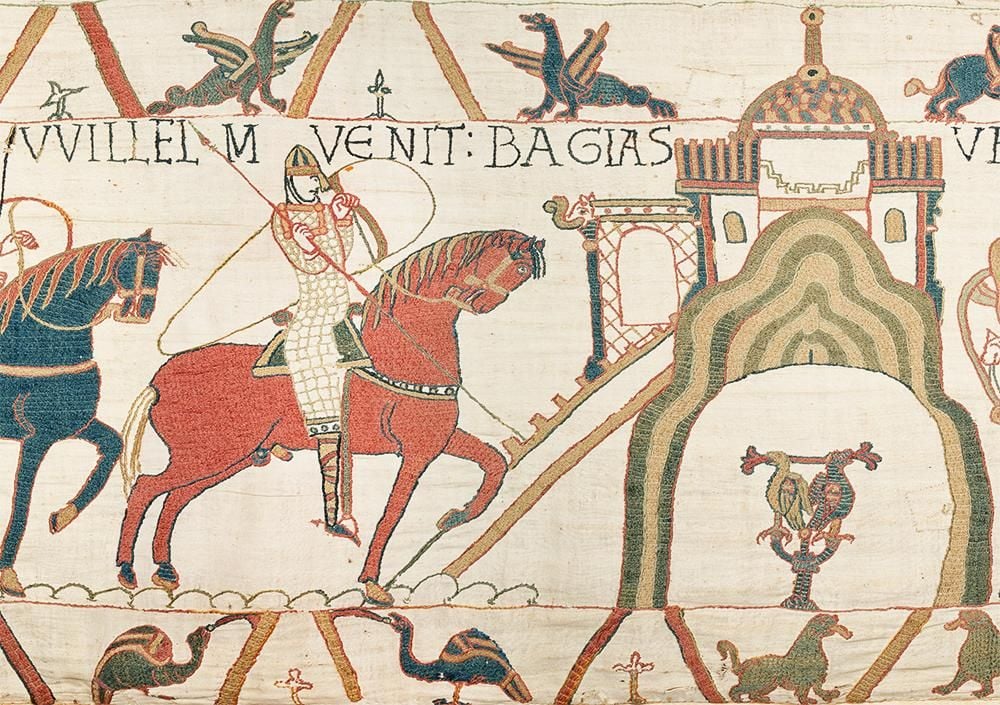
Guillermode Normandía visita Bayeux © La Fabrique de patrimoines en Normandie / Antoine Cazin.
The Bayeux Tapestry: Nearly a Thousand Years of History Arrive in London
British Museum, London | September 2026 – July 2027
One of the most extraordinary museum events of the season is the arrival of the Bayeux Tapestry at the British Museum in London.
This monumental work, measuring approximately seventy metres in length, depicts the events leading up to the Norman Conquest of England and the Battle of Hastings in 1066, one of the defining episodes of medieval European history.
Although traditionally described as a tapestry, it is in fact a narrative embroidery on linen, whose extraordinary wealth of imagery offers insights into the political, military and everyday life of the eleventh century.
Its temporary transfer from France is an exceptional event, given the work’s age, the fragility of its materials and its immense historical and cultural significance.
The Bayeux Tapestry also has a literary dimension that extends beyond art history. The world of England before the Norman Conquest inspired Ken Follett to write The Evening and the Morning, a novel set in a period preceding the events depicted in the embroidery.
The exhibition offers an opportunity to discover one of the great visual narratives of European history and to understand how images were used to construct political narratives long before the emergence of modern mass media.
George Lucas Opens a Museum Dedicated to the Art of Storytelling
Lucas Museum of Narrative Art, Los Angeles | Open since 22 September 2026
Star Wars creator George Lucas and businesswoman Mellody Hobson have opened one of the most ambitious museum projects of recent years in Exposition Park, Los Angeles.
The Lucas Museum of Narrative Art is built around an idea as simple as it is compelling: exploring the history of images through their power to tell stories.
Its collection comprises more than 40,000 works, encompassing illustrations, paintings, comics, photography, film posters and other forms of visual expression traditionally relegated to the margins of the established museum canon.
The project champions the cultural significance of visual storytelling, from images that accompanied great historical narratives to the creations that have shaped contemporary popular culture.
The building, designed by Ma Yansong of MAD Architects, is itself one of the museum’s main attractions. Its organic forms and futuristic appearance seem to extend the cinematic universe of its founder into the realm of architecture.
Beyond its inevitable association with Star Wars, the museum encourages reflection on the role of images as vehicles for cultural transmission and the construction of collective identities.
Its opening also invites us to reconsider the boundaries between fine art, illustration, popular culture and cinema — disciplines that have occupied very different positions within art institutions for decades.

Guggenheim Abu Dhabi.
Guggenheim Abu Dhabi: A New Architectural Landmark for Contemporary Art
Saadiyat Island, Abu Dhabi | Scheduled opening: 11 December 2026
The season will culminate in the long-awaited opening of the Guggenheim Abu Dhabi, one of the last major architectural projects designed by Frank Gehry.
Located on Saadiyat Island, the museum will join the expanding cultural district of the United Arab Emirates’ capital, already home to the Louvre Abu Dhabi.
The building combines monumental volumes, geometric structures and exhibition spaces designed to accommodate large-scale artworks, installations and contemporary artistic projects.
With thirty galleries and an architectural design conceived to establish connections between indoor and outdoor spaces, the museum aims to become an international landmark for modern and contemporary art.
Its curatorial vision seeks to move beyond an exclusively Western interpretation of recent art history, placing particular emphasis on connections between different regions, cultures and generations.
The opening also raises compelling questions about the changing geography of international culture, the role of major museum institutions and the growing importance of the Middle East as a centre for the production, exhibition and circulation of contemporary art.
An Autumn to Reconsider Art History
The retrospectives of Fabro, Merz and Matisse, alongside the exhibition exploring Cézanne’s legacy, offer opportunities to reassess traditional narratives of modernity, while Cattelan and Mori reflect on memory, identity and the relationships between technology and human experience.
The Bayeux Tapestry reminds us that images have served as essential instruments for narrating and legitimising historical events for centuries. Meanwhile, the new museums in Los Angeles and Abu Dhabi broaden the debate about what deserves to be preserved, how it should be exhibited and who has the power to shape the cultural narratives of the future.
Between revisiting the past and imagining new forms of representation, autumn 2026 offers a valuable opportunity to recognise that museums are not merely spaces for preservation, but also arenas in which our ways of understanding the present are continually negotiated.
Nadie ha publicado ningún comentario aún. ¡Se tú la primera persona!