


Director Georgia Oakley, known for Blue Jean, brings Jane Austen’s Sense and Sensibility back to the big screen, with Daisy Edgar-Jones (Normal People) and Esmé Creed-Miles as the Dashwood sisters. During an international press conference, the cast reflected on the enduring relevance of Austen’s work, the chemistry between its leading actresses and the film’s ambition to connect with contemporary audiences.
First published in 1811, Sense and Sensibility remains as relevant as ever in its exploration of love, family relationships and the tension between emotion and reason. With a screenplay by Diana Reid, Oakley offers an intimate, emotionally nuanced portrayal of the Dashwood sisters, finding fresh perspectives within a story that has captivated readers and audiences for more than two centuries.
The film stars Daisy Edgar-Jones as Elinor and Esmé Creed-Miles as Marianne, alongside Caitríona Balfe, Herbert Nordrum and Frank Dillane. Speaking at the press conference, moderated by Debra Birnbaum, Editor-in-Chief of Gold Derby, the actors shared their experiences on set and discussed how they approached characters deeply embedded in literary and cinematic history.
Rather than attempting to reinvent Austen’s world, the filmmakers seek to reveal new dimensions within it. For the cast, the story’s lasting appeal lies in the universality of its emotions and the complexity of characters whose desires, vulnerabilities and contradictions remain recognisable today.

Two Sisters, Two Ways of Understanding Love
Elinor and Marianne Dashwood represent two different approaches to emotions. The former is characterised by prudence, self-control and a sense of responsibility; the latter by emotional intensity and a passionate understanding of love. However, this new adaptation seeks to avoid reducing the sisters to this simple opposition.
Daisy Edgar-Jones explained that Elinor was one of the literary characters she had loved most since childhood. In Diana Reid’s screenplay, the actress found an opportunity to explore a less obvious side of her personality.
Although Elinor embodies reason, she is also a deeply passionate woman who has learned to control her emotions. Edgar-Jones highlighted how this version allows her to reveal moments of greater intensity, small cracks in her apparent composure that expose everything the character keeps hidden.
For the actress, Austen’s enduring relevance lies precisely in her ability to portray recognisable human behaviour. Although her characters were created more than two centuries ago, their contradictions, insecurities and desires still feel familiar.
Austen’s enduring relevance lies precisely in her ability to portray recognisable human behaviour.
Esmé Creed-Miles shares this interpretation. The actress pointed out that every new adaptation inevitably emerges from the personal experiences of those involved. Respect for previous versions does not prevent performers from bringing their own instincts to the material and creating different interpretations of the characters.
The relationship between the two actresses is one of the film’s defining elements. Edgar-Jones and Creed-Miles had previously worked together when they were nineteen and seventeen, respectively, and had maintained a friendship ever since.
During their chemistry test, they performed a particularly intense scene in which Elinor reveals to Marianne that she, too, is suffering from profound heartbreak, although she does not express it in the same way. Edgar-Jones recalled that it was precisely through performing this scene with Creed-Miles that she finally found her character.
The trust between them helped create a close relationship, both physically and emotionally. The director gave them the freedom to improvise small, everyday gestures, such as braiding each other’s hair or reaching out for physical contact. These details help convey a shared history that extends beyond the dialogue.
Creed-Miles explained that this connection allowed her to explore a level of vulnerability in her performance that she had never experienced quite so deeply in previous roles. The sisters’ emotions emerged from a genuine personal bond that both actresses could recognise beyond the set.

A Story of Female Resilience
Although Sense and Sensibility is often associated with its romantic storylines, the cast emphasised that the novel also addresses economic and social issues that remain relevant today.
The Dashwood family’s circumstances change dramatically when, following their father’s death, the family fortune passes to their brother. The women are forced to rebuild their lives in a society where their opportunities for financial independence are severely limited.
Caitríona Balfe (Outlander), who plays Mrs Dashwood, believes this aspect of the story is entirely relatable to contemporary audiences. Although social circumstances have changed, the need to make decisions shaped by financial security remains part of many people’s lives.
The actress also highlighted her character’s optimism. Unlike other maternal figures in Austen’s world, Mrs Dashwood is not driven by social calculation, nor does she constantly attempt to control her daughters’ futures. She trusts them and allows them to find their own paths.
Edgar-Jones went a step further, suggesting that, for her, the film’s true love story is the bond between the women of the family. Beyond their romantic relationships, the sisters must learn to understand and support one another as they navigate financial and emotional loss.
This interpretation also resonates with the experience of making the film. The actress recalled how the production was shaped by the presence of women in key creative roles, from directing and screenwriting to producing.
In this context, revisiting a novel that Austen originally published anonymously, under the name “By a Lady”, felt particularly meaningful, recalling a time when female writers faced significant obstacles to pursuing their work publicly.

Georgia Oakley and the Intimacy of a Period Drama
One of Georgia Oakley’s main objectives was to bridge the distance that often separates audiences from films set in the past. The director sought a visual approach that would preserve Austen’s language and atmosphere while allowing viewers to connect with the characters on a more immediate, emotional level.
Edgar-Jones explained that Oakley paid particular attention to camera positioning, especially in scenes involving Elinor. As a woman who rarely expresses her feelings openly, the character required a visual language capable of revealing her inner conflicts.
The actress recalled a sequence in which Elinor receives a letter from Edward announcing that he will not be visiting her. Although she tries to appear composed in front of her family, the camera captures a fleeting moment when her expression betrays the disappointment she is struggling to conceal.
In another scene, during a confrontation with Marianne, Oakley decided that Elinor should deliver part of her dialogue with her back turned to her sister. The choice, initially uncomfortable for the actress, ultimately became a way of conveying the character’s difficulty in exposing her emotions.
The production was shaped by the presence of women in key creative roles, from directing and screenwriting to producing.
Creed-Miles praised the director’s ability to create an atmosphere of trust without micromanaging performances. Oakley established the tone of each scene while allowing the actors to discover their own responses.
Balfe also emphasised the importance of conversations before filming began. The director shared her visual references and narrative intentions with the team, ensuring that everyone approached the project with a common understanding of her vision.
Herbert Nordrum, who plays Colonel Brandon, likewise praised Oakley’s sensitivity and the way she supported the actors throughout rehearsals. For the Norwegian performer, taking on his first English-language role presented a linguistic challenge, but also offered an opportunity to approach the character from a more intuitive perspective.

Costume Design Tells Its Own Story
The pursuit of naturalism extends to the costume design by Grace Snell (Pillion), whose work received particular praise during the press conference.
Balfe explained that the costumes were not conceived as individual pieces for specific scenes, but as a genuine family wardrobe. The sisters share clothes, reuse dresses and adapt their outfits to their dramatically changed financial circumstances.
The costumes also reflect the grieving process. Dark colours initially dominate, gradually giving way to other shades as the story unfolds.
Edgar-Jones pointed out that one of her dresses was altered to give it a more modern silhouette, illustrating how the Dashwood women had to make the most of their limited resources after losing their fortune.
The same approach was applied to the hairstyles. Rather than reproducing the rigid, meticulously styled appearance often associated with period dramas, the team imagined what everyday life might have looked like for a family of women with almost no domestic staff.
The actress noted that much of our perception of the past comes from portraits presenting idealised versions of their subjects. In the privacy of their homes, however, these women probably behaved in a far more relaxed manner.
The intention was to portray the Dashwoods as an artistic, somewhat bohemian family, with Elinor drawing and painting, Marianne devoted to music, and their mother encouraging her daughters’ freedom.

Dances, Letters and New Ways of Expressing Desire in Sense and Sensibility
The adaptation also uses dance as a storytelling device. Edgar-Jones explained that certain sequences were changed from the novel to visually convey the differences between the protagonists’ romantic relationships.
Marianne’s dance with Willoughby, played by Frank Dillane, is characterised by rapid movements and spins that capture the exhilaration of first love. By contrast, the encounter between Elinor and Edward takes on a restrained, melancholic quality, with gestures and hands that move towards each other without ever quite touching.
The actress highlighted how choreography can express feelings that the characters are unable to put into words.
Esmé Creed-Miles, who has previous experience in dance, particularly enjoyed preparing these sequences. Edgar-Jones, meanwhile, had to learn one of the choreographies in just two days while feeling unwell, making the numerous spins an additional challenge.
The conversation also touched on the differences between courtship in Austen’s time and modern relationships, increasingly shaped by dating apps and instant communication.
Edgar-Jones admitted her fascination with letters and the anticipation they involved. The time between sending a message and receiving a reply heightened romantic uncertainty and encouraged people to express their feelings differently.
Although Sense and Sensibility is often associated with its romantic storylines, it also addresses economic and social issues that remain relevant today.
Austen’s original language also plays an important role in the film. The adaptation preserves much of its poetic expressiveness while incorporating new dialogue written by Diana Reid.
For Edgar-Jones, this combination retains the characters’ delicacy and brings back a form of communication in which metaphors, imagery drawn from nature and subtle expressions of courtesy carry particular significance.
Imperfect Characters in a Story That Remains Relevant
The film does not seek to turn its male characters into entirely idealised figures either.
Frank Dillane explained that his approach to Willoughby was guided by a desire to avoid portraying him as an outright villain. Although the character behaves questionably and embodies the unreliable lover, the actor also wanted to bring out his charm and vitality.
Herbert Nordrum, meanwhile, sought to approach Colonel Brandon through his own experiences rather than simply reproducing a preconceived image of the honourable, reserved gentleman.
Both actors humorously recalled preparing for a duel scene, which required them to coordinate seemingly simple movements, such as counting their steps and firing at precisely the right moment.
Beyond these anecdotes, the cast agreed in praising the creative freedom Oakley gave them and her ability to reveal the humanity of characters who might otherwise seem defined by literary tradition.
The Real Love Story
One of the most meaningful memories from the shoot emerged during the discussion of the film’s ending.
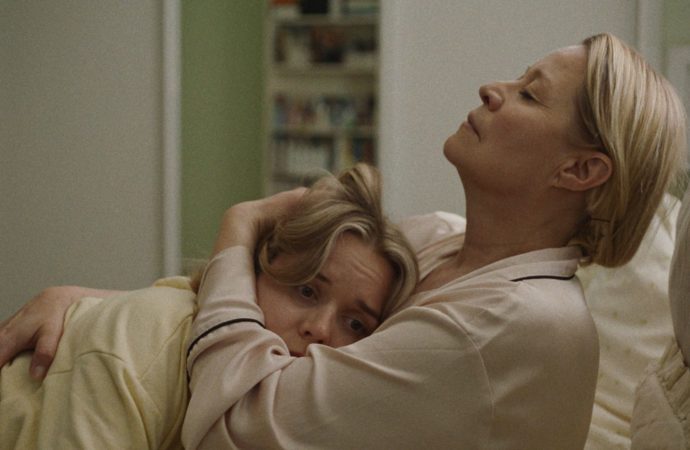
Edgar-Jones explained that the final sequence was filmed during the last few minutes of natural light before sunset. It was then that Creed-Miles suggested ending the film with an embrace between Elinor and Marianne.
For both actresses, that decision captured the essence of the adaptation: beyond romance and social conventions, this is a story about two women learning to understand one another and grow together.
The gesture also encapsulates Georgia Oakley’s approach to Jane Austen’s novel. Rather than seeking to establish its identity through a radical departure from the original material, this new Sense and Sensibility returns to the qualities that have kept the story alive: the complexity of human emotions, the tensions between desire and responsibility, and the importance of emotional bonds.
Two centuries later, Elinor and Marianne still grapple with questions that feel familiar. How we express our feelings, how much we should sacrifice for others, and how we can shape our own freedom are concerns that transcend the novel’s historical setting.
Oakley’s adaptation finds its greatest strength in this emotional continuity. And, as the actresses’ reflections suggest, perhaps the true value of Sense and Sensibility lies in its portrayal of two sisters who discover that understanding each other is also a way of understanding themselves, beyond their romantic experiences.
Source: International press conference for Sense and Sensibility (6 October 2026), moderated by Debra Birnbaum, Editor-in-Chief of Gold Derby, with Daisy Edgar-Jones, Esmé Creed-Miles, Caitríona Balfe, Herbert Nordrum and Frank Dillane.



Nadie ha publicado ningún comentario aún. ¡Se tú la primera persona!