
Cine y Series

Interview With Ugo Bienvenu: “Animation Is the Realm of Error and Humanity”

En Film & Series, Interviews, Cine y Series Friday, 22/05/2026

Eva Peydró

Eva Peydró

PERFIL

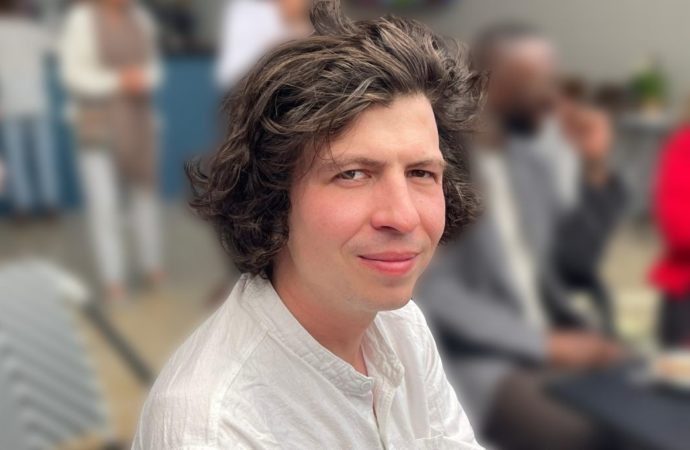
Ugo Bienvenu represents one of the most compelling trajectories among a new generation of European creators. An illustrator, graphic novelist, producer and filmmaker, his formative years unfolded across several continents—from Guatemala and Chad to Mexico and France—a cultural diversity that has profoundly shaped his imagination. With Arco, his first animated feature, which premiered in Cannes in 2025, he achieved remarkable international recognition, culminating in awards at Annecy, the Lumières, the César Awards and the European Film Awards, as well as an Academy Award nomination. His career embodies the figure of the contemporary creator: an artist who moves effortlessly between formats and disciplines, guided by a distinctly global outlook.

Selected among the “10 to Watch 2026,” a list of emerging French film talents chosen by leading international journalists from outlets such as Screen International, Cineuropa, The Hollywood Reporter and France Inter, and presented annually by UNIFRANCE at the Cannes Film Festival, Bienvenu continues to establish himself as a truly multifaceted artist.

We spoke with Ugo Bienvenu, who is also in Cannes this year for the premiere of Adieu, monde cruel, directed by Félix de Givry and selected in Critics’ Week, for which he served as producer.

EVA PEYDRÓ: You have lived in Guatemala, Mexico City, the United States, and France. Has that geographical displacement influenced your worldview and your work in any way?

UGO BIENVENU: Absolutely. I am made up of different cultures, and I’m a rather strange mixture. I’m European, but I grew up in the Americas and in Africa. When I turned eighteen, I went to China because I wanted to discover the East. What affected me most was Japanese culture. As a child, I already had a fairly deep understanding of Western, African, and Latin cultures, and then I discovered Asia. So I’m a kind of globalised author, what people once called “happy globalization.”

Ugo Bienvenu’s work is ultimately about the human condition, where imagination, doubt, and sensitivity remain valuable and irreplaceable forms of knowledge.

At what point did you realise that Arco had to become a film rather than remain in another form?

Ideas already arrive with their own form. Sometimes I have an idea, and I know it is a drawing. Other times, I know it will be a book. I am not the one who chooses; the ideas themselves choose, because they are made up of signs, symbols, and forms that fit better in one medium than another.

With Arco, I needed the wind. I needed space. I could not find that either in comics or in literature. Besides, it is a film about sharing, and cinema is the place of sharing.

What can animation express today that other forms of cinema can barely reach?

Magic. I believe animation is the best place to talk about sensory reality rather than objective reality. Everything passes through the body of the artist and through the teams working on the film. It is also the realm of error. It is the realm of humanity. Because to err is human, but human beings are also error itself. What we recognise in others are precisely those imperfections. That is why we recognise ourselves less in large-scale productions that strive for perfection: they reduce the space for error. And I believe that human beings recognise themselves precisely in the quality of their mistakes.
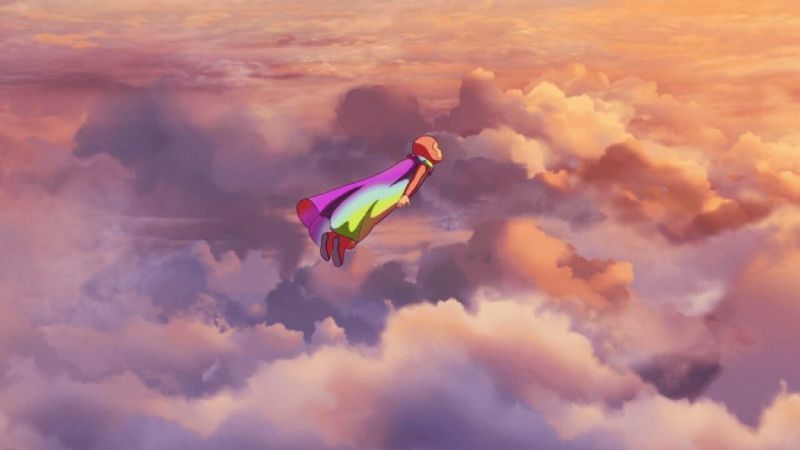
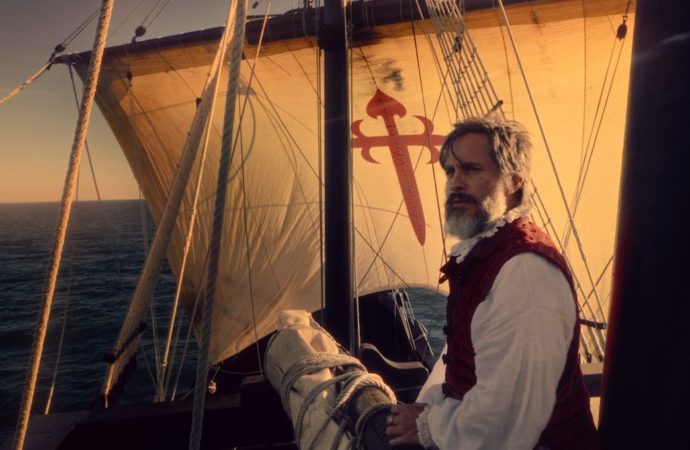
ARco. Ugo Bienvenu

Arco (Ugo Bienvenu, 2025).

I completely agree. I will always prefer a work that is imperfect and alive to one that is flawless and lifeless.

Because it has charm. That is why I love hand-drawn animation so much. It confronts us with human sensitivity and the human gesture.

Animation is still often perceived as a niche. Do you think that perception is changing?

It is a much stronger niche than people think. Animated films attract more audiences than most live-action films, even if people do not really want to acknowledge it.

Traditionally, that perception has existed.

Animation has always travelled better internationally and has always brought more people into cinemas than many live-action films. It is quite curious. What happens is that live-action cinema protects itself. It is a form of protectionism. There is also a kind of arrogance in saying that animation is for children. It is absurd. It is as if children and adults were different species. But we are the same species.

Different sensibilities, perhaps, but not different species.

Exactly. What makes us human are our emotions. And cinema is the place of emotions. When I was a child, I felt that the adult inside me was not respected. Now that I am an adult, I feel that the child who still exists inside me is not respected.

I try to speak to both. To respect the intelligence of children and the sensitivity of adults.

Arco. Ugo Bienvenu

Arco (Ugo Bienvenu, 2025).

You work both with luxury brands and on highly personal artistic projects. How do you manage the tension between the commercial and the artistic?

I’m lucky because people come to me for who I am. They never tell me what I have to do. They ask me, “What do you want to do?” I answer, and then they let me do it. It’s an incredible privilege. And when I receive a commission, I’m also free to appropriate it and make it my own. It all belongs to the same creative movement.

You produce alongside Félix de Givry, and the two of you share a common artistic vision. How does that creative relationship work?

We share many things. He’s an extraordinary partner because we have similar ideas about society and about life. And we’re also very complementary.

What do you find most stimulating about working with him?

Him, first of all. And also something Charles Gillibert, from CG Cinéma, once told us. One day he said: “I don’t produce films, I produce people.” I think he’s right. We work with people we care about. What I enjoy is giving value to things that do not yet have any. I would rather create value than take advantage of value that already exists.

In your work, technology never appears as something entirely utopian or entirely monstrous. Are you more interested in ambiguity than in cautionary tales?

I don’t like films that tell me what I should think. Personally, I believe technology is leading us towards an abyss, towards the worst possible future. But my job is not to give my opinion. My job is to question the world. I try to show its nuances rather than saying, “This is good” or “This is bad.” If I did that, I would be writing a thesis, not making a film.

What I want is to offer pleasure and to ask questions. For example, when I use a robot or a machine, I use it as a mirror. If I give humanity to a machine, it forces us to ask what it is that makes us human. And by introducing humanity into the machine, we begin to realise that we may be losing part of our own humanity.

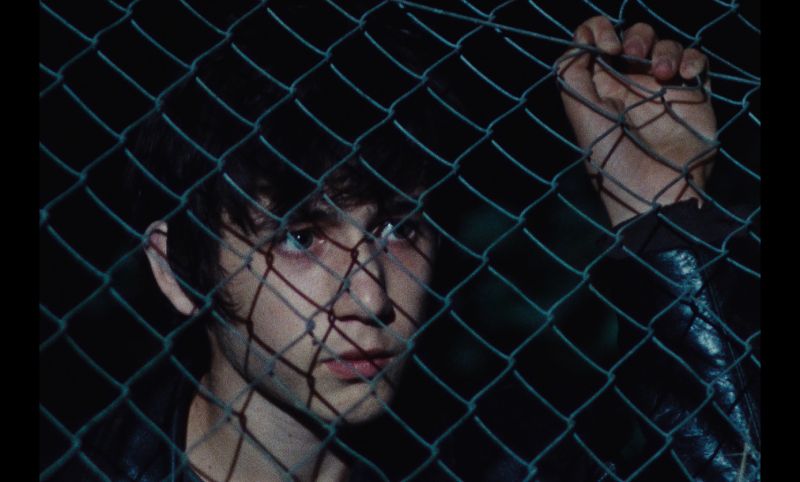
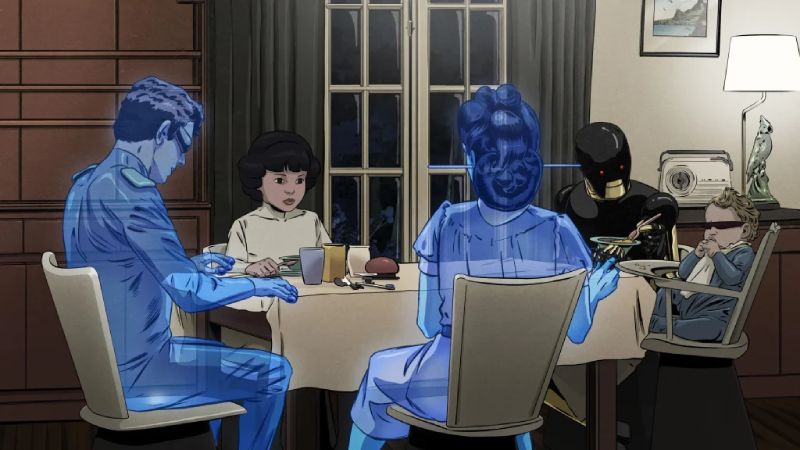
Adieu, monde cruel. (Félix de Givry, 2026)

Adieu, monde cruel (Félix de Givry, 2026)

That is another way of making things visible.

Exactly. Giving human characteristics to an object amplifies them. Although, personally, I think we are committing collective suicide.

In both Arco and Adama, we find young characters confronted with deeply unsettling worlds. Do you think your generation looks at adolescence differently?

Not necessarily. I simply think we are aware that young people today are entering a very complicated world. I am increasingly convinced that the greatest gift we can offer our children is to protect their innocence for as long as possible. We live in a society that destroys that innocence far too quickly.

The strongest adults are often those whose imagination and innocence were protected for the longest time. I myself try to preserve that childlike gaze—not in the sense of being immature, but in the sense of looking at the world as if it were new. As we grow older, we run the risk of seeing everything as something worn out instead of continuing to discover it.

Your work has received a great deal of recognition in recent years. Has that changed the way you work?

Yes, it has disturbed me.

Have you felt pressure?

Yes. Before, whenever I made something, everyone said it was bad. So I worked without thinking too much about it. Now I tell myself, “It has to be good.” I did not have that pressure before.

I have also seen the other side of the industry, and I do not like it very much. It disappoints me to realise that, since the industrial era, the world has become increasingly obsessed with numbers and increasingly uninterested in ideas.

Although those successes also give you access to larger budgets.

I don’t know. It’s complicated because people want you to repeat what you have already done. Now I have new ideas, and they will probably tell me, “No, that’s not like Arco.” So it will become difficult again.

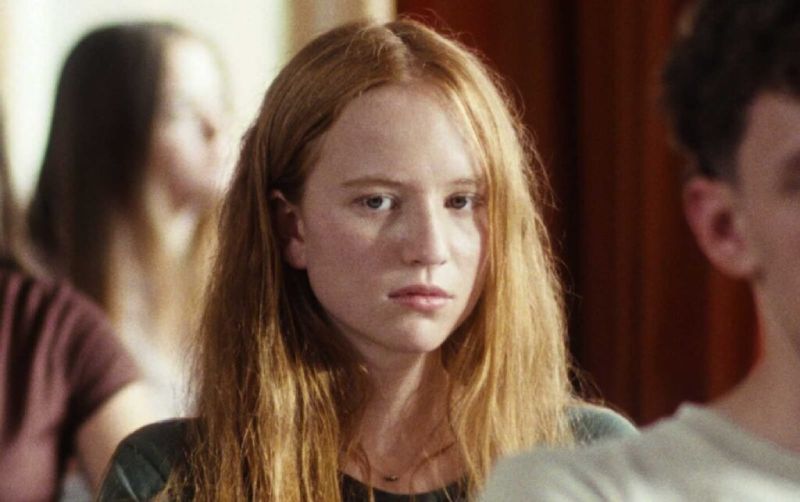
Adieu, monde cruel.

Adieu, monde cruel (Félix de Givry, 2026)

What are you looking for in your next projects?

For now, I want to make smaller things. Things that reconnect me with myself. I want to ask myself again why I do what I do. Is it to feed my ego, or is it to try to create something that might help human beings, even just a little? I have an idea that moves in that direction, but I am still trying to understand whether my reasons are the right ones.

The only thing I know is that I do not want to make anything that is less important than myself.

I admire that lucidity. It is not so common in a young creator who has already received so many awards.

It’s difficult. Besides, everything is very arbitrary. I have served on juries at many festivals, and I know perfectly well that the best film does not always win. Sometimes it does, sometimes it doesn’t. So when you receive an award, all you can hope is that it is deserved. But in reality, that is not what matters most.

Awards have weight too. They are like a backpack that keeps getting heavier. At some point, you have to recover your lightness and forget about them.

Because if you listen too closely to praise, you should also listen to criticism.

Exactly. And I have allowed myself to be carried away by all of that a little too much. I fell into the pot, and now I need to clean myself off. Besides, this film has taken me very far away from my family. The first thing I want to do now is reconnect with them.

Making films is wonderful, but I also want to succeed as a father. That is far more important.


By the end of the conversation, it becomes clear that the true subject of Ugo Bienvenu’s work is neither technology nor the future, but the human condition itself, in which imagination, doubt and sensitivity remain among our most valuable and irreplaceable forms of knowledge.

Header image: ©Eva Peydró

Suscríbete a nuestra newsletter

* indicates required

Compartir:

10 to Watch79º Festival de Cannes79th Cannes Film FestivalAdieuARCOFélix de Givrymonde cruelUgo BienvenuUniFrance

Artículos relacionados

Comentar

Debes ser registrado para dejar un comentario.

Sin comentarios

Nadie ha publicado ningún comentario aún. ¡Se tú la primera persona!

Revista cultural el Hype
Privacy Overview

This website uses cookies so that we can provide you with the best user experience possible. Cookie information is stored in your browser and performs functions such as recognising you when you return to our website and helping our team to understand which sections of the website you find most interesting and useful.