Verdi, Falla and Fado: Two Great Nights in Ravenna

En Music Monday, 13/07/2026

Gian Giacomo Stiffoni

Gian Giacomo Stiffoni

PERFIL

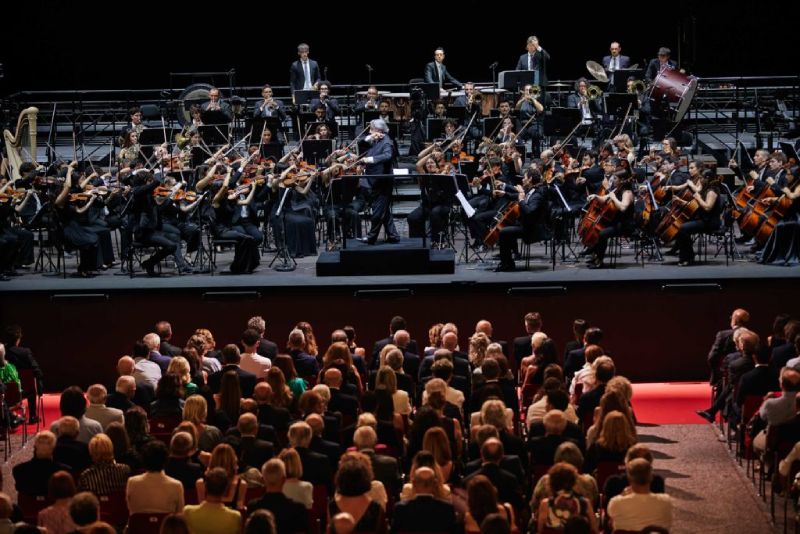
Almost two weeks after the memorable concert of 7 June, centred on Hindemith’s splendid Nobilissima visione, Riccardo Muti returned to the podium of the Ravenna Festival conducting the Luigi Cherubini Youth Orchestra in a programme that brought together Verdi and twentieth-century Spanish and French music. Just a few weeks before his eighty-fifth birthday, the Neapolitan maestro once again demonstrated that he retains intact the authority of his gesture, his technical clarity and an extraordinary ability to shape musical discourse.

Ravenna

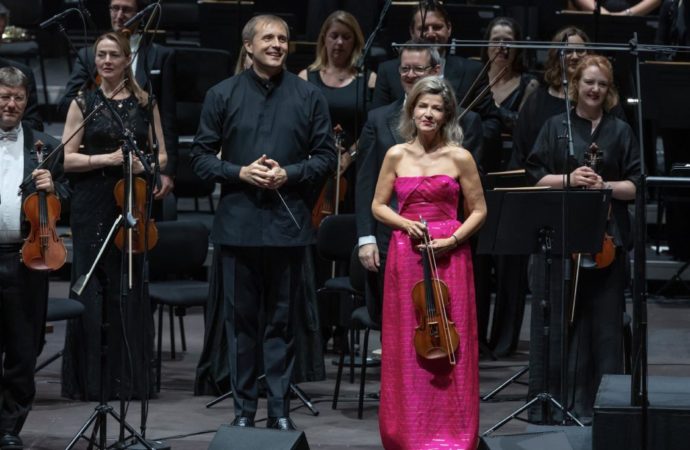
Riccardo Muti conducting the Orchestra Giovanile Luigi Cherubini. © ZANI-CASADIO.

The first half of the programme, devoted to Verdi, once again offered an opportunity to appreciate Muti’s stylistic refinement, particularly in his phrasing and meticulous attention to dynamics. However, the young Italian ensemble did not quite reach the expected level. The string section displayed a somewhat tense sonority and insufficient cohesion between music stands, limitations that were perceptible both in the overture to Nabucco and, above all, in Le quattro stagioni from the ballet of Les vêpres siciliennes—an opera originally conceived for the Paris Opéra in 1855. Nevertheless, the conductor’s authority always succeeded in preserving the internal logic of the musical discourse and in drawing moments of considerable quality from the orchestra. Among the soloists, clarinettist Davide Pellegri once again stood out for his noble tone and outstanding musicianship.

The concert acquired an entirely different dimension after the interval. Although the ensemble’s limitations did not disappear completely, the orchestra found greater concentration and responded with much greater conviction to Muti’s demands. The Suite No. 2 from The Three-Cornered Hat revealed a reading of remarkable musical intelligence. Far from focusing solely on the score’s local colour, the conductor highlighted the modernity of Manuel de Falla’s writing, placing it quite naturally alongside the great orchestral currents of the twentieth century represented by Ravel and Stravinsky.

His extraordinary management of the different sonic planes also allowed the richness of the orchestration to emerge with absolute clarity, while his masterful control of rhythm and of the various timbral layers endowed the performance with an uncommon tension and vitality.
Ravenna

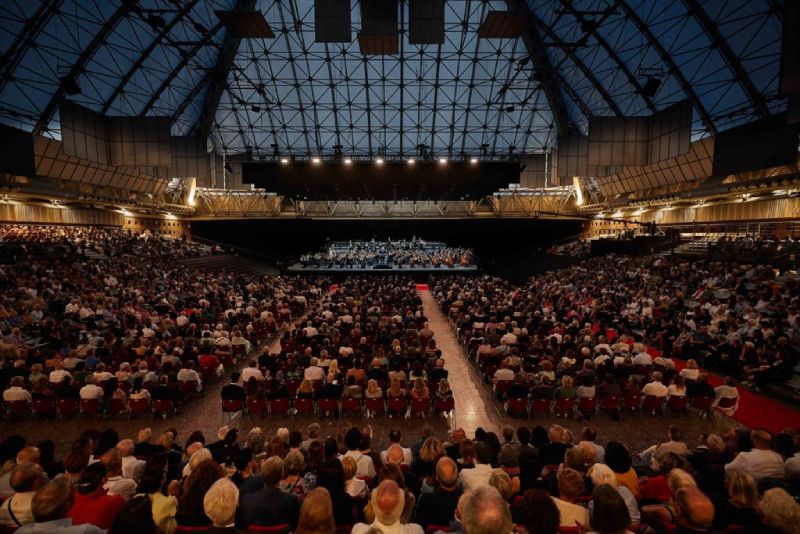
Riccardo Muti conducting the Orchestra Giovanile Luigi Cherubini en Ravenna. © ZANI-CASADIO.
Ravel’s Boléro undoubtedly constituted the high point of the evening. Muti avoided any temptation toward mere showmanship, instead constructing the celebrated score as an immense sonic progression, sustained with admirable patience and an absolute command of the work’s architecture. Each new instrumental entry was integrated naturally into a carefully calibrated crescendo, culminating in a finale of enormous expressive power.

It was precisely in this second half that the Luigi Cherubini Youth Orchestra showed its finest qualities and where the artistry of the Italian conductor once again asserted itself in all its greatness.

Ravenna

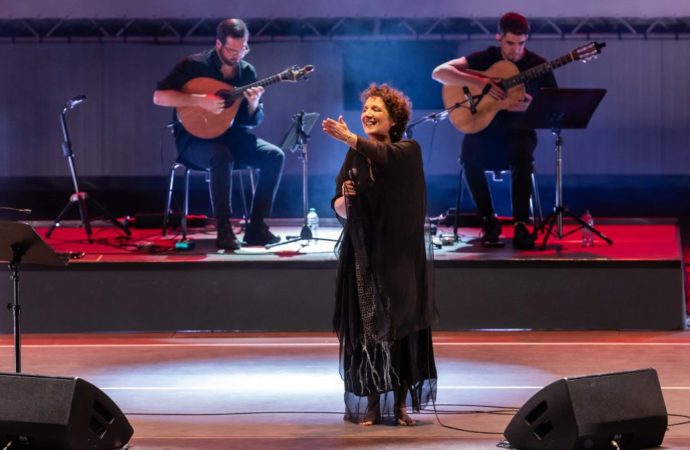
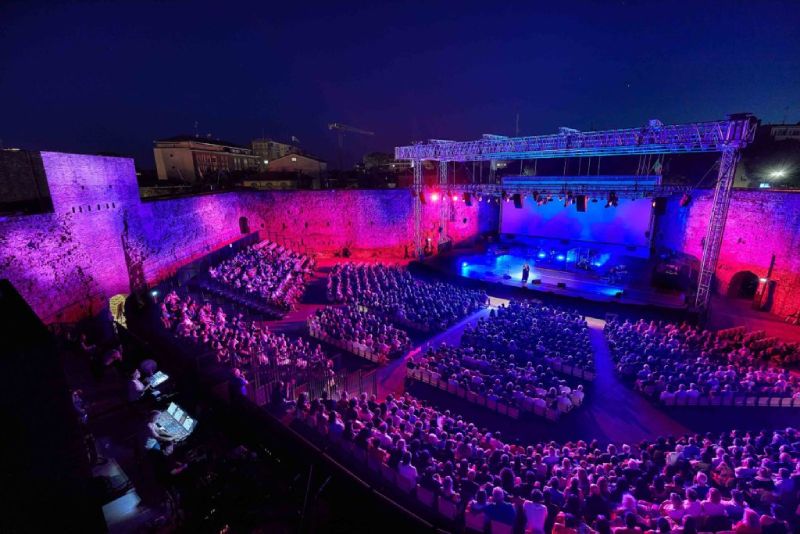
The historic Rocca Brancaleone as the setting for Dulce Pontes’ concert in Ravenna. © ZANI-CASADIO.

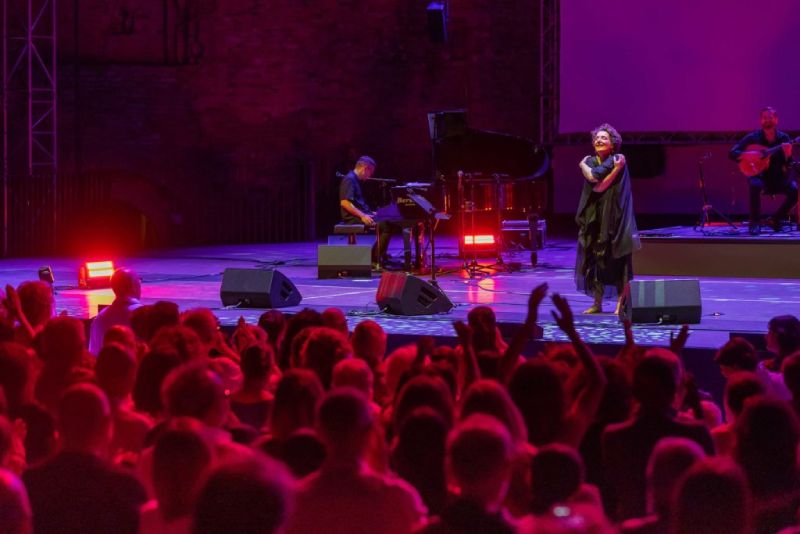
A few days after the concert conducted by Muti, the festival completely changed atmosphere, as is so characteristic of its DNA, with the eagerly awaited performance by Dulce Pontes in a completely packed Rocca Brancaleone. The large audience, which filled every available space in the open-air venue, greeted with constant enthusiasm an artist who, after thirty-five years of career, continues to display an utterly unmistakable interpretative personality.

The Portuguese singer opened the evening with a moving rendition of Lucio Dalla’s Caruso, performed with an expressive intensity that set the tone of the concert from the very first moment. From there, she unfolded a journey through the different facets of her career, in which fado entered into dialogue with the musics of the Mediterranean and with a sensibility capable of transcending any stylistic boundaries.

Ravenna

Dulce Pontes. © ZANI-CASADIO.

One of the evening’s most moving moments came with the tribute to Ennio Morricone. The Portuguese singer performed the piece that the composer had written especially for her based on Cinema Paradiso, evoking the profound artistic relationship they had shared over many years. Her voice, endowed with extraordinary timbral breadth and a remarkable richness of nuance, found in this page one of the most emotional moments of the night. Accompanied by an excellent quintet comprising piano, drums, Portuguese guitar, guitar and electric bass, Pontes delivered a performance in which expressiveness consistently prevailed over any display of technical virtuosity.

The result was a concert of enormous communicative intensity in Ravenna, one that once again confirmed Dulce Pontes’ exceptional ability to transform every performance into a deeply human and musical experience.

Suscríbete a nuestra newsletter

* indicates required

Compartir:

BoleroDulce PontesFadoGiuseppe VerdiLes vêpres siciliennesLucio DallaMaurice RavelNabuccoOrchestra Giovanile Luigi CherubiniPaul HindemithRavenna FestivalSin categoría

Artículos relacionados

Comentar

Debes ser registrado para dejar un comentario.

Sin comentarios

Nadie ha publicado ningún comentario aún. ¡Se tú la primera persona!

Revista cultural el Hype
Privacy Overview

This website uses cookies so that we can provide you with the best user experience possible. Cookie information is stored in your browser and performs functions such as recognising you when you return to our website and helping our team to understand which sections of the website you find most interesting and useful.