
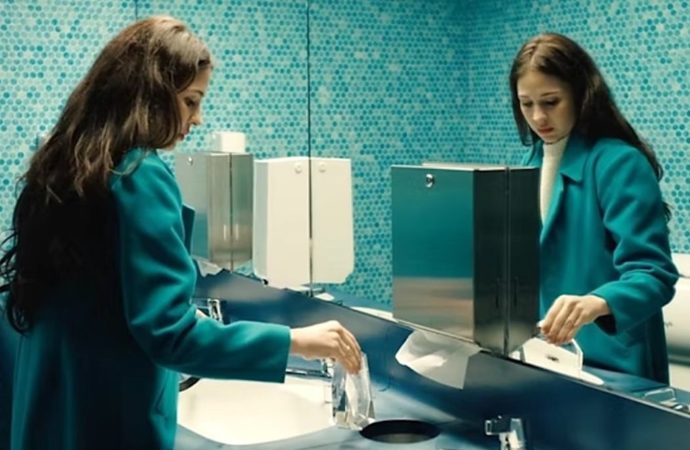

Milagros Mumenthaler’s third feature, The Currents, moves not through dramatic events but through tiny, almost imperceptible shifts that unfold with meticulous precision. Winner of Best Film at the Uruguay International Film Festival and Best Director at the Cartagena International Film Festival (FICCI), the film represents another step forward in a body of work distinguished by its remarkable consistency and emotional sensitivity.
The story begins with an apparently inexplicable gesture. Lina (Isabel Aimé González Sola), a thirty-four-year-old fashion professional at the height of her career, attends an awards ceremony in Switzerland. There, driven by a force that even she seems unable to fully understand, she performs an unexpected act that will reverberate throughout the rest of the film. Back in Buenos Aires, she chooses not to speak about it. Yet something has changed. Quietly, almost imperceptibly, a past she believed long buried begins to resurface.
Mumenthaler does not build her film around revelations or major dramatic confrontations. Instead, she shows how the slightest fracture can alter an apparently stable existence. Like the subterranean currents evoked by the title, the most significant transformations take place beneath the visible surface. The real movement of the story lies not in action but in what slowly shifts inside the protagonist —an inverse Undine— its origins distant and unconscious.
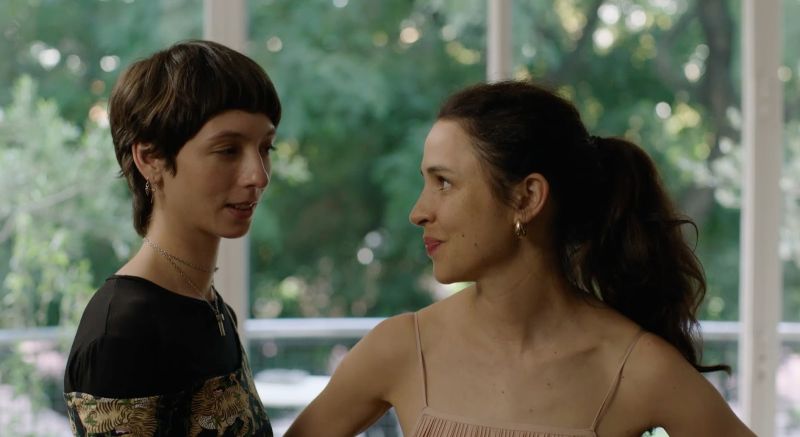
It is no coincidence that Switzerland occupies such a central place in the narrative. The director herself knows this ambiguous territory between belonging and displacement all too well. Born in Córdoba in 1977, she spent much of her childhood and adolescence in Switzerland after her family was forced into exile during Argentina’s military dictatorship. Years later, she returned to Buenos Aires to study film and develop a career populated by characters suspended between places, times and memories.
“More than once I wondered what would happen if a woman jumped into the river that crosses Geneva”, Mumenthaler has said of the project’s origins. That image already contains many of the questions that permeate the film: who we really are, which parts of our history remain hidden even from ourselves, and whether it is ever possible to escape what we believe we have left behind.
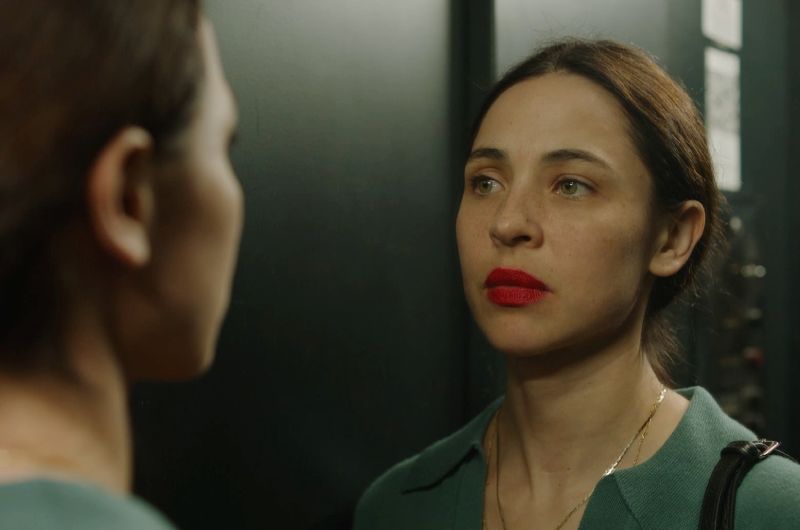
From her early shorts to Back to Stay (2011), which won five awards in Locarno, and The Idea of a Lake (2016), one of the most delicate explorations of memory and absence in recent Argentine cinema, Mumenthaler has displayed a rare ability to film the intangible. Her characters inhabit spaces where the past continues to exert a silent influence on the present. The Currents extends this inquiry with remarkable formal maturity.
The mise-en-scène is marked by almost surgical precision. Every frame seems designed to accompany the protagonist’s inner movements. The camera observes rather than explains. Silences carry as much weight as dialogue. Buenos Aires and the Swiss landscapes appear less as physical settings than as emotional states. Everything contributes to an atmosphere of restrained estrangement in which the viewer shares Lina’s uncertainty.
Isabel Aimé González Sola’s performance is essential to maintaining this delicate balance. She avoids psychological excess, creating a character whose complexity emerges through subtle gestures, glances and silences. Alongside her, Esteban Bigliardi (Society of the Snow, J.A. Bayona, 2023) brings a similarly restrained presence, reinforcing the intimate and observational tone that defines the film.
Mumenthaler’s approach to personal crisis is anything but conventional. The Currents offers a more subtle experience, focusing on what remains latent beneath the surface of an apparently ordered life: the connections between memory, identity and desire, and the possibility—or impossibility—of reinventing oneself when the deeper currents of personal history begin to emerge once again.
With this third feature, Milagros Mumenthaler finds in patient observation a form of revelation against the noise and velocity of the present.



Nadie ha publicado ningún comentario aún. ¡Se tú la primera persona!