
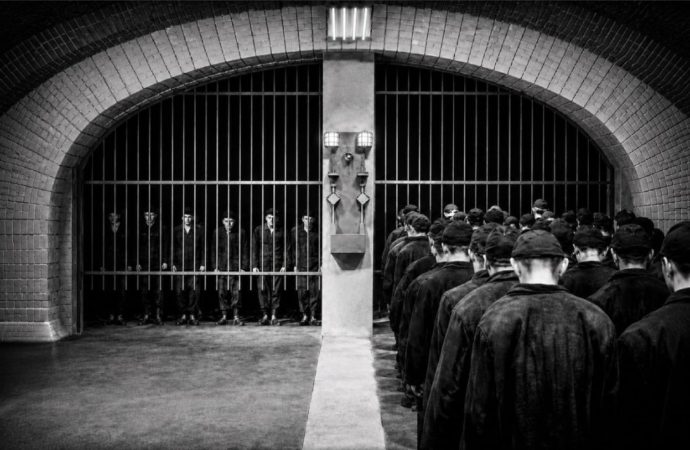

There is no experience without mediation, just as there is no perception that is not already organised and oriented by a set of parameters that precede consciousness itself. The belief that we see the world as it is remains one of the most persistent fictions of modernity. What we see, what we think, and even what we believe we decide are inscribed within pre-existing systems that delimit not only the visible but also the thinkable. Manipulation is therefore neither an anomaly of the present nor a side effect of contemporary technologies; it has always been a structural condition inherent to the very origin of experience. Nelson Goodman articulated this idea with great clarity in Ways of Worldmaking, arguing that there is not a single world, but multiple versions constructed through symbolic systems.
What we call reality is not something predetermined but something constructed. We do not discover the world; we configure it through processes of selection, exclusion, emphasis, and organisation, whereby each symbolic system establishes a way of ordering what exists, a way of making it intelligible and, ultimately, inhabitable. These configurations, which we may think of as spheres, are not sealed compartments but active frameworks that generate meaning. Each sphere establishes its own criteria of validity, its own forms of coherence, and even its own regimes of visibility. There is no access to the real outside these constructions. Even the most immediate perception already participates in this process. To see always implies interpretation, and every interpretation implies taking a position within a system. From this perspective, manipulation ceases to be an external practice and becomes the very form through which the world is rendered intelligible.
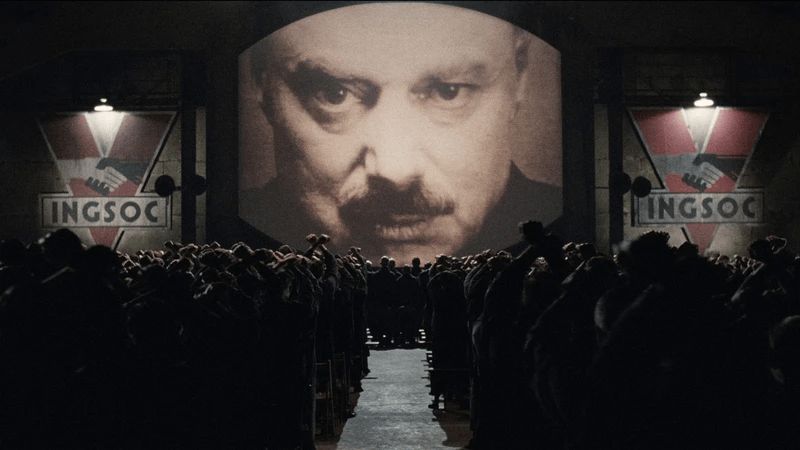
1984 (Michael Radford, 1984).
The problem is not the existence of multiple spheres, but forgetting that they are constructed frameworks. Once a sphere becomes naturalised, once its underlying parameters are no longer perceived as such, it turns into a structure that appears beyond question. It is at this point that manipulation reaches its most effective form, because it no longer needs to impose itself; it has ceased to be recognised as manipulation at all.
Today we live amid a proliferation of spheres that not only organise knowledge but also shape sensibility. Some are particularly dominant: the algorithmic sphere, the media sphere, the economic sphere and the institutional sphere. Each operates through systems of selection that determine what appears and what remains invisible, what acquires value and, ultimately, what falls outside the bounds of consideration altogether. Experience thus becomes the product of a continuous process of reorganisation.
In this context, the subject can no longer be conceived as an autonomous entity confronting the world from an external position. The subject is produced within these spheres. Its decisions, preferences and judgments are entirely embedded within systems that condition them a priori. The idea of an independent will thus appears as a carefully sustained construction and, at the same time, an unattainable one.
It is at this point that Judith Butler’s reflection becomes decisive. What we understand as identity is not a pre-existing essence but the repeated effect of norms embodied through practice. The subject does not exist prior to the structures that shape it; it is their product. There is no “self” outside the parameters that make it possible. Manipulation, in this sense, is not exercised upon already constituted subjects but participates actively in their very formation.
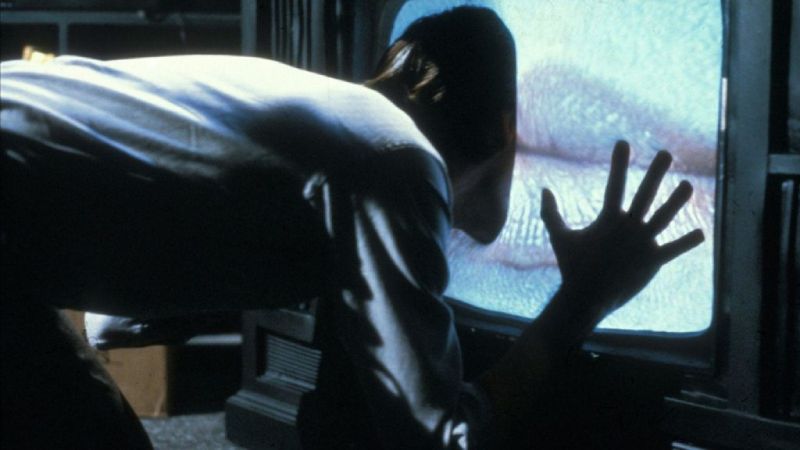
Videodrome (David Cronenberg, 1983).
The art world offers a privileged field in which to observe this process. Far from constituting an exceptional space, contemporary art has developed its own deeply codified spheres of validation. Institutions, art fairs, curatorial discourses and markets form a network that not only exhibits works but also produces the very conditions of their existence. We come to understand that artistic status does not reside in any intrinsic quality, but in an artwork’s insertion into a system of recognition. Something functions as art when it conforms to the parameters of a particular sphere. When the artistic sphere becomes self-referential, when its criteria cease to open up possibilities and instead begin to reproduce formulas, art ceases to be a space of inquiry and becomes a mechanism of legitimisation. The appearance of rupture then coexists with profound predictability. Works simulate dissent while evolving within perfectly recognisable parameters.
At this point, the emergence of digital art and new technologies introduces a decisive ambiguity. On the one hand, it amplifies existing logics of control: algorithms that determine visibility, platforms that condition production, and artificial intelligences that replicate established languages. On the other, it opens up the possibility of intervening in the very systems through which reality is constructed. Generative art and practices based on code and data do not merely produce objects; they operate upon the processes that shape experience itself. They do not simply function within a sphere; they expose and continually reconfigure it. In doing so, they suggest a possible rupture with the dominant model. Not because such practices exist outside all forms of manipulation, but because they render its structural mechanisms visible and shift attention from the result to the process itself.
Yet this opening is accompanied by its rapid absorption. What appears as rupture can become style, and style can in turn become norm. The recent history of art has been shaped by this continuous cycle of integration. Perhaps, then, we are not witnessing a transformation of art, but rather the evidence of its exhaustion as an autonomous sphere. A process that has been unfolding for decades: the gradual loss of its capacity to constitute a differentiated space of experience.
The disappearance of art would not take the form of a sudden collapse but of a gradual dissolution into other spheres, accompanied by a change of designation and an absolute ontological loss. In this context, however, the question is no longer merely aesthetic but structural. Rethinking the system cannot be reduced to a slogan or to a superficial reform of existing structures. It requires a profound transformation of the parameters through which we understand political, economic, social and artistic reality. It means recognising, first and foremost, that what we call the system is neither a natural entity nor an inevitable one, but a historical, symbolic and material construction shaped by relations of power.
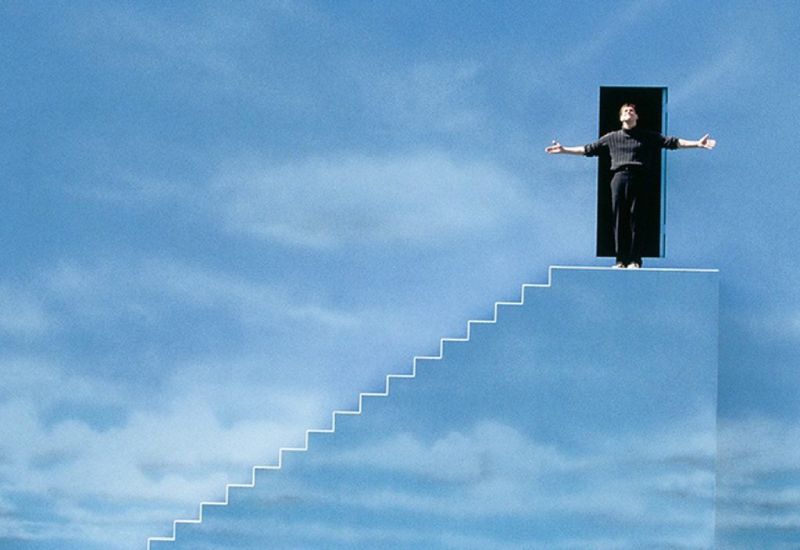
El Show de Truman (Peter Weir, 1998).
To rethink is to denaturalise. Politics, in this sense, must be reconsidered beyond its classical institutional form. The model of delegated representation has produced an ever-widening separation between those who govern and those who live with the consequences of that governance. Popular sovereignty has gradually been captured by closed structures, by the professionalisation of power and by networks of influence operating beyond any effective form of accountability. This crisis is compounded by the role of contemporary communication systems. Large platforms and media lobbies do not merely transmit information; they shape the frameworks through which reality becomes thinkable. They determine what can be imagined and, consequently, what can be accepted. The problem is therefore also epistemological.
Within this increasingly absolutist landscape, techno-feudalism emerges as a contemporary form of power. Technological infrastructures function as new centres of sovereignty, controlling not only production but also the very conditions of access, visibility and participation. Transforming this system requires more than regulation; it demands intervention in the underlying logics that sustain it. It means questioning the primacy of efficiency, growth and optimisation as absolute ends. It entails recovering the political dimension of technology, but also opening the possibility of multiple forms of organisation. Not a single system, but a plurality of configurations. An ecology of spheres that does not close in upon itself, but extends into the public sphere.
Escaping manipulation does not mean escaping spheres, but making them visible, intervening in their parameters, confronting them with one another and, above all, ensuring that they remain open and publicly accessible. It means recognising that every form of reality is constructed and, precisely for that reason, capable of being transformed. It also requires acknowledging that responsibility lies not only with institutions, technologies or economic structures, but equally with the passivity through which we accept their configurations as immutable.
The only possible way out is not external but active. We must recover the capacity to make worlds, not merely to inhabit versions already configured by others, but to participate in their construction, alter their rules and introduce discontinuities wherever repetition seeks to prevail.
The insistence on placing the human being at the centre of all experience begins to fracture the moment artificial intelligence systems intervene in the production of reality. This is not merely a technical extension but a reconfiguration of the very conditions under which something can appear, be articulated or be thought. Manipulation can no longer be understood simply as a relationship between subjects exerting influence over one another; it becomes an effect inscribed within devices that organise in advance the field of the possible. In this sense, the problem acquires a new epistemological density: processes of knowledge are generated within operational layers that are not fully accessible, verifiable or even translatable into traditional human categories.
Yet this is also an ontological mutation. What exists as experience is no longer guaranteed by the centrality of the subject, but depends upon networks in which the human is only one element among calculations, data flows and automatisms. Manipulation thus becomes imperceptible at its point of origin, not because it is concealed, but because it coincides with the very conditions that make perception possible. It no longer acts upon what we see, but upon what can come to be seen.


Nadie ha publicado ningún comentario aún. ¡Se tú la primera persona!