


In recent years, the so-called Creator Economy has been transforming the way independent culture is produced around the world. Although it continues to coexist with more conventional business models, its impact is already being felt across a wide range of creative industries. This model allows creators to monetize their content directly online without the mandatory involvement of production companies, media outlets, publishers, or record labels. The ecosystem is broadly divided between free distribution platforms such as TikTok, YouTube, and Instagram—which help audiences discover creators—and platforms based on direct monetization through pay-per-view or subscription models. Among the latter are Teachable for online courses, Harbiz and Trainek for personal trainers, Kick and Twitch for gaming, Etsy for artists and craftspeople, Redbubble for illustrators, Patreon for cultural projects, and Substack for journalists and writers.
Within this market ecosystem, adult-content platforms have emerged as some of the most profitable businesses on the internet, in some cases generating revenues that surpass those of major Silicon Valley technology companies. The leading example is OnlyFans. According to financial data released by its parent company, Fenix International, the platform generated more than $7.22 billion in gross revenue in 2024, representing a 9% increase over the previous year. Net revenue reached $1.41 billion. During the same period, the company reported 4.6 million creator accounts—13% more than in 2023—and 377.5 million registered users, an impressive year-on-year increase of 24%.
OnlyFans was founded in 2016 by British entrepreneurs Tim and Guy Stokely as a pay-per-view platform focused on areas such as fitness, cooking, music, and literature, initially excluding erotic content. The company’s trajectory changed significantly in 2018 when entrepreneur Leonid Radvinsky acquired a 75% stake in the business. A graduate in Economics from Northwestern University, Radvinsky had previous experience in the sector, having founded the adult live-streaming platform MyFreeCams in 2004, which today hosts approximately 100,000 creators.
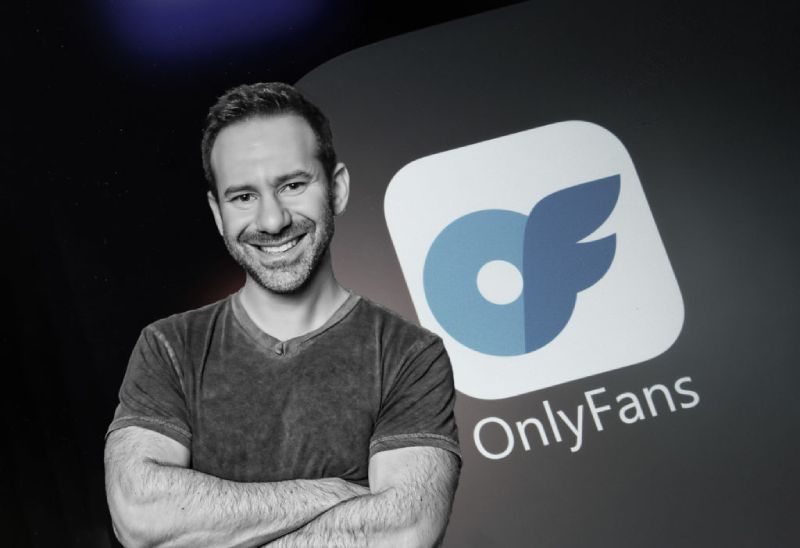
Shortly before Radvinsky’s acquisition, OnlyFans identified a lucrative opportunity in the adult-content market and lifted the restrictions on erotic material that had been in place since the platform’s launch. From that moment on, its growth became unstoppable, particularly under Radvinsky’s management and thanks to the business opportunities created by the COVID-19 pandemic. During lockdowns, the closure of physical businesses and widespread job losses pushed millions of people to seek alternative sources of income through smartphones and computers. This included both sex workers who moved their activities online when in-person work became impossible and amateur creators who turned to the platform as a means of generating quick income after being affected by layoffs and business closures.
These two groups were soon joined by celebrities from popular culture, most notably actress Bella Thorne, who joined the platform in 2020 and reportedly earned more than one million dollars within her first day. The success of her launch led OnlyFans to revise parts of its pricing and payment policies. Consumer growth was equally remarkable during this period. Lockdowns intensified feelings of isolation for many people, who found in the platform’s interactive features a form of communication and connection that has continued to expand ever since.
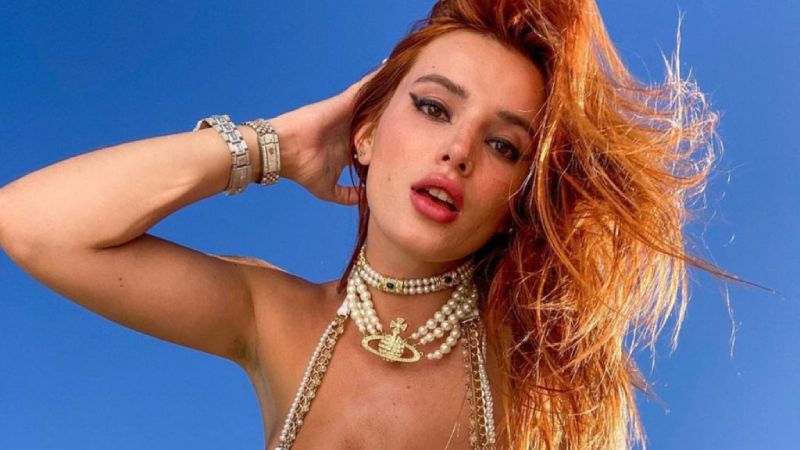
Bella Thorne.
Despite its considerable business volume, OnlyFans also faces significant challenges. The main one is its complex relationship with banking institutions, due to the nature of its content and the lack of uniform online regulation. This dependence on financial capitalism represents the company’s true sword of Damocles. In 2021, amid the rise of pornographic content, the main payment gateways threatened to suspend their services to the platform, exposing its vulnerability to corporations such as Visa and Mastercard. Today, banks require OnlyFans to enforce strict controls to prevent the presence of minors and the circulation of non-consensual material, including revenge porn. In addition, digital transactions in the porn sector are marked with the high-risk MCC 5967 code, which generates a high rate of chargebacks. These technical and financial issues force OnlyFans to delay payments to creators, creating clear disadvantages compared with other pay-per-view digital industries. Puritanism and morality are also financial.
These operational difficulties are compounded by uncertainty surrounding the company’s corporate future following Radvinsky’s death from cancer last March at the age of 43. Although economic control is secured through a family trust, there are rumours of a possible sale to international investors, as well as obstacles to any future IPO because of the reputational risk that the pornography sector poses for more traditional investors. Added to this is the impact of artificial intelligence. The proliferation of hyperrealistic images generated through tools such as Midjourney or Stable Diffusion has attracted a significant number of subscribers, leading the platform to formally ban AI-managed accounts in order to prioritise human-made content. However, the speed of technological progress makes detecting this automated content increasingly difficult, threatening to create a vicious circle that will be hard to control.
OnlyFans’ operating model has transformed the conventional porn film industry and reshaped consumption habits through these networks. On the one hand, its impact has been positive: platforms of this kind have succeeded in getting users to pay for this type of content again, something commercial pornography had failed to achieve for more than three decades. On the other hand, they have also contributed to a decline in the budgets of conventional productions, since the revenue generated no longer flows to production companies but directly into the accounts of the creators themselves.
The cinematic grammar of adult content has also been affected by the new centrality of the independent creator. Creators now manage their own working conditions and produce on demand with small crews, often in domestic settings, seeking the authenticity associated with homemade and amateur aesthetics. At the same time, they replace classical narrative structures—beginning, development and resolution—with fragmented formats centred on climax, prioritising vertical video and flat lighting produced with ring lights over the horizontal format of commercial cinema, among other formal shifts.

Maitland Ward.
This new visual structure has begun to migrate into non-pornographic independent productions. Formats such as Screenlife — films that unfold entirely on a computer or mobile phone screen — directly adopt the production systems of digital platforms and the consumption habits associated with networks such as TikTok or OnlyFans. Likewise, actresses from conventional television, such as Maitland Ward, have consolidated independent careers on these platforms, while musical artists such as rapper Bhad Bhabie use them to offer exclusive, non-erotic material to their followers.
The social influence of the OnlyFans phenomenon is already reflected in mainstream television productions such as Euphoria and Industry, where certain characters use these monetization tools as a normalized part of the plot. This consolidates an economic and visual model whose impact promises to reach far beyond the digital entertainment and adult-content markets. According to specialists, the future will no longer lie so much in the production of images as in access to content: value will no longer reside in the image itself, but in the commodification of intimacy and in the possibility of paid, personalized interaction. It is a complex future for social relationships, leisure culture and private life. And it has only just begun.




Nadie ha publicado ningún comentario aún. ¡Se tú la primera persona!