
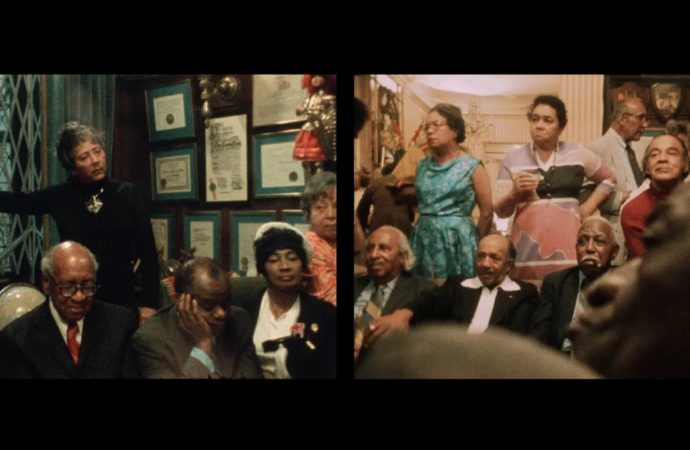

Returning to what once was in order to build the future, preserving the past before it disappears forever: these could be some of the central lessons of Once Upon a Time in Harlem, a documentary presented this year in the Directors’ Fortnight at the Cannes Film Festival. The film brings back the voices of the great figures of the Harlem Renaissance, the golden age of African American culture in early twentieth-century New York.
The documentary originates from a gathering organized by filmmaker William Greaves, who brought together, on an August Sunday in 1972, at Duke Ellington’s home in Harlem, many of the writers, musicians, and activists who had shaped that extraordinary artistic and cultural movement of the 1920s and 1930s. They were among the last surviving representatives of the Harlem Renaissance and, in many cases, had not seen one another for decades.
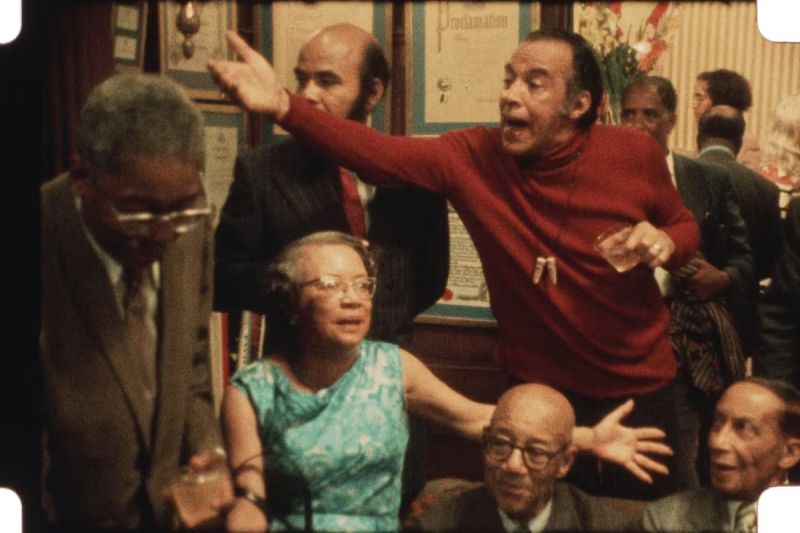
Crowded together in a modest living room, the film introduces some of the era’s most significant figures. Singer and musician Noble Sissle recalls the emergence of African American jazz and theatre, while socialist activist Richard B. Moore reflects on how opposition to lynching and racist legislation became a driving force behind the movement.
“For the first time, we realized there were so many creative Black people,”says journalist Gerri Major, who had known many of them personally. The film also paints a portrait of a politically turbulent period, marked by debates over whether African roots should be actively reclaimed and whether socialism represented the most effective path toward emancipation.
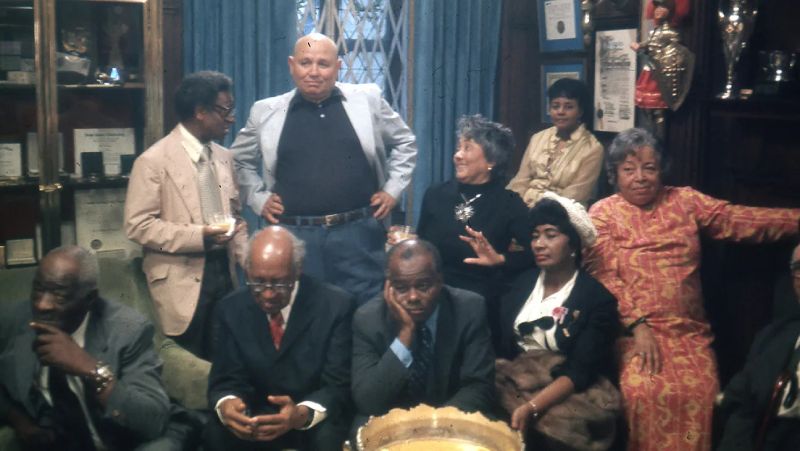
The result is far more than a parade of aging luminaries nostalgically reminiscing about a lost Arcadia. Its real power lies in Greaves’s camera. As an heir to the cinéma vérité tradition, he places us among the guests themselves. In Once Upon a Time in Harlem, we become witnesses to overlapping conversations, relive the ideological disputes of the era, and share in the sorrow for the poets, musicians, and artists who are no longer with us.
“Don’t forget Countee!” repeatedly cries the widow of poet Countee Cullen, who died prematurely, turning the plea into a kind of refrain. Meanwhile, the nearly centenarian actor Leigh Whipper astonishes us by reciting theatrical texts he has carried in his memory for seven decades, without hesitation and with a radiant smile.
Once Upon a Time in Harlem is also a tribute to old age, to that stage of life when everything returns just as we approach the end. At the same time, it is a demonstration of cinema’s extraordinary power. Everyone present understands that the occasion is historic and that the presence of the camera changes everything. What might otherwise have been a gathering of old friends becomes an act of legacy-building. They know the camera is there, recording, and therefore everything must be told—nothing and no one can be forgotten. It is now or never.
Greaves’s deeply humanistic gaze, combined with the unique power of documentary filmmaking, transforms a Sunday afternoon gathering in Harlem into a piece of historical and cultural heritage for future generations.
Nadie ha publicado ningún comentario aún. ¡Se tú la primera persona!