

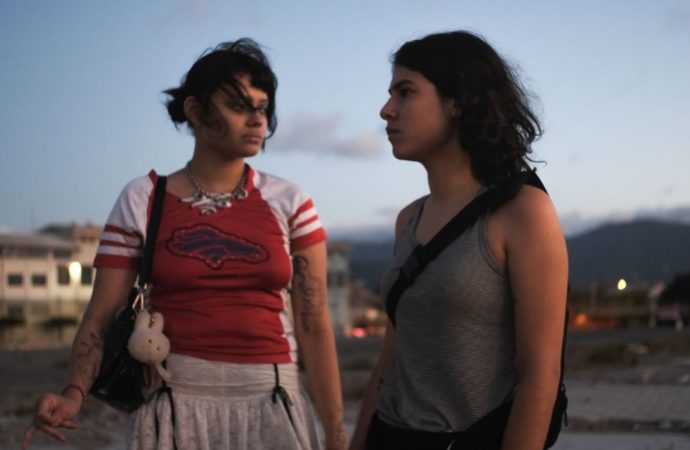

With Forever Your Maternal Animal (Siempre tu animal materno), presented in the Un Certain Regard section of the 79th Festival de Cannes, Costa Rican director Valentina Maurel confirms and expands upon the intuitions already present in her debut feature, I Have Electric Dreams. If that film explored the family nucleus through the bewilderment of a teenage girl trapped between filial love and the latent violence of the adults around her, this second feature shifts its focus toward the transition into adulthood and the scars left by failed emotional dynamics when time no longer functions as either refuge or excuse.
The continuity between both works is evident, not only thematically but emotionally. Daniela Marín Navarro and Reinaldo Amien once again embody the complex daughter-father relationship that brought so much acclaim to I Have Electric Dreams, which won Best Actress, Best Actor, and Best Director for Maurel at the Locarno Film Festival, as well as the FIPRESCI Prize at the Mar del Plata International Film Festival. In that film, the young Eva resisted accepting the reasons behind her parents’ separation and the reality of abuse, clinging to an idealized vision of the father-daughter bond even as it showed unmistakable signs of collapse. That same emotional ambivalence, also present in La buena hija by Júlia de Paz Solvas, reappears here transformed into a broader, more bitter exploration of familial disintegration.
In Forever Your Maternal Animal, Maurel expands her portrait of the dysfunctional family and distributes the dramatic weight among all its members. Elsa, once again played by Marín Navarro, returns to Costa Rica from Brussels, where she studies anthropology and maintains a stable relationship with her Belgian boyfriend. Yet the apparent autonomy of her European life soon reveals itself as another form of escape. The abandoned family house becomes the true physical and symbolic center of the film: a space everyone has fled from —the parents toward new partners, Elsa toward Europe— leaving behind only Amalia, the younger sister, who has become the most vulnerable and forgotten member of the family.
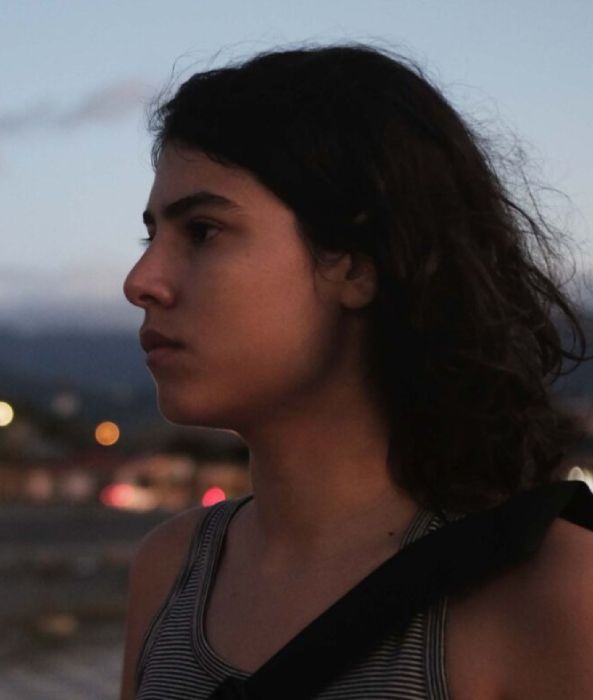
Daniela Marín Navarro.
The film finds its most devastating dimension there. Amalia lives isolated in a house overtaken by young people who drink, take drugs, and breed dogs as if attempting to improvise a substitute community. She has dropped out of university, claims to see ghosts that rape her during the night, and remains emotionally suspended in an adolescence eroded by emotional abandonment. The family’s longtime caretaker, now terminally ill, also disappears as the last stable bond, while Amalia rejects the arrival of a new housekeeper and preserves the domestic chaos — embodied by a perpetually clogged sink — as a desperate gesture of resistance against the passage of time and the disappearance of the past.
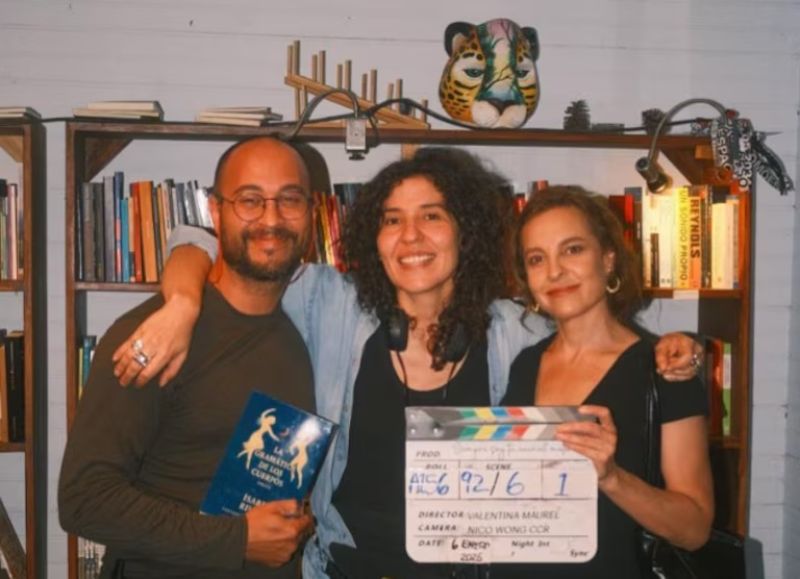
Formally, the director preserves the sensibility already present in her previous works, capable of observing bodies and spaces through an uncomfortable, almost physical proximity, at times reinforced by camera movements that convey instability. Emotional deterioration is constantly translated into material elements: accumulated garbage, caged dogs, uninhabitable rooms, clogged pipes, and a graffiti mark that stubbornly refuses to disappear. Everything in the film appears suspended in a state of irreversible decay.
With this second feature film, Valentina Maurel confirms not only a singular cinematic voice, but also the consolidation of a Costa Rican cinema that is becoming increasingly visible on the international stage. Forever Your Maternal Animal thus becomes the second Costa Rican feature selected for the Un Certain Regard section in the history of Cannes, following the remarkable Domingo y la niebla (2022) by Ariel Escalante Meza. Maurel’s relationship with the festival goes back even further: in 2017 she won the Cinéfondation Prize with Paul est là, and she had already participated in Cannes in 2019 with the short film Lucía en el limbo.
Forever Your Maternal Animal speaks to the contemporary inability to sustain emotional bonds, assume affective responsibilities, or accept the inevitable erosion brought by love and time, within a universe where parents and daughters continue searching for one another even when they no longer know how to love or coexist together.


Nadie ha publicado ningún comentario aún. ¡Se tú la primera persona!