

What happens when the law is enforced with absolute rigour, without exceptions, without improvisation and without any room for human ambiguity?
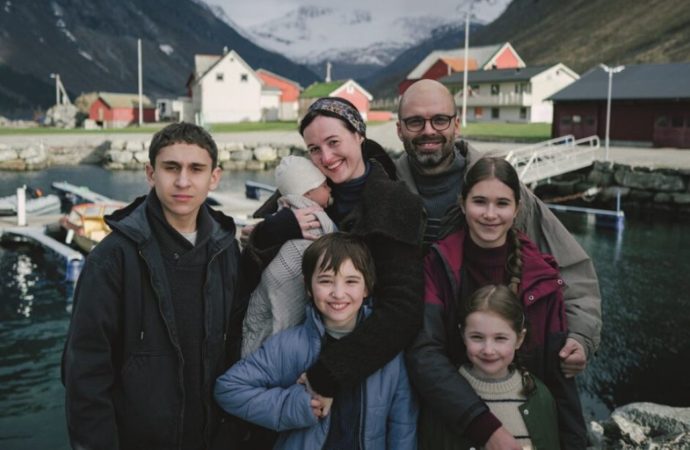
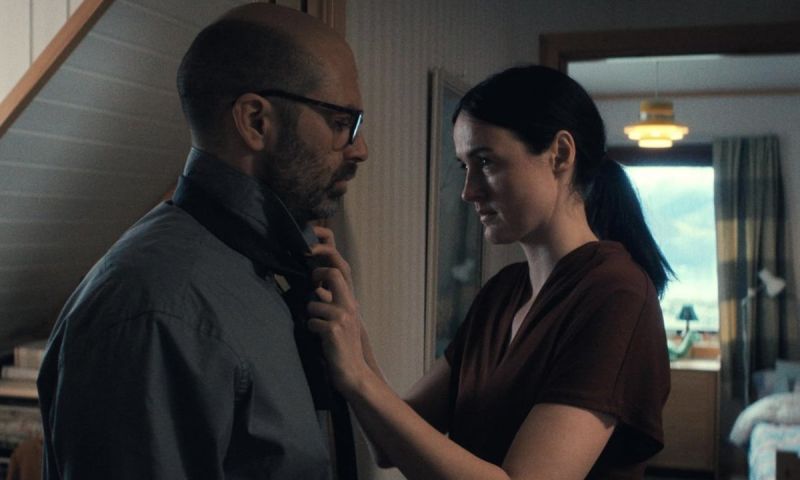
Inspired by a series of real cases in Scandinavia, in which immigrant families came under investigation by child protection services for using forms of physical discipline considered culturally acceptable in their countries of origin, under the provisions of Norway’s Child Welfare Act, the film follows the Gheorghiu family. Having recently relocated from Romania to Norway, Mihai (Sebastian Stan) and Lisbet (Renate Reinsve) have chosen to start a new life with their five children. He hopes to provide them with a safer and more stable environment; she has returned to her native country to benefit from her mother’s help with childcare.
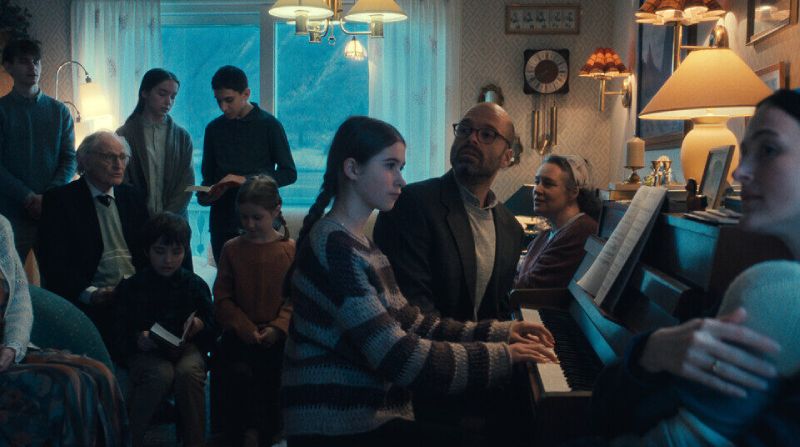
Integration, however, proves far from straightforward. The Gheorghius live according to strict religious principles. Daily prayers, Bible lessons, domestic discipline, compulsory participation in household chores and the prohibition of mobile phones, video games and secular music form part of an upbringing they regard as inseparable from their faith. Although the local community appears welcoming and tolerant, cultural differences emerge from the outset. Teachers warn the children against displaying religious beliefs at school. Lisbet receives similar remarks at the nursing home where she works. What the family experiences as a natural expression of identity is perceived by public institutions as a potential breach of the neutrality expected in certain public spaces.
The situation erupts when marks discovered on the body of the teenage Elia (Vanessa Ceban), sustained during a gym class, arouse the suspicions of the school coordinator. Child protection services intervene immediately. The couple’s five children are removed from the family home and placed with separate foster families while a judicial investigation into possible abuse unfolds. From that moment on, family life is suspended in an administrative limbo that seems to have no end.
Mungiu, of course, refuses to provide an easy answer. Do the parents actually hit their children? The film never fully clarifies the issue. The parents acknowledge that they have occasionally resorted to spanking as a disciplinary method, yet the director carefully avoids offering any conclusive evidence that would allow them to be either exonerated or condemned without qualification. As in the Romanian filmmaker’s finest works, truth remains fragmented, trapped between perceptions, prejudices and fundamentally incompatible systems of values.
The case soon transcends the local sphere. Religious organisations, media outlets and Romanian political representatives turn the proceedings into an international cause célèbre. What began as an investigation into possible child abuse comes to be interpreted as a cultural conflict between competing conceptions of family, religion and parental authority. State intervention is viewed by some as a moral obligation and by others as an unacceptable form of ideological intrusion.
The questions raised by the film are numerous and deliberately uncomfortable. Does preventing a teenager from listening to secular music constitute a form of abuse? How far does a parent’s right to educate their children according to their own beliefs extend? Can the State legitimately intervene when those beliefs restrict certain cultural or social experiences? Mungiu introduces another particularly sensitive issue when one of the daughters expresses her rejection of lesbianism after a schoolmate reveals her sexual orientation. The scene lasts only a few minutes, yet it illuminates the deeper conflict running through the film: the tension between an upbringing grounded in conservative religious beliefs and a society that regards certain egalitarian values as non-negotiable principles. The director does not make this issue the central focus of the narrative, since the legal case revolves around allegations of physical punishment, but he allows it to linger in the background as another unresolved question about the boundaries between religious freedom, education and discrimination.
One of the most fascinating aspects of Fjord is the way it observes the children’s adaptation to their new circumstances. Separated from their parents, the siblings miss them deeply and long to return home. At the same time, however, they discover a different way of life in their foster families. Video games, greater personal autonomy, more flexible rules and freedoms previously unknown to them create a complex emotional tension. Which carries greater weight: their attachment to their parents, or the experience of a newly discovered freedom, whether in their foster homes or during their escapades with their friend Gunda? Mungiu observes this contradiction without passing judgment, allowing both realities to coexist simultaneously and refusing to reduce the children’s experience to a simple choice between loyalty and liberation.
As so often in his work, private conflicts gradually acquire a symbolic dimension. The film’s most powerful image appears twice. While the school community is gathered outdoors, an avalanche descends from a nearby mountain. No one panics. No one runs. No one appears alarmed. Everyone trusts completely in the safety protocols designed to protect them. The image functions as a perfect metaphor for the Norwegian society depicted in the film: a community where everything has been anticipated, regulated and codified. Confidence in institutions is absolute. Yet that very efficiency also produces rigidity. The same structures designed to protect people can become mechanisms incapable of accommodating exceptions.
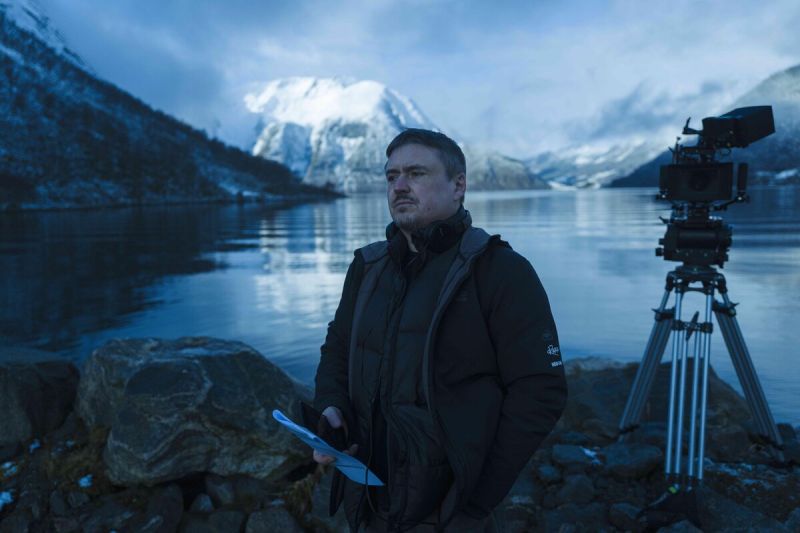
Formally, Fjord retains the austere precision that has become one of Mungiu’s trademarks. The staging avoids melodrama, the performances remain restrained, and the narrative—including the courtroom sequences—unfolds with an almost documentary calm. Beneath that tranquil surface, however, the director’s narrative machinery continues to operate with remarkable efficiency. The thriller-like emotional pressure that characterised his earlier films seems here to simmer according to an unmistakably Nordic rhythm: passive-aggressive, slow, polite and outwardly reasonable. There are no dramatic outbursts or eruptions of violence. Anxiety emerges instead from interviews, forms, meetings, reports and administrative decisions that advance with relentless logic. Like the avalanche observed from afar, the conflict progresses slowly yet inexorably. The threat is already in motion long before its consequences become fully visible.
Sebastian Stan delivers what is arguably one of the most understated performances of his recent career. Free from any trace of heroism, he constructs a father who is at once deeply religious, affectionate and authoritarian, a man whose convictions are inseparable from his identity. Alongside him, Renate Reinsve brings a compelling combination of vulnerability and determination, portraying a mother caught between two cultures and two systems of values that demand mutually incompatible loyalties. Together, they give emotional weight and human complexity to a conflict that might otherwise have remained purely ideological or institutional.
Fjord dares to suggest that there exists a space where good intentions, cultural prejudices, moral convictions and unintended consequences coexist.
With Fjord, Cristian Mungiu demonstrates once again that few European filmmakers are capable of exploring ethical dilemmas with such rigour and intellectual honesty. The film neither condemns nor absolves anyone. It observes, listens and compels the viewer to confront a crucial question: when a society has designed effective mechanisms to protect its citizens, what happens when those very mechanisms come into conflict with the complexity of the lives they were never designed to accommodate?
Far removed from simplistic narratives of victims and perpetrators—or from the conventions of a courtroom thriller—Fjord takes the risk of asking us to understand that there is a grey zone where good intentions, cultural prejudices, moral convictions and unforeseen consequences coexist. And in doing so, Mungiu delivers one of the most mature and subtle works of his career.
Update (23 May 2026)
Fjord was awarded the Palme d’Or at the 79th Festival de Cannes.



Nadie ha publicado ningún comentario aún. ¡Se tú la primera persona!