
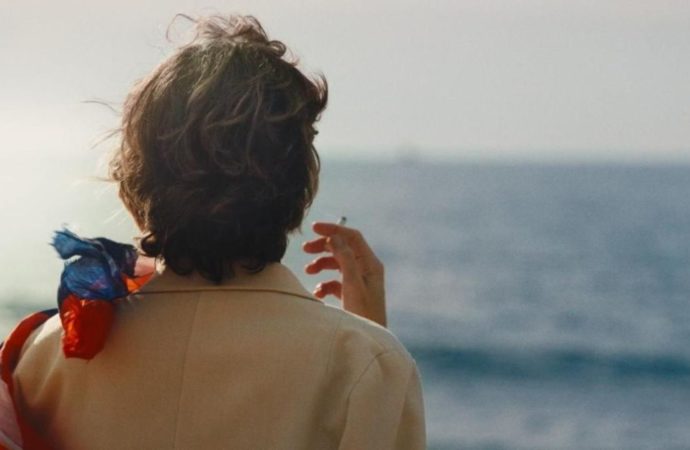
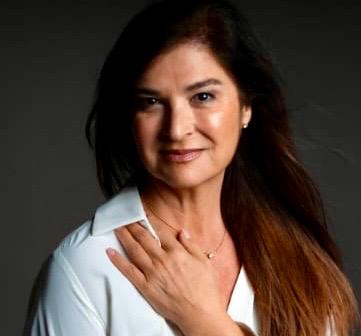
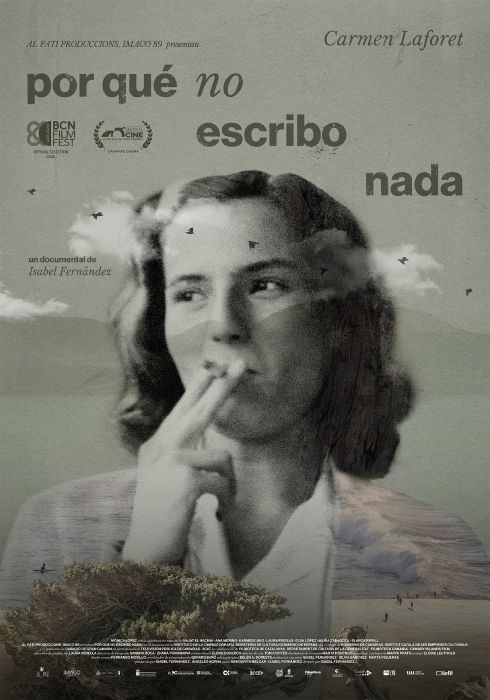
In her documentary Why Am I Not Writing Anything?, director Isabel Fernández challenges the conventional portrayal of the author of Nada, reclaiming her as a vibrant, independent woman fiercely committed to her freedom. We discuss the different interpretations of Laforet’s life, her relationship with writing, and the limits of documentary reconstruction.
Carmen Laforet burst onto the Spanish literary scene at just 23 years old. Nada, which won the inaugural Nadal Prize in 1944, became a literary sensation, bringing early acclaim to a writer who would spend the rest of her life navigating a complex relationship with writing, fame, and the expectations others had placed upon her. Her subsequent career, unfinished projects, constant travels, and gradual withdrawal from public life have contributed to the image of an elusive, insecure writer, in some ways a prisoner of her own success.
In Why Am I Not Writing Anything?, documentary filmmaker Isabel Fernández sets out to challenge this interpretation. Drawing on private correspondence, previously unpublished writings, and archival material, with actress Mónica López embodying Laforet’s voice, she reconstructs the life of a woman who appears to have placed her independence above social conventions, publishers’ demands, and the expectations of a deeply patriarchal society. The documentary also features the voices of seven contemporary women writers (Najat El Hachmi, Laura Freixas, Karmele Jaio, Ana Merino, Elsa López, Blanca Ripoll, and María Zaragoza), establishing a dialogue between Laforet’s experience and the obstacles that women writers continue to face today.
EVA PEYDRÓ: The documentary portrays Carmen Laforet as a free-spirited and rebellious woman, drawing on the voices of contemporary women writers and an extensive montage of archival footage to connect her experience with that of other women and highlight the bonds between them. But isn’t there a risk of projecting present-day concerns onto her and constructing an image just as partial as the one the film seeks to challenge? How do you strike a balance between reclaiming her legacy and respecting her individuality and contradictions?
My intention was, first of all, to dismantle the image of her as an inaccessible, depressive, withdrawn person, which simply isn’t true. And also the idea that she was a one-book author, overwhelmed by the success of her first novel. That isn’t true either.
Through her personal journey, issues emerge that affect the vast majority of women and that she herself reflected on extensively. These were matters that concerned her deeply, that she was very aware of, and about which she developed thoughts of astonishing clarity. I think it’s important to share them with the world, and particularly with women, because they can help us.
The film suggests that Laforet paid for her independence with ostracism. Yet she was an admired writer who received considerable support from publishers — who showed understanding and patience when she failed to meet deadlines or deliver manuscripts despite receiving advances — as well as from fellow writers and friends. There are also revealing episodes involving her writer’s block, her pathological procrastination, and the paralysis that led her to cancel a lecture tour of the United States just before her departure, overwhelmed by the anxiety of travelling and facing an audience. Shouldn’t we distinguish between ostracism imposed from outside and isolation caused, at least in part, by her own emotional and social difficulties?
I disagree. I think some of the things you’re saying are part of the established narrative. For example, you mention pathological procrastination. Who says that?
Her correspondence reveals profound suffering at her inability to write, at having entire novels in her head but being unable to put them down on paper. For instance, she would rent a house in the countryside to isolate herself, away from her children, specifically to write. Yet despite having the right conditions, she could spend an entire month without writing a single page, which caused her considerable anxiety.
But there’s nothing negative about renting a house in the countryside to write.
There is if that inability to write causes her suffering, as she herself expresses in her letters.
But she wasn’t a suffering person. I think the film shows that she was a vibrant woman, fighting to be free in the fullest sense of the word. And that freedom also includes deciding what writing means, how she should write, and how often she should publish.
Writing is not the same as publishing. Being a writer doesn’t mean constantly producing books or meeting a publisher’s demands. It means remaining committed to the exploration, experimentation, and development of one’s artistic work.
I think there’s an element of a sexist narrative in the way certain episodes are presented as symptoms of a tortured personality. The same traits are judged differently in men. Oscar Wilde was an emotionally complex figure, yet nobody judges him by his limitations or difficulties, or by whether he once failed to turn up somewhere and left people waiting at the last minute. In his case, that would be interpreted as the eccentricity of a genius. When it’s a woman, it’s described as incapacity.
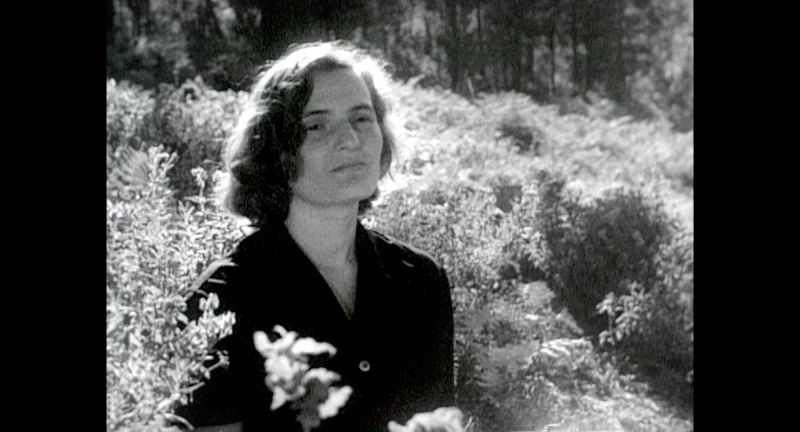
But in Laforet’s time, psychological suffering was not understood as it is today. Many behaviours were attributed to weakness of character, without considering the emotional conflicts that might explain them. Perhaps today some of those difficulties could be recognised and treated.
I think that’s going too far into speculation. It’s clear that she suffered from an illness towards the end of her life, but I don’t see her as a depressive or tortured person.
Her correspondence reveals enormous anguish over the publishing commitments she was unable to fulfil, not least because of her financial circumstances. She received advances without delivering the manuscripts, failed to complete her novels, and continued to assure her publishers that they were almost finished. This isn’t an inherited impression: these situations are documented in her letters and examined exhaustively in Anna Caballé and Israel Rolón-Barada’s monumental biography, Carmen Laforet. Una mujer en fuga. I haven’t seen this research cited in the documentary’s press dossier. Do you agree with their conclusions?
I read that biography, and I think it’s somewhat biased. There are certain points where the authors venture into speculation and, in my opinion, reveal prejudices. I didn’t approach Laforet with any preconceived ideas. Instead, I immersed myself in her correspondence, which is extensive.
We all have days when, if someone overheard us, they might think we needed to be admitted to a psychiatric hospital immediately. If you’re looking to construct a dramatic character, you can select particular moments from someone’s life and build that narrative around them.
I think this is another example of a perspective shaped by prejudices against women. People go looking for conflicts with husbands, with female friends, for evidence of whether or not a woman had a lesbian relationship… There’s a tendency to speculate about women writers’ private lives that simply isn’t applied in the same way to men.
It’s the same thing that happened with Nada: people insisted it was an autobiographical novel. When a man writes a novel, he isn’t constantly asked how much of the story he personally experienced. But when a woman writes one, the first question seems to be how much of herself she has put into it.
All of this caused Laforet considerable difficulties, including within her own family, who interpreted certain elements of the novel as autobiographical.
And then there’s this image of her as a depressive woman. She wasn’t like that. She was vibrant, athletic, sporty, cheerful. She grew up on an island, surrounded by nature, enjoying a very free upbringing. She broke away from her father, made bold decisions at a very young age, and wrote an extraordinary novel at just 23.
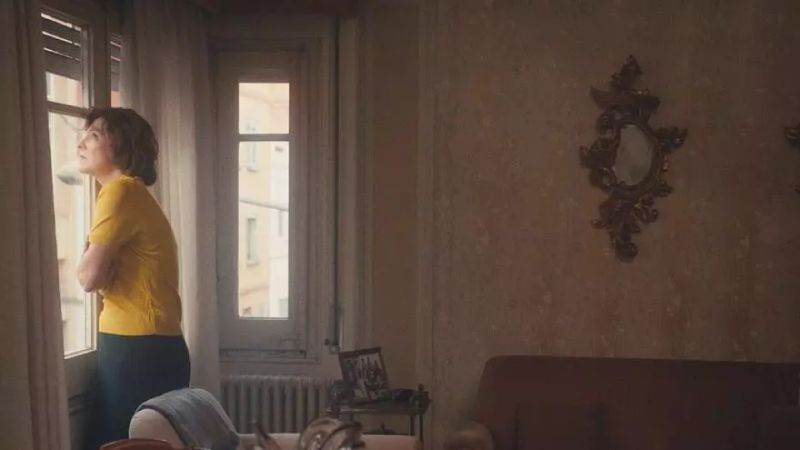
But those qualities aren’t necessarily contradictory. Laforet could be cheerful, athletic, and full of life while also experiencing profound personal conflicts. What criteria did you use to decide which aspects of her life to include in the film and which to leave out?
What drew me to this project was precisely that the image constructed around Carmen Laforet didn’t ring true to me. I’d been told the story of a woman who achieved extraordinary success, then did virtually nothing else, who couldn’t move beyond her first novel, got married, had five children, and became a housewife.
But when I started exploring her life, I discovered something very different. A woman who decided to separate from her husband, taking enormous risks, and who later decided she didn’t want a permanent home, that a single suitcase was enough. To me, that’s one of the most radical decisions a person can make.
And you discover that this attitude had been there since her youth. In letters to her friends in the Canary Islands, she was already expressing her rejection of stability, her desire to be a wanderer, to live like a storm. That has nothing to do with the image of a mysterious, depressive young woman.
Then there’s her writing. Because although people keep repeating that she disappeared after Nada, she wrote short stories, travel chronicles, and newspaper articles. She kept writing. Yet very little of that has entered the public consciousness.
I wondered how it was possible that a woman who had won the Nadal Prize at 23 could have been reduced, in the public imagination, to her first novel. And the answer I gradually arrived at was that she placed her freedom, her way of living, and her understanding of artistic creation above everything that was offered to her.
External recognition and material possessions were of secondary importance to her. She didn’t want to construct a public persona that might force her to betray her own conception of writing.
There’s an idea associated with Oscar Wilde that I love: that the greatest work of art is oneself. I think Carmen Laforet took that idea to its ultimate conclusion.
There’s also the project of El gineceo, the novel she never finished and discussed in her correspondence with Ramón J. Sender. Her daughters knew that project well, because she carried entire novels in her head. Sometimes she would write and then tear up what she’d written. There are even accounts of a novel kept in a suitcase that has never been found.
To me, all of this reveals a remarkably courageous and utterly singular character. And I find her views on women’s freedom extraordinarily perceptive. That’s the perspective from which we constructed the film’s narrative.
As a documentary filmmaker, where do you draw the line between the artistic interpretation of a person and the responsibility not to present that interpretation as the definitive truth?
There is no such thing as definitive truth. Every work is a construction, even a short newspaper article.
For me, what matters most is honesty and the position from which you approach your work. I’m drawn to a subject because I find elements that resonate with my own interests, usually existential questions, and that’s where my research begins.
I don’t set out to prove something I’ve already decided. What motivates me is the process of discovery.
In this case, we asked ourselves whether it would be possible to tell Laforet’s story from her own perspective, through her private writings. One of our main sources was her correspondence with childhood friends from the Canary Islands, relationships she maintained throughout her life. Those letters allowed us to reassess the narrative that had been constructed around her.
We also made the film without any involvement from her family. Once it was edited, we showed it to them. For me, that was an important test: to find out whether, in trying to reconstruct her through her own voice, we had somehow lost our way.
That first screening was very emotional, and I was extremely nervous. Her daughters were there, and they recognised their mother in the portrayal. Cristina, who has researched her mother extensively and wrote Música blanca, was also surprised. Seeing that they recognised their mother in the film was an important confirmation for me.
At what point in the process did the idea emerge to connect Laforet’s experience with that of contemporary women writers?
It was connected to El gineceo and Laforet’s ambition to find an authentic language for women, because she believed we were working within patterns constructed by men.
We also found a letter to Emilio Sanz de Soto in which she proposed creating a women’s reading club, modelled on English literary clubs.
Throughout her life, she had built and maintained a network of female friends who provided her with intellectual and emotional nourishment. I thought it would be wonderful to revive that project she never managed to realise and bring it into the present.
Bringing together a group of contemporary women writers to discuss what Carmen Laforet means to them was also a way of paying tribute to the club she had dreamed of creating.
At the same time, it allowed us to show that many of the constraints that restricted her, trapped her, and stifled her voice are still present today.
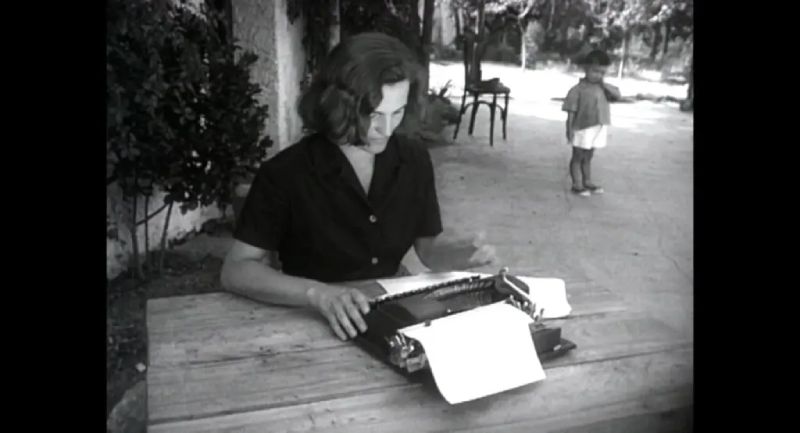
In what ways do you think the situation of women writers and artists has improved since Laforet’s time?
We’ve made enormous progress. Obviously, the atmosphere under the Spanish dictatorship was nothing like that of 2026. We have different resources and opportunities today.
But I think the fundamental problem still lies in ingrained patterns of thought and language, in the unconscious biases that operate automatically and that we all share, men and women alike.
Laforet did extraordinary work, particularly in her newspaper articles, observing and analysing these structures with remarkable clarity and simplicity.
I think she can help us develop that critical awareness, encouraging us to question the assumptions behind the way we perceive and judge women, whether as artists, professionals, or colleagues. Because these are cultural constructs that we all share.
Perhaps one of the greatest advances is that today we can speak openly about issues that were once subject to external censorship and self-censorship: intimate conflicts, personal contradictions, sexual identity, or the relationship between artistic creation and social expectations. Couldn’t that freedom of expression have helped Laforet resolve some of her own conflicts?
Perhaps she wouldn’t have felt such a need to run away.
Or perhaps she could have written about certain subjects without having to resort to other forms of expression or sources of refuge, as happens with religion in La mujer nueva. I’m not questioning the novel’s literary quality, but rather the possibility that some concerns couldn’t be expressed directly.
La mujer nueva is a very daring novel. There’s a letter featured in the documentary in which Laforet explains that the novel has been misunderstood. She says that most interpretations have focused on Catholicism saving the woman, whereas for her the issue is much broader: transcendence, the search for spirituality.
She even speaks about herself, acknowledging that for a time she mistakenly sought refuge in Catholicism.
As so many people do when they turn to religion in search of answers they cannot find elsewhere.
But she doesn’t find the ultimate answer there.
It was an illusion, and in her time she didn’t have access to the appropriate resources to find those answers.
Yes, for her it was a transitional phase. In a letter to a friend, she explains that if she had been Muslim, she might well have sought refuge in Islam. She turned to Christianity because it was the culture in which she had been raised.
And then there’s Lilí Álvarez, whom I find absolutely fascinating. Her relationship with Catholicism was one of conscious commitment and devotion, much more consistent throughout her life.
We conclude our conversation with several questions still open. To what extent does this attempt to reclaim Laforet allow us to understand such a contradictory figure? Is it possible to separate her desire for freedom from the personal conflicts that may have limited her ability to exercise it? Was Laforet a marginalised writer, or a woman who sometimes found herself unable to embrace the opportunities offered to her? And, above all, can a new biographical interpretation end up being just as selective as the one it seeks to challenge? Ultimately, audiences and readers will have the final say.
Nadie ha publicado ningún comentario aún. ¡Se tú la primera persona!