
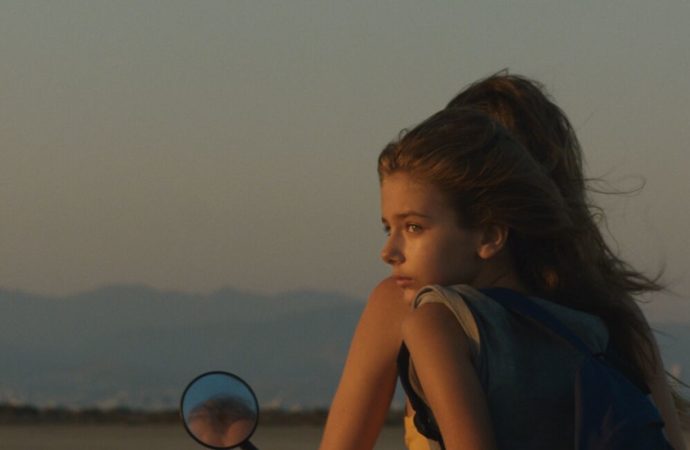
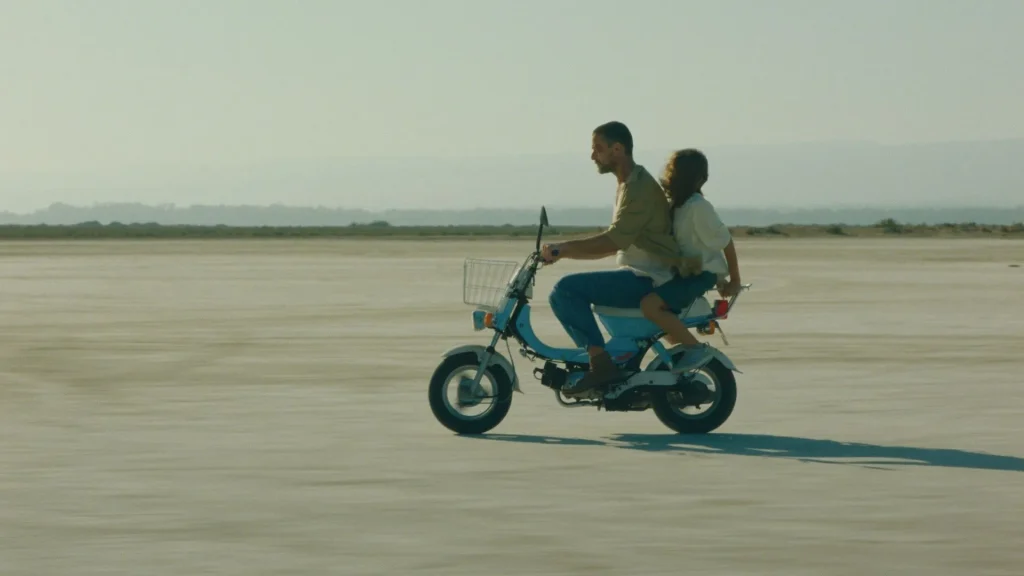
Hold Onto Me, Aristidou’s feature debut, ventures into this emotional territory through the encounter between Iris and Ari, a daughter and father who barely know each other and attempt to build a relationship as necessary as it is uncertain.
Set in Cyprus, the film juxtaposes the radiance of the Mediterranean summer with a story marked by absence, family wounds, and the longing to belong. Its protagonists approach each other from seemingly contradictory positions: Iris, still a child, displays a maturity that her father often lacks, while Ari, unable to fully embrace his responsibilities, discovers in his relationship with his daughter an unexpected opportunity for connection.
Now selected as Cyprus’s submission for the Academy Awards, Hold Onto Me confirms the distinctive voice of a filmmaker who, following two short films, continues to explore the complexities of affection and human relationships.
We spoke with Myrsini Aristidou about the film’s autobiographical elements, the development of its characters, and the meaning behind a title that holds a deeply personal confession.
MYRSINI ARISTIDOU: Yes, absolutely. We tend to take it for granted that there is an automatic bond of love between family members, when very often that isn’t the case. Sometimes it’s difficult to let go of the idea that we’re supposed to love our parents. And for people who have had painful family experiences, questioning that obligation can be even harder.
There are many people who don’t speak to their parents or have no relationship with them at all. When we’re born, we assume that we have a mother and a father and that we’re supposed to love them. But ultimately, it’s a much more delicate and complex relationship than we tend to think.
And those relationships can cause trauma that takes years to overcome, if it ever heals at all. Don’t you think children often end up taking on emotional responsibilities that should belong to their parents?
As children, we operate largely on instinct. We may understand a great deal, but we don’t necessarily know how to express it. I think it’s when we become adults that we can look back, question those relationships, and begin to understand them better.
At that point, as members of a new generation, we have a certain responsibility: we can choose to revisit that relationship and work on it, or decide to let it go.
But it takes both sides. For a relationship to truly develop, both people have to make an effort. It can never be built by one person alone.
So many. To begin with, we shot in Cyprus, where I’m from, so the locations, the places, and the atmosphere are all deeply personal. The relationship between Iris and her friends is also drawn from my own experience.
And, of course, there’s my relationship with my father. We didn’t really develop a relationship until quite late in my life, and it was a very unconventional one. We were more like friends than father and daughter.
Did making the film change the way you understood that relationship?
My father is actually the reason I became a filmmaker. We started growing closer when I was a teenager, and he was the one who introduced me to cinema in many ways. He’s a writer and an artist.
I think all artists are a little bit like con artists, at least that’s how I see it.
We connected through creativity, philosophy, and conversations about existence. These weren’t the kinds of things people my age usually shared with their fathers. Rather than a conventional father-daughter relationship, ours was more of a friendship.
We talked about life as equals. And I think that comes through in the film as well. Iris and Ari are, in a way, equals. He’s immature and she’s mature, even though she’s the child. In fact, there’s something childlike about him, too.
They bond over petty crimes and a way of living on the margins of society. In a sense, all of that serves as a metaphor for my relationship with my father.
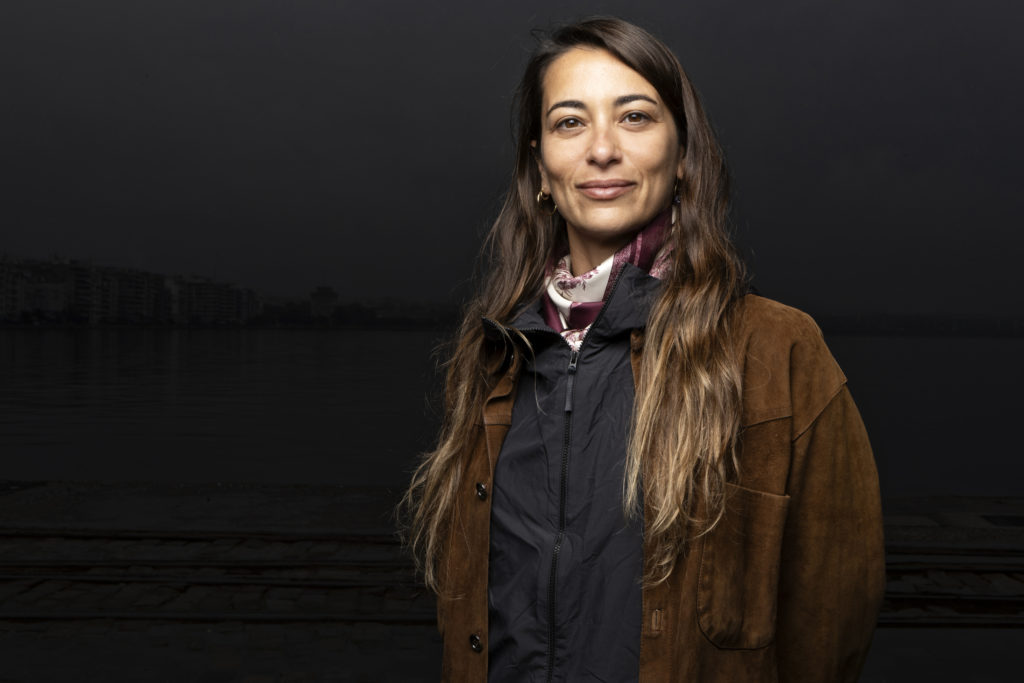
Myrsini Aristidou ©Photo: Aris Rammos.
Ari (Christos Passalis) puts his daughter Iris (Maria Petrova) in dangerous situations, and yet, as an audience, we want them to stay together. Isn’t that a contradiction?
Absolutely. Although I’m not entirely sure to what extent he’s actually the one putting her in danger.
Towards the end, Ari gets angry when she shows up. It’s Iris who wants to follow him, who doesn’t want him to leave and disappear from her life again. So I think, especially towards the end, it’s more her decision than his.
But yes, it’s interesting that the audience wants them to be together despite everything.
The relationship between the protagonists reminded me of Peter Bogdanovich’s Paper Moon.
It’s a wonderful film! Interestingly, I saw it after I’d written the first draft of the screenplay. Someone read it and recommended that I watch the film. I was very surprised, because I’d always wanted to portray that kind of relationship.
Although Paper Moon is a comedy, while I found your film considerably darker, as well as very moving.
Do you really find it that dark? I think it has some funny moments. Perhaps it’s a linguistic thing, but there are scenes involving the father that are quite humorous, for instance at the market or in some of the things he says.
The line between comedy and drama is very thin. You only have to cross it slightly for something to become funny, or stop being funny.
I think there’s a certain lightness to the film. I don’t see it as particularly dark. You can find that lightness in the girl’s attitude, in her friends, in the summer atmosphere, and also in the father’s carefree nature.
The atmosphere isn’t dark. What’s painful is the emotional core of the story: absence. That feeling can be incredibly heavy when you experience it.
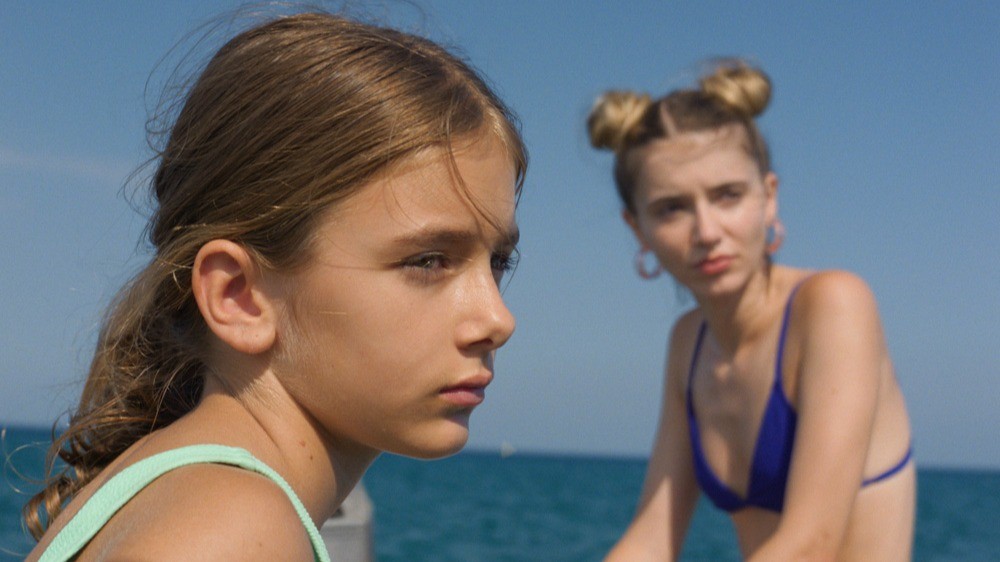
How did you work with the actors to develop that father-daughter relationship?
We didn’t rehearse at all. It’s a long story, but the truth is that we only read through the script once, the day before shooting began. Then I just threw them straight into the scenes.
At first, she didn’t like him very much. There was a certain resistance between them, which was actually very interesting because that was precisely the awkwardness I wanted between the characters.
Christos (Dogtooth) was trying very hard to win her over. He’s also someone who treats children as equals. He doesn’t talk down to them or treat them like children; he speaks to them as adults.
So their relationship developed very naturally during the shoot. The more scenes they shared, the closer they became. It was a fascinating dynamic.
After two short films and your first feature, do you think you’re finished exploring father-daughter relationships?
I think that, in a way, filmmakers make the same film over and over again, just in different forms.
It doesn’t necessarily have to involve a father and daughter again. But the idea of how we coexist, human relationships, and the question of what love is are things I think I’ll always carry within me.
Hold Onto Me won the Audience Award at Sundance and was selected as Cyprus’s submission for the Academy Awards. What does this recognition mean for your country’s film industry?
I think it’s a very positive development. We’re a very small country with a very small film industry, and we have to be realistic about that.
But I think it’s important for us to have a place of our own in the cultural landscape. Cinema is such an important language today, and it’s also a universal one.
So I believe this is a major step forward for Cyprus. We have many emerging filmmakers, as well as others who have been working for years. I feel very grateful that all of this is happening.
The title, Hold Onto Me, carries several layers of meaning. What exactly does it mean to you?
It has many layers. In the film, the father says those words when they’re in the water, trying to swim back to shore.
But to me, it means much more than that. It expresses a need we all share: the need to be held.
And I think it’s something we don’t easily say to other people. Unless you truly love someone, you don’t ask them to hold on to you, because it means you’re willing to carry their weight.
It also has a very personal meaning for me. While making this film, there were many moments when I thought I would never finish it. It was an incredibly long journey.
And in the end, I realised I had to hold on to myself. There were times when I felt that the only person I could rely on was me. That’s also where the title came from. It’s a very intimate interpretation, but it means a great deal to me.
I changed the title during the creative process, and when it finally came to me, I immediately knew it was the right one.
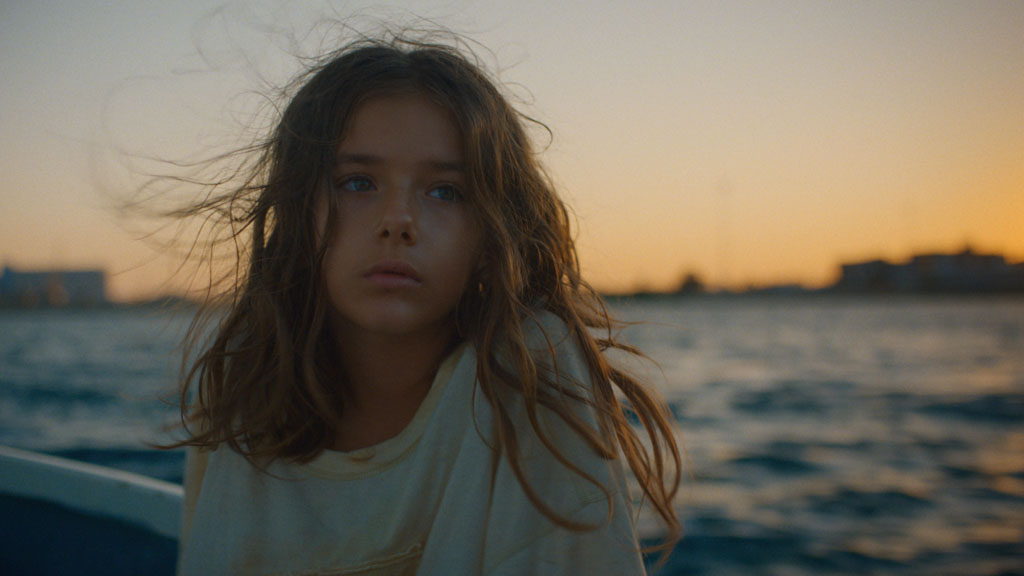
Yes, there are differences, but also many similarities. Ultimately, we all share a handful of fundamental emotions that we experience again and again: fear, surprise, happiness, joy… They’re all present in the film in one way or another. I think that’s what makes it universal and allows people from very different places to connect with it.
Then there are cultural nuances. Audiences in Cyprus or Greece might recognise certain situations differently from American audiences, who may laugh at different moments because they find different things funny.
I loved the audience reactions in China, for example. The questions were incredibly profound, very philosophical. It’s beautiful to see how each audience develops a different relationship with the same film.
You shared the editing of Hold Onto Me with Jenna Mangulad. Did you discover anything during that process that you hadn’t noticed while shooting?
Not really. Jenna started editing the film and put together the first cuts, but then she had to leave the project, so I continued working on my own. I ended up re-editing practically the entire film.
What did happen, though, was something very important to me: for the first time, I was able to connect emotionally with my own film.
Until then, the whole experience of making it had been very painful, even traumatic. But during the editing process, I felt that I could finally get my hands on it and work with it as though I were painting.
I loved it. I was spending about sixteen hours a day editing, and I couldn’t stop, because it was the first time I had fallen in love with the film again.
From the writing stage, I knew exactly how I wanted the film to be edited. Even the way I shot it was guided by that vision. Although many scenes didn’t turn out as planned, I knew I could reconstruct what I was looking for in the editing room.
I always end up editing my own films because I have a very clear idea of the emotion I want to create. It’s the final process that brings all the pieces together.
Are you already working on a new film?
I have a couple of projects in mind, and there’s one I’m already working on. I’m still at the writing stage.
Nadie ha publicado ningún comentario aún. ¡Se tú la primera persona!