
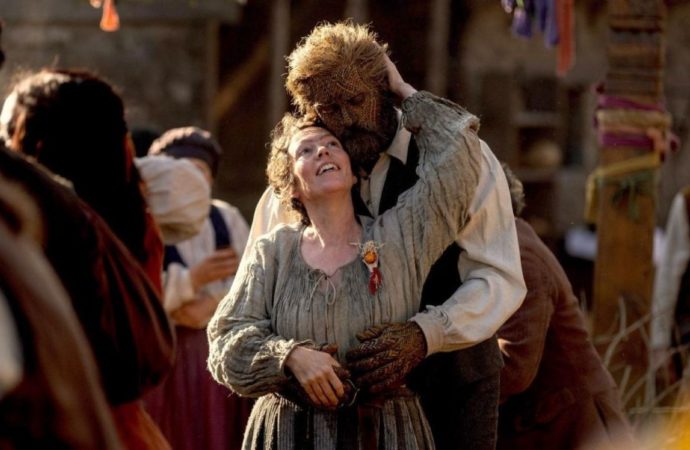
Olivia Colman and Alexander Skarsgård reflected during a press conference on gender roles, jealousy, freedom and the power of tenderness in Wicker, an unconventional romantic fable that blends humour, fantasy and social criticism.
The love story at the heart of Wicker, directed by Alex Huston Fischer and Eleanor Wilson, begins with an extravagant yet revealing decision: to commission a husband made of wicker. What might initially seem like the premise of an absurd comedy becomes a fable about social conventions, romantic relationships and the possibility of imagining a form of masculinity far removed from its traditional representations.
Starring Olivia Colman and Alexander Skarsgård, Wicker builds its world around a woman who defies her community’s expectations and a husband whose unusual nature exposes the contradictions of those who consider themselves perfectly normal.
Patriarchy, female independence, jealousy and the need to be acknowledged by another person run throughout the story.
During an international press conference held to promote the film, both actors discussed the challenges of bringing such unconventional characters to life, the delicate balance between comedy and drama, and the themes running through the story: patriarchy, female independence, jealousy and the need to be acknowledged by another person. Above all, however, they made one thing clear: perhaps the most revolutionary quality in a relationship is the ability to pay attention.
Olivia Colman: A Woman Who Doesn’t Need Saving
One of the most interesting aspects of Wicker lies in the construction of its female protagonist. Rather than following the tendency to portray women who live outside social conventions as inevitably lonely figures, Olivia Colman offers a very different interpretation. “I never really thought of her as a lonely woman,” the actress explained during the press conference.
Her character is a fisherwoman who possesses something exceptional within her community: financial independence and the ability to make decisions about her own life.
“She’s the only one who has her own job and her own money. I think she’s much more comfortable in her own skin than probably anyone else in the village.” This observation is fundamental to understanding the film. The protagonist does not seek a husband because she needs someone to complete her identity or because her life lacks meaning. Rather, her decision stems from weariness with other people’s mockery and expectations.
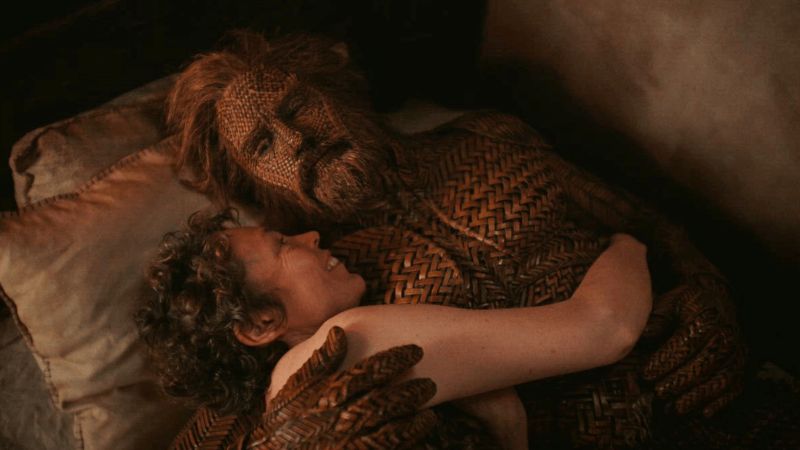
According to Colman, after enduring one too many remarks, her character decides to commission a husband simply to get everyone to leave her alone. What she receives, however, exceeds anything she could have imagined: an extraordinarily affectionate, kind and attentive being.
The actress also finds an explanation for her character’s self-assurance in her family background. Certain lines in the screenplay suggest that she grew up surrounded by affection and witnessed a healthy, loving relationship between her parents. That emotional foundation may have enabled her to develop a degree of independence rarely found in her community.
What truly unsettles the villagers, then, is not the appearance of a man made of wicker, but the fact that a woman who seemed to need nothing should end up enjoying a relationship that everyone else begins to envy.
Alexander Skarsgård and the Challenge of Acting Behind a Mask
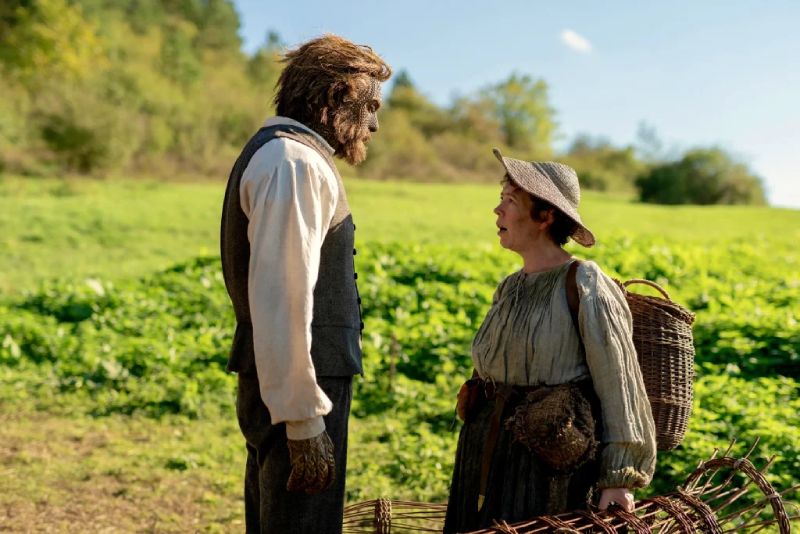
While Olivia Colman plays a woman who defies convention, Alexander Skarsgård faces an equally unusual acting challenge: conveying emotion through an almost immobile face. The actor recalled that his first reaction upon putting on the prosthetics was one of “panic and claustrophobia”.
The character’s appearance was created by Wētā Workshop, the New Zealand studio specialising in cinematic effects and creature design. According to Skarsgård, a team of between thirty and forty artists spent approximately eighteen months developing it.
Until just a few days before filming began, the actor had only seen images of the design and spoken with the people responsible for creating it. Finally stepping into the costume transformed his relationship with the character.
After spending a year imagining him, this extraordinary being suddenly acquired a tangible physical presence. The rigidity of the structure dictated his movements, while the mask forced him to rethink his entire approach to facial expression.
“It was the first time I had to exaggerate all my expressions to convey an emotion,” Skarsgård explained during the press conference.
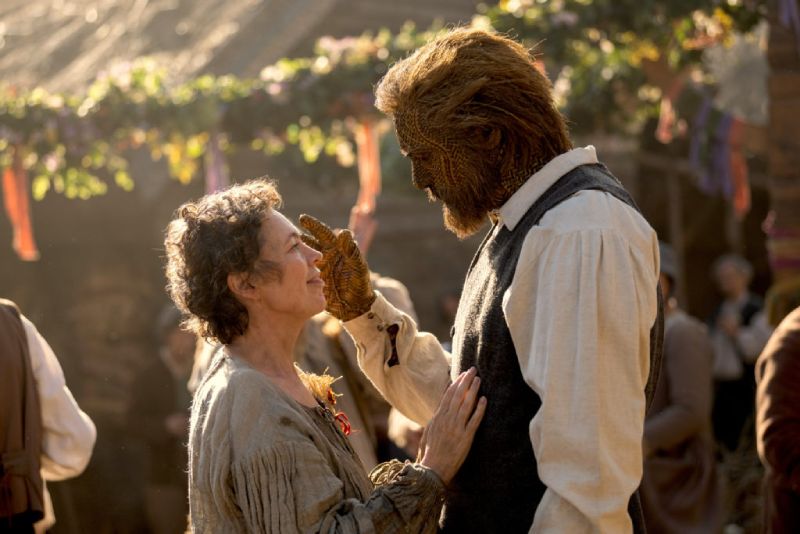
A subtle gesture that would normally register on camera simply disappeared beneath the prosthetics. The directors instructed him to considerably exaggerate his facial movements so that the result would appear natural on screen.
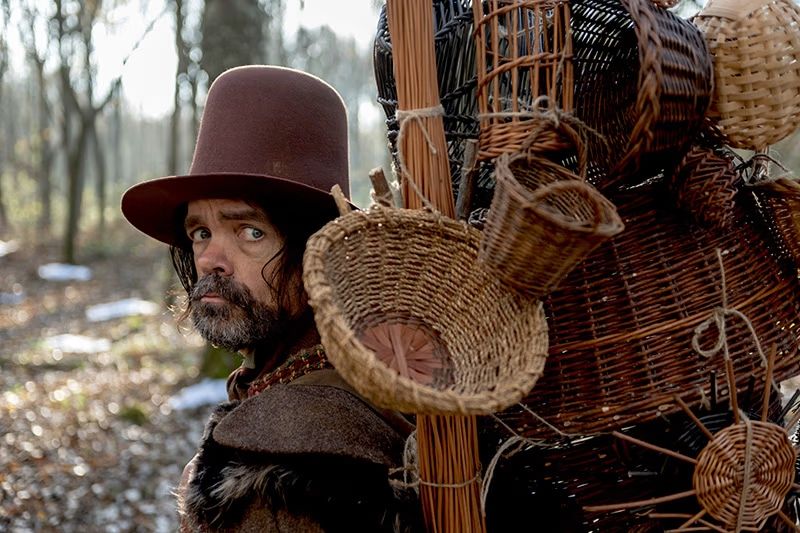
The experience was particularly disconcerting when sharing scenes with actors such as Colman, Elizabeth Debicki or Peter Dinklage, all accustomed to working with great expressive subtlety. Skarsgård admitted that, at times, he felt as though he were acting like a clown. Yet when he watched the footage on the monitor, he discovered that all that exaggeration translated into a far more restrained performance than he had imagined.
Colman emphasised the importance of having a real, physical costume rather than relying exclusively on digital effects. Being able to touch her co-star and interact with a tangible body made it easier to establish the intimacy between their characters. She also praised Skarsgård’s ability to convey love, humour and tenderness through what she jokingly described as a basket.
A Masculinity Rooted in Attentiveness and Tenderness
The conversation took a particularly interesting turn when the actors were asked about the portrayal of masculinity. In Wicker, the wicker husband is radically different from the other men in the village, not because he possesses extraordinary strength, enjoys a privileged social position or commands unquestionable authority, but because of something far more fundamental.
“The essential thing is that he pays attention to his partner and her needs,” Skarsgård explained. The character does not regard his wife as an extension of himself, his desires or his ambitions. Instead, he recognises her as an independent individual.
This seemingly simple attitude upsets the balance of the entire community, exposing the shortcomings of relationships considered conventional. For the actor, the film offers a reflection that resonates well beyond its fantastical world: how easily people can stop listening to their partners or begin taking them for granted.
Colman brought the discussion back to the question of attraction: “I love the reminder that the man everyone finds attractive in the film is the one who is attentive, kind and loving.”
The actress also mentioned Harry Styles as an example of a contemporary masculinity that can move beyond certain traditional codes without losing its appeal.
In this sense, Wicker goes beyond simply reversing gender roles to question why certain behaviours historically associated with masculinity have been considered desirable, while others, such as sensitivity and emotional attentiveness, have been relegated to a secondary position.
This wicker husband does not need to assert his authority to become the most admired figure in his community. All he needs to do is care.
Between Romantic Comedy and a Critique of Patriarchy
Part of what makes Wicker so distinctive is its tone. Its premise could easily have lent itself to an outrageous farce or an overly explicit satire of relationships between men and women. Yet both lead actors emphasised the importance of maintaining a balance between humour, romance and genuine emotion.
Skarsgård recalled that the screenplay made him laugh out loud, but also moved him deeply at certain moments. From the outset, the challenge was to prevent the more absurd elements from overshadowing the story’s emotional dimension.
Colman offered an approach to acting that helps explain how these different registers can coexist: “I think comedy works really well when you play it truthfully, and the same goes for drama.”
The actress pointed out that people can experience seemingly contradictory emotions at the very same moment. Even during the saddest periods of her life, she explained, she has found herself laughing uncontrollably.
For that reason, she believes humour and tragedy can coexist perfectly well when performances are rooted in emotional honesty.
The film’s fable-like quality also makes it possible to address political issues without turning the story into a moral lesson. Colman noted that this format allows the filmmakers to explore patriarchy, marriage and social conventions with a lightness of touch that invites audiences to laugh first and reflect afterwards.
From the outset, the challenge was to prevent the more absurd elements from overshadowing the story’s emotional dimension.
Skarsgård agreed that one of the screenplay’s greatest strengths is its refusal to preach. The social criticism is always present, but it never takes precedence over entertainment or forces the audience towards a particular interpretation.
Jealousy as a Threat to Love
Another subject raised during the press conference was the role of jealousy. In Wicker, the protagonist’s unexpected happiness provokes a collective reaction that exposes the frustrations of those around her. The community that once ridiculed her choices begins to regard what she has achieved with resentment.
Colman was particularly forthright when discussing jealousy in personal relationships: “I don’t think jealousy should exist in a relationship.” The actress explained that she tries to recognise jealousy and stop it before it develops into something destructive.
She also makes an effort to pass this idea on to her children: friendships and romantic relationships should contribute to people’s happiness and personal growth, rather than encourage competition or insecurity.
Skarsgård shared her view, acknowledging that jealousy can be profoundly destructive. Once again, the contrast between the wicker husband and the other characters becomes apparent. He wants his wife to flourish, even when her independence challenges traditional expectations of marriage. Love is thus associated with generosity and respect for another person’s freedom, rather than possession.
The Freedom to Choose Smaller Projects
The press conference also offered an insight into why two actors with careers as established as Colman’s and Skarsgård’s continue to embrace smaller-scale productions. The Swedish actor recalled his early years in the profession, when he went through long periods without work and was not always in a position to choose which projects to accept.
Having appeared in bigger-budget productions, he now finds himself in a position where he can prioritise his creative interests, “I don’t have to do a film just because they’re offering me a bigger cheque than for Pillion or Wicker.” For Skarsgård, that independence represents an extraordinary freedom.
Working with emerging filmmakers is not simply about supporting new voices, but also about seeking out personally rewarding creative experiences. His connection with the directors and the quality of the screenplay now carry more weight than financial considerations.
Why does an independent woman still make her community uncomfortable?
Colman expressed a similar view. The actress explained that she agreed to appear in Wicker because she thought the screenplay was extraordinary, without fully realising how much her involvement might help the project move forward.
Both agreed that being able to choose films they genuinely want to see is one of the greatest privileges of their respective careers.
A Chemistry That Needed No Rehearsals
The chemistry between Colman and Skarsgård was another highlight of the conversation. Despite never having met before, the two actors quickly discovered that they shared the same understanding of the screenplay and its delicate tonal balance.
According to Colman, there was no need to manufacture the chemistry between their characters, “I think we take our work seriously, but we don’t take ourselves too seriously.”
Skarsgård recalled that they almost never had to interrupt a scene to discuss how they should approach the relationship. They simply spent time together, talked and then allowed themselves to be carried along by the situations.
That trust extended to the directors, whom Colman described as exceptionally warm people, capable of creating an inspiring working environment. The apparent ease of their collaboration stands in contrast to the technical complexity of a film that must make a love story between a woman and a man made from plant materials entirely believable.
Wicker: A Fable About the Right to Love Differently
Beneath its eccentric exterior, Wicker raises questions that reach far beyond its fantastical world: Why does an independent woman still make her community uncomfortable? What makes someone a good partner? To what extent do we confuse love with possession? And why does tenderness remain such an uncommon quality in certain representations of masculinity?
Olivia Colman and Alexander Skarsgård’s responses reveal that the film does not seek to resolve these questions through an explicit confrontation between men and women. Its approach is more subtle: introducing an impossible element into a seemingly familiar world and observing how its presence exposes the contradictions of those who inhabit it.
The wicker husband may appear to be the strangest figure in this story, but his behaviour ultimately calls into question everyone else’s supposed normality.
Wicker explores the changing nature of romantic relationships by embracing the imaginative freedom of the fable, placing its trust in humour and championing attentiveness to another person as one of the most essential expressions of love.



Nadie ha publicado ningún comentario aún. ¡Se tú la primera persona!