
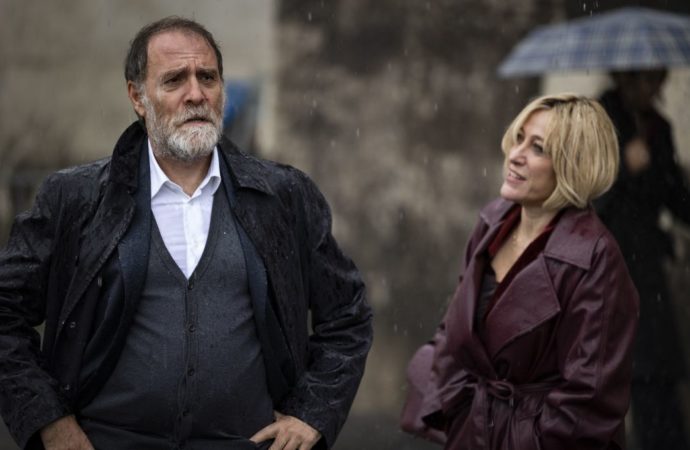
Paolo Virzì returns with Five Seconds, a film that begins under the sign of mystery and solitude before gradually opening itself up to life. The director of Human Capital and Like Crazy returns to one of the territories he knows best: wounded, seemingly incompatible characters whom he brings together until they discover that unexpected forms of affection can exist beneath conflict. The film stars Valerio Mastandrea, Galatea Bellugi and Valeria Bruni Tedeschi, with a screenplay by Virzì himself alongside Francesco Bruni and Carlo Virzì.
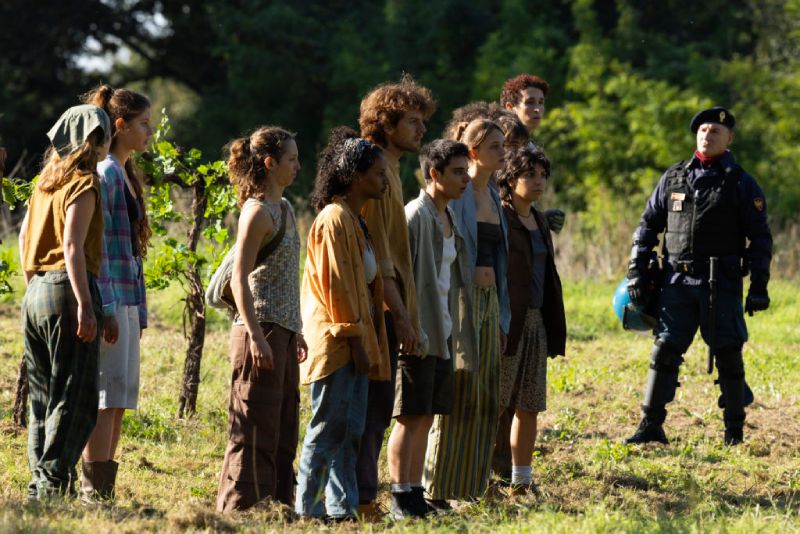
At the heart of the story is Adriano Sereni (Mastandrea), a man who lives almost entirely cut off from the world on an old, nearly ruined estate. His seclusion is disrupted when a community of young people moves into the neighbouring villa with the intention of restoring its abandoned vineyards. Among them is Matilde (Bellugi), the granddaughter of the former owner, who soon becomes curious about this surly, solitary neighbour who seems determined to keep the world at a distance. What begins as a confrontation between the two gradually gives way to a far more complex relationship.
From solitude to life
Virzì builds the film around two characters who, at least on the surface, stand at opposite ends of the spectrum. Adriano has withdrawn from life; Matilde is pregnant and therefore literally embodies a life about to begin. She also approaches motherhood without attaching particular importance to whether her child has a father. From this emerges one of the film’s central themes: fatherhood, its necessity or irrelevance, and the unusual bond that ultimately develops between the two characters.
Virzì himself describes Five Seconds as a story that begins mysteriously, gradually reveals a painful plot, erupts into a lively and comic conflict, and ends on a note of hope and trust. Above all, it is a film “about death and life” and about the capacity of pain to give rise to tenderness and protection. Adriano and Matilde’s mutual irritation thus gradually turns into an alliance: protection for her and, perhaps, the possibility of rebirth for him.
It is not difficult to recognise here some of the recurring themes in Virzì’s cinema. For more than three decades, the Italian filmmaker has moved between comedy and drama to explore the contradictions of his characters and, through them, those of Italian society. From La prima cosa bella to Human Capital, Like Crazy and Siccità, his films have often found humanity precisely where their protagonists seem most lost. Virzì made his directorial debut in 1994, and his career has since been recognised with numerous David di Donatello and Nastro d’Argento awards, among other honours. His films have also represented Italy at the Oscars on two occasions.
A vineyard as metaphor
In Five Seconds, the landscape takes on particular significance. Surrounding the characters is an abandoned, overgrown vineyard that the young people intend to bring back to life. The metaphor is transparent, but no less effective for it: something that appeared exhausted can bear fruit again when given attention and care. For Virzì, this natural world resembles ourselves: a wild vineyard that, if properly tended, can produce a wine capable of inducing euphoria.
In contrast to Adriano’s isolation, there is also a small, noisy, musical and disorderly community. Music plays a narrative role here. Carlo Virzì, who composed the score, conceived a distinctive musical world for the young inhabitants of the villa from the screenplay stage onwards: guitars, small instruments and songs performed by the characters themselves. Some were written specifically for the film, and Vento became so important during shooting that it ultimately took centre stage in an entire sequence. By contrast, the incidental score is built around deep, almost heartbeat-like rhythms, expressing both Adriano’s pain and his tenderness and desire.
Mastandrea, Bellugi and Bruni Tedeschi
Much of the film’s weight rests on Valerio Mastandrea, one of the essential figures of contemporary Italian cinema and a frequent collaborator of Virzì. The two had already worked together on La prima cosa bella, for which Mastandrea won the David di Donatello for Best Actor, and later reunited for Siccità.
Opposite him, Galatea Bellugi brings a distinctly different generational energy. Born in Paris in 1997 to an Italian father and a Danish mother, she began acting as a child at Ariane Mnouchkine’s Théâtre du Soleil before developing a career between France and Italy. Following films such as Keeper, L’apparition, Amanda and Gloria!, she plays Matilde, the character who embodies much of the story’s vital impulse.
Completing the central trio is Valeria Bruni Tedeschi, who reunites with Virzì after a series of particularly fruitful collaborations. She won the David di Donatello for Best Actress for Human Capital and later starred in Like Crazy, a performance that earned her another David di Donatello as well as a Nastro d’Argento.
Five Seconds ultimately finds its raison d’être in the encounter between different generations, temperaments and ways of facing existence, and in the question of what can still grow in the aftermath of the past. Between a crumbling house and an abandoned vineyard, Virzì explores death, fatherhood, community and second chances without abandoning humour, because sometimes all it takes is an unexpected intrusion, another person and barely five seconds for a life that seemed to have come to a standstill to begin moving again.

Nadie ha publicado ningún comentario aún. ¡Se tú la primera persona!