
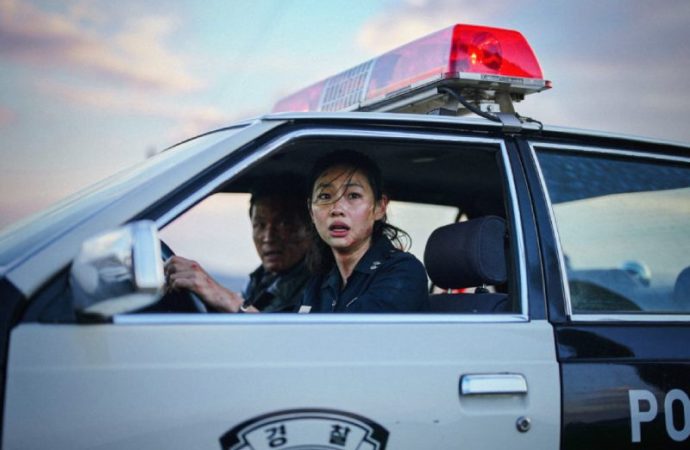

Hope, the latest film from South Korean director Na Hong-jin, starring Michael Fassbender and Alicia Vikander —working together for the second time— leaves nothing like the same impression. Premiered at Cannes Film Festival, it was also one of the most eagerly anticipated films of this year’s Sitges Film Festival. Its intriguing opening certainly deserves credit: keeping everything off-screen, the film gradually reveals the devastating effects of something — we do not yet know exactly what — that has struck a small Korean town. It is a strategy reminiscent of Steven Spielberg at his best, or, for instance, Roland Emmerich‘s excellent Godzilla: a technique that consists of showing the consequences of a disaster before revealing its cause, thereby heightening the audience’s anxiety. What, or who, has brought such destruction and chaos to this small town?
Before long, we find ourselves caught up in a chase once it becomes clear that some kind of monster is on the attack. And it is not long before the film begins to reveal one of its major problems: this entire opening sequence drags on for an interminable 47 minutes. Yes, 47 minutes in which everything boils down to a man running through the town, firing shots off-screen and looking terrified. Nothing else is introduced, developed, explained, or even hinted at. Nothing. Just that.
This is the first clear indication of Hope‘s narrative ineptitude: it is difficult to engage with a film that offers little more than off-screen gunfire for 47 minutes. And, indeed, for all its subsequent spectacle, it remains incapable of providing anything for the overwhelmed viewer to latch on to. The noise is exhausting, the action relentless, the music deafening, and yet the entire narrative feels stretched and strained to breaking point without any convincing justification in the plot. The result is an exhausting, unbearable ordeal lasting 161 minutes.
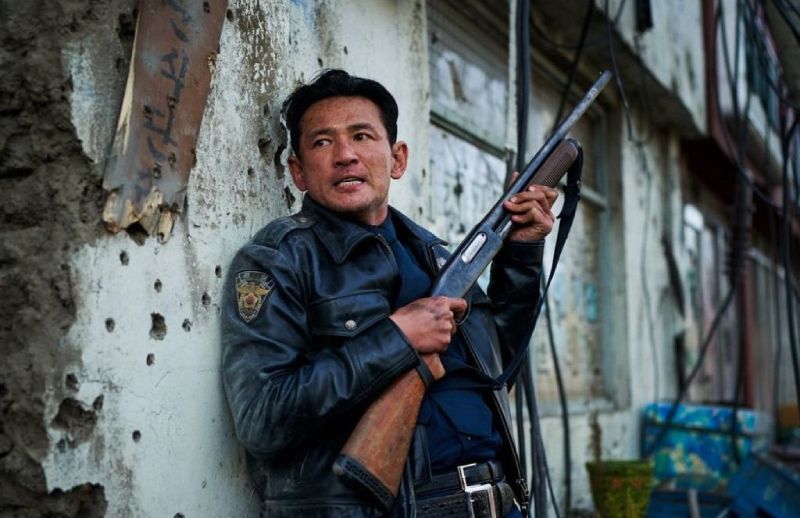
And this is a serious problem when you are making a monster movie. Because it undermines the entire narrative and repeatedly pulls you out of the film: when the eye registers such a blatant lack of physical mass, the mind — mine, at least — struggles to grant the suspension of disbelief that this kind of cinema particularly demands. It is not a question of believing that such a monster could exist in real life, but of believing that it could exist within the world of this film. And that is a task at which Hope fails miserably.
Burdened by these two serious shortcomings, Hope stumbles along through sequences of absurd, unnecessary dialogue before launching into an interminable motorway chase in which, without giving too much away, the monsters’ designs are no longer as original as in their first appearance. By this point, we are dealing with something considerably more predictable and dull. All of which leads to a bewildering ending, almost an afterthought awkwardly tacked on, steeped in an unmistakable narrative and visual debt to James Cameron’s dreadful Avatar.
Ultimately, Hope emerges as one of the season’s major disappointments, its reputation perhaps artificially inflated by its appearances at festivals such as Cannes and San Sebastián. This is only Na Hong-jin’s fourth feature film, yet it was being talked about as a phenomenon of epic proportions. Perhaps it is time to start acknowledging that many film festivals today exist in a bubble, utterly disconnected from ordinary cinema audiences, frequently manufacturing reputations that prove to have little staying power once the films reach theatres — if they ever do.

Nadie ha publicado ningún comentario aún. ¡Se tú la primera persona!