
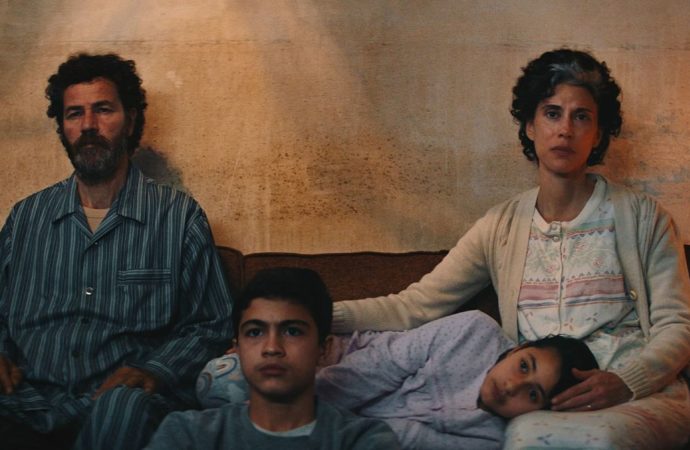
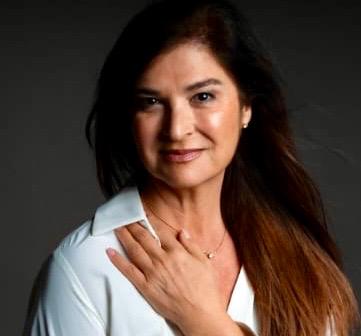
Director and actress Cherien Dabis achieves with her third feature, All That’s Left of You (Allly baqi mink, 2025), not only the telling of a story—both in its grand and intimate dimensions—but also the reconstruction of an absent narrative. It is a work rooted in a desire for restitution: of a family memory, and of an origin that, as she herself has pointed out, has been largely excluded from the dominant discourse. “My intention in making it was always: ‘Let’s recognize the pain…’,” the director states, and this is not a theoretical framework but the very driving force of the film.
Premiering at the Sundance Film Festival and awarded the Silver Yusr at the Red Sea Film Festival—where Dabis also received the Variety International Vanguard Director Award—the film has consolidated its international presence through numerous festivals, including Best Director at the Festival de Sevilla and the Audience Award at Thessaloniki Film Festival. It has also been selected as Jordan’s official submission for the 2026 Academy Awards. Yet beyond its accolades, what matters here is the nature of its proposal, particularly in a year that has seen works such as Palestine 36 and The Voice of Hind, alongside documentaries like Put Your Soul on Your Hand and Walk by Sepideh Farsi or With Hasan in Gaza by Kamal Aljafari, and short films such as Qaher by Nada Khalifa or Control Anatomy by Mahmoud Alhaj, all of which have brought renewed focus to the Palestinian question.
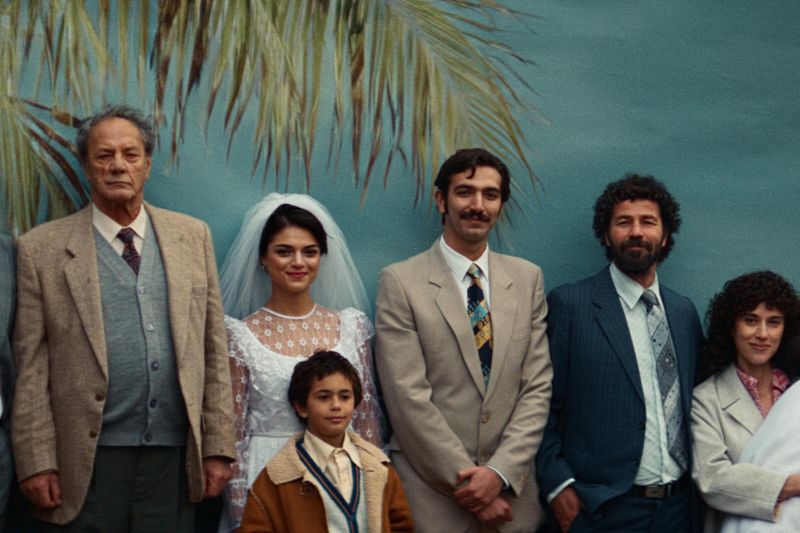
With executive producers Javier Bardem and Mark Ruffalo, the film opens in medias res, with a Palestinian teenager, Noor (Muhammad Abed Elrahman), caught in the violent repression of a protest in the West Bank. His impulsive, almost inevitable act triggers a retrospective structure in which his mother reconstructs the family history, as if searching in the past for an explanation the present can no longer provide. From Noor’s introduction, his mother, Hanan (Cherien Dabis), breaks the fourth wall to tell us: “I know you are wondering why we are here… But for you to understand, I must tell you what happened to his grandfather.” The narrative thus unfolds across four historical moments—from 1948 to 2022—not as separate episodes, but as layers of a single wound.
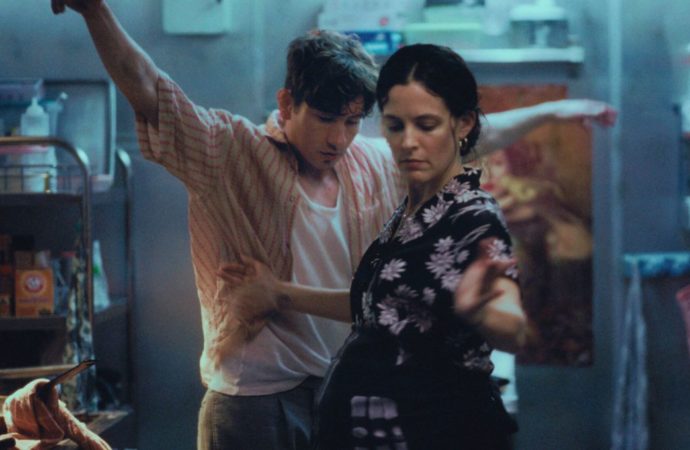
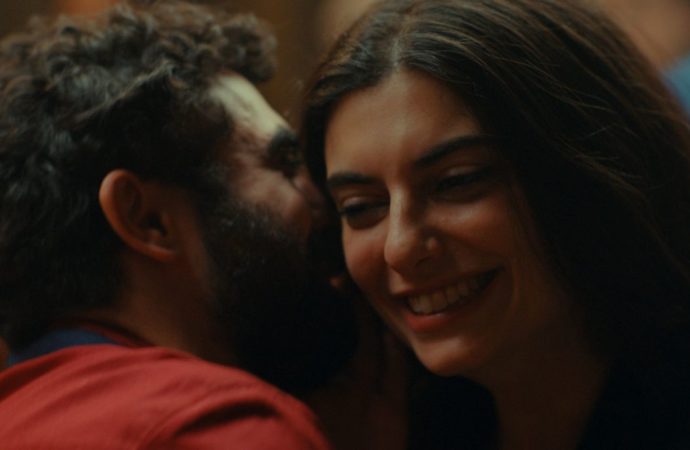
The foundational trauma is the 1948 Nakba, the mass displacement of Palestinians that determines the family’s fate. In this first segment, the film adopts an almost epic dimension: the loss of home, landscape—the orange groves of Jaffa—and identity is rendered through a sweeping mise-en-scène in which the characters seem carried by a history beyond their control. Adam Bakri (Sharif) and Maria Zreik (Munira) embody this first generation with a dignity that borders on the archetypal, yet never becomes abstract.
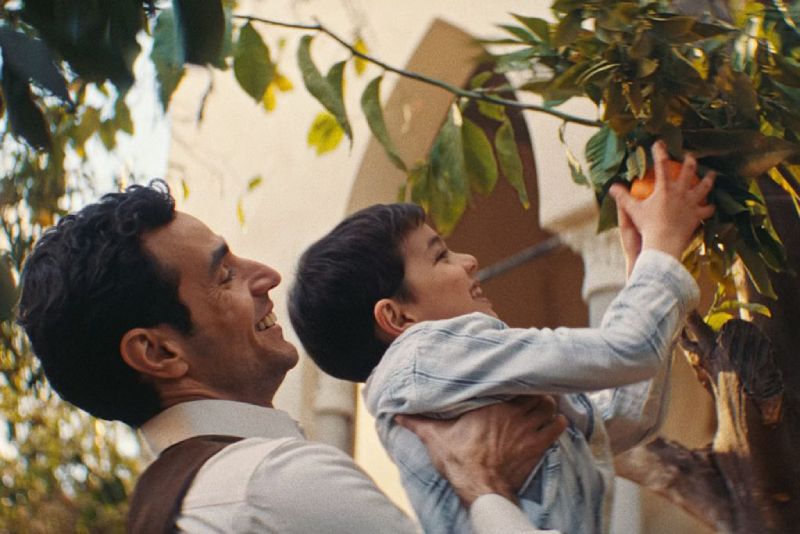
From there, the film gradually retreats into intimacy. The narrative abandons its historical breadth to focus on the family’s internal fractures: occupation reshapes not only territory, but relationships, affections, and the transmission of values. The father figure ceases to be heroic and becomes a site of conflict, eroding Noor’s bond with his own father while drawing him closer to his grandfather Sharif, culminating in the outburst that structures the film.
In this shift, and beyond the grand political narrative, Dabis insists on the micro-history: how geopolitical decisions sediment in bodies and everyday gestures. The characters respond differently—through resignation, fear, or active resistance—and the film traces this diversity, mapping a complex moral landscape.
Yet this effort to render the conflict intelligible for an international audience introduces a degree of didacticism. The film explains, contextualises, orders. At times, this pedagogical impulse softens the ambiguity the material seems to demand. But it is a conscious choice: Dabis does not conceal her intention to fill a narrative void, to give form to an origin she considers absent from the global imagination, and one she herself encountered through her father, a refugee in Jordan.
The mise-en-scène mirrors this movement. The expansive early segments, almost like a historical fresco, contrast with the restraint of the final part, where the drama becomes strictly human. At this point, history ceases to be a backdrop and becomes lived experience—irreparable loss, but also persistence—resulting in a heightened emotional intensity.
The original title, All That’s Left of You, points precisely to that dimension: not so much what has been lost as what remains. The film insists on what endures, on what is transmitted despite fracture.
In this sense, the final screen appearance of Mohammad Bakri—who passed away shortly after the film’s release—as the older Sharif acquires particular resonance. His presence, alongside Saleh Bakri (who plays Salim, Noor’s father) and Adam Bakri, introduces an almost spectral, meta-cinematic dimension of generational memory.
Shot under conditions marked by instability—with production relocated from Palestine to Cyprus and Greece following the events of October 2023, which disrupted pre-production while a refugee camp set was being built in Jericho—the film carries that tension within its very materiality. A story about displacement that also bears its mark in its own genesis.
All That’s Left of You aspires to be a work of historical memory and hope, as its director intends, yet its intimate and devastating ending leaves a sense of suspension—the feeling of a narrative as open as the conflict that gives rise to it.
Nadie ha publicado ningún comentario aún. ¡Se tú la primera persona!