
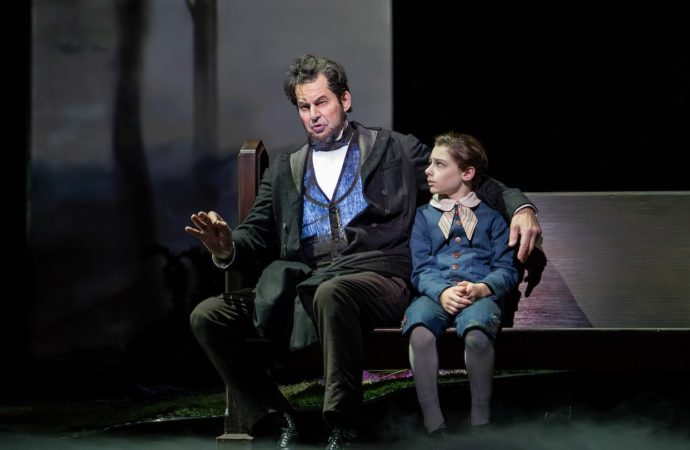
It may be a redundancy or a paradox —one can never be quite sure— but Abraham Lincoln has spent almost a month at New York’s Lincoln Center.
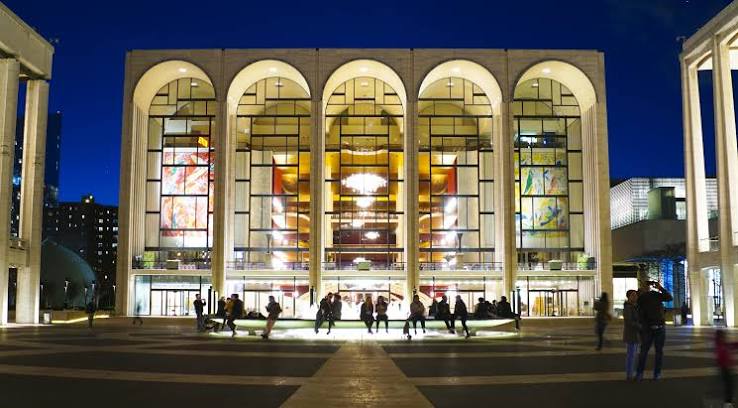
Lincoln at Lincoln Center, quite literally. For four weeks, this vast cultural complex on Manhattan’s Upper West Side —home to the Met, the New York Philharmonic and the Juilliard School, among other institutions— has been transformed into a distinctly American liminal space where the righteous await redemption. A place where the charismatic US president, surrounded by ghosts, has wept and laughed, sung in a baritone voice and lamented the weight of his personal and historical responsibilities.
All thanks to Lincoln in the Bardo, Missy Mazzoli’s opera based on the novel of the same name by George Saunders, which premiered at the Met on October 19 and has become one of the major cultural events of this autumn on the international stage.
Opera as an Instrument of Legitimation
Since the 19th century, opera has played a fundamental role in nation-building, serving as an instrument of legitimation, propaganda and the display of economic status.
Verdi did so in Italy, Wagner in Germany, Smetana in the Czech Republic, and Glinka and Mussorgsky in Russia. John Adams and Philip Glass continue this tradition in the United States, a country that frequently turns to its presidents as symbolic figures through which to explore national identity —a way of sacralizing its history with the endorsement of high culture and economic power.
Thus, we find Richard Nixon in Nixon in China (John Adams, 1987); John Quincy Adams in Amistad (Anthony Davis, 1997); John F. Kennedy in Jackie O (Michael Daugherty, 1997); and Bill Clinton in Billy Blythe (Bonnie Montgomery, 2002). Ronald Reagan, meanwhile, has appeared in two operas: Mulroney: The Opera (Alexina Louie, 1995) and Wallenberg (Erkki-Sven Tüür, 2001).
Lincoln on Stage
Abraham Lincoln is perhaps the president who has appeared most frequently on the operatic stage. This is hardly surprising, given his status as a national icon: he abolished slavery, preserved the Union and was assassinated, becoming a secular martyr.
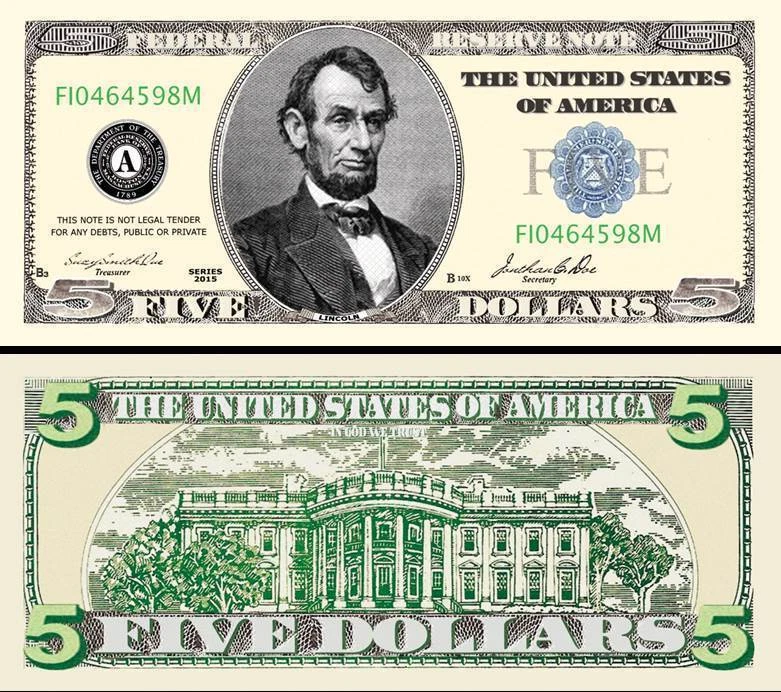
His portrait also appears on the five-dollar bill. Alongside the flag, the dollar is one of the great symbols of the United States, embodying the fusion of individual economic success and patriotic pride —something difficult to find in other countries, with their different currencies and national flags.
Lincoln appears in the operas Appomattox (Philip Glass, 2007), Our American Cousin (Eric Sawyer, 2008) and The Perfect American (Philip Glass, 2013), in which he shares the spotlight with Walt Disney, another American icon. Now, the popular president has returned to the stage in Lincoln in the Bardo.
Culture as a Shaper of Narratives of Power
American culture has always found mass media, particularly cinema, to be an effective instrument for constructing narratives of power and using them as vehicles for propaganda both at home and abroad.
Hollywood has successfully promoted American ideals of freedom as a justification for power, individualism, economic liberalism and the American way of life as hallmarks of progress in contrast to other political and social traditions. It is a cultural industry that combines commercial, political and artistic interests in a way few others can.
It is worth recalling the importance of the United States in bringing both World Wars to an end and their wider consequences, as well as the state of the market during the Cold War (1947–1991). These historical circumstances proved enormously advantageous to the international dissemination of such narratives.
While the American establishment uses mass culture to spread its narratives through propaganda, it also draws on opera, art and literature —in short, high culture— to confer prestige upon them and assert its hegemony.
These are two sides of the same coin. Opera houses around the world —not just the Met—, supported by their respective sponsors and patrons, serve as showcases of national prestige, with their season openings becoming gathering places for the political and financial elite.
Lincoln in the Bardo
The Met’s production of Lincoln in the Bardo meets all the criteria outlined above and introduces two further elements that make it exceptional.
On the one hand, it adapts the novel by George Saunders; on the other, it is the first opera by a woman to receive its world premiere at this prestigious opera house. With this work, New York’s great operatic institution takes a significant step towards gender equality, challenging the patriarchal tradition that has dominated opera for centuries.
Let us hope that other opera houses follow suit. Although Mazzoli is the first woman to have an opera commissioned and premiered by the Met, she is not the first female composer whose work the institution has staged. In 1903, it presented Der Wald by British composer Ethel Smyth, which had premiered in Berlin the previous year. It has taken 123 years for the Met to stage another opera composed by a woman.
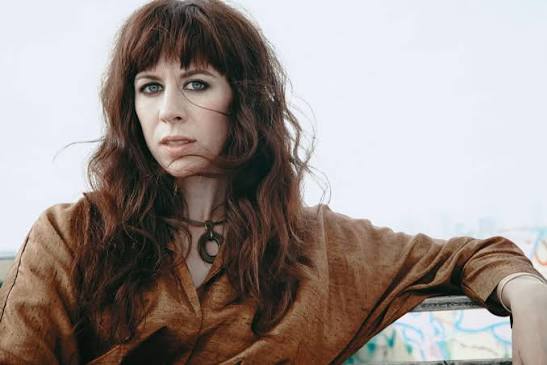
A work deeply rooted in American national identity, it is now being elevated to the status of operatic art through music composed by a woman commissioned by the New York opera house in its century and a half of existence, and a production supported by a predominantly African American artistic and technical team. All these factors make this opera an exceptional event.
As expected, the red carpet at the October 19 premiere was a veritable parade of celebrities —“A-listers shine,” as Americans like to say these days— including Dua Lipa, Callum Turner, and stars from Saturday Night Live, hit television series, popular podcasts and the world of social media influencers. Judging by the guest list, many may well have been attending the opera for the first time and might never have heard of Saunders’ novel. Yet they are familiar faces at major events, commanding millions of followers across social media.
Around the world, opera premieres are no longer merely gatherings of financial and political power. They have also become displays of soft power and entertainment, sometimes with a touch of FOMO thrown in. This migration of the mechanisms of mass culture into the realm of high culture —which should by no means be mistaken for trivialization— is a fascinating social phenomenon that deserves our close attention at this crossroads between the analogue and digital worlds. This is where power now resides.
Saunders’ novel of the same name, on which the opera is based, is an experimental work —a collage of quotations, multiple voices and different typographical devices— that recounts Abraham Lincoln’s nocturnal visit to the crypt at Oak Hill Cemetery in Georgetown, where the body of his eleven-year-old son Willie lies.
Saunders transforms this cemetery into the Bardo, an intermediate realm between death and rebirth inspired by Tibetan Buddhism. It is inhabited by numerous spirits who remain unaware that they are dead and give voice to their desires and frustrations, sometimes with considerable humour. The work explores love and the difficulty of coming to terms with grief in a liminal space such as Oak Hill.
The Rise of Spiritualism
The novel introduces us to a phenomenon that has played a significant role in American culture since the mid-19th century: belief in ghosts and spiritualism.
The Civil War (1861–1865) devastated the country, and many families found solace in practices that nurtured the hope of contacting loved ones who had died on the battlefield. In New York, the sisters Kate and Maggie Fox pioneered modern spiritualism, which quickly spread across the country alongside the development of the telegraph.
If the telegraph made it possible to communicate across thousands of miles, spiritualism promised communication with the afterlife through knocks and sounds. It marked the triumph of a form of global communication that was at once materialist and animist. This duality can be seen in the Western, where the telegraph office is a recurring presence, but also in films such as Pale Rider (Clint Eastwood, 1985), with its connections to the supernatural. Both developments —the telegraph and spiritualism, the material and the spiritual— unfolded in parallel in a fascinating way.
In some cases, spiritualism led people to question religious dogma and became particularly popular within the suffragist and abolitionist movements. With no ecclesiastical hierarchy, it offered women opportunities for emancipation and leadership.
In Europe, spiritualism was closely associated with anarchism. The connections between spiritualism, anticlericalism, feminism and anarchism at the dawn of the 20th century are particularly revealing, not only in the United States but also in Spain —especially Catalonia and the Valencian Community— and France.
Spiritualist séances often became spaces for literacy education and radical feminism. Some examples have found their way onto the big screen. Consider the scene in Libertarias (Vicente Aranda, 1996) in which the character played by Victoria Abril explains why she is both an anarchist and a spiritualist, declaring that God is a woman and that she has spoken to her. A level of political and conceptual radicalism that many of today’s woke movements could only wish for.
Lincoln was no stranger to these practices, which were very much part of life at the White House. Willie’s death was traumatic for the family. Mary Todd Lincoln, the president’s wife, sought solace in the afterlife, organizing séances at the presidential residence with some of the most renowned mediums of the day. Lincoln himself attended several of these gatherings, as various sources confirm.
Willie died in 1862, at the height of both the Civil War and the spiritualist movement. From then on, spiritualism played a defining role in the First Lady’s life. Following Lincoln’s assassination in 1865, Mary Todd visited the studio of William H. Mumler, the celebrated spirit photographer, to have a ghostly portrait made of herself alongside her late husband.
The profound and prolonged grief she suffered following the deaths of her husband and three of her children was so overwhelming that spiritualism became an obsession, ultimately contributing to her confinement in a psychiatric institution.
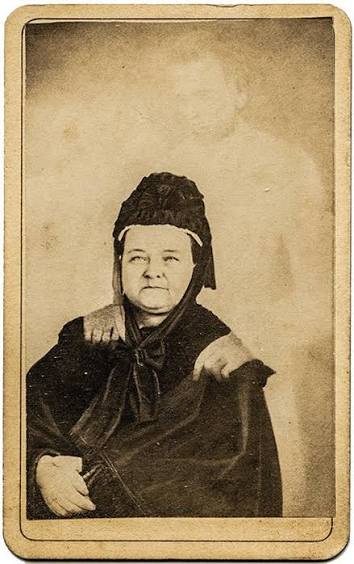
Naturally, this tradition is also reflected in cinema: ghosts and their relationships with the living span every genre, from The Shining (Stanley Kubrick, 1980) to Poltergeist (Tobe Hooper, 1982), and from The Sixth Sense (M. Night Shyamalan, 1999) to the romantic Ghost (Jerry Zucker, 1990) or the comedy Ghostbusters (Ivan Reitman, 1984) and its many sequels.
The Ghostly Tradition, Feminism and National Identity in Lincoln in the Bardo
Saunders’ novel and its operatic adaptation are deeply rooted in this ghostly tradition, while also drawing on another distinctly American characteristic: the elevation of a president to an almost sacred status as a means of examining national identity, without overlooking the feminist dimension of the wider context.
Both works humanize Lincoln within the historical circumstances of his time, marked by the rise of spiritualism, the suffering caused by the Civil War and the desperate desire to preserve the Union.
On a personal level, he is portrayed as a grief-stricken father struggling to fill the void left by his son; on a collective level, as a president overwhelmed by the responsibility of ending the war and the suffering it has caused.
The intimate versus the historical; the family versus the nation; the private versus the collective. Dilemmas that resonate deeply.
Librettist Royce Vavrek, known as the “Metastasio of underground opera”, has adapted Saunders’ novel into two acts, set entirely in a single location: Oak Hill Cemetery.
In the first act, we witness Willie’s arrival at the cemetery and his encounters with other ghosts who refuse to accept their deaths and inhabit the Bardo, suspended between life and eternal rest. Suddenly, Abraham Lincoln appears, devastated by grief and determined to spend the night beside his son’s body, a gesture of love that deeply moves the other spirits.
In the second act, a new spirit appears, the Reverend Everly Thomas, who, together with the other ghosts, persuades Willie to accept his death and move towards the light. Lincoln once again embraces his son’s body.
The spirits then discover how to enter the president’s consciousness and communicate with him, helping him accept his loss and return to Washington, to the world of the living, to lead the country, bring an end to the war and secession, consolidate the abolition of slavery and ensure that the United States remains one nation.
The acceptance of death as an individual responsibility, and political duty as a social and historical responsibility, thus become another example of American history presented as a model of universal values, elevated to an almost sacred status through high culture.
A Spectacular Dreamlike Production
Vavrek has transformed Saunders’ novel into a spectacular dreamlike production, filled with moments of extraordinary visual impact, in which Adam Rigg’s set design, Montana Levi Blanco’s costumes and James Ortiz’s giant puppets play essential roles.
Together, these elements lend Lileana Blain-Cruz’s staging a distinctly Tim Burton-esque atmosphere —particularly reminiscent of films such as Sleepy Hollow (1999)—, something quintessentially American in its own right. Mazzoli’s score is deeply moving, rich in atmospheres of unease and beauty, powerful choral passages and opportunities for the principal singers to display their vocal artistry, especially Peter Mattei, who brings Abraham Lincoln to life through both voice and presence.
Yannick Nézet-Séguin, conducting the Met Orchestra, brings the necessary fluency and assurance to the performance. The result is a production of considerable artistic and cultural significance, fulfilling important social functions and reinforcing a sense of national identity with the support of mass culture.
Nor should we overlook the large number of African American professionals involved in the production: the aforementioned Blain-Cruz, choreographer Raja Feather Kelly, and singers Janai Brugger and Joshua Blue, among others. Together, these elements make the Met’s production a unique theatrical experience and a made-in-USA metaphor for universal values.
Coda: Although its run in New York has come to an end, we can still enjoy Lincoln in the Bardo on YouTube. The platform offers a complete recording of the production (in low resolution), available free of charge, along with numerous high-resolution clips of its most memorable moments.
A visit to the Met’s website will also reveal a wealth of documentation about the production. We live in a globalized world, and the internet makes such access possible —fortunately for culture everywhere, wherever you happen to be. Enjoy the Met’s production, Mazzoli’s magnificent score and Saunders’ extraordinary novel. You will surely approach Lincoln in the Bardo with fresh eyes.
Nadie ha publicado ningún comentario aún. ¡Se tú la primera persona!