
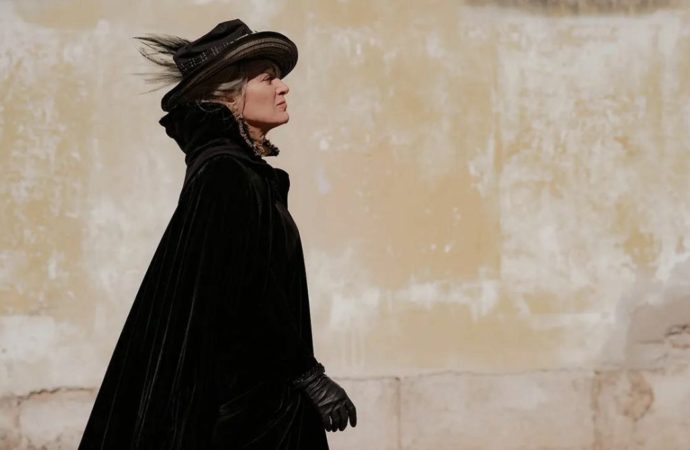
From Lost and Beautiful (Bella e perduta, 2015) to Martin Eden (2019), Scarlet (2022) and the recent Duse (2025), Italian filmmaker Pietro Marcello has established himself as one of the most distinctive voices in contemporary European cinema. Moving fluidly between fiction and archival material—his original vocation—his adaptations are always rooted as much in historical memory as in intimate experience, achieving a singular quality that belongs to true auteurs. Marcello’s films never treat the past as a museum piece or a mere reconstruction; instead, they present it as a living force that continues to converse with the present.
In Duse, which premiered at the 82nd Venice Film Festival, Marcello turns his attention to one of the most influential figures of modern theatre, Eleonora Duse. Yet he deliberately avoids the conventions of the traditional biopic. Rather than celebrating the myth or recounting a triumphant career, he focuses on the woman herself, lingering on her fragility, her failures, and her extraordinary capacity for reinvention. We spoke with him about art and power, memory and archives, the relevance of Duse today, and the making of a film that speaks as much about the present as it does about the past.
EVA PEYDRÓ: Duse is one of the most famous figures in the history of theatre, and yet she remains profoundly mysterious. We have only a handful of photographs, some written testimonies, and a single surviving film, Cenere (Febo Mari and Arturo Ambrosio, 1917), which she co-wrote and starred in. Even the recording Thomas Edison made of her in 1896 has been lost. How does a filmmaker approach the challenge of portraying a woman whose physical and artistic presence is known to us mainly through absences and traces?
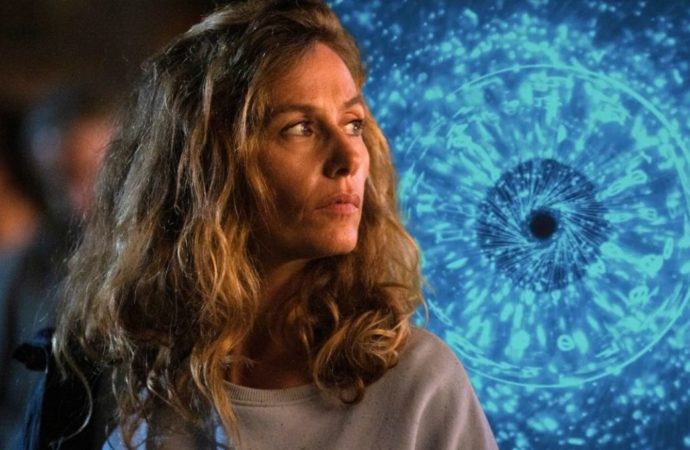
PIETRO MARCELLO: I think every filmmaker can tell her story differently. Whether I succeeded or not, I don’t know, but this is how I wanted to tell it. I approached her this way because I wanted, in a sense, to strip her bare. Not so much Eleonora Duse as a historical figure, but rather to use her as a way of exploring female talent, fragility, and creative strength—the qualities that Valeria Bruni Tedeschi embodies in the film. That was what interested me most.
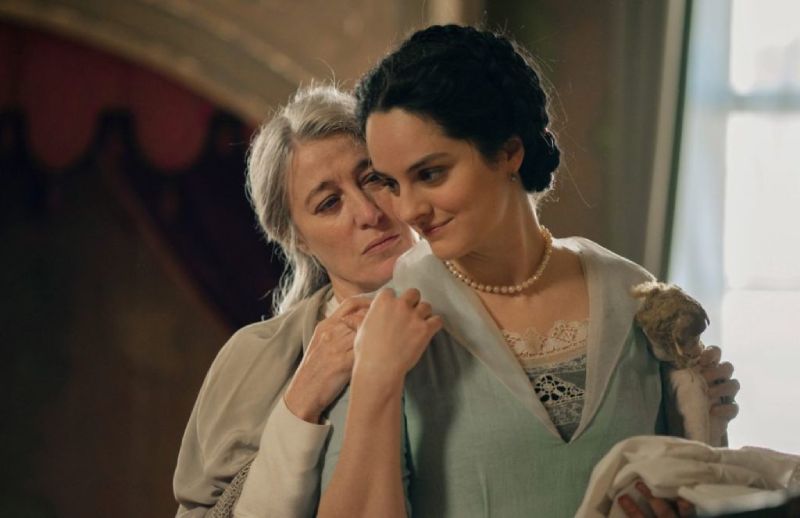
The film does not focus on Eleonora Duse at the height of her fame, but rather on the final stage of her life, when she was facing financial difficulties, health problems and a certain sense of historical displacement. Was it precisely that fragility that interested you? Do you think periods of decline reveal more about a person than moments of success?
First of all, because I am more interested in the defeated than in the victors. The victors always get to tell history the way they want. What interested me was not the moment of success, but the moment when survival became most difficult for her. That is why I am drawn more to the defeated than to the winners. I also wanted to expose some of the fragilities that belong to us as creators. I was not interested in telling only her successes, but also her failures, because our lives are made of failures as well. I am sorry, but life is made of failures too. Naturally, in cinema nobody wants to see failure. People always want to see victories, just as in politics and in history. I wanted to portray this talented and creative woman through her vulnerabilities, because we ourselves are made of vulnerability. What interested me was the relationship between the human and the divine.
Duse’s passion for art drives her to reinvent herself constantly, to become interested in cinema and even to consider directing her own films. Do you think that ability to start over, even after defeat, is one of the defining qualities of true artists?
Absolutely. Especially because she had withdrawn from the stage for many years. She had enormous financial problems and suffered from depression. When we are young, we are intoxicated by a kind of unconsciousness. We may lack experience, but we possess talent. Talent, energy and determination belong to a certain youthfulness in our lives. As time passes, we gain experience, but we lose some of that strength and tenacity. What I wanted to portray was the condition—the twilight—of a heroine, of a great female figure such as Duse in the final years of her life.
But what interested me most was this woman’s ability to say no. “I do not accept this. I want to be different from everyone else.” We must remember that Duse was a figure of the nineteenth century, and navigating such a male-dominated world must have been extraordinarily difficult. If she achieved the success she did, it was because she possessed immense, almost monstrous talent. It was that talent that allowed her to make her way through life.
The film opens during the First World War with a striking image: Eleonora Duse ascending in a rudimentary cable car to meet the soldiers. It is an almost allegorical scene, suspended between reality and myth. When did you realise that the film had to begin there, literally elevating Duse above a world that was on the verge of collapse?
Because I am fascinated by the view from above, by the idea of observing the world from a higher vantage point. There is something more mystical, more spiritual about it. I wanted her to arrive from above and to arrive in the midst of war. At that point she was no longer acting, although she would later return to the stage. During those years she often visited soldiers at the front. It is also important to remember that Duse supported Italy’s intervention in the First World War, which is part of her historical complexity.
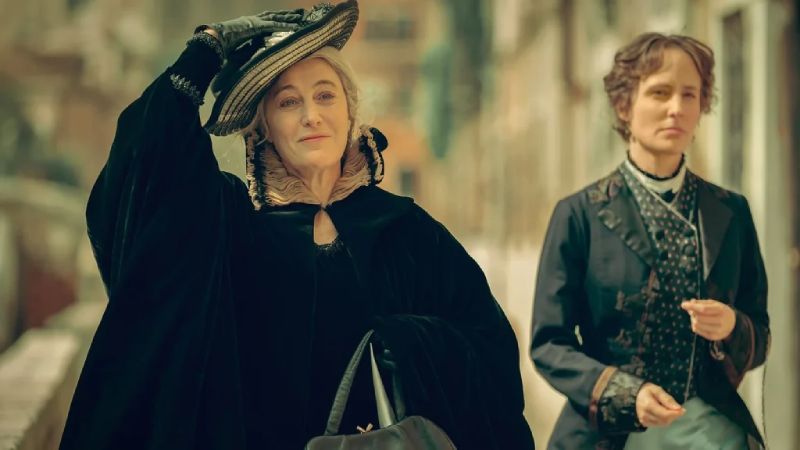
In Duse, we encounter a woman who believes deeply in art and in its ability to elevate human beings, yet at the same time witnesses the emergence of a world in which culture, poetry and even patriotic symbols are increasingly instrumentalised by power.
The divine and the human… Many artists have behaved in fragile ways in the face of History. That is not the case with Eleonora Duse, because in the end she left and died in America, unlike D’Annunzio—played in the film by Fausto Russo Alesi—who gave his aesthetics to Fascism, and those aesthetics were later exported throughout the world. That is why I am not particularly fond of D’Annunzio. He was a good writer, he wrote beautifully, but I do not feel any special admiration for him.
Do you see any parallels between that era and our own? Is art still enough on its own, or does it need to be accompanied by an ethical dimension?
I believe human beings are capable of causing immense harm, except when they create works of art as an alternative. Art undoubtedly heals the soul, and that is its strength. But beauty exists within us, as Tolstoy said. Beauty is inside us, and it is we who create that beauty in our everyday lives. I am against art without ethics. I believe the artist’s role is to bear witness to his or her own time. And what is happening today, just as it happened then, is indifference and moral cowardice. I do not know if you remember that poem often attributed to Brecht that says: “They came for the Jews, and I looked the other way…”
And in the end there was no one left to defend him…
And in the end they came for him as well. Especially at a moment like this, when none of us could have imagined twenty years ago that we would be living through what we are living through today.I am often quite bewildered by people who have no point of view, no position of their own, who prefer not to see and simply turn away.
Archival footage is a constant feature of your cinematic language. In Duse, Gloria: Apotheosis of the Unknown Soldier runs throughout the film—what should be a plea for peace is intercut with Fascist imagery. In your work, History never functions as a mere backdrop. To what extent has your background as a researcher and archivist shaped the way you make films?
I am a complete archivist. I love archives. For me, fiction is a game. I enjoy it because I have been a camera operator, a cinematographer, an editor and a producer; I have produced all of my films. But archival material is something unattainable. Through fiction, even through historical films, it is impossible to achieve the power of archival footage. Impossible.
These archival materials, together with your use of music, deliberately challenge the idea of conventional historical reconstruction. As in Martin Eden, you seem to use anachronism to bring the past closer to the present. Are you interested in reminding us that human emotions remain contemporary, regardless of the historical period in which a story takes place?
The music I used actually belongs to that period. It was not so much a question of anachronism. These are pieces that were composed at the time. There is Vivaldian music, but there is also electronic music. I have always liked contaminating my films, and this film is not so different from Martin Eden. It has many things in common with Martin Eden, because both films, in the end, carry History on their shoulders. Today I no longer approach filmmaking from an aesthetic point of view. I have been engaged with cinema for thirty years. What matters most to me is finding content, finding a story that can communicate something meaningful.
In life you learn how to do many things, but I have a particular love for archives. In fact, I am currently working on a film about the twentieth century composed entirely of archival footage. It is something I have been doing for many years, and I genuinely enjoy working with this material.
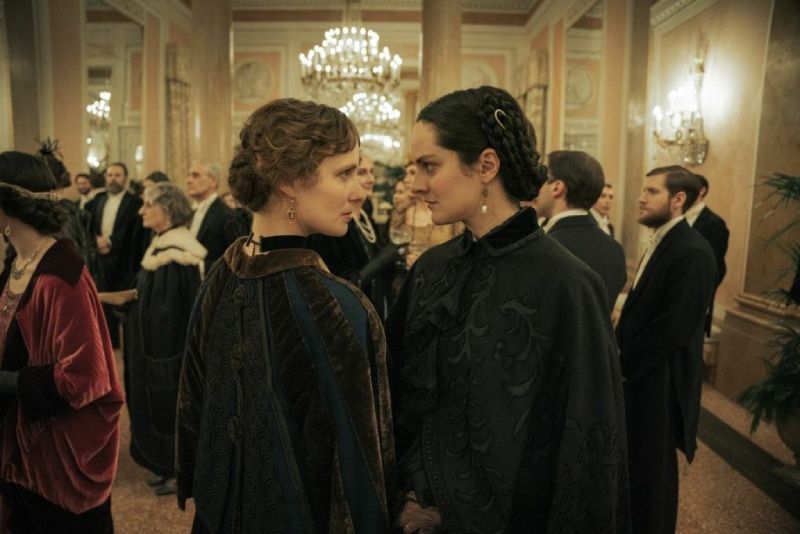
In the scene depicting the encounter between Eleonora Duse and Sarah Bernhardt, played by Noémie Lvovsky, one might expect a clash of divas, as in a conventional biopic. Instead, you construct a dialogue between two different conceptions of art. Were you interested in moving beyond that competitive logic to show a lineage of female artists who recognise one another?
What interested me was the fact that Sarah Bernhardt lived in a very different world from Duse’s. Paris was a far more developed city than the Italian cities of the time. Italian theatre was old and stagnant. It was not very different from what existed in Spain or elsewhere in Italy. Madrid was not Paris. Venice and Rome were not Paris. Paris was an extraordinarily vibrant cultural city. The criticism that Sarah Bernhardt directs at Duse has nothing to do with her talent. What she criticises is the world surrounding her. Duse was profoundly modern, but the environment around her was an old theatre, made by old people. That is the criticism Sarah Bernhardt makes of Eleonora Duse.
Finally, I would like to ask you about Valeria Bruni Tedeschi. There is a very special connection between your direction and her performance. The film seems to be built around a particular energy that she brings to the screen. Did you feel from the beginning that you had found your Duse, or was it a creative relationship that developed during the shoot?
I must confess that there was no casting for this film. There was no casting for the role of Eleonora Duse. The project was offered to me and I immediately said: “Yes, I’ll do it, but only with Valeria Bruni Tedeschi.” Because Valeria is not just an actress; she is also a director. She has character, spirit and a very strong personality. Working with her has been one of the most beautiful experiences of my life. Above all because I had an enormous amount of fun. She improvises a great deal, and I love improvisation. I made this film in a state of grace, almost as if it were an epiphany. And I never thought of making a biopic. The biopic as a form did not interest me at all. I never saw Duse perform, nor did I ever hear her speak. The screenwriters worked from historical sources. What interested me was stripping away the myth and portraying this female figure through her strength, but also through her weaknesses. Because we ourselves are made of weaknesses.
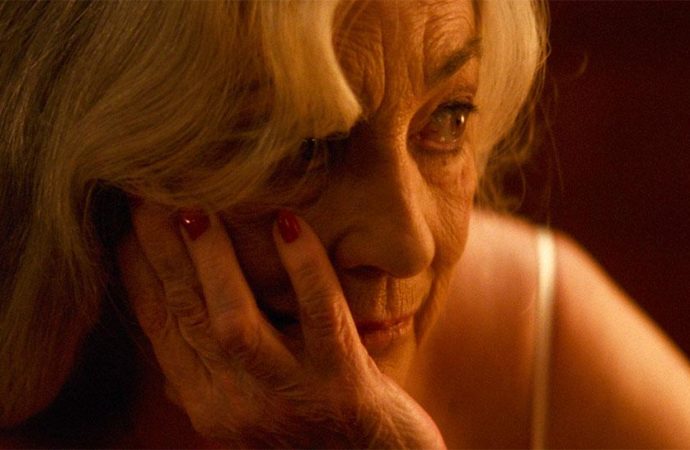
Contemporary critics often described Duse as an almost spiritual presence, something that seemed to reside above all in her gaze. That is why I was struck by your constant use of extreme close-ups. There is a sense that Valeria Bruni Tedeschi’s eyes end up organising the entire visual structure of the film. Was that a conscious decision from the beginning?
Because she is always crying. But she is not crying for no reason. Life is made of smiles and tears, and she does not hide her tears. I think there is something beautiful about a person who does not hide them. Duse cried too. The problem is that perhaps today nobody wants to see tears in cinema. Nobody wants to see failure. Nobody wants to see a certain kind of pathos either, and yet pathos is very much present in this film, because both D’Annunzio and Duse are deeply pathetic figures in the classical sense. That interested me as well, because the structure of the film is that of a melodrama. We invented melodrama in Italy in the seventeenth century, and later the Americans inherited it. Italians, Spaniards… in the end, it is something that belongs to Latin cultures. In the film everyone is constantly shouting. I have never seen a German or French film in which people shout like that. In Italian films they do. In Spanish films too. We shout all the time. And there are moments of emotional excess that I love very much. Although an Anglo-Saxon viewer will probably watch it and think: “What is this? It’s far too melodramatic.”
Throughout this conversation, Pietro Marcello reaffirms why he occupies such a singular place in contemporary cinema. Drawn to complexity rather than certainty, he resists simplification and approaches history through the lens of the present, guided by a deeply humanistic concern for resilience, resistance and the dignity of failure.
In Duse, that vision finds an exceptional vehicle in the figure of Eleonora Duse, an artist who never ceased to believe in the transformative power of art, even as the world around her seemed to drift towards darkness. Marcello’s film ultimately speaks not only about a legendary actress of the past, but also about our own time: about the responsibility of artists, the fragility of beauty, and the necessity of continuing to create in moments of uncertainty.

Nadie ha publicado ningún comentario aún. ¡Se tú la primera persona!