
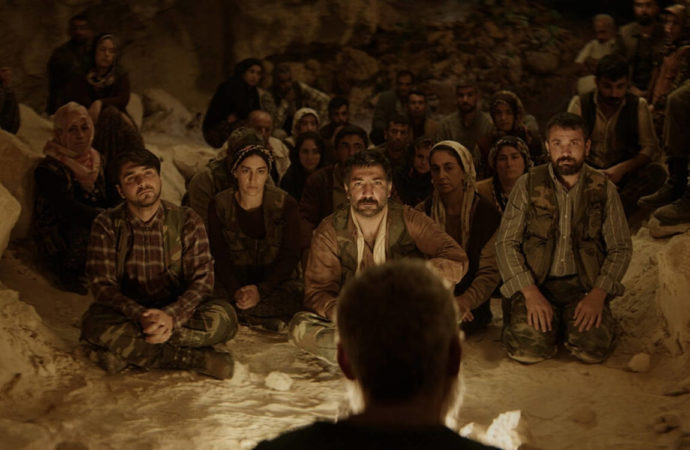

In Emin Alper’s cinema, fear is rarely an individual experience. It spreads, becomes contagious, and ultimately turns into a collective force capable of distorting the perception of reality. From Beyond the Hill (2012) to Salvation (2026), the Turkish filmmaker has explored the mechanisms through which communities construct threats, identify enemies, and find in obedience to an authority figure the promise of security.
His latest feature places these concerns within a confrontation between two Kurdish clans, in a territory where land disputes, religious beliefs, and power struggles intertwine, eventually unleashing a spiral of violence.
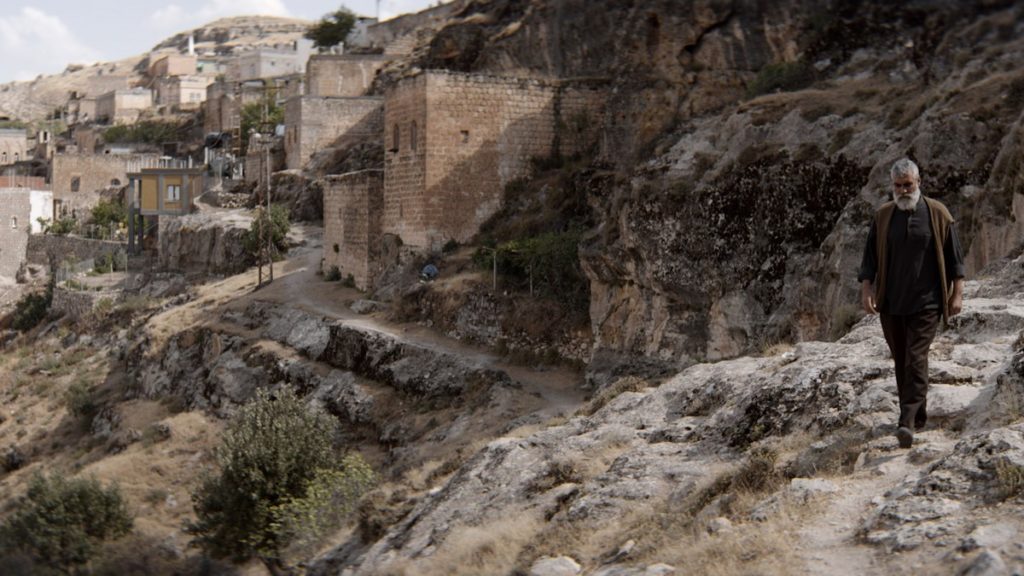
Salvation (2026).
The Enemy as a Cultural Legacy
The construction of an enemy is a recurring theme in Alper’s filmography. In Beyond the Hill, a family projects its internal tensions onto an external threat; in Frenzy (2015), paranoia and surveillance turn suspicion into a form of social interaction. Salvation takes this concern into a territory where fear becomes intertwined with religion, a sense of belonging, and the need for leadership.
Alper believes that the need to identify an enemy recurs throughout history. But in the case of Turkey — as he also points out during our conversation — there is a specifically cultural dimension: from childhood, particularly through school education, people are taught to perceive a constant threat coming from outside.
That enemy can take many different forms: another country, a minority, an immigrant community, or any group perceived as different. What matters is not so much its specific identity as the conviction that there is a permanent threat against which one must protect oneself.
According to Alper, this upbringing rooted in mistrust reinforces the belief that one must be stronger than others to ensure one’s own survival. Self-defence ceases to be a response to a specific danger and becomes a collective attitude, a way of understanding relationships with the wider world.
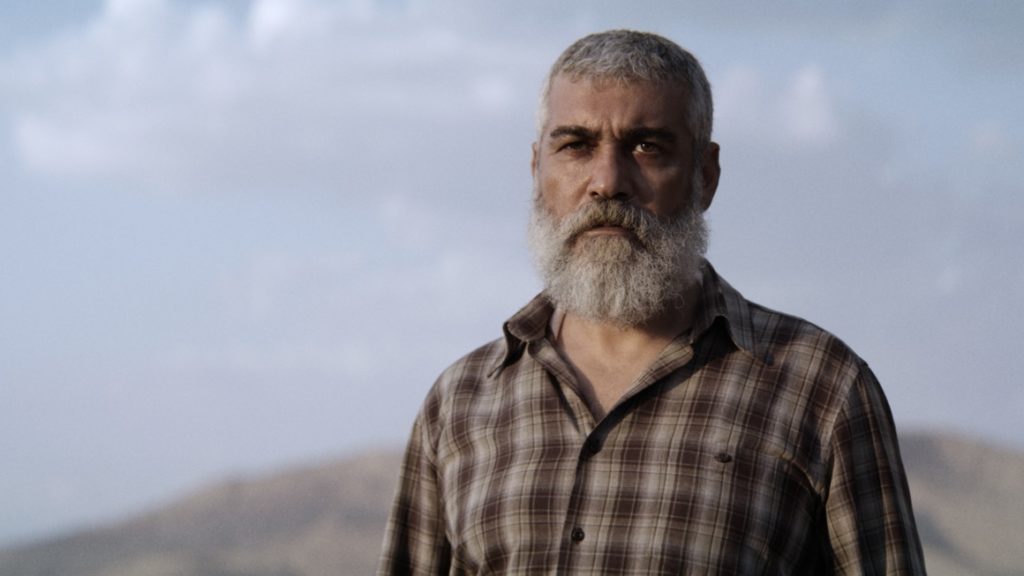
Salvation (2026).
Salvation explores precisely this ambiguous territory, where the need for security can turn into obedience, and the conviction of acting in self-defence ultimately serves to legitimise violence.
Anatolia, a Landscape That Tells Stories
Physical space plays a fundamental role in Alper’s cinema. His films are deeply connected to the territories in which they unfold, and the landscapes themselves seem to participate in the characters’ conflicts.
The director explains that he begins searching for locations at a very early stage in the development of his projects. It is not simply a matter of finding a suitable setting for an already defined story, but of allowing the environment to play a part in shaping it.
Alper has a particular fascination with the Anatolian landscape, whose expressiveness and dramatic power he considers extraordinary. Its mountains, vast open expanses and isolated settlements possess a presence that goes far beyond the purely visual: the barren plain, where an individual finds himself trapped in an infinite landscape with few resources; the labyrinth; underground spaces; dead-end alleys leading to precipices; cursed orchards; or gathering places (mosques, squares) that bring together dehumanised people, to be exterminated like beasts or indoctrinated like a flock.
As the director confirms, in his cinema the landscape is intertwined with the plot, shapes the atmosphere and contributes to the development of the narrative. It is neither a decorative element nor a mere geographical backdrop, but an essential dimension of the film, influencing the fate of its characters: disputed lands, gloomy cellars turned into prisons, roads disappearing into the horizon…
This relationship between territory and storytelling is particularly evident in Salvation, where isolation and geography help construct a world dominated by tensions between communities, fear and belief.
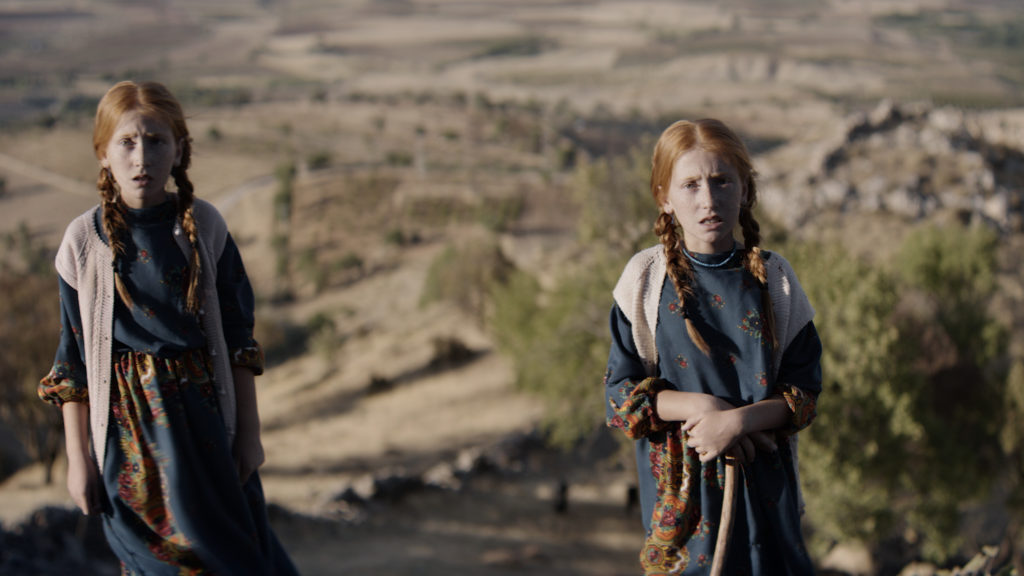
Salvation (2026).
Cinema Across Genres
Alper’s work has a constant and undeniable connection to the western, both in the importance of landscape and in its territorial conflicts, codes of masculinity, and confrontations between individuals and communities.
The filmmaker acknowledges this influence but refuses to be confined to a single cinematic tradition. What interests him is precisely the possibility of combining genres and using their conventions flexibly.
His films bring together psychological drama, thriller, horror and western elements, without any one genre necessarily taking precedence over the others. This freedom allows him to address political and social conflicts through narrative forms that intensify the audience’s emotional experience.
In Salvation, the religious dimension and the characters’ visions introduce unsettling elements that border on psychological horror, while the territorial disputes evoke the western. Meanwhile, the progressive breakdown of communal relationships and the escalation of violence generate the tension of a thriller.
Dreams also occupy an important place in his conception of cinema. Alper attributes to them a narrative potential that goes beyond their possible fantastical function: they provide access to dimensions of human experience that cannot always be expressed through strictly realistic representation.
The blending of genres and the presence of dreamlike elements thus stem from the same pursuit of expressive freedom, in which the boundaries between different cinematic forms become increasingly fluid.
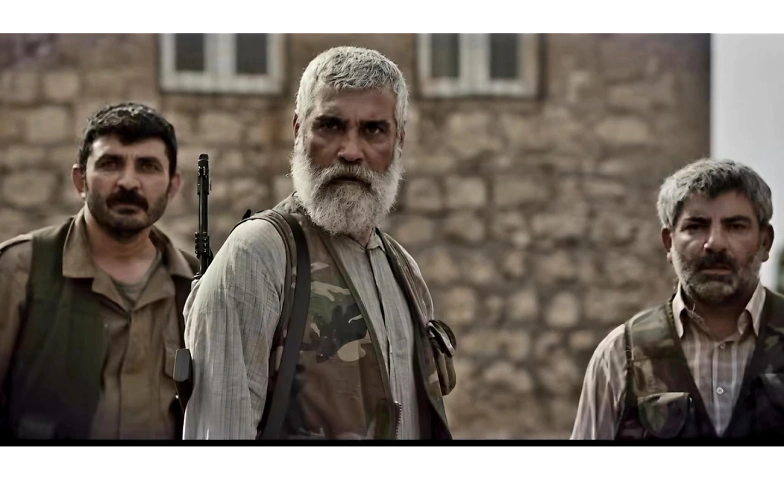
Salvation (2026).
Script Precision and Freedom of Interpretation
This formal openness does not, however, mean sacrificing precision when directing actors.
Alper places decisive importance on the screenplay as a means of conveying the motivations, contradictions and psychological worlds of his characters to the performers.
He explains that he tries to ensure that all the necessary information is contained in the script and that the actors remain faithful to what is written, while each subsequently brings their own interpretation to the role.
It is an approach to acting that combines a rigorous structure with the freedom necessary for characters to come to life through their performers.
This attention to detail is particularly important in a cinema where characters can rarely be reduced to simple moral categories, and where conviction, fear and self-deception coexist within the same behaviour — another aspect to which Emin Alper attaches fundamental importance.
Filmmaking While Blacklisted
The political dimension of his filmography has had direct consequences for the production of his films.
Alper explains that he has been on a blacklist of filmmakers denied official funding in Turkey for years because of their political positions. This institutional exclusion considerably limits his opportunities to secure financing within the country.
International recognition has not changed the situation either. Asked whether winning the Silver Bear might open doors for him in his own country, his answer is no. International co-productions remain, in practice, his main means of bringing new projects to fruition.
The paradox is clear: while his films receive some of the most prestigious awards on the international circuit, he continues to face structural obstacles to financing them in his own country.
Nevertheless, Alper rejects the idea that filmmakers from societies marked by political conflict are necessarily obliged to make political films, or that this is what international audiences expect of them.
As an example, he mentions Nuri Bilge Ceylan, whom he considers the finest Turkish filmmaker and whose work is not characterised by an explicitly political agenda. He contrasts him with directors such as the Iranian Jafar Panahi, for whom political engagement occupies a much more central place.
Geographical origin, therefore, does not necessarily determine the nature of a filmmaker’s work. Political cinema is an artistic choice, not an obligation imposed by one’s national context.
Towards a Freer Cinema
Reflecting on the evolution of his career, Alper acknowledges a transformation in his cinematic language. He considers that his early films followed a more rigid, more constrained approach, whereas over time he has gained greater expressive freedom.
This evolution does not mean abandoning the concerns that have defined his work, but rather expanding the cinematic resources through which he can explore them.
The blending of genres, the growing importance of dreams and the integration of landscape into the narrative structure are all part of this pursuit of a cinema less constrained by formal conventions.
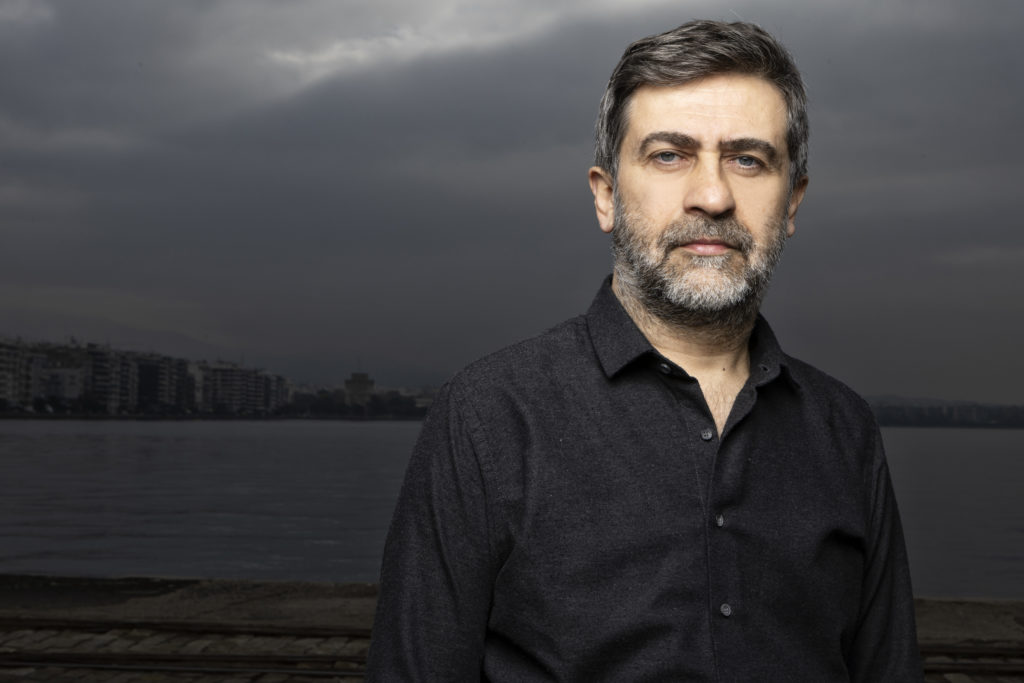
Emin Alper at Thessaloniki Film Festival © Photo: Aris Rammos.
In Salvation, all these dimensions converge in a story that explores the mechanisms of power and violence, while also drawing on the strength of its imagery and the complexity of its narrative structure to forge a distinctive cinematic identity.
Emin Alper’s cinema continues to question why communities need enemies and why individuals are willing to surrender their freedom to those who promise to protect them. At the same time, however, his evolution demonstrates that these concerns can be expressed through an increasingly open cinematic language, one in which the imagination resists being confined to a single form. This is the growing creative freedom in his career that the director acknowledges during our conversation.




Nadie ha publicado ningún comentario aún. ¡Se tú la primera persona!