
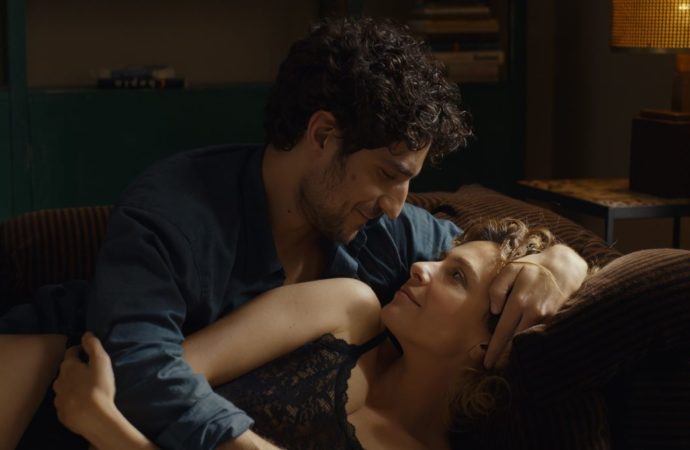

Thirty-seven years after Palombella rossa — his last appearance in the Venice competition, not without controversy — Nanni Moretti returns to the Lido with Succederà questa notte, a loose adaptation of Eshkol Nevo’s stories collected in Legami. The director himself has explained the origins of the project: the precision with which Nevo portrays relationships and the emotional weight of his stories about love, encounters and abandonment led him, together with screenwriters Federica Pontremoli and Valia Santella, to construct a single narrative from scattered fragments — taking a relationship from some stories, a character from others, and sometimes little more than an image.
The result is the story of Greta and Matteo — Jasmine Trinca and Louis Garrel — who meet again and again over the course of seventeen years, always at the wrong moment, sustained by the stubborn belief that life will always offer another chance, that the night when it finally happens will eventually come. It is, explicitly, a film about feelings and the need to put them into words: to allow them to surface, to admit without reservation that we care, to tell one another without embarrassment that we are in love.

That Moretti should pursue melodrama here is no coincidence, as confirmed by his choice of composer: Alberto Iglesias, the long-time musical collaborator of Pedro Almodóvar, works with the Roman director for the first time. It is a gesture of clear intent, almost a declaration of genre. But melodrama demands a surrender to emotion and an ability to convey something universal yet hidden, even while remaining bound to the plot — something Moretti, a filmmaker of ironic distance and oblique commentary, does not always manage to sustain.
The love story between the two protagonists, unfolding over almost two decades, often feels forced and overly literary. There is honesty in its premise — although this notion of repeatedly mistimed encounters possesses a recognisable truth only on the literary page or in banal screenplays, never in the lives we actually lead — but the execution feels contrived from beginning to end, with sex scenes that seem dictated by the screenplay rather than demanded by the story, and emotional crescendos that fail to achieve the credibility they seek.
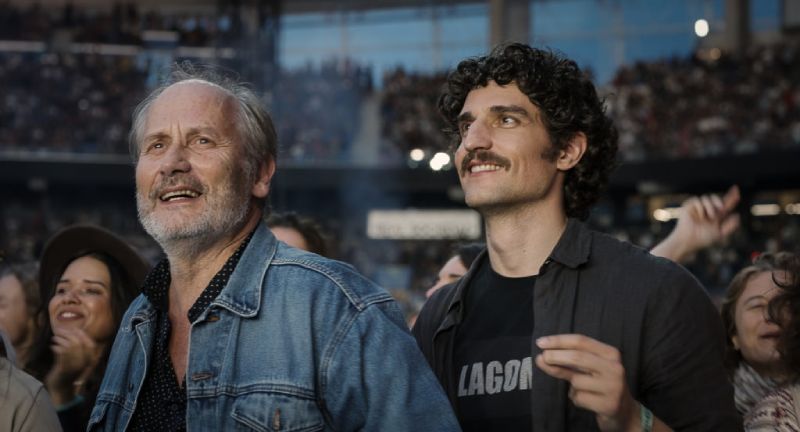
The ending only accentuates the problem. A third encounter unfolds as a kind of literary evening in which actors read passages from writers and philosophers. Perhaps Moretti’s intention is to emphasise the fictional dimension of everything that has come before, suggesting that certain scenes imagined by the characters will never correspond to actual events. It is a legitimate idea and one that, on paper, could have been highly effective, but it feels as constrained as the rest of the film. And although the ending does manage to move us, it never entirely escapes a sense of falseness and contrivance.
One question remains: was this precisely the effect Moretti intended, or has the mechanism ultimately escaped his control?
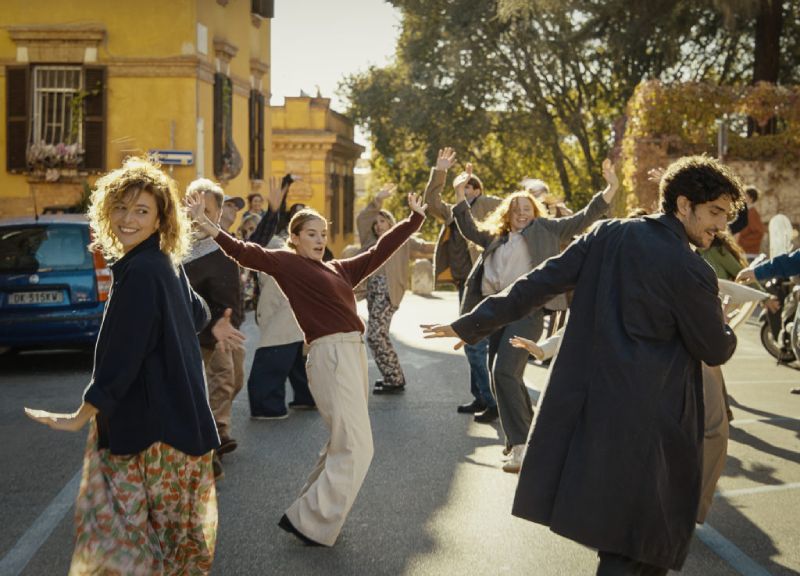
Paradoxically, the film’s most successful passages are those that have least to do with the melodrama it is pursuing and most with the Moretti we have always known, working in a lighter register: the scenes with the protagonist’s mother (Angela Finocchiaro) and father (Hippolyte Girardot), the dancing, that tender, observational comedy the director handles so effortlessly. This is where the film breathes; elsewhere, it strains. Nor does the cast entirely manage to conceal this fracture: neither Garrel nor Trinca seems particularly at home in their role, although he is, despite everything, somewhat more convincing than she is.
Was this the melodrama Moretti wanted to make, or the one he thought he ought to make? Succederà questa notte will surely make many people cry when it reaches cinemas in December. Yet the overriding impression remains that of a not entirely successful exercise in style, one that sits uneasily within its director’s body of work.


Nadie ha publicado ningún comentario aún. ¡Se tú la primera persona!