

Weezer’s self-titled debut album, better known as the Blue Album, had sold more than two million copies by 1995 and been certified double platinum. Its three singles, along with their accompanying music videos, had been huge hits, making Weezer the first major band to break through in the alternative rock scene — still the dominant force in music following the death of Kurt Cobain. Expectations were therefore sky-high for their next record, an album that would be called Pinkerton.
What nobody expected was that this record, which had begun life as a strange concept album, would end up becoming a first-person account of the trials and tribulations of a guy who becomes a rock star and, after growing tired of having sex, finds himself longing for a deeper relationship, all while sniffing a letter from a fan who is barely of legal age and imagining her masturbating.
The album was savaged by critics, achieved less than half the success of its predecessor and was even partly disowned by its principal creator, who described it this way: “It was like getting really drunk at a party and blurting out everything that was going through your head in front of everyone, feeling incredibly good and liberated by it, only to wake up the next morning and realise you’d made a complete idiot of yourself in front of everybody.” And the fact is that Rivers Cuomo had vomited up, almost literally, a masterpiece.
Incredibly, by the time Weezer decided to move forward with a third album, five years after Pinkerton, the record had already achieved cult status and become the band’s most beloved album among fans. Some of them would never connect with anything Weezer released afterwards, recognising only the Blue Album and Pinkerton as the band’s two masterpieces. Something even the biggest fan of “Beverly Hills” or “Pork & Beans” knows to be true.
So let’s go back to 14 April 1995, when Rivers Cuomo, Weezer’s singer, principal songwriter and lead guitarist, underwent surgery to correct a two-centimetre difference in the length of his legs. His recovery would be long and painful, and he would also enrol at Harvard to study classical composition. By then, he had already developed an obsession with the opera Madame Butterfly, which would inspire the title Pinkerton, and had begun writing songs for his next album, Songs from the Black Hole, a rock opera in which he intended to grapple with his conflicting feelings about Weezer’s success.
Pinkerton is one of the most honest and raw records ever made about what goes through a young man’s mind after his dream of becoming a rock star comes true.
That success had given him an inferiority complex about his own music. He thought his songs were “simple and stupid” and wanted to create something complex and intense, which led him to Harvard. That insecurity would remain evident in some of the songs on Pinkerton, as when he exclaims in “Falling for You”: “What could you possibly see in little ol’ 3-chord me?”
But after the operation, his mental state began to deteriorate. The idea of a futuristic rock opera featuring robots increasingly struck him as whimsical and disconnected from his own reality. Even so, the band managed to record several songs intended for the album, including “Blast Off!”, “Longtime Sunshine”, “I Just Threw Out the Love of My Dreams”, “Tired of Sex” and “Getchoo”. Some would be repurposed for Pinkerton, but one thing was already clear: the quality was exceptionally high, and Cuomo was writing some of the finest songs of his career.
The sound of the songs also changed to match the lyrics. Gone was Ric Ocasek’s gleaming, crystal-clear production, replaced by a much rawer sound and dirtier guitars. In January 1996, during the university’s Christmas break, they recorded songs such as “El Scorcho” and “Pink Triangle”, in which Cuomo fantasises about marrying a girl at Harvard he has never even spoken to, until he spots a pink triangle and assumes that marriage is impossible because she is a lesbian.
A whole new generation saw Pinkerton as a mirror in which they could recognise themselves.
Essentially, Pinkerton is one of the most honest and raw records about what goes through a young man’s mind after his dream of becoming a rock star comes true. And that is not because Cuomo is a particularly gifted lyricist, but because he writes with such unflinching candour that he hardly paints himself in a flattering light. Something his Weezer bandmates also noticed, as they were none too pleased with the singer’s new lyrical direction.
Rivers’ deeply autobiographical songwriting, combined with the fact that this little three-chord guy still had an innate gift for irresistibly catchy choruses, makes Pinkerton the great album it is. It opens with a heavily distorted note before the singer admits that he is tired of the casual sex so typical of rock mythology. It was curious that a song like this should strike such a chord with a target audience still playing Dungeons & Dragons well into their twenties. But even if they weren’t hooking up with Jen, Lynn or Jasmine, it was easy to identify with a guy searching for that much-maligned ideal —at least among Generation X— of true love.
Things remained raw on the direct and menacing “Getchoo”, another song salvaged from Songs from the Black Hole. But despite the strong opening, the album began to soar with the wonderful “Why Bother?”, in which, armed with one of those near-perfect choruses (and those Matt Sharp backing vocals) so characteristic of Weezer, Cuomo wonders why he should bother getting excited about a new relationship if it is only going to end in heartbreak.
“Across the Sea” is both one of the best songs and one of the most problematic on Pinkerton. It is the song in which he describes how much a letter from an 18-year-old Japanese fan —although she may well have been younger— meant to him, telling him how much she loved his songs. Rivers Cuomo spares no details, describing himself sniffing the letter while imagining the girl masturbating and wondering why the entire Pacific Ocean has to separate them. The only thing that seemed clear was something he admitted in the song itself: I need help…
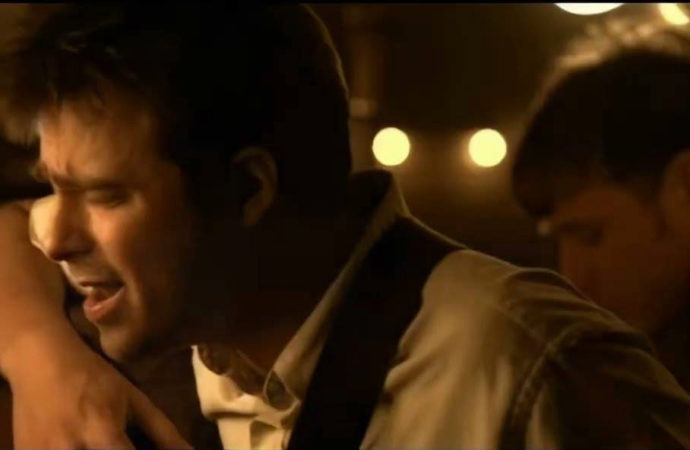
Then came the song that should have been the album’s lead single, boasting the most irresistible chorus of Weezer’s career alongside “Buddy Holly”. That song was “The Good Life”, in which Cuomo, tired of his spiritual retreat at Harvard, decides that the time has come to return to the good life, shaking his backside and enjoying sex without responsibility. By the time they tried to use it to rescue the album’s sales, even shooting a video in the style of those from the Blue Album, it was already too late, and Pinkerton never managed to take off.
Which is a shame, because the “The Good Life” single featured the finest song left over from the Songs from the Black Hole project: the essential “I Just Threw Out the Love of My Dreams”, one of the best songs of Weezer’s career, sung by Rachel Haden, daughter of Ornette Coleman’s bassist, Charlie Haden. Quite simply, one of the great singles of the 1990s.
But Cuomo chose to introduce the album with “El Scorcho”, another great song, though far less immediate and further removed from the sound people had come to expect from the band, with the singer half-rapping over a funky rhythm. The chorus, however, was pure gold once again, with that irresistible singalong: “I thiiiiink IIIIII’d be gooooood for yoooooooou, and yoooooooou’d be gooooood for meeeeeee!” The song returned to another of the singer’s infatuations, a half-Japanese cellist he met at Harvard who also appears in “Falling for You”, the album’s penultimate track. It is the song in which he asks her what she could possibly see in this “little three-chord guy”, and which contains one of the album’s defining lines: “I’d do anything to get the hell out alive / Or maybe I would rather settle down with you.”
The album ended in the least Weezer-like way imaginable, with Cuomo and an acoustic guitar taking on the role of Pinkerton and asking forgiveness from his own personal butterfly. There was certainly no Spike Jonze video that could have turned this song into a hit. It was, however, the perfect ending to an album about a nerd turned rock star on the verge of a nervous breakdown.
After the critical backlash and the public’s rejection of the album, Rivers Cuomo felt exposed and believed he had made a fool of himself in front of the whole world by laying himself bare in his songs without any filter. But an entire new generation saw the record as a mirror in which they could recognise themselves, and bands such as Jimmy Eat World and The Get Up Kids, who spearheaded the emo movement of the early 21st century, have never hidden their love for Weezer and, in particular, Pinkerton.
And so the album that almost broke up the band — Weezer did, in fact, split up after the Pinkerton tour, and Matt Sharp would never return — ended up becoming the foundation of a legacy that has seen the band go on to record another 18 albums. Although we all know, Rivers Cuomo included, that none of them comes close to the heights reached here or on their debut.




Nadie ha publicado ningún comentario aún. ¡Se tú la primera persona!