

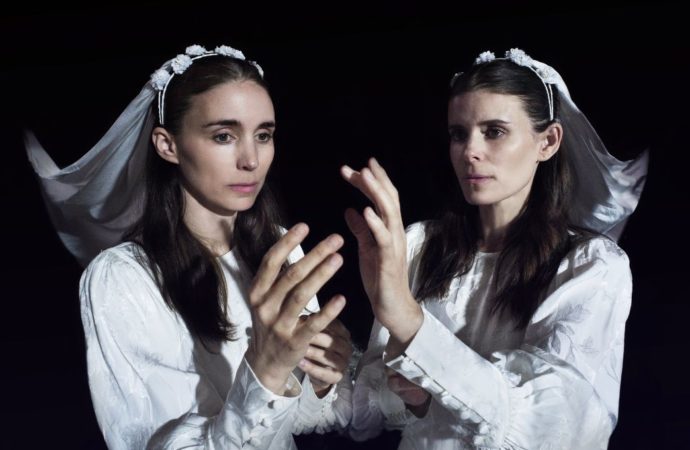
Some filmmakers mellow with age. Werner Herzog, by contrast, seems to have spent recent years sharpening the same obsession that has always driven him: the disproportion between human desire and the material world that stands in its way. Bucking Fastard, his first fiction feature since Family Romance, LLC (2019), arrives at the Lido in competition for the Golden Lion at the 83rd Venice Film Festival.
The German director has said that this latest work completes an ideal operatic triptych alongside Fitzcarraldo and Grizzly Man. The adjective should not be taken literally, since it refers not to the score but to the form. Opera here is the dramaturgical structure that the filmmaker has been repeating for half a century: an outsized will, a material obstacle that refuses to yield, and a natural world verging on the sublime that responds with indifference or cruelty. The ship hauled over the mountain, the man devoured by the bear, and now two sisters drilling through a mountain range.
What changes is the scale: excess has left the jungle behind and retreated into two bodies. Yet the pantheistic sense of nature that Herzog so magnificently explored in masterpieces such as The Enigma of Kaspar Hauser and Heart of Glass remains intact.
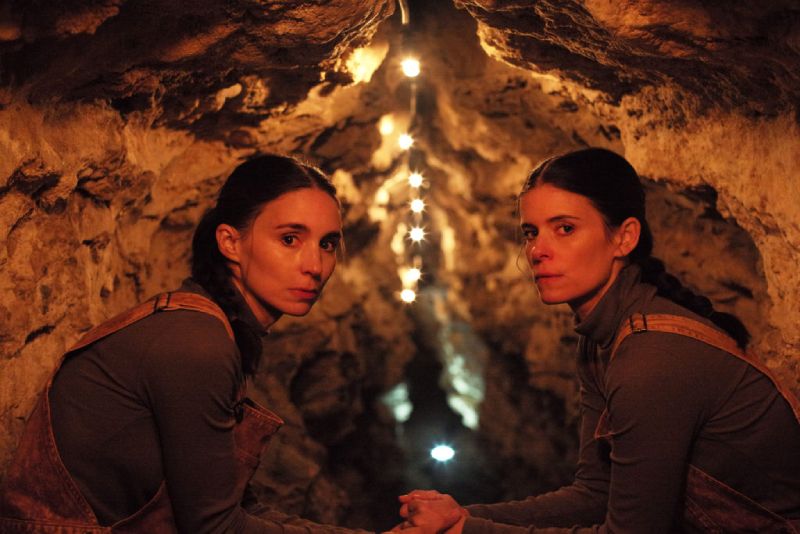
Kate and Mara Rooney in Buking Fastard. © Gateway to Orkney.
The filmmaker’s starting point is a documented case. Freda and Greta Chaplin, identical twins, made headlines in the British tabloids in the 1980s over a shared obsession that eventually landed them in court; the film’s title, in fact, comes from a verbal slip that both sisters uttered simultaneously during the proceedings. Herzog had carried the project with him for decades and listed it as an unrealised project in his memoirs, where he noted that, as far as is known, what fascinated him was the idea of telling a story centred on the only twins capable of speaking in perfect unison.
From there came the idea of transforming the story into a fable: isolated from society and unable to conform to conventional life, Joan and Jean Holbrooke (Rooney and Kate Mara, respectively) set out to excavate a tunnel through a mountain in order to reach an imaginary land where true love might be possible.
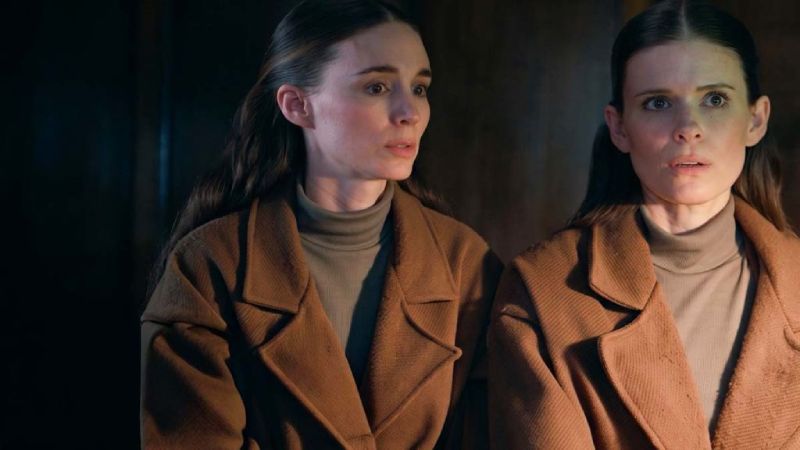
The soundtrack is a fundamental element within the film; it ceases to be accompaniment and becomes part of the narrative itself. Ernst Reijseger, a Herzog collaborator since The Wild Blue Yonder, has spent years writing for cello and layered voices, and here the dramatic material offers him, for the first time, a literal object. Because unison is not merely a device: it is the very negation of counterpoint. Where there are two distinct voices, there is dialogue, dissent, the possibility of a third thing; where there is unison, there is forced monody, a single line that believes itself to be two.
Reijseger works precisely on this threshold, at times reworking pieces by Schubert and Handel, allowing the voices to separate only slightly — a beat, the slightest deviation in pitch — to reveal the fissure the sisters refuse to acknowledge. And the echoes deep within the earth complete the effect: the tunnel thus becomes a resonating body, an excavated soundbox, and listening becomes the only form of knowledge the film allows us.
Kate and Rooney Mara take on the roles of the sisters magnificently, with a symmetry that on paper might have seemed like a publicity hook — real-life sisters appearing together on screen for the first time — but which the film defuses by turning it into a formal challenge that it meets completely. Orlando Bloom plays the turbulent lover, while Domhnall Gleeson is the social worker charged with steering them back towards normality: two variations on the same desire, that of separating what cannot be separated.
The German filmmaker’s greatest achievement is that he offers no moral whatsoever. He leaves the case where he found it: in a territory of uncertainty, culminating in a superb ending in which the grotesque and the moving sustain one another, and where the only promised land is the one that opens and closes doors, blow by blow, beneath the stone.
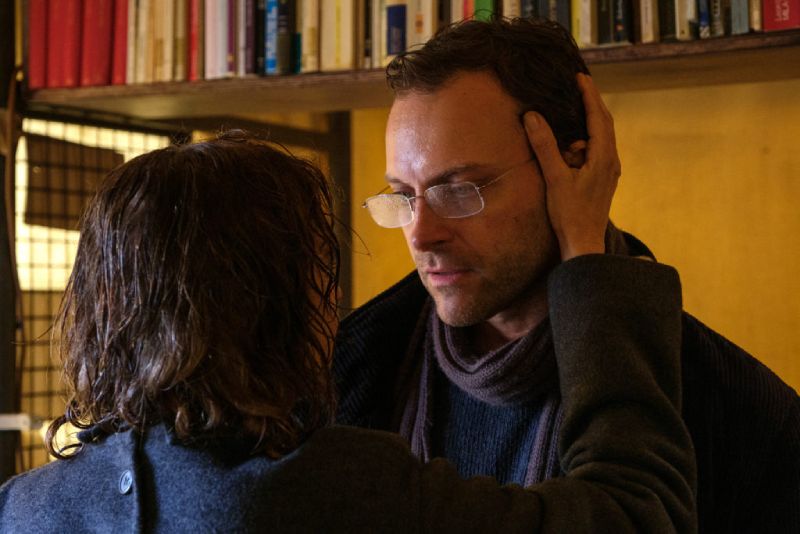
Alessandro Borghi and Valeria Golino in Nessun Dolore. © Claudio Annone.
Less convincing and less accomplished is Gianni Amelio’s feature Nessun Dolore, presented Out of Competition, in which an urgent subject becomes trapped in a cinematic grammar that Italian cinema itself seems to have left behind. The director states his intentions plainly in his notes: Nessun Dolore grew out of a desire to go beyond the unresolved ending of Lamerica, to ask once again who “the immigrant” is today — someone to be welcomed or someone to be rejected. The question is legitimate, and it is approached with a sensitivity that never lapses into sloganeering. The problem lies not in the what, but in the how.
Amelio filma con una fijeza que en otro tiempo fue rigor moral y aquí se vuelve inmovilidad.
Davide (Alessandro Borghi) sells second-hand books in a Roman square; Elsa (Valeria Golino), his most loyal customer, is also his confidante and source of tenderness. The arrival of a North African boy, handed over in the street like a parcel, the accident, the hospital, Aminah’s arrival from Algeria, the apartment gradually filling with strangers, the neighbours’ complaint and finally prison: the narrative accumulates these stages with a regularity that eventually exposes its own construction. They feel like contrivances of the screenplay, overly visible narrative joins, and each one creates a distance from the character that the film never manages to close.
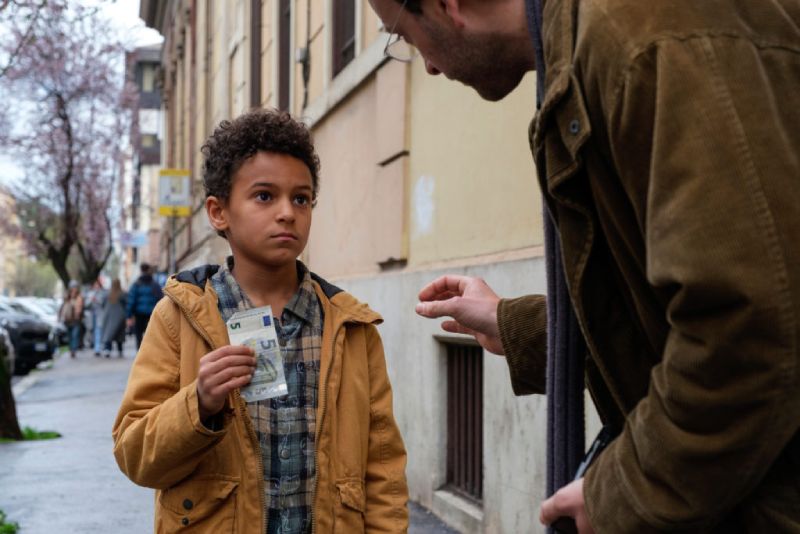
Nessun Dolore. © Claudio Annone.
Amelio films with a stillness that once conveyed moral rigour, but here turns into immobility. The shots linger, waiting for an emotion that never arrives, while the plot does not progress so much as move in fits and starts, pushed forward from the outside and without conviction. The loneliness of the two protagonists — particularly his, burdened by a guilt that the film states more often than it shows, and which forms the axis of the narrative — consequently never manages to take flight, partly because the performances remain confined to a single register. Borghi works through subtraction to the point of opacity; Golino is restrained to the point of neutrality. Two monodies that, unfortunately, never manage to form a duet. What remains is the honesty of the question. What is missing, however, is the body that should have sustained it.




Nadie ha publicado ningún comentario aún. ¡Se tú la primera persona!