
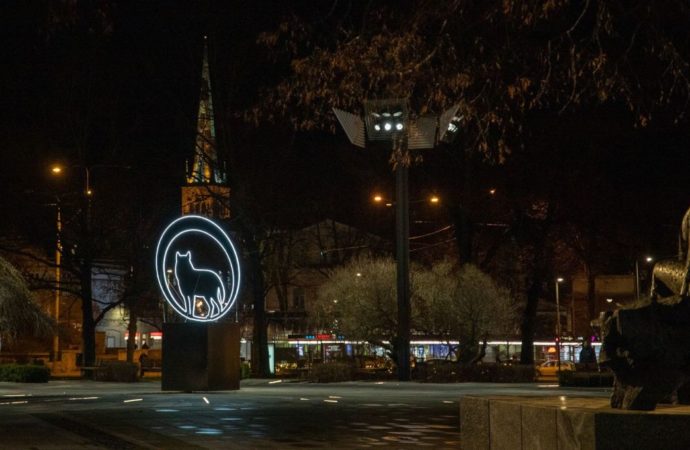

The Tallinn Black Nights Film Festival celebrates its 30th edition with 489 films from 87 countries, 107 world premieres and 47 international premieres. With a programme that places Baltic cinema at the heart of its anniversary celebrations, Estonia is once again set to become one of the major meeting points for international cinema.
Thirty years after its inception, PÖFF returns with an edition that combines a celebration of its history with an open-minded outlook on the future. From November 6 to 22, 2026, the Estonian cities of Tallinn and Tartu will host a programme of considerable scope: 230 feature films and 259 shorts, spread across the main festival, its children’s and youth section, Just Film, and its short film festival, PÖFF Shorts.
The sheer number of premieres confirms the festival’s determination not merely to showcase films that have already earned recognition on the international circuit, but also to play an active role in discovering new cinematic voices.
With 834 screenings scheduled, PÖFF approaches its thirtieth anniversary by reaffirming an identity built around geographical diversity, the coexistence of emerging filmmakers and established directors, and a commitment to seeking out films that rarely find a place in commercial distribution.
As Triin Tramberg, PÖFF’s Artistic Director, explains: “A festival stays relevant by giving audiences a reason to be curious and to spend their time with us. This year’s programme reflects very different lives and experiences, yet tells stories we can connect with.”
The Baltics Take Centre Stage at Their Own Festival
One of the most significant aspects of this edition is the decision to place cinema from Estonia, Latvia and Lithuania at the centre of the programme.
Under the title Focus: Baltics, the festival will bring together nearly forty feature films, alongside a selection of shorts, offering an opportunity to explore different periods in the cinematic histories of the three countries. The programme will combine classics, contemporary works and new premieres, providing an overview of the evolution of film industries that share geographical proximity while maintaining their own distinct cultural identities and traditions.
The choice carries an obvious symbolic significance: celebrating thirty years of an international film festival by championing the cinema of the very region that hosts it.
“Giving Baltic cinema a central place in this anniversary programme feels especially meaningful,” explains Tramberg. “We want international audiences to discover the diversity of filmmaking in our region, and local audiences to see familiar places and experiences through fresh eyes.”
The opening film, Ulya, embodies precisely this commitment to regional collaboration. It is a co-production between Latvia, Estonia and Lithuania, led by Latvia.
Beyond the selection of films itself, the Baltic focus raises a question that runs through much of contemporary European cinema: how to forge a recognisable cinematic identity without sacrificing international dialogue.
Basque Cinema Finds Its Place in Tallinn
The 2026 edition also introduces a special programme dedicated to the Basque audiovisual industry, Spotlight on Basque Audiovisual, which will showcase films and filmmaking talent from the Basque Country to international audiences and industry professionals.
The initiative will extend beyond screenings. It will also feature at Industry@Tallinn & Baltic Event, the festival’s industry platform, with activities designed to encourage exchanges between filmmakers, producers and industry representatives, as well as foster new collaborations.
The decision to spotlight Basque cinema is particularly interesting given that it has developed a distinctive identity within Spanish filmmaking, combining Basque-language productions with projects conceived for international audiences.
Its presence in Tallinn offers an opportunity to broaden the reach of these films and strengthen ties between two filmmaking regions situated at opposite ends of Europe.
Seven Competitions and a Broad Cinematic Perspective
PÖFF’s competitive structure reflects the breadth of its programme. The main festival will feature seven competitions, alongside four at Just Film and six at PÖFF Shorts.
The documentary competitions, grouped under Doc@PÖFF, will take place from November 7 to 13, encompassing both international and Baltic productions.
The main fiction competitions will follow from November 13 to 19: Official Selection, First Feature, Rebels with a Cause, Critics’ Picks and Baltic Film Competition.
This structure accommodates different approaches to contemporary cinema, from debut features by emerging filmmakers to works that seek to challenge narrative, aesthetic or thematic conventions. It also serves one of the essential functions of film festivals: giving visibility to films that do not necessarily conform to prevailing commercial expectations.
Particularly significant is the inclusion of Critics’ Picks, a section that acknowledges the importance of critical perspectives in an audiovisual landscape increasingly dominated by promotional machinery, recommendation algorithms and the concentration of media attention on a relatively small number of titles.
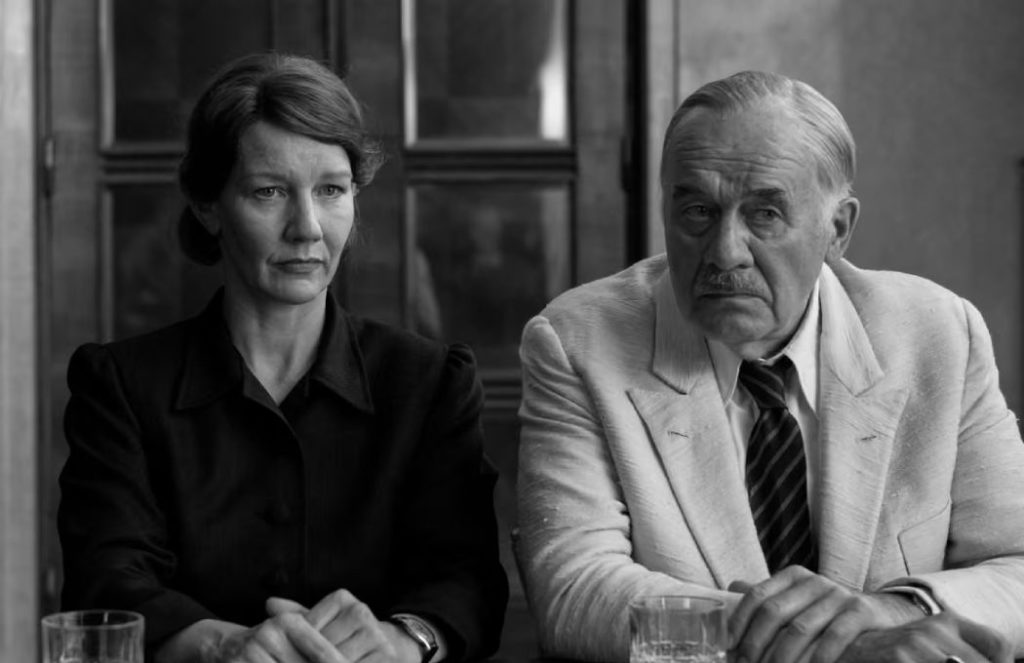
Fatherland (Pawel Pawlikowski, 2026).
From the World’s Major Film Festivals to the Nights of Tallinn
Alongside its discoveries and premieres, PÖFF will bring together some of the most notable titles from the international festival circuit of 2026.
Among them is Minotaur, by Andrey Zvyagintsev, one of the most internationally acclaimed contemporary Russian filmmakers, whose work has been characterised by a critical examination of power structures, family relationships and society’s moral contradictions.
The programme will also feature Wild Horse Nine, by Martin McDonagh, the director and playwright whose filmography has been shaped by black humour, violence and ethical dilemmas.
Spanish cinema will be represented, among other titles, by La bola negra (The Black Ball), by Javier Ambrossi and Javier Calvo, while Paweł Pawlikowski will feature in the programme with Fatherland.
Joining them is I Am Rocky, by Peter Farrelly, a film connected to one of the great popular icons of American cinema.
The inclusion of these films gives Estonian audiences access to works that have travelled through the world’s leading international festivals, creating a dialogue between the major names in contemporary cinema and the lesser-known productions that form an essential part of PÖFF’s identity.
The programme’s international scope is also reflected in its connection to awards season: thirteen films have been selected by their respective countries to compete for the Academy Award for Best International Feature Film, while another fifteen appear on the European Film Awards pre-selection list.
From Midnight Movies to Cinematic Memory
The parallel programme considerably broadens the range of films on offer. Best of Festivals will revisit outstanding titles from other international festivals, while Best of Docs will bring together a selection of documentaries. There will also be room for environmental and science films, sports films and Midnight Shivers, a section dedicated to the more unsettling offerings of fantasy and horror cinema.
Meanwhile, Standing with Ukraine will continue to draw attention to Ukrainian cinema, while Old Gold will offer an opportunity to rediscover works from the cinematic heritage.
The anniversary will also feature a section specially conceived for the occasion: PÖFF Celebrating! This Is Where It All Began.
The programme will revisit a selection of Nordic films screened during the festival’s inaugural edition, creating a bridge between its origins and its present-day international stature.
The initiative serves as a reminder that PÖFF did not begin on the scale it enjoys today, but has gradually forged its identity through its programming, its relationship with audiences and its embrace of new cinematographies.
In this sense, the thirtieth anniversary is conceived not merely as a celebration of impressive figures, but also as an opportunity to revisit the festival’s own history.
A Growing International Film Industry
PÖFF is not simply an event for cinema audiences. Its professional platform, Industry@Tallinn & Baltic Event, has become an essential part of the festival’s structure.
This year, it will also celebrate its own anniversary—its twenty-fifth—with activities scheduled from November 9 to 20.
Over those days, the programme will include project presentations, industry meetings, discussions, training programmes and activities designed to encourage co-productions and the international circulation of new films.
The festival and its industry platform expect to welcome nearly 2,000 guests from more than fifty countries.

Griffin Dunne in After Hours (Martin Scorsese, 1985).
Among the announced guests are playwright and screenwriter Christopher Hampton, actor and director Tim Blake Nelson, Iranian actress Golshifteh Farahani, filmmaker and actor Griffin Dunne, and British actor David Dawson.
Their presence confirms the drawing power of a festival that, from its geographical position in northern Europe, has succeeded in forging connections with filmmakers and film industries around the world.
Yet an event of this magnitude also depends on a considerable team: 463 volunteers and 85 interns will help organise the 834 scheduled screenings. It is a dimension of the festival less visible than the red carpets or premieres, but essential to sustaining an event of this scale.
Thirty Years On, Black Nights Keeps Curiosity at Its Heart
At a time when major film festivals compete for world premieres, international media attention and the presence of high-profile figures, PÖFF has chosen to emphasise the importance of keeping audiences curious.
The coexistence of films from 87 countries, the focus on Baltic cinema, the space reserved for emerging filmmakers and the rediscovery of historical works all contribute to a programme that seeks to combine discovery, memory and contemporary perspectives.
Thirty years after its inaugural edition, the Tallinn festival has become a place where cinema from the margins can encounter major international productions without necessarily sacrificing its own identity.

Nadie ha publicado ningún comentario aún. ¡Se tú la primera persona!