
The Venice Biennale is one of the institutions that has done the most to shape contemporary culture over the past 130 years. Founded in 1895 as an international art exhibition, it has evolved into a unique organisation that brings together visual arts, architecture, cinema, music, theatre and dance under a single institutional umbrella. Its influence extends far beyond the city of Venice itself: each edition helps define some of the central debates in contemporary art while attracting hundreds of thousands of visitors from around the world. It was also responsible for launching the world’s first film festival, held for the first time in 1932, followed in later decades by the Architecture Biennale and the International Festival of Contemporary Dance, consolidating a cultural model unlike any other on the international stage.
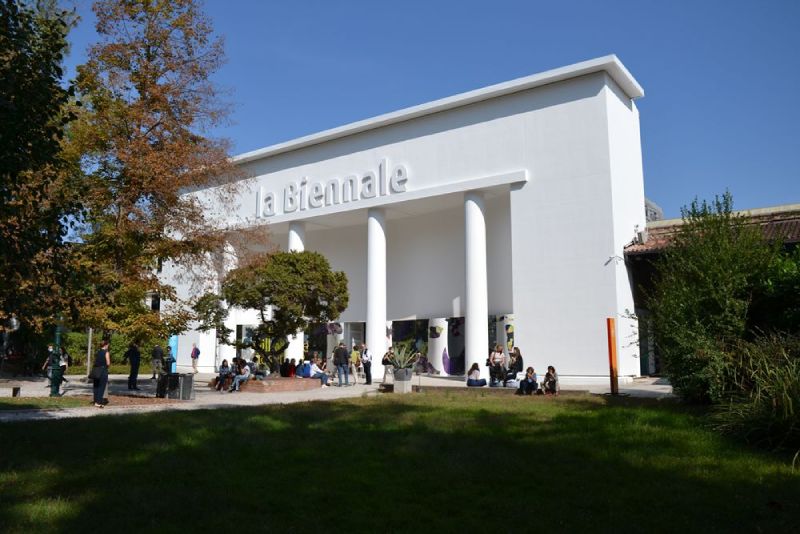
Photo © SJLL_arq.
The World Explained Through One Hundred Pavilions
If the International Exhibition forms the conceptual heart of the Biennale, the national pavilions remain one of its most fascinating features. No other artistic event preserves so visibly this unique cultural geography, where each country constructs its own contemporary narrative.
The format itself, inherited from the great World Expositions of the late nineteenth century, inevitably raises uncomfortable questions. Does it still make sense to represent contemporary art through national borders in an increasingly globalised world? Paradoxically, it is precisely this apparent contradiction that makes the Biennale such an extraordinary geopolitical barometer, reflecting many of the major tensions and conflicts shaping our present.
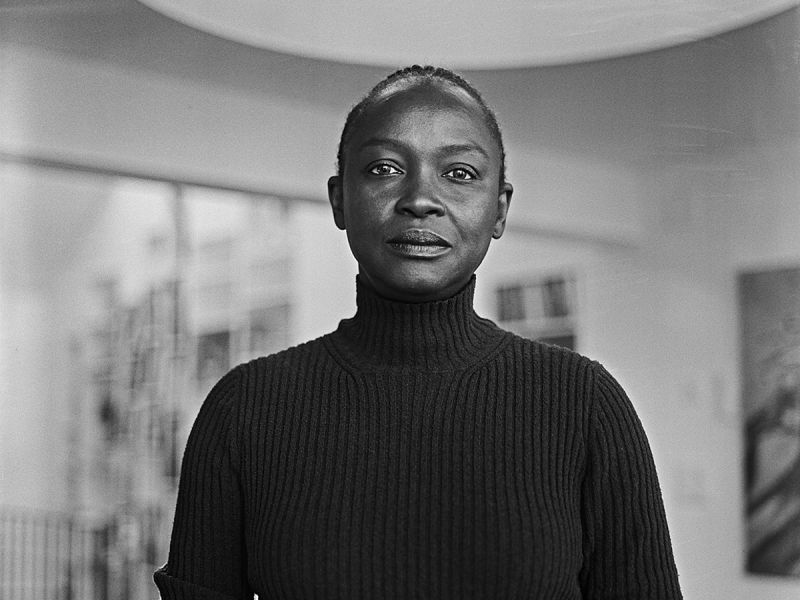
Koyo Kouoh (1967-2025).
More Than an Exhibition
One of the Biennale’s greatest strengths lies precisely in the way it compels us to rethink what an exhibition can be today.
The experience extends far beyond simply looking at works of art. It means walking for hours through the city, crossing bridges, discovering hidden courtyards, entering buildings that are usually closed to the public, and exploring an urban landscape whose own history is in constant dialogue with contemporary artistic practice.
Visitors move seamlessly from a Tintoretto hanging in a sixteenth-century church to an immersive video installation; from a Byzantine façade to a live performance; from a Gothic palace to a site-specific sound work.
Few cities allow historical heritage and contemporary creation to coexist with such effortless harmony. In Venice, the Biennale does not simply occupy the city—it redefines the way we experience it.
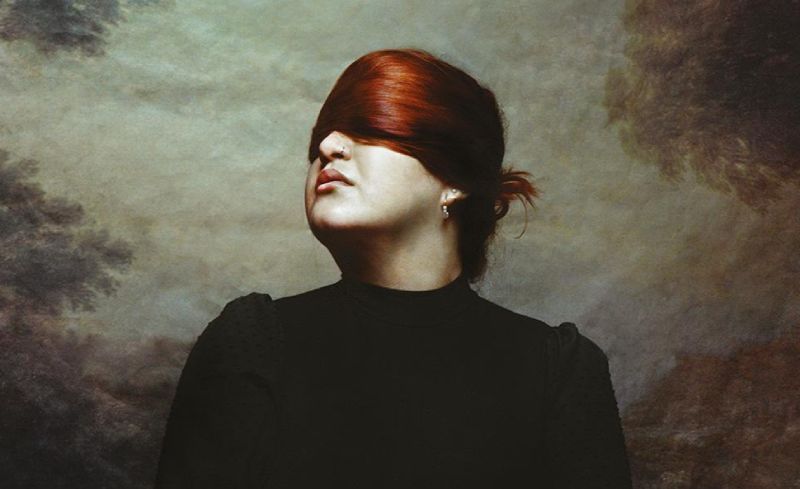
ARKEO, Luana Bottallo, Jorge Chavarría, Manuel Navichoc, Ana Lorena Núñez, SOY artistic group and Elsie Wunderlich take part in Guatemala pavillion.
For years, the same question has surfaced again and again: do biennials still define the future of contemporary art?
The market increasingly revolves around major international art fairs, while social media accelerates the circulation of images, opinions and artistic discourse. Yet the Venice Biennale retains something that neither can replicate: the physical experience of moving through an immense, collectively constructed narrative.
Unlike an art fair, where commercial interests inevitably shape the encounter with artworks, the Biennale continues to privilege ideas over transactions. It is not simply a place to discover new artists—although it still fulfils that role—but a space where curatorial thinking, artistic experimentation and cultural debate converge. Walking through its exhibitions means engaging with a multiplicity of voices that together attempt to capture the anxieties, aspirations and contradictions of our time.
Perhaps that is why, despite the transformations of the global art world, Venice continues to occupy a unique position. More than a marketplace or a museum, the Biennale remains a place where contemporary art pauses to reflect on itself—and, in doing so, offers a glimpse of the directions it may yet take.
Five Pavilions to Understand the 2026 Biennale
The greatness of the Venice Biennale lies precisely in the fact that it is impossible to experience in a single visit. With more than one hundred national pavilions and dozens of exhibitions spread throughout the city, every itinerary inevitably becomes a matter of choice. If there are a handful of projects that best capture the spirit of this year’s edition, these are among the ones no visitor should miss.
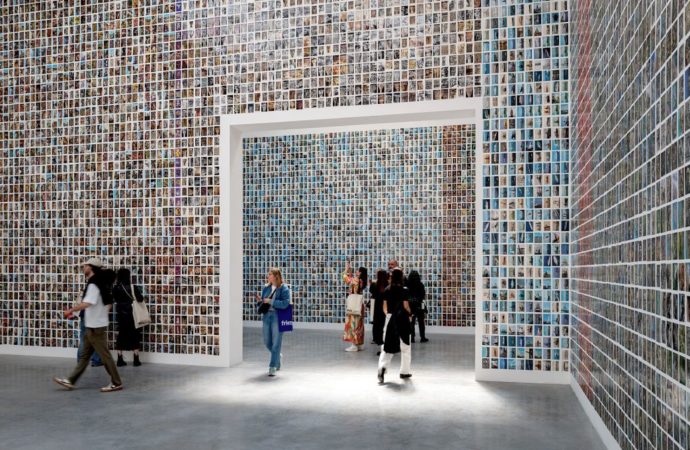
Among the national participations, the Spanish Pavilion presents one of the most conceptually compelling projects of the Biennale—and an essential stop for anyone interested in the exhibition’s broader themes. With Los restos (The Remains), artist Oriol Vilanova, curated by Carles Guerra, transforms the historic pavilion into an immense archive built from tens of thousands of vintage postcards collected over more than two decades. Far more than an exercise in collecting, the installation becomes a meditation on visual memory, tourism, museums and the ways in which history is constructed through images.
With Los restos (The Remains), Oriol Vilanova transforms the historic Spanish Pavilion in the Giardini into an unusual museum built from tens of thousands of postcards collected over more than two decades from flea markets and second-hand bookshops.
The project engages in an especially compelling dialogue with the spirit of In Minor Keys, inviting visitors to question established narratives and to pay attention to what usually remains hidden at the margins of the image.
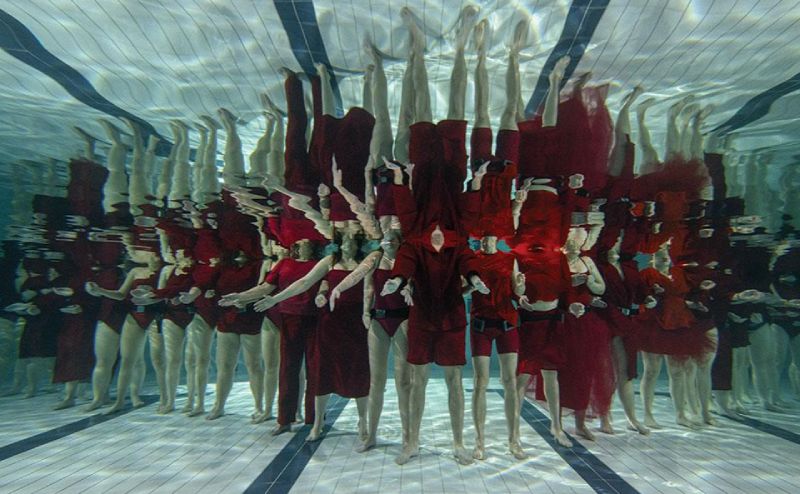
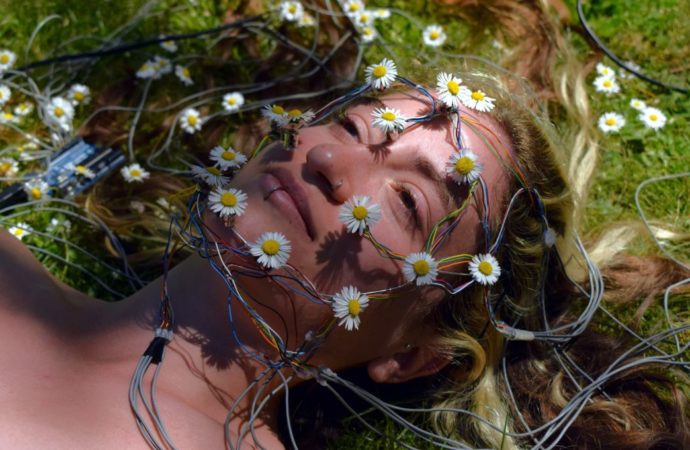
Liquid Tongues, audio visual installation by Bogna Burska and Daniel Kotowski. Polish Pavilion.
Another of the Biennale’s highlights is the British Pavilion, featuring Lubaina Himid, one of the leading figures of the Black British Art movement. Her exploration of colonial memory, representation and postcolonial identities makes this one of the most eagerly anticipated national participations of the exhibition.
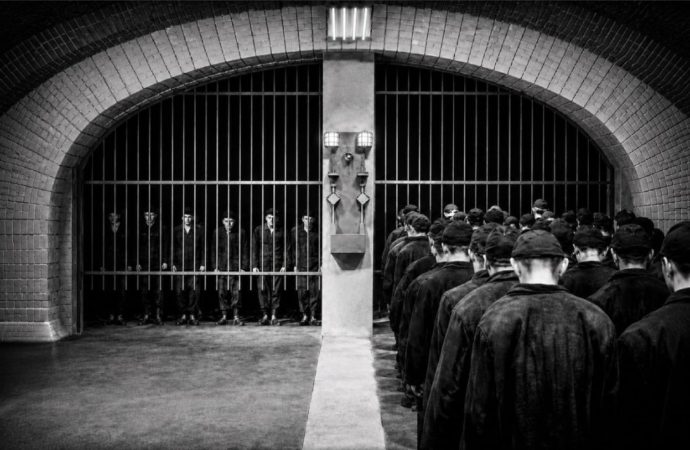
A striking contrast is offered by the Greek Pavilion, where Andreas Angelidakis presents Escape Room, an immersive installation that blends architecture, digital culture, queer activism and references to classical philosophy into one of the Biennale’s most playful and thought-provoking projects.
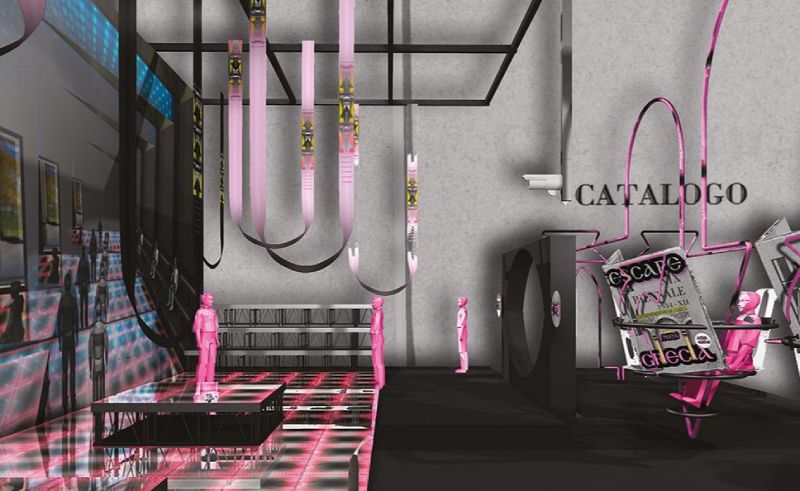
Andreas Angelidakis’s immersive installation Escape Room transforms the Greek Pavilion into a contemporary version of Plato’s Cave.
Also worthy of special attention is the Holy See Pavilion, which offers a quiet, contemplative reflection on memory and spirituality at a time of profound political polarisation. Equally compelling is the Moroccan Pavilion, one of the Biennale’s revelations, whose project explores identity, diaspora and the construction of memory through a distinctly contemporary lens.
The Austrian Pavilion completes this selection with a site-specific intervention that treats architecture as an inseparable component of the artwork itself, while the German Pavilion once again demonstrates why it remains one of the Giardini’s most consistently ambitious venues, combining installation, historical memory and political reflection in a powerful immersive experience.
Yet reducing the Biennale to its national pavilions would be a mistake. Much of the richness of each edition lies beyond the Giardini. Collateral exhibitions such as Personal Structures, spread across several historic Venetian palaces, together with the major presentations organised by Fondazione Prada, Palazzo Grassi and Punta della Dogana, expand the city’s artistic landscape until Venice itself becomes a museum without physical boundaries.


Nadie ha publicado ningún comentario aún. ¡Se tú la primera persona!