

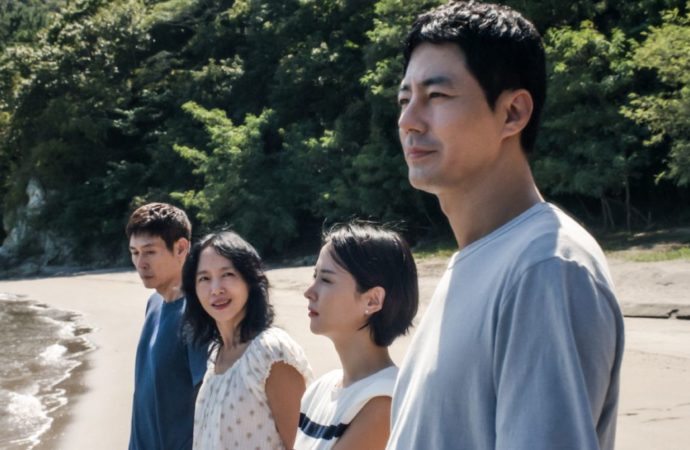
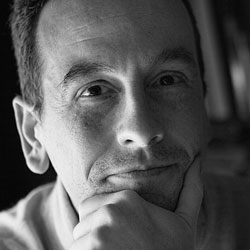
Lee Chang-dong returns to the Venice competition — where he won the Silver Lion for Best Director for Oasis — with his first feature film to be released in eight years. Possible Love follows two married couples whose worlds collide by chance: Mi-ok (Jeon Do-yeon), a face-mask factory worker married to Ho-seok (Sul Kyung-gu), a laid-off worker still carrying the trauma of a violently suppressed strike; and Ye-ji (Cho Yeo-jeong), a documentary filmmaker recording the lives of laid-off workers, married to Sang-woo (Zo In-sung), the heir to a fortune who has never known deprivation.
When Ye-ji proposes documenting the lives of Mi-ok and Ho-seok, the two couples begin to cross paths, and from this contact emerges an attraction between Mi-ok and the inscrutable Sang-woo that is as quiet as it is unsettling. The title, as Lee himself has explained, deliberately reverses the classic archetype of impossible love: the question here is not what obstacle keeps the lovers apart, but what kind of love remains possible when social class, money and power have already contaminated everything in advance.
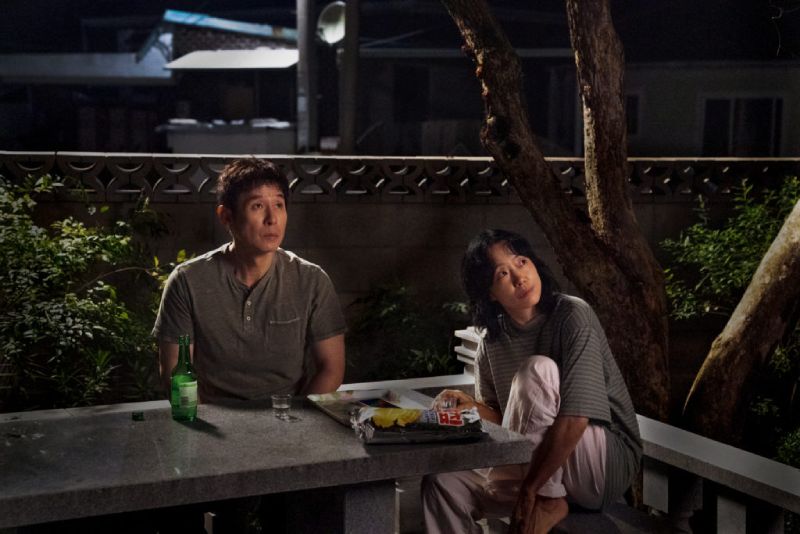
Sul Kyung-gu and Jeon Do-yeon in Possible Love. Joo Jae-bum/Netflix © 2026
Recognising Lee Chang-dong’s poetics helps us understand why this apparently simple story unfolds with such density. Heir to a methodological rigour reminiscent of Bresson and Bergman, the South Korean filmmaker has built his filmography around a single principle: curiosity about the individual and their ethical relationship with the world around them. Lee is instinctively wary of narratives that seek to reveal everything, and in Possible Love he demonstrates this once again: the title itself functions as an open-ended question, faithful to his conviction that cinema should pose endless questions rather than offer comfortable certainties.
From this principle emerges the film’s central achievement: a merciless examination of social conflict that is never articulated as explicit discourse, but instead runs beneath the surface of every everyday gesture. The wound left by the violently suppressed strike, class resentment, the guilt of those born into privilege — all of this is present in every scene without Lee ever needing to underline it. Social conflict seeps into the very texture of these encounters, into the way a drink is poured, into who sits where at the table. This is a cinema that places greater faith in patient observation than in denunciation, and for that very reason strikes all the harder.
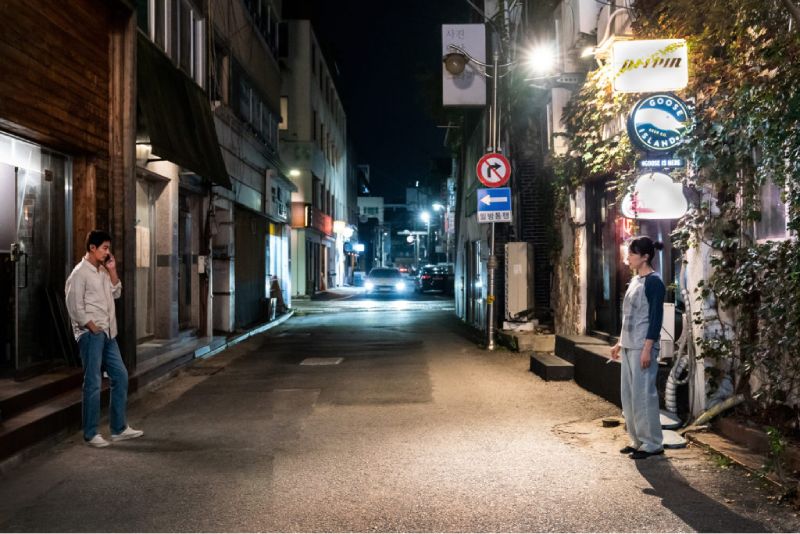
Zo In-sung and Jeon Do-yeon in Possible Love. Joo Jae-bum/Netflix © 2026
At the centre of this observation is, above all, Mi-ok, and Jeon Do-yeon creates in her one of the most intense and beautiful characters seen at the festival: a woman who refuses to give up even when everything seems lost, whose vitality is never reduced to mere resilience, but unfolds in layers, contradictions and a vulnerability that is never disguised as victimhood.
And it is precisely around Mi-ok that the film constructs its most audacious achievement: the erotic power tension that develops between this factory worker and Sang-woo, the magnate and husband of the documentary filmmaker. For a moment, this tension reverses the expected social hierarchy, because in that exchange of glances it is Mi-ok who briefly holds power over someone who belongs to the very pinnacle of a society that has condemned her to precarity — and which ultimately attempts to restore that hierarchy in one of the film’s most intense scenes.
The Korean filmmaker captures this vertigo with a delicacy that never becomes explicit, allowing desire to be read in held breath, in the distance that two bodies choose not quite to close.
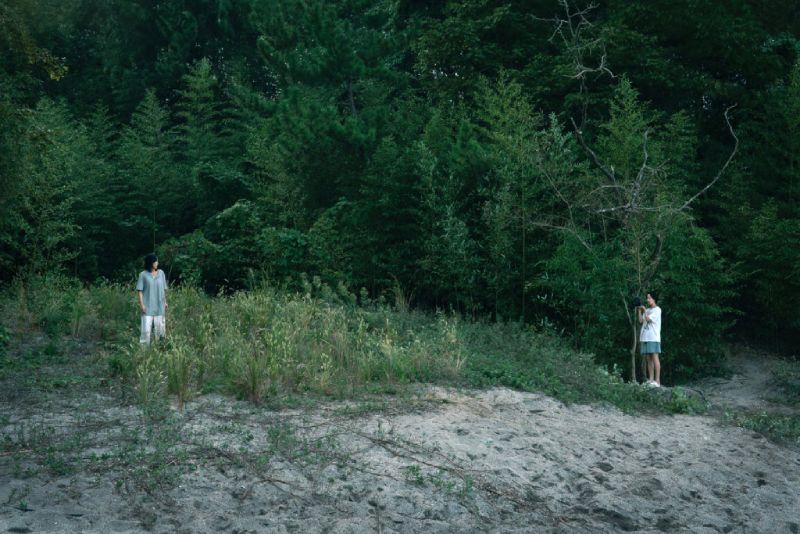
Jeon Do-yeon and Cho Yeo-jeong in Possible Love. Joo Jae-bum/Netflix © 2026
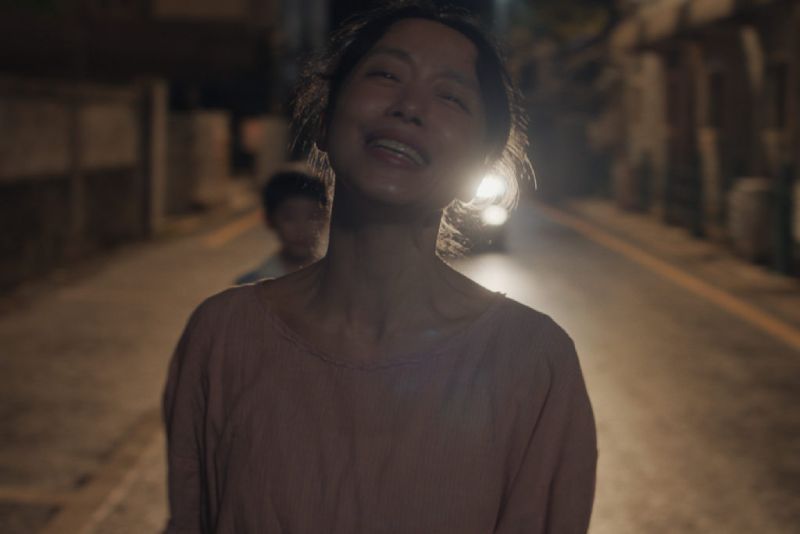
Jeon Do-yeon in Possible Love. Netflix © 2026
Nadie ha publicado ningún comentario aún. ¡Se tú la primera persona!