
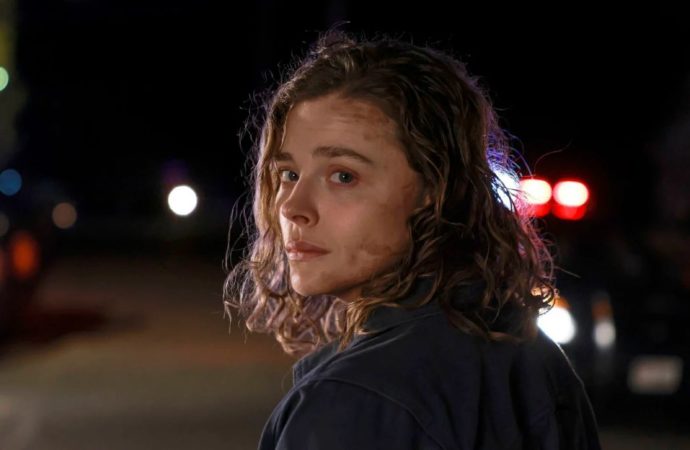

The 59th Sitges International Fantastic Film Festival of Catalonia is now underway, opening with Carlota Pereda’s latest feature, Found Alive. This marks Pereda’s fourth feature film, following the critical acclaim garnered by her second, Piggy (2022), but also the disappointing reception of her third, The Chapel (2023), which was largely ignored by both critics and audiences.
Chloë Grace Moretz plays Reeve LeClaire, a woman who was kidnapped in the past and now embarks on a desperate investigation to rescue other young women trapped in the same situation. With this premise, Pereda stakes almost everything on a procedural thriller that bears an all-too-obvious resemblance to The Silence of the Lambs, both in its plot and its visual approach (at times, it even seems to have been filmed in similar locations).
However, Found Alive ultimately bleeds out from one fatal wound: a screenplay that can only move forward through contrived situations — forced and implausible even within the film’s own cinematic logic — leaving behind a devastating trail of plot holes that ultimately undermine its otherwise undeniable strengths.
Chief among those strengths is a committed Chloë Grace Moretz, who does what she can with a character whose internal consistency is never sufficiently developed to justify her actions. The film also deserves credit for its reasonably accomplished visual presentation, which, while lacking imaginative flourishes, displays enough aesthetic competence to avoid becoming dull. Nevertheless, these virtues cannot save a film that remains perfectly watchable without being particularly irritating, but which stands little chance of distinguishing itself in the already overcrowded landscape of the mystery thriller.
Father Joe wastes no time on niceties and gets straight down to business from the very first minute: everyone inside a clandestine drug laboratory is eliminated by a mysterious vigilante who, at the end of this opening sequence, is revealed to be the titular Father Joe, played by a stern-faced (but convincing, as usual) Kiefer Sutherland. The film’s intentions could hardly be clearer: we have a priest who behaves almost like a bargain-basement John Wick — but John Wick nonetheless — handling an entire arsenal of firearms with the same ease with which he delivers sermons at Sunday Mass. Faced with an opening like this, the audience simply has to take a leap of faith.
For those willing to do so, the reward is a hugely entertaining film, almost a more respectable, watered-down version of Besson’s masterpiece, the unforgettable Léon: The Professional, with an obvious desire to emulate the violence of the aforementioned John Wick films, although neither Grossmann nor his stunt team are remotely in the same league. Nor do they need to be. All it takes to make Father Joe an appealing proposition is a gloriously deranged premise (a priest waging war against the drug empire), a visibly frail Al Pacino who can nevertheless still deliver his lines with conviction, and an entire set piece of unrestrained violence that explodes — quite literally — inside a church. No further questions, Your Honour.

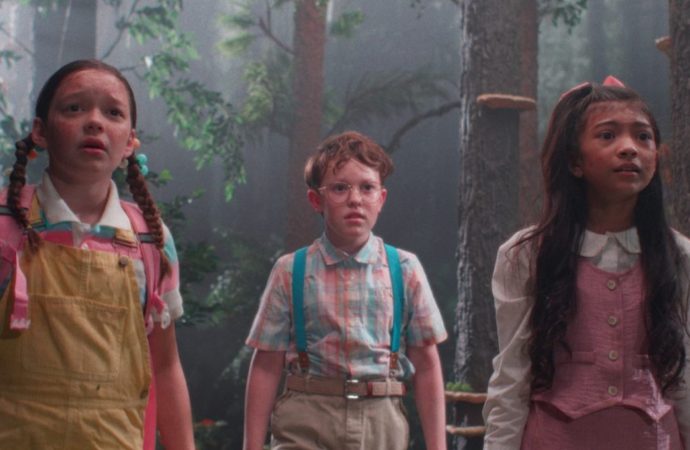
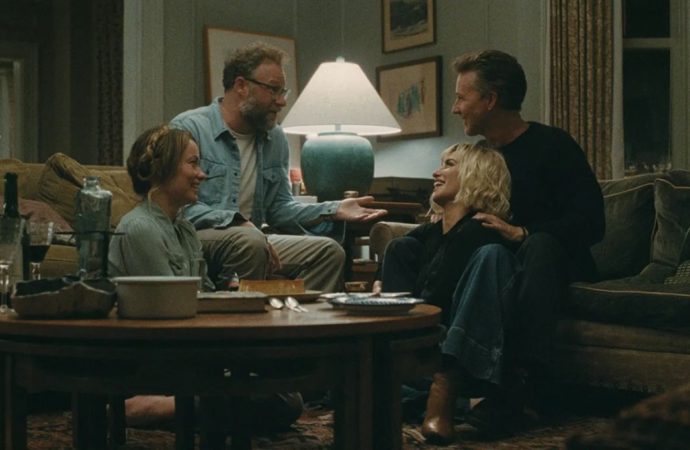
This whole meta-cinematic game finds an even more elaborate expression in the plot, which, unsurprisingly, unfolds on the set of a horror film. Kevin and Kyra play a couple, while Sosie and Travis play their children, so yes, how amusing, how terribly clever. There are also a few cameos (fewer than one might expect, given Kevin Bacon’s long and distinguished career), meaning that all the ingredients are in place for that well-worn tribute to the art of filmmaking.
And therein lies Family Movie’s main limitation: its entire premise feels outdated before the screening has even begun. Admittedly, its intentions are good, and the plot does contain a few genuinely amusing touches, such as the decision to turn Kyra Sedgwick’s character into a serial killer halfway through the film, drawing directly on Kathleen Turner’s performance in Serial Mom. But the film’s relentless good-heartedness is at times almost embarrassing, particularly when it scatters its otherwise predictable “cinema fixes everything” message throughout the narrative. And while this does not entirely ruin the experience, it certainly dilutes the film’s achievements.
Nevertheless, it is difficult to resist the childlike innocence and naivety of something like Family Movie. At a time when cynicism dominates cinematic discourse, when simplicity is so often mistaken for simple-mindedness, perhaps we should be a little more willing to applaud a film that takes pride in being small, straightforward and entirely free of narrative pretension.
Nadie ha publicado ningún comentario aún. ¡Se tú la primera persona!