

La primera parte de la Mostra de Venecia ha dejado sin duda un nivel de calidad notablemente alto, con propuestas sólidas venidas de distintas cinematografías con la excepción de los dos títulos italianos de Andrea Pallaoro y Paolo Strippoli (The Echo Chamber y L’estranea) que no solo fracasan en lo que se proponen, sino que además cargan con una pretenciosidad autoral que resultó francamente molesta. A la confirmación de la calidad citada anteriormente contribuyó la película danesa Woman Unknown.
May el-Toukhy, su directora, llega a la competición de Venecia con su tercer largometraje, siete años después de Reina de corazones, y lo hace con una de las propuestas más incómodas del certamen. El largometraje se sitúa en la Dinamarca de 1945, en los días eufóricos e inestables que siguieron a la liberación del ocupante nazi. Marie (Mathilde Arcel), niñera y sirvienta, está a punto de casarse con Christian, el acaudalado viudo para quien trabaja, propietario de una fábrica de guantes. Pero Marie guarda un secreto vergonzante: durante la guerra mantuvo una relación íntima con un soldado alemán, y ese pasado amenaza con destruir el estatus que está a punto de conquistar.
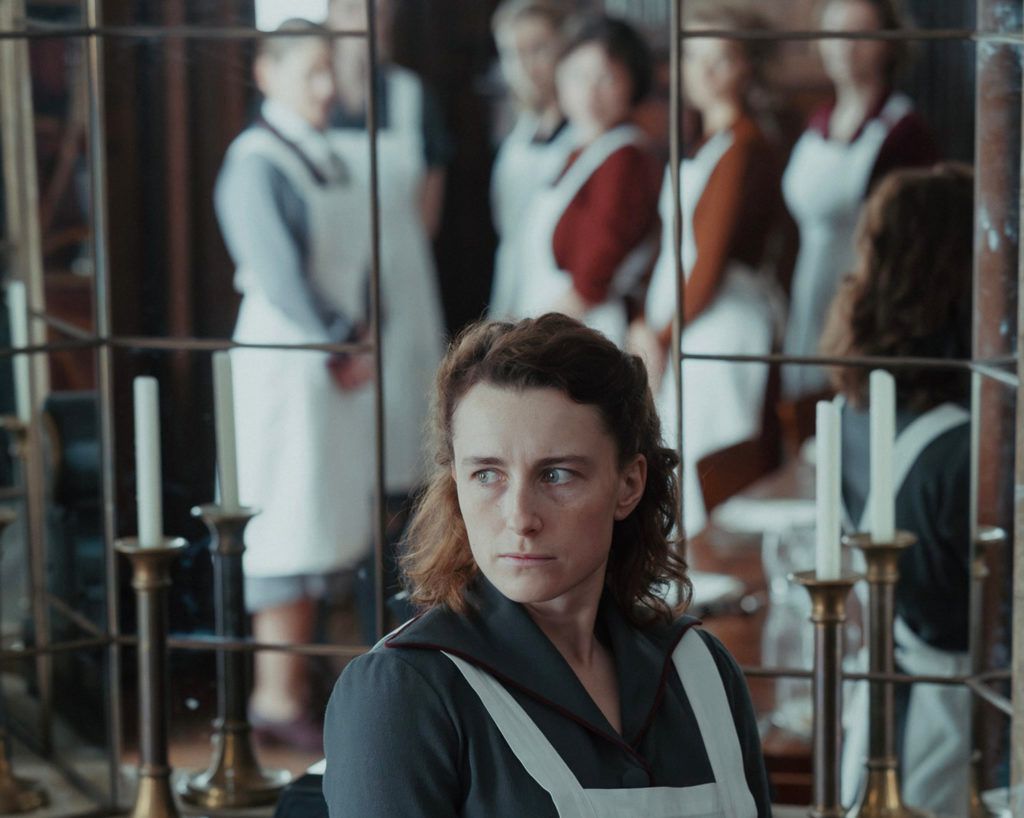
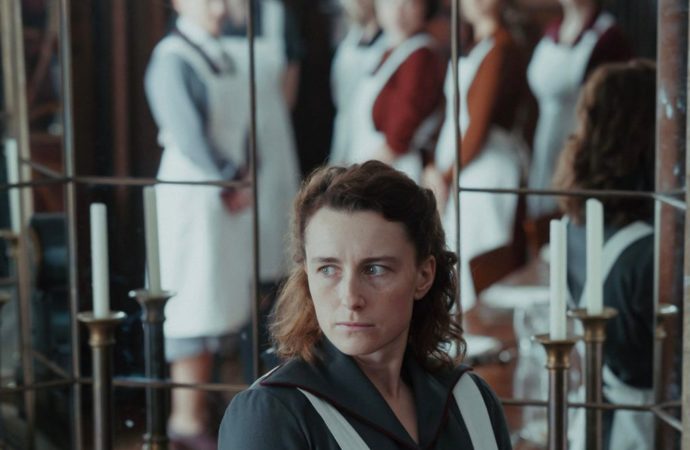
Mathilde Arcel in Woman Unknown. © Andrejs Strokins.
The Danish director concentrates the action into just five days, a decision she herself explains as a way of intensifying the sense of pursuit and avoiding moral judgement over what Marie felt for that soldier — love, desire, survival, all of these at once or none of them — in order to focus on the film’s true subject: the female body as public territory, as a battleground upon which a society unloads its collective shame.
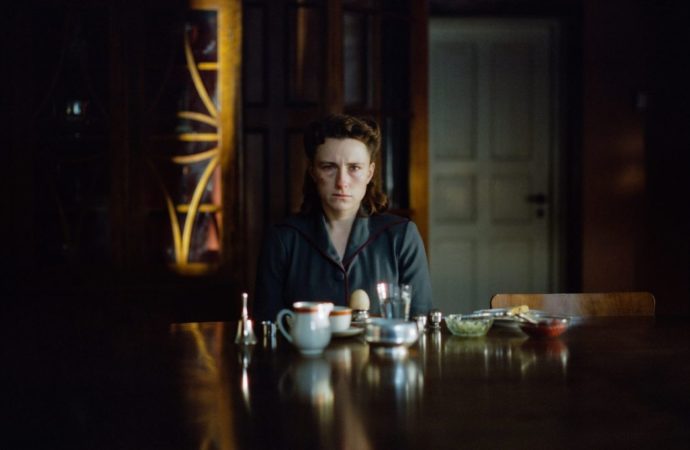
The result is a remarkable portrayal of the character’s inner conflict, sustained by a cold stylistic register that, far from distancing us, places us inside the laceration. El-Toukhy films almost always from over Marie’s shoulder or in a coolly frontal and lucid manner, the camera following her in such a way that, as viewers, we constantly share her disorientation and her anguished, uneasy calculations.
Woman Unknown belongs to that category of historical cinema that rejects period reconstruction as mere backdrop and instead turns it into an instrument for examining the present.
This formal coldness — the greys of the post-war period, the rigidity of a mise-en-scène that avoids picturesque period detail — is not, however, distance but method: it allows us to inhabit from within both Marie’s personal trauma and the collective hatred directed at alleged collaborators, a form of social lynching that the film documents with almost unbearable harshness: women with their heads shaved, branded and spat at in the street in the name of a patriotic purification that needed visible victims.
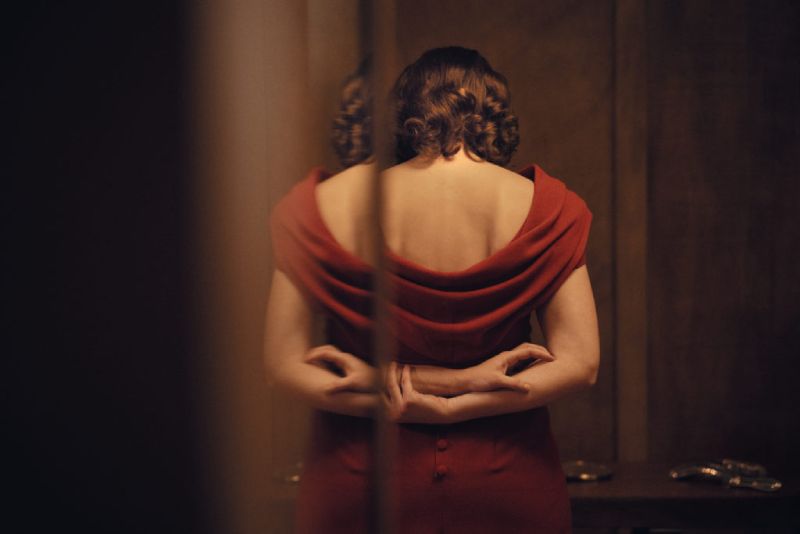
La actriz Mathilde Arcel in Woman Unknown. © Andrejs Strokins.
Particularly effective is the use of superimpositions that layer post-war violence — almost documentary-like images of public punishments, of women’s bodies exposed to humiliation — over Marie’s story, a device that expands the individual case into a European phenomenon without ever abandoning the protagonist’s strictly personal point of view. The colour palette reinforces this tension: red, a colour the director herself associates with both the Danish and Nazi flags, recurs as a subliminal warning, a stain contaminating the domestic sphere — the swastika painted on a door, on a back — until it becomes a permanent threat.
The film’s ending has a formal harshness that deserves particular mention: the final close-ups of Marie’s face, now the lady of the house as she tries on her wedding dress, are held for a length of time that deliberately verges on the unbearable. There is no relief in this marriage, secured through silence and calculation: Arcel’s face, filmed almost as the sacrificial object of a union born not of love but of opportunity and the need for protection, conveys a discomfort that the very duration of the shot makes physical. It is a bold editing choice, refusing any comforting resolution and leaving the viewer exactly where the character has ended up: trapped inside a house with a despotic future husband who saves and condemns her at the same time.
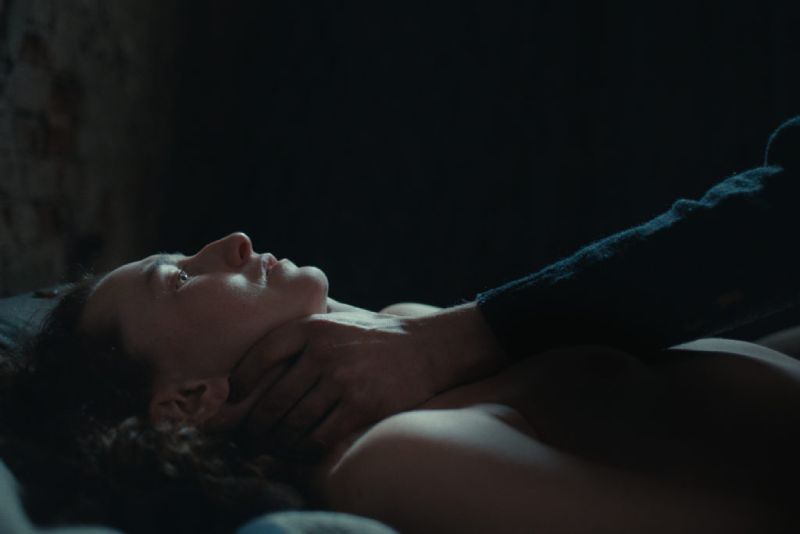
La actriz Mathilde Arcel in Woman Unknown. © Andrejs Strokins.
Mathilde Arcel carries the entire film with a magnetic performance, conveying Marie’s calculation, fear and remaining sense of dignity with scarcely any recourse to verbal release; much of her performance is in the eyes, in a constant vigilance that never lets its guard down.
Woman Unknown belongs to that category of historical cinema that rejects period reconstruction as mere backdrop and instead turns it into an instrument for examining the present: the ways in which we continue to judge and expose women’s bodies and desires, not only in times of war.



Nadie ha publicado ningún comentario aún. ¡Se tú la primera persona!