
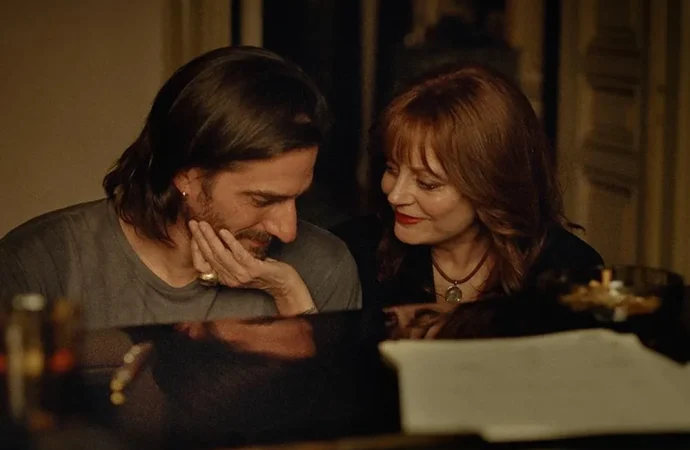
Andrea Pallaoro presented his latest film, The Echo Chamber, at the Thessaloniki International Film Festival, following its world premiere in competition at the 83rd Venice International Film Festival.
Starring Luca Marinelli (Leo), Alicia Vikander (Anne) and Susan Sarandon (Ava), the film brings to the screen the final screenplay by Bernardo Bertolucci, written in collaboration with Ilaria Bernardini and Ludovica Rampoldi. Bertolucci had intended to direct the project himself, but his death in 2018 left it unfinished. Eight years later, Pallaoro has taken on the challenge of translating the Italian master’s final vision into his own cinematic language.
The Echo Chamber retains several defining elements of Bertolucci’s cinema: the confinement of his characters within a restricted space, an intense exploration of human relationships, and the ability to create psychological depth without relying on conventional dramatic action. The film never leaves Leo’s apartment. The outside world is reduced to a small fragment of the street visible through a window, where Leo parks his car and which marks his departures and returns. Within this enclosed universe, love and dependence, tenderness and control, presence and absence become increasingly difficult to distinguish.
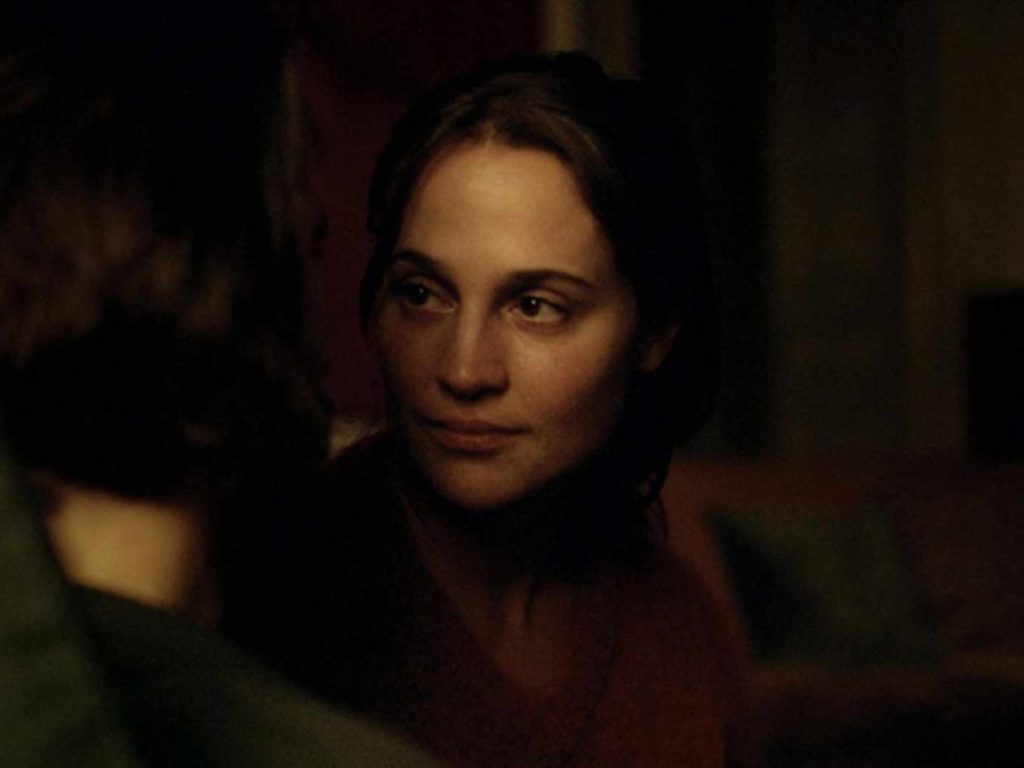
Shot in almost square frames —with an aspect ratio of approximately 1.2:1, even narrower than the classic Academy ratio of 1.37:1— by cinematographer Diego García, whose previous collaborations include films by Apichatpong Weerasethakul, Carlos Reygadas and Nicolas Winding Refn, the film has an almost painterly visual quality. García’s meticulous cinematography, together with Gaspare De Pascali‘s production design, reinforces the psychological dimension of the apartment, transforming it into a space charged with memory and emotional tension, both a refuge and a prison, a repository of memories and an extension of the characters’ inner lives.
We spoke with Andrea Pallaoro during the 67th Thessaloniki Film Festival about the responsibility of inheriting Bertolucci’s final screenplay, the cinematic representation of absence, the ambiguous boundaries between love and addiction, and the echoes that remain within us after a relationship has ended.
ANDREA PALLAORO: That’s a very good question, because when I was first offered the screenplay, I actually turned it down. Up to that point, I’d always directed my own screenplays, I’d always written my own material, and so I felt that it was a really big departure for me. But then I also understood that it was a great opportunity, a challenge, really, to explore themes that I feel very connected to, but to do it in a different way.
I felt that the responsibility of inheriting the last screenplay of someone like Bernardo Bertolucci was very, very big, of course. But I immediately felt that the only way to be sincere with the material was to allow it to filter through my own vision, my own aesthetic, my own sensibility. There was no other way. There was no point in trying to reproduce his cinematic vision or to guess what Bertolucci might have done, you know? The only way to really honour the material, to serve it in the best way possible, was to be sincere with it, and to be sincere with it meant to make it my own way, through my own vision.
And so, to answer your question, yes, the shadow of Bernardo was felt throughout the film, but more than a shadow, I would say it was an echo. It was like he was there in his energy, because for me, it became very interesting to explore Bernardo not as a filmmaker through the film, but as a human being. I felt I got to know him through this film, which is, in a way, very autobiographical.
It felt like it had a lot of autobiographical tones, maybe one of the most autobiographical scripts ever written. I felt that I was getting to know him and exploring him as a man and not as a filmmaker, you know?
One of the things I found most fascinating about the film is the way absence becomes almost a physical presence. How did you approach filming something as intangible as absence? Was it primarily a question of framing, space, rhythm, or the relationship between the characters and their surroundings?
Absolutely. That was a central topic for me. In fact, when I read the script, that was one of the things that excited me the most about exploring this material.
I love the opportunity to use cinematic grammar, composition, camera movement, the relationship to colour, and even the aspect ratio and the mise-en-scène, to explore presence through absence. I felt one of the most exciting things for me was to see how these two main characters are chasing one another within this space that we never leave. It’s a space that we are in from beginning to end.
And this space has the ambiguity of being both a refuge and a prison, of being a container of memories and also a place of surveillance. I felt that the relationship between these characters is manifested through how they inhabit this space. They communicate with one another through this space.
It’s like a channel.
Yes, it’s like a channel of energy between the two of them. We experience their longing, their desire, the need to control one another and to take care of one another through how they inhabit the space. And I’ve never seen something done quite like that in cinema.
So it was a really interesting challenge for me to do that. And how they use objects within this space, like the pillow, the coffee mug, the scarf, as avatars for one another. I really wanted to find a way to use cinema to create an architecture of desire and control.
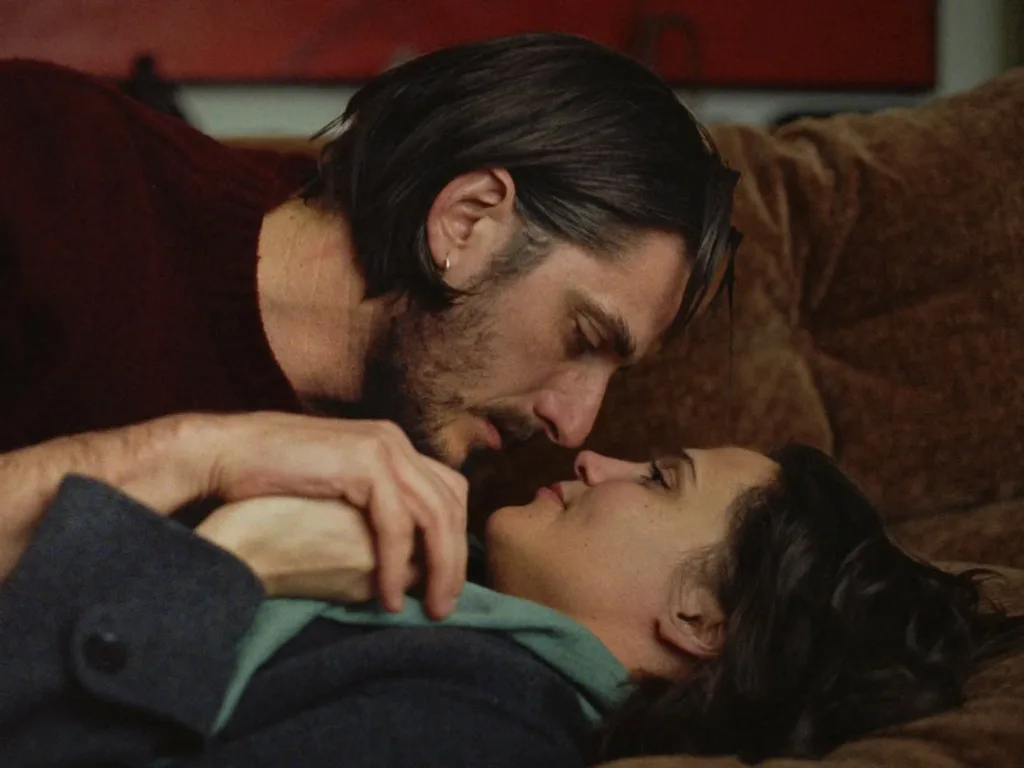
The relationship between Leo and Anne constantly oscillates between genuine affection and emotional dependency. At times, love seems almost indistinguishable from control. Were you interested in exploring the point at which caring for someone becomes a way of possessing them?
Absolutely. You go straight to the heart of it. Because I felt that through this relationship, which is an extreme relationship, we can really see and understand dynamics that belong to a lot of relationships.
I think most human relationships, especially romantic relationships, can reflect elements of this relationship that we see, maybe to a lesser degree. What I find very fascinating is that a relationship is not only one thing. And that the need to control the other person can also be the need to take care of them.
And the ambiguity of seeing one and the other, of being one and the other at the same time, is at the core of what it means to be a human being.
Maybe it’s the difference between loyalty and dependence.
Absolutely. Between dependence and intimacy. Between addiction and love. Can we really call it love if it is addiction? It raises a lot of questions.
And what was very important to me was that every creative choice, every formal choice, every aesthetic choice, focused on the type of relationship I wanted the spectator to have with the characters. A relationship in which we don’t tell the spectator what to think or what to feel, but we allow them to have a very individual and independent relationship with the characters. Because that, I think, is the catharsis of art.
It’s about projecting yourself into the character and understanding who you are through that.
Anne is particularly intriguing because her behaviour seems driven by contradictory emotions: love, responsibility, guilt, and perhaps a need to feel indispensable. How do you understand her sense of guilt? Is she trying to save Leo, or is she also trying to redeem something within herself?
Yes, of course. Absolutely. She’s both, and she’s aware of being both a controller, a saboteur, and also a caretaker.
Someone who wants to ease Leo’s pain, who wants to fill his void, his emotional void. Because this is also a film about pain, about suffering, about both physical suffering and emotional suffering, psychological suffering. And about how we can easily become addicted to what is the cure for that suffering, or what fulfils the emotional void that we have, you know?
And so, through that, the person who provides that cure for the other person can easily become in control of the other person.
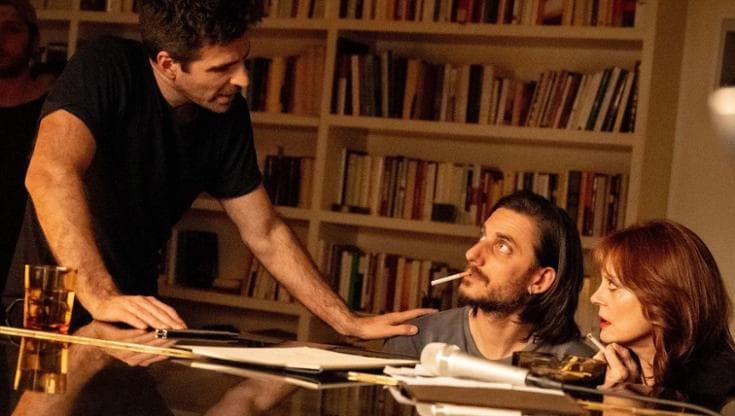
Opiates are important in their relationship.
Absolutely, they are. And that is precisely what the film explores. In fact, the film becomes an exploration of the boundaries between addiction and control.
How we find intimacy through addiction, and how one action, one behaviour, can be both control and care.
You brought together three actors with very different screen presences: Alicia Vikander, Luca Marinelli, and Susan Sarandon. What guided your casting choices, and how did you imagine their contrasting energies shaping the emotional dynamics of the film?
Well, these are all actors that I loved very much even before meeting them. These are actors who have inspired me, whom I have admired greatly over the years, and who have gifted us performances of such intensity, vulnerability and power, you know?
We are all made of echoes.
And so I chose them based on my desire to work with them, to create with them. And it has been the honour of a lifetime to bring these characters to life with them because they are very different actors. They come from very different backgrounds and they have very different artistic approaches and processes.
But what they all share is an incredible generosity, dedication and commitment, and also fearlessness, courage to jump into this project, take risks and explore together. And that was really amazing.
Bertolucci frequently explored relationships marked by desire, power, dependency, and emotional vulnerability. In some ways, The Echo Chamber seems to revisit these concerns from a different perspective. Did you perceive a particular connection with Last Tango in Paris, or did you deliberately avoid such comparisons?
Well, yes. I think the themes of Last Tango echo in this film as well. They certainly resonate, you know?
And also, I felt that Last Tango explores control, falling in love, or loving without wanting to possess the other person. And these are certainly themes that come up in this film as well, that are at the centre of this film.
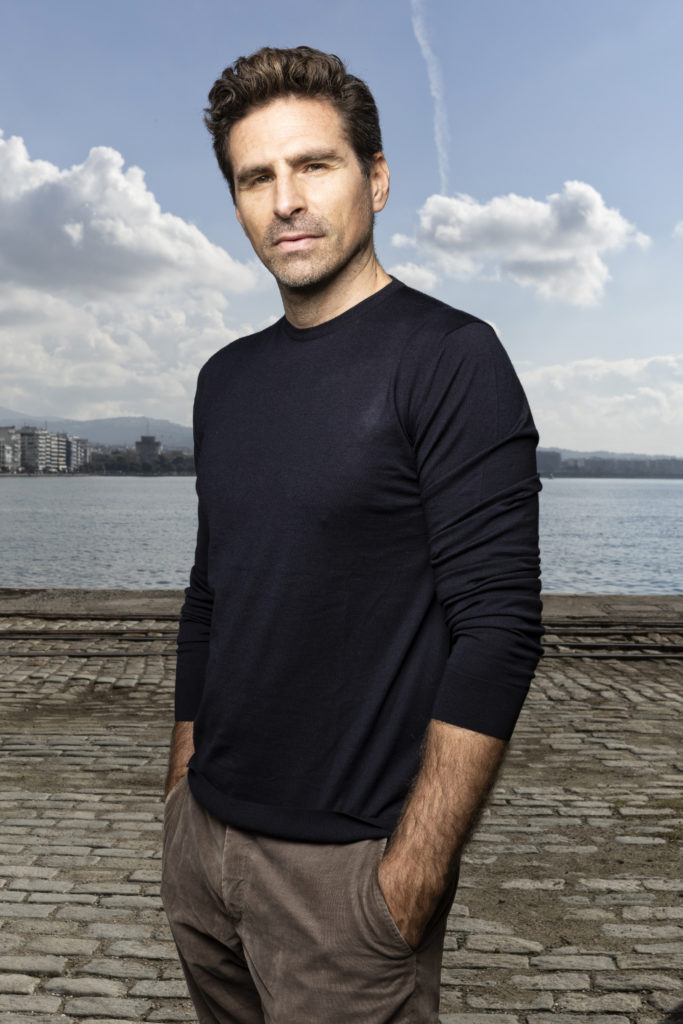
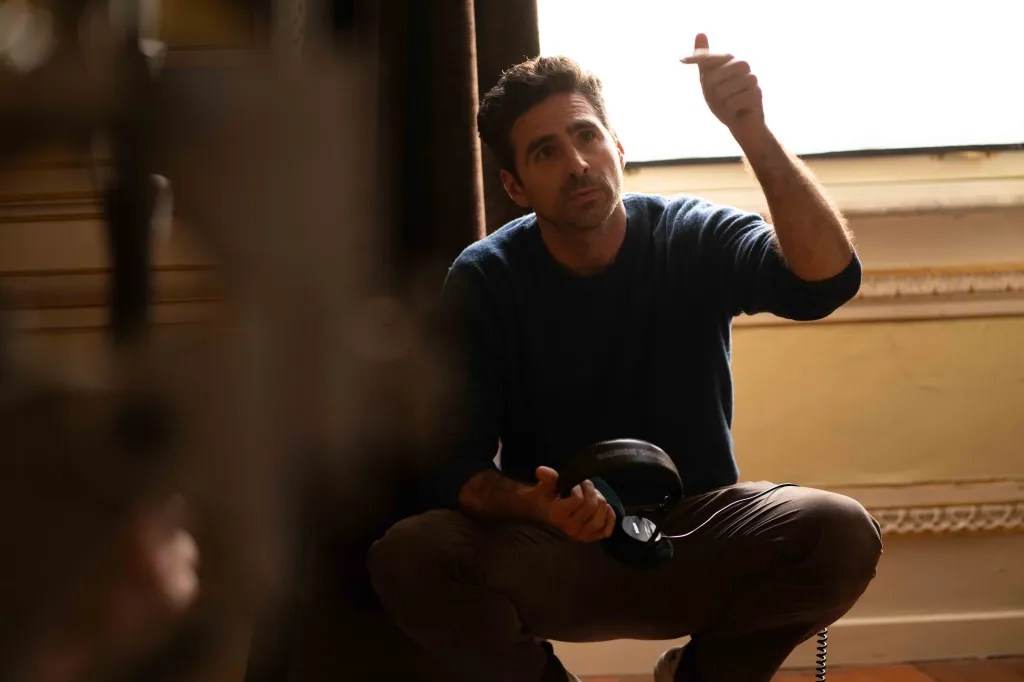
Andrea Pallaoro at Thessaloniki Film Festival ©Photo: Aris Rammos.
And in addition, it’s more personal, as you said.
Of course.
An echo is something that persists after its original source has disappeared. Is The Echo Chamber ultimately a film about the impossibility of letting go, or about learning to coexist with what is no longer there?
Yes, well, to me, this title allows for a lot of different readings. But to me, its most resonant meaning, or the way I understand it, is that we are all made of echoes. Every human being is made of echoes. All the people that we have loved, that have loved us, that have had a meaningful role in our lives, keep living inside us, even after those relationships are no longer present.
And they keep informing who we are, our identity, as echoes, even after they are no longer there. And so that is what the echo chamber is. It’s exploring that idea.
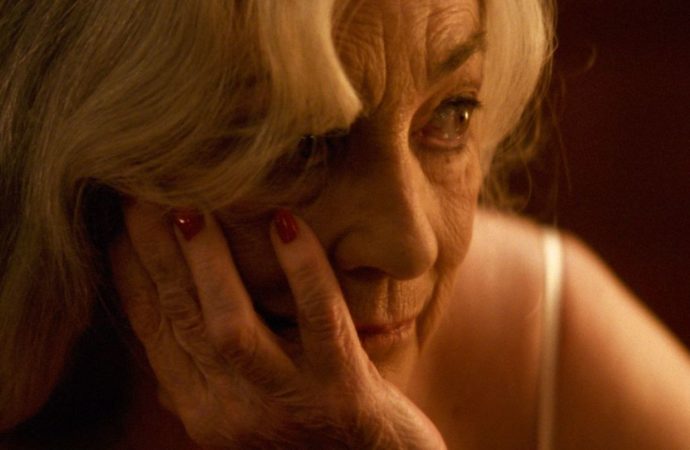
Even the character of Ava, played by Susan Sarandon, really embodies that. She talks about her lover in multiple ways, and on multiple occasions throughout the film, in exactly that way. And this also reflects the longing that Leo has for Anne, and vice versa, and how they are living this experience, this relationship.
And the apartment itself is keeping the voices. In the silence.
You really feel like the walls are echoing the past. Exactly. And finding the cinematic way to explore that was very important to me.
And what about your next project?
Oh, I have a few projects that I’m developing. One is based on an experience that I’ve lived, and that was very meaningful to me. And they’re all projects that I wrote myself.
So it will be going back to the way I started making films, coming from an urgency of my own.
Nadie ha publicado ningún comentario aún. ¡Se tú la primera persona!