
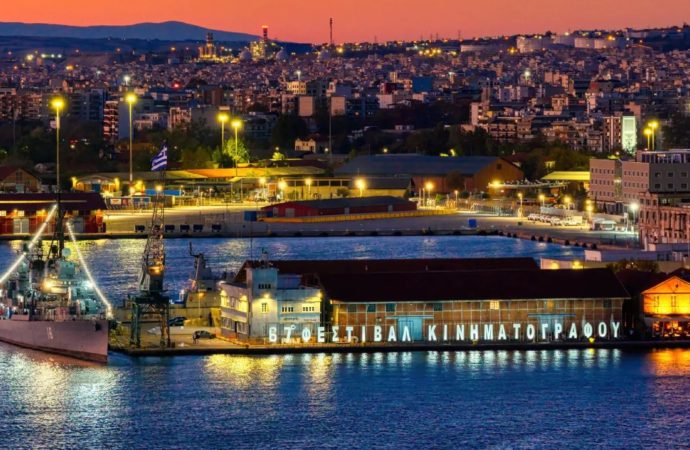

The 67th Thessaloniki International Film Festival, taking place from November 5 to 15, will bring together 26 feature films and 27 short films in its Greek cinema programme. Nineteen films will premiere at the festival, which will also inaugurate its new Classics Revisited section with a restored print of Maria Plyta’s Eve (1953), previously presented at Cannes Classics.
The Thessaloniki International Film Festival once again places national filmmaking at the heart of its programme. Its 67th edition, running from November 5 to 15, 2026, will offer a wide-ranging overview of contemporary Greek cinema, combining emerging voices, established filmmakers, experimental works and the rediscovery of significant films from the country’s cinematic history.
The Greek Film Festival will feature 26 feature films and 27 shorts, with nineteen premieres and nine films selected for the competitive sections. The programme reflects the diversity of a national cinema exploring issues such as identity, immigration, family relationships, historical memory and new forms of audiovisual expression.
Alongside the screenings, the festival continues its commitment to Greek film professionals through financial awards, internationalisation initiatives and tools designed to facilitate access to the global film market.
Nine Films in the Official Competitions
Three Greek productions will compete in the Arrivals International Competition.
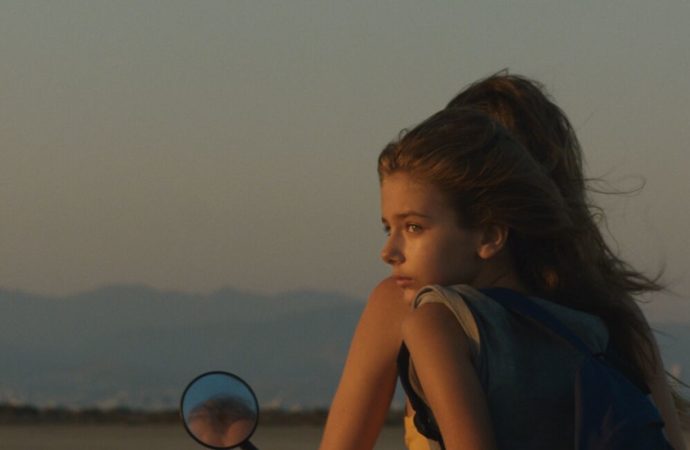
A Day in the Life of Jo: Chapter Phaedra, directed by Jacqueline Lentzou, follows Jo, a fifteen-year-old girl who discovers unexpected feelings when she hears her classmate Phaedra singing. The film explores the small events capable of transforming an apparently ordinary day.

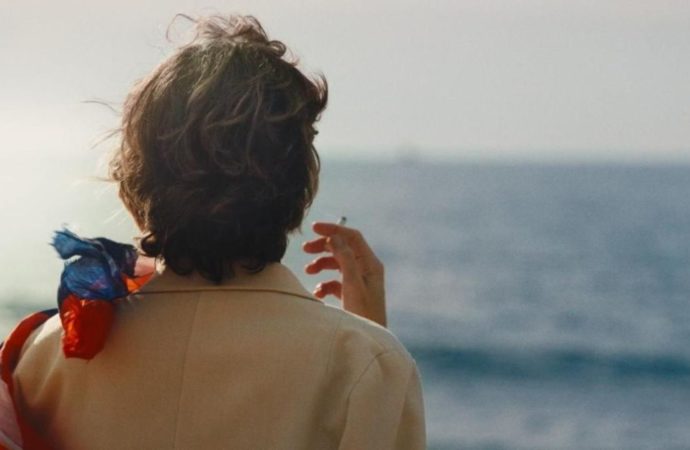
Eve (Maria Plyta, 1953).
In A Whole Person Almost, by Efthimis Kosemund-Sanidis, a young man struggling with debt arrives on a remote island to claim the inheritance of his estranged father, a doctor. As he develops a relationship with a woman who dreams of leaving the island, inexplicable illnesses begin to spread.
Meanwhile, Titanic Ocean, by Konstantina Kotzamani, takes audiences to a Japanese boarding school where teenage girls train to become professional mermaids. Its seventeen-year-old protagonist, Akame, discovers love and her own identity in a world combining spectacle, fantasy and transformation.
The Meet the Neighbors+ competition will include four Greek productions or films co-produced with Greece.
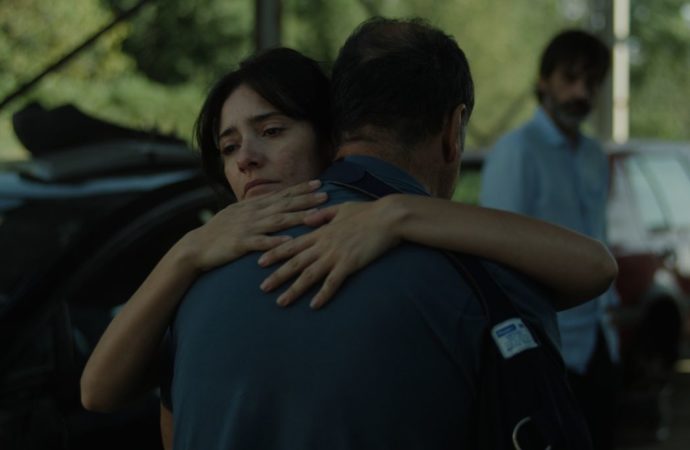
Elena’s Shift, by Stefanos Tsivopoulos, addresses precarious employment and discrimination through the story of a Romanian immigrant fighting to obtain Greek citizenship. After being unfairly dismissed, she develops a relationship with a lawyer representing a cleaners’ union.
In Recrucified, Theo Papadoulakis imagines a Greek island occupied by foreign forces in the near future. A young street artist, forced to portray Christ in a Passion Play, must decide whether to confront the injustices committed against refugees.
The Cypriot co-productions The Lion at My Back, by Tonia Mishiali, and Hold Onto Me, by Myrsini Aristidou, complete the selection. The former explores the solidarity between a Senegalese teenage asylum seeker and a Cypriot woman attempting to rebuild her life after addiction. The latter tells the story of an eleven-year-old girl reconnecting with her estranged father.
Finally, the >>Film Forward competition will present Particles of Dust, by Argyris Germanidis, a fantastical narrative about identities, memories and past lives, and Under the Judas Tree, by Christos Houliaras, a mystery set in a northern Greek village near the Albanian border.

Happy Beginning (Dinos Dimopoulos, 1954).
New Voices and Perspectives on Contemporary Society
The First Run section will also feature films exploring very different genres and themes.
In Apart, by Stelana Kliris, the Turkish invasion of Cyprus in 1974 takes a young Greek Cypriot woman to South Africa, where she must confront the contradictions of another divided society.
The Megalomaniacs, by Spiros Stathoulopoulos, offers an unusual story about a marine archaeologist determined to prove that ancient pottery could record sounds.
Angel Downtown, by Freddy Vianellis, transforms the streets of Athens into a stage where everyday experiences intersect with artistic creation, while Worthy, by Christos Georgiou, begins with the discovery of an apparently miraculous icon.
The selection also includes The Gleaner, by Panagiotis Rappas, set on an Aegean island in the late nineteenth century; Game Theory, by Karolos Zonaras, which introduces artificial intelligence into a family and crime drama; and Foreign Blood, by Tonis Lykouressis, about a man forced to confront the consequences of an accident that unexpectedly connects with his past.
In Don’t Forget the Sunshine, by Marco Papadopoulos, a Greek woman living in Germany confronts family conflicts and questions of identity, torn between her life in the Ruhr region and her ties to Thessaloniki.
Completing this selection are Alexander the Great and the Accursed Dragon, by Dimos Avdeliodis, and The Flaw, by Theophilos Papastylianos, an adaptation of Antonis Samarakis’s novel imagining an authoritarian regime built on surveillance and psychological manipulation.
The A Second Viewing section will offer another opportunity to discover Uchronia, by Fil Ieropoulos; Maralinga Maningrida Mantamaru, by Alexandros Voulgaris (The Boy); and Last Call, by Sherif Francis.

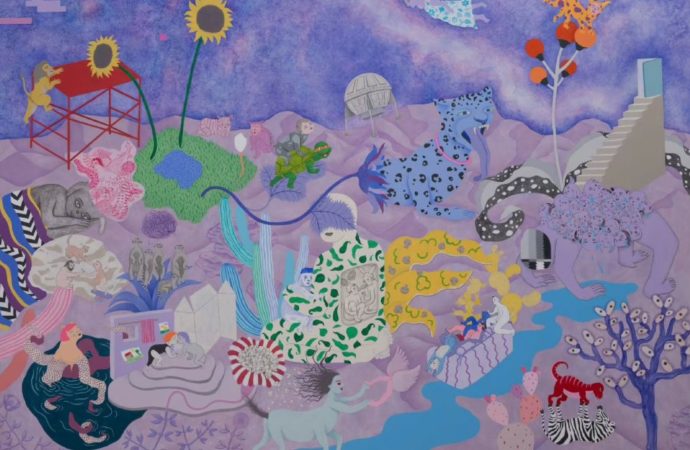
Titanic Ocean (Konstantina Kotzamani, 2026).
Maria Plyta Inaugurates Classics Revisited
One of the main innovations of this edition will be the creation of Classics Revisited, a section dedicated to restoring and promoting Greece’s cinematic heritage.
Its inaugural screening will be Eve (1953), directed by Maria Plyta, a film about a married woman who begins a brief romantic affair with a young man during her summer holidays, provoking the anger of her husband and the disapproval of the island’s small community.
The film holds considerable historical significance: it was the only production by Kominis Film and marked the first appearance of Mikis Theodorakis’s name in film credits.
In 2026, it also became the first restored Greek film to be presented in the Cannes Classics programme.
Its restoration was undertaken by The Film Foundation’s World Cinema Project and Cineteca di Bologna, in collaboration with other institutions, including the Greek Film Archive.
Special Screenings and a Tribute to Nikos Grammatikos
The festival will also present three special screenings.
Happy Beginning (1954), by Dinos Dimopoulos, will be screened in collaboration with Finos Film. This musical comedy brings together two rival trios of composers and lyricists competing in a radio contest.
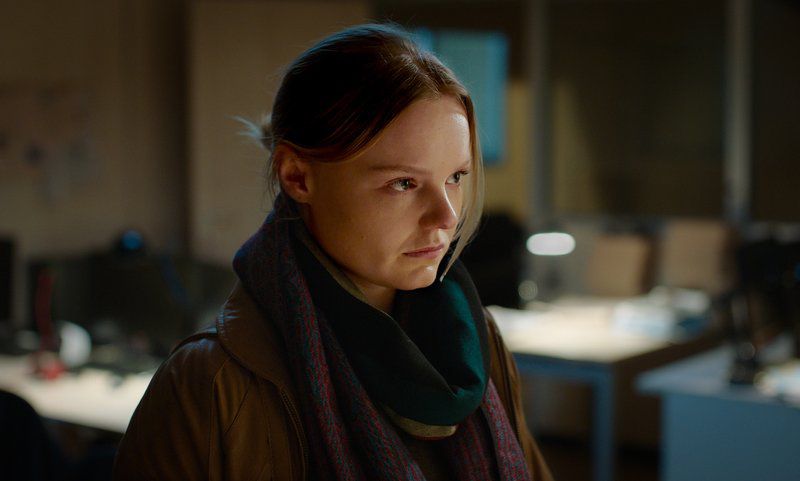
Elena’s Shift (Stefanos Tsivopoulos, 2025).
Sea of Glass (2026), by Alexis Alexiou, will have its preview screening in Thessaloniki. The film follows a sixty-five-year-old widow who, while holidaying at a seaside resort, meets a young woman trapped in a violent family relationship.
Meanwhile, The Classic Masterpiece (2026), by Renos Haralambidis, will screen at the open-air Apollon Cinema. Its protagonist is a film critic who, towards the end of his career, is given the opportunity to direct the only screenplay he wrote in his youth. An existential comedy about artistic aspirations, the passage of time and vanity.
The programme will also include a tribute to Nikos Grammatikos, who will receive the Honorary Golden Alexander in recognition of his career. The retrospective will revisit his feature films and shorts, alongside a special screening of Exodos (1995), courtesy of the Greek public broadcaster ERT’s archive.
Another distinctive event will focus on Opera (1976), by Andreas Velissaropoulos, a lost film regarded as a landmark of Greek queer cinema. The discovery of Super 8 footage from its production will provide an opportunity to reconstruct its history through a discussion involving collaborators, filmmakers and researchers.
Awards, Short Films and Industry Support
The Thessaloniki Film Festival maintains an extensive network of independent awards designed to strengthen Greek film production.
These include the New Vision Award, worth €6,000 for a first-time director, and the Location Award, worth €2,000, both presented by EKKOMED.
Greek public broadcaster ERT will award €3,000 to the film recognised by the International Federation of Film Critics (FIPRESCI), as well as €2,000 for Best Original Music.
The Finos Film Award and the J. F. Costopoulos Foundation Award will each carry a €3,000 cash prize, while the Municipality of Thessaloniki will present €5,000 to a film in the City Stories thematic category, dedicated to experiences of urban life.
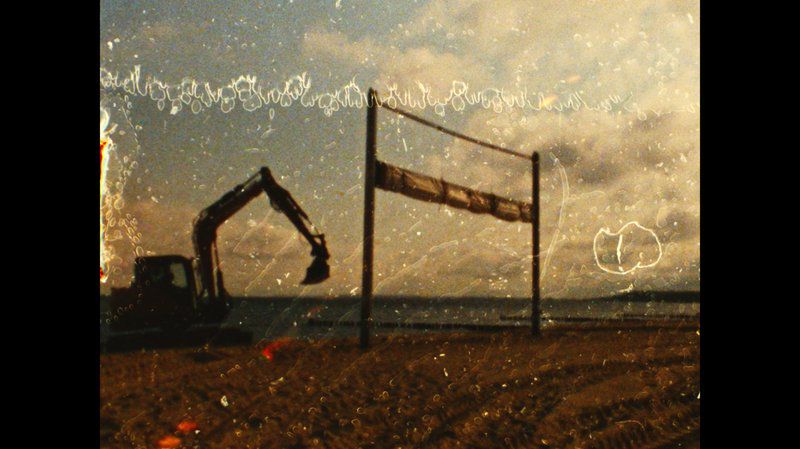
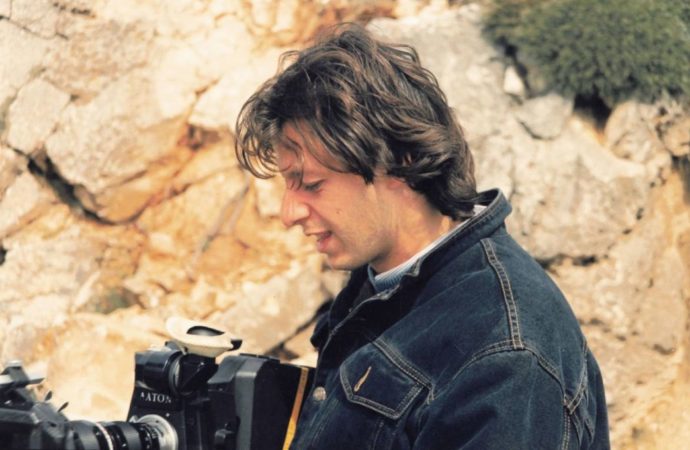
Particles of Dust (Argyris Germanidis, 2026).
Awards will also be presented by the Greek Film Critics Association, the university Youth Jury and Crew United. The Thessaloniki State Symphony Orchestra will offer a composer the opportunity to collaborate on the recording of a future film soundtrack.
The short-film programme will bring together 27 award-winning Greek titles from the Drama International Short Film Festival, which will also be represented in the professional film market.
The festival will further facilitate the international circulation of Greek productions through the professional platform Cinando and will pay screening fees to the Greek films selected for its official programme.
Finally, 23 Greek films will feature adapted subtitles for deaf and hard-of-hearing audiences. In collaboration with Alpha Bank, the festival will make these accessibility materials available to producers for future screenings.
Through this combination of premieres, restorations, retrospectives and professional support, the 67th Thessaloniki International Film Festival reaffirms its role as an essential platform for Greek cinema, both in preserving its heritage and in promoting new generations of filmmakers internationally.
Nadie ha publicado ningún comentario aún. ¡Se tú la primera persona!