
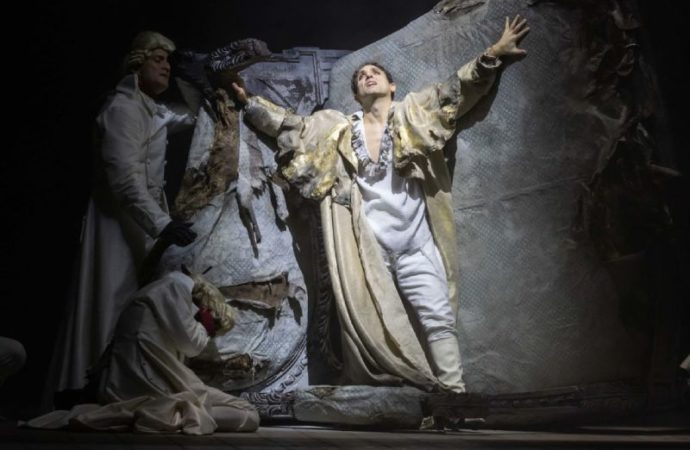
The same artistic team was involved throughout: Chiara Muti was responsible for the dramaturgy and stage direction, while Ottavio Dantone conducted the Orchestra Giovanile Luigi Cherubini, all within a unified scenic framework: the Viennese room in which Mozart died, rendered in white and defined by the geometry of the Enlightenment.
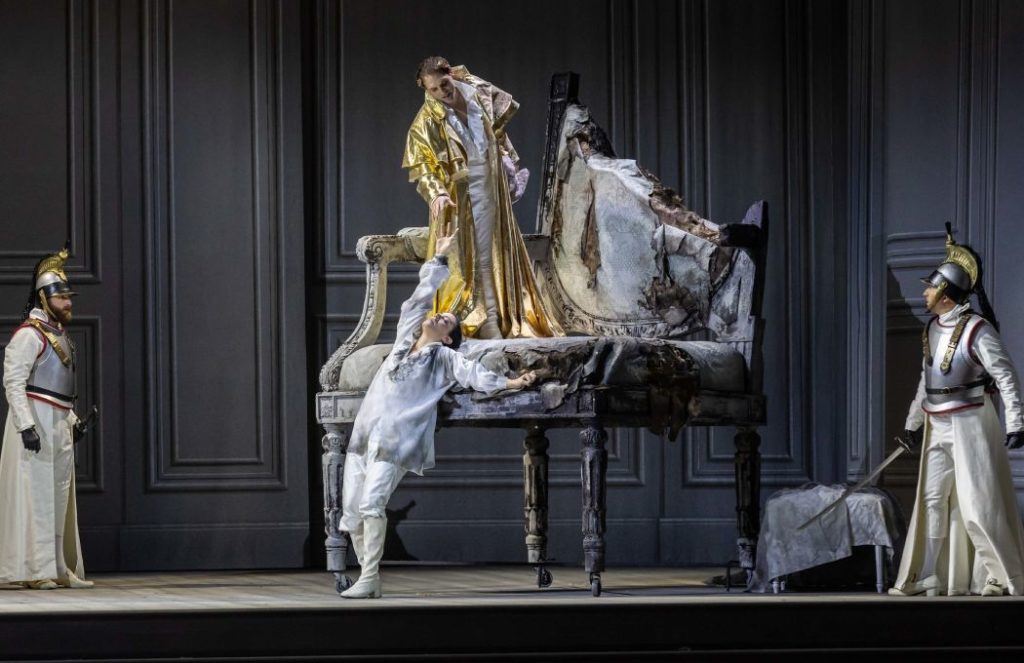
Giovanni Sala and Arianna Vendittelli in Act II of La clemenza di Tito. ©Zani-Casadio.
In its exploration of human behaviour and its frailties, it is in no way inferior to Così fan tutte or Die Zauberflöte: only the terrain is different, here that of power and betrayed friendship. Every note is a theatrical gesture. The clarinet accompanying Sesto in his first-act aria, ‘Parto, ma tu ben mio’, conveys his hesitation more eloquently than any verse; the finale of that same act, with its horror and bewilderment at Tito’s presumed assassination, eschews bombast and fades into a hushed lament; the basset horn enveloping Vitellia’s rondo towards the end of the second act gives remorse a tangible musical form; Tito’s accompanied recitatives reveal both the emperor and the man wounded in his deepest affections.
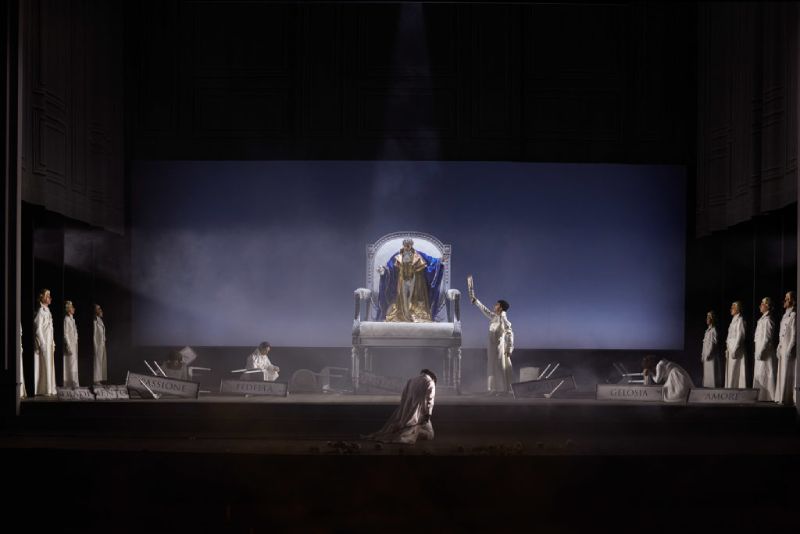
Giovanni Sala in the final scene of La clemenza di Tito. © Zani-Casadio. ©Zani-Casadio.
La clemenza di Tito still suffers from the prejudice that it is a cold work, a belated tribute to an exhausted genre.
Nor did Tito, portrayed as a man afraid of his own shadow, manage to engage our sympathies: his behaviour merely undermined the pivotal act of clemency, which carries dramatic weight only when exercised by someone who has the power to punish. Equally unhelpful were the hints of a possible revolution at the end of the opera, with the colours of the French tricolour appearing rather too conspicuously. The historical coincidence is undeniable, but neither the libretto nor the score supports such a reading.
Stage direction can illuminate what lies within a text; when it projects onto it what the director believes to be there, it ceases to interpret and begins to rewrite.
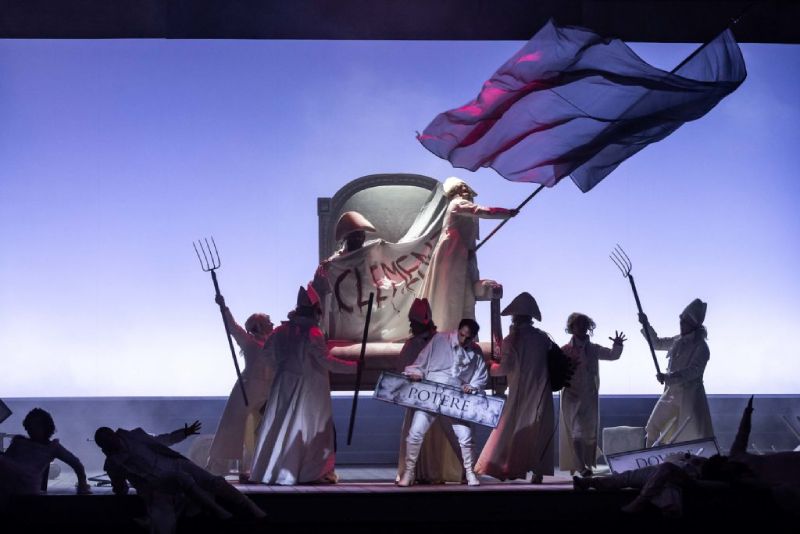
The final scene of La clemenza di Tito. © Zani-Casadio.
The cast delivered accomplished performances throughout. Giovanni Sala was an excellent Tito, restoring to the character the authority denied him by the staging, with a voice ideally suited to the role, while Arianna Vendittelli gave an outstanding performance as Sesto throughout the evening. The remaining singers were less convincing. Mariangela Sicilia was comfortable in the middle and upper registers but struggled considerably in the lower register, an area in which Mozart’s writing for Vitellia is particularly unforgiving. Moreover, she portrayed a character who was more coy than vengeful and tormented, a shortcoming that was particularly apparent in the first act.
Paola Gardina’s Annio and Francesco Leone’s Publio were effective but vocally no more than adequate. Special mention should go to Martina Licari, a delicate Servilia capable of conveying genuine emotion in her wonderful and only aria, ‘S’altro che lagrime’, in the second act. All performed under the baton of Ottavio Dantone, at the helm of an excellent Orchestra Cherubini. His conducting was competent and effective, but hardly revelatory. It lacked the essential ingredient: a sensitivity to what lies at the very heart of Mozart’s style, the intimate relationship between music, stage and word.
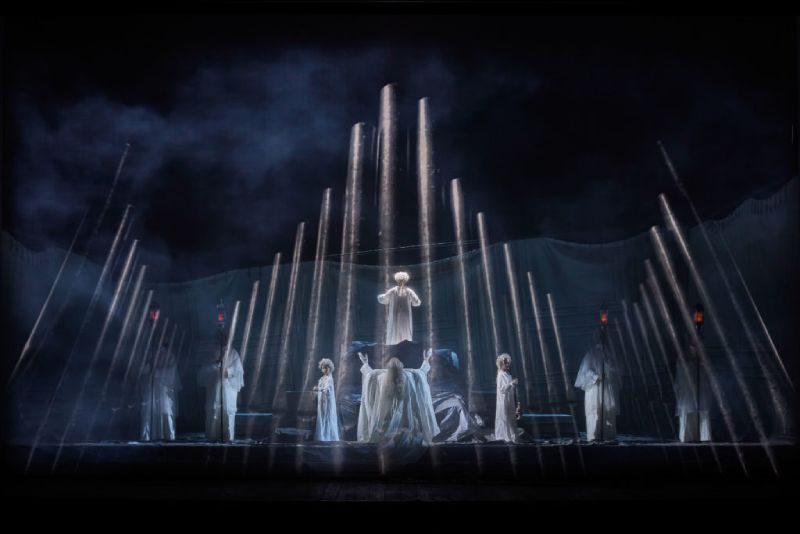
L’ultimo incanto. ©Zani-Casadio.
An interesting and potentially fruitful idea. Yet it was lost as the work progressed, in a succession of numbers from Die Zauberflöte (The Magic Flute) linked somewhat predictably to the vicissitudes of the composer’s life: his thoughts on life and death, his loves and his relationships with his father, mother and sister, all presented in a rather simplistic manner, lacking originality and, above all, any genuine reinterpretation.
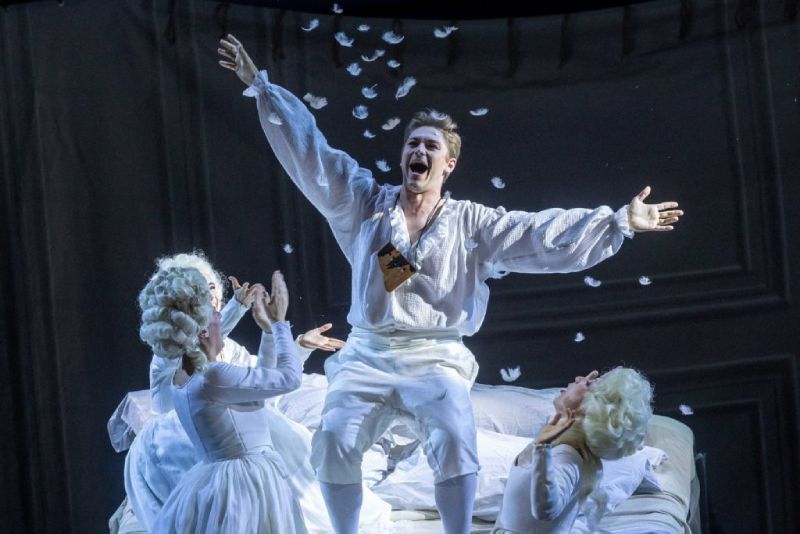
Louis de Lavignère in L’ultimo incanto. ©Zani-Casadio.
The ideas were presented coherently and without an excessive desire to apportion blame, yet they remained closed in on themselves, dangerously confined to the surface: an approach to certain subjects that is regrettably characteristic of our times, heavy on emphasis and short on substance. There was no attempt to delve into the fundamental issues that should underpin any critical and creative reinterpretation of the life and work of a great composer. Above all, what was missing was that sense of dramaturgy, at once complex and simple, that encapsulates the entirety of Mozart’s theatre.
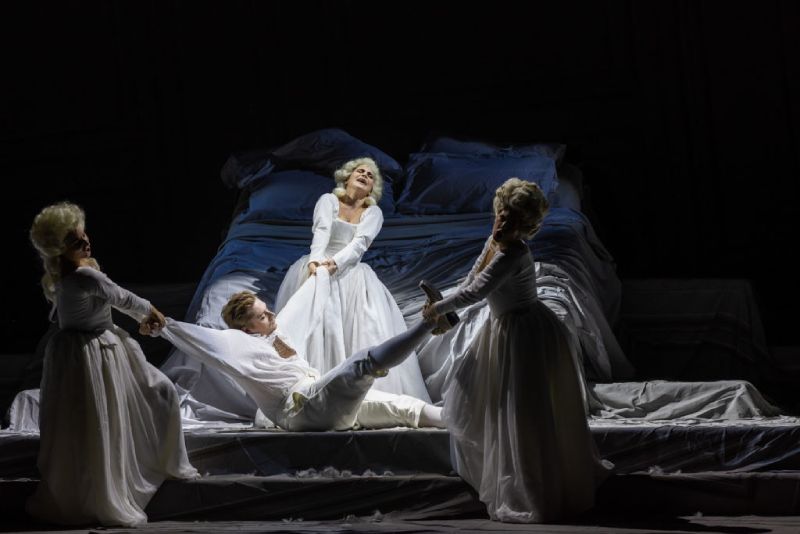
L’ultimo incanto. ©Zani-Casadio.
The singers gave fine performances, particularly the tenor Ilker Arcayürek (Tamino), the bass Louis de Lavignère (Papageno), Martina Licari as Pamina and the soprano Maria Sardaryan, who negotiated the Queen of the Night’s arias with assurance. Dantone conducted with stylistic propriety and good control of dynamics and phrasing, but displayed the same limitations as in La clemenza di Tito: an overly mechanical approach to the score, lacking in nuance. Fortunately, what remained was the greatness of the music of a singular genius who conveyed the truth of life like no other, ensuring the success of both Mozart evenings with the audience.
Nadie ha publicado ningún comentario aún. ¡Se tú la primera persona!