
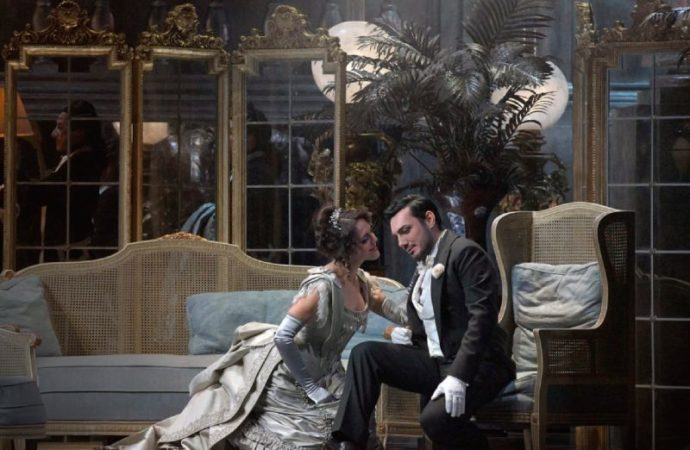
Fedora had not been staged at La Fenice since 1968, and its return to open the 2026–2027 opera season was hardly an innocent choice. By opting for a work from the verismo movement, the great Venetian opera house clearly signalled the direction of its new artistic leadership, headed by Nicola Colabianchi, the superintendent appointed by Alessandro Giuli, Minister of Culture in Giorgia Meloni’s government: a reactionary, sovereigntist agenda very much to the liking of Italy’s ruling right wing, which championed it vigorously and through improper channels.
It was this same agenda that led to the appointment of Beatrice Venezi as music director, a conductor regarded as close to Fratelli d’Italia, Meloni’s party. The appointment, which we have already criticised in previous articles, was revoked in April following months of protests by the orchestra. In a sign of the continuing opposition to the new superintendent, a strike by theatre staff forced the cancellation of the opening performance on 13 November.
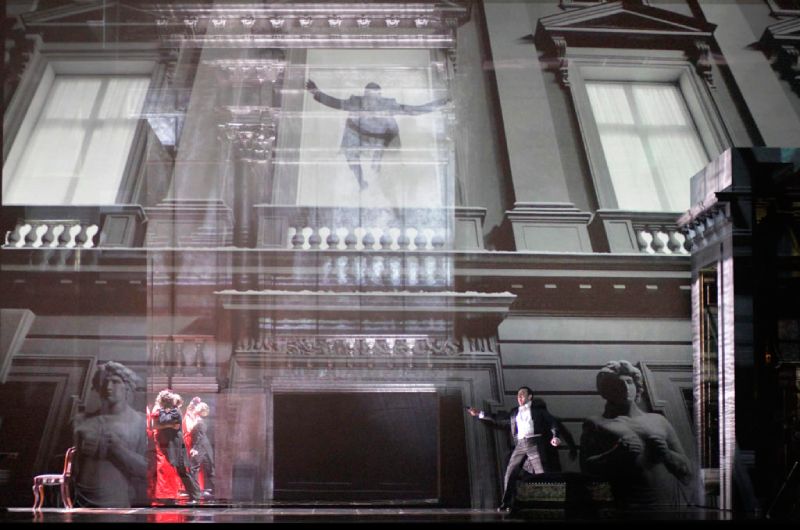
A scene from the opening of Act I of Fedora. © Michele Crosera.
Composed in the wake of the success of Andrea Chénier, Umberto Giordano’s opera, with a libretto by Arturo Colautti, premiered at the Teatro Lirico in Milan on 17 November 1898, starring Gemma Bellincioni and a young Enrico Caruso as Loris Ipanov, and confirmed its composer’s international success.
The first Italian opera based on a play by Victorien Sardou, preceding Tosca, it inherits all the shortcomings of the kind of theatre that George Bernard Shaw contemptuously dismissed as ‘Sardoodledom’: well-crafted works devoid of any genuine ethical or idealistic tension.
The plot advances in leaps, from a wintry St Petersburg to the circles of the exiled Russian aristocracy in Paris and the Swiss Oberland. Princess Fedora vows to avenge her murdered fiancé, only to fall in love with his killer. Her denunciation leads to the deaths of Loris’s brother and mother, leaving her with no recourse but poison.
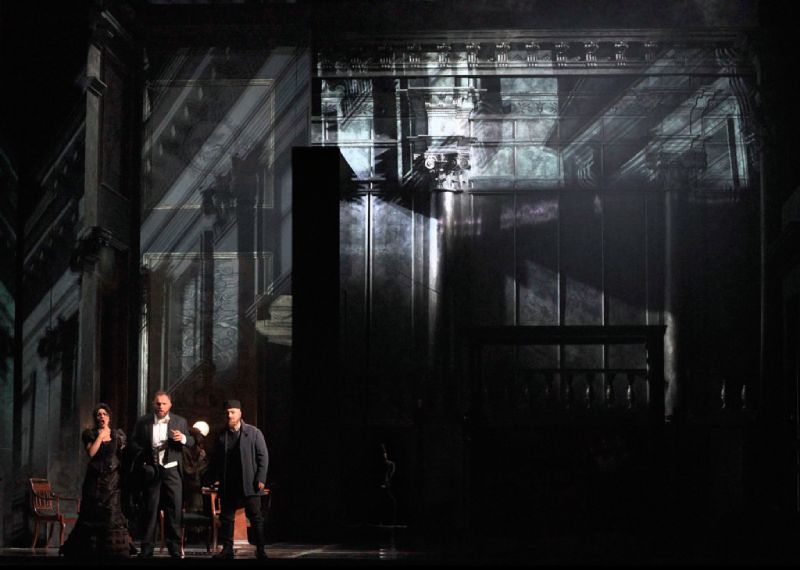
Maria Agresta and Simone Piazzola in Act I of Fedora. © Michele Crosera.
With the exception of the genius of Puccini – who, in Manon Lescaut, had transformed despair in the face of death into a musical and dramatic moment of an intensity that Giordano’s operatic finale comes nowhere near matching – that period produced works of little invention, sustained by stentorian, unnuanced singing, more concerned with vocal extremes than with the words.
Fedora was the first Italian opera based on a play by Victorien Sardou, preceding Tosca.
Fedora is no exception. The score effectively reinforces the melodramatic atmosphere with immediate theatrical impact and affords occasional moments of lyrical repose. Yet, apart from a few flashes of orchestral brilliance and the celebrated Act II intermezzo, introduced with undeniable craftsmanship, it lacks genuine inspiration.
Donato Renzetti himself, the conductor of the Venetian performance, likens it to the great cinematic scores. The compliment reveals more than intended, for it describes music that underscores the action without ever reflecting upon it.
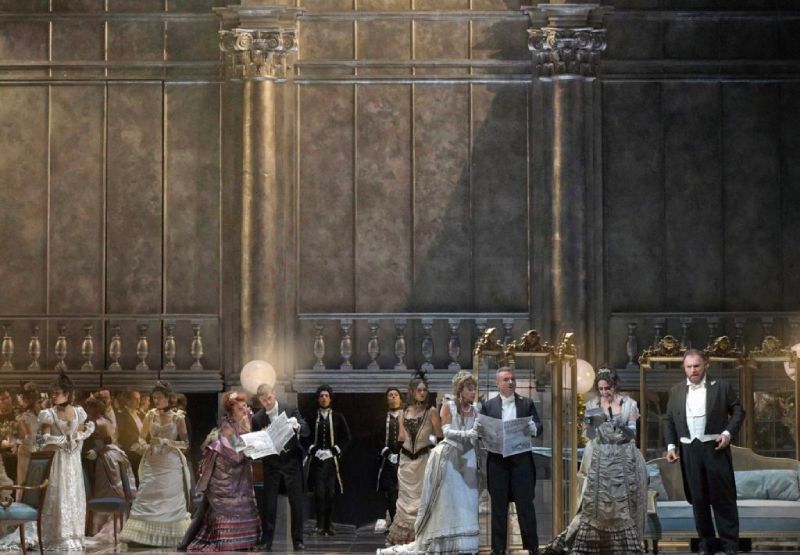
Act II of Fedora. © Michele Crosera.
Fortunately, the Venetian performance was excellent. Renzetti conducted with assurance and a keen sense of theatrical pacing, attentive to the continuity and rhythm demanded by this crime thriller. The orchestra responded with precision, and the chorus, prepared by Elena Pierini, was particularly fine.
In the first cast, Maria Agresta stood out above all, making her debut in the role. With a full, solid voice and finely sculpted phrasing, she was a convincing Fedora, both in her wounded pride and in her downfall. Alongside her, Vincenzo Costanzo was a Loris of rich, rounded timbre and convincing dramatic impetus, captivating in the celebrated ‘Amor ti vieta’. Equally effective in their by no means minor roles were Simone Piazzola as De Siriex and Ekaterina Bakanova as a lively and self-assured Olga.
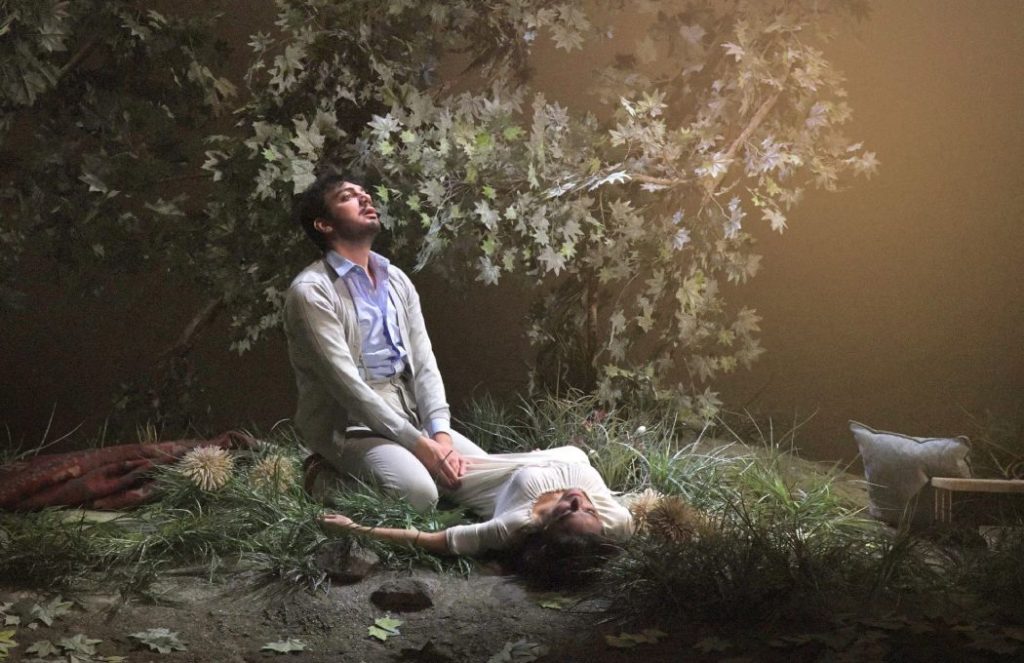
Maria Agresta and Vincenzo Costanzo in the final scene of Act III of Fedora. © Michele Crosera.
Hugo de Ana, one of the last great scenic designers of the operatic stage, was responsible for the direction, sets and costumes of a production that made opulence its hallmark. Prince Vladimir Andreyevich’s palace in St Petersburg and Fedora’s Parisian residence were interiors overflowing with ornaments, furnishings and decorative details, evoking an elegant and meticulously crafted world.
In Act III, set in the mountains of the Bernese Oberland, the stage opened onto a large, diagonally positioned branch with dense foliage extending over a grassy surface. Here, the simplicity of the set proved even more effective than the elaborate designs of the preceding acts.
The period costumes offered a wealth of chromatic variations in harmony with the different settings. The staging thus adhered scrupulously to Colautti’s libretto; the only departure came in the form of filmed sequences by Michele Innocente, created with the substantial contribution of artificial intelligence. These introduced exterior settings and expanded the action otherwise confined to interiors, even during the interval between the first and second acts.
It was a solution consistent with the drama’s almost detective-story character and with the cinematic qualities that Renzetti identifies in the score, offering the staging some scope to break free from its confines. In short, it was a production that served the work well, even if the opera itself had little more to offer. The audience seemed to share this assessment, rewarding the performers with warm and sustained applause, but without the enthusiasm reserved for truly memorable evenings at the opera.
Nadie ha publicado ningún comentario aún. ¡Se tú la primera persona!