
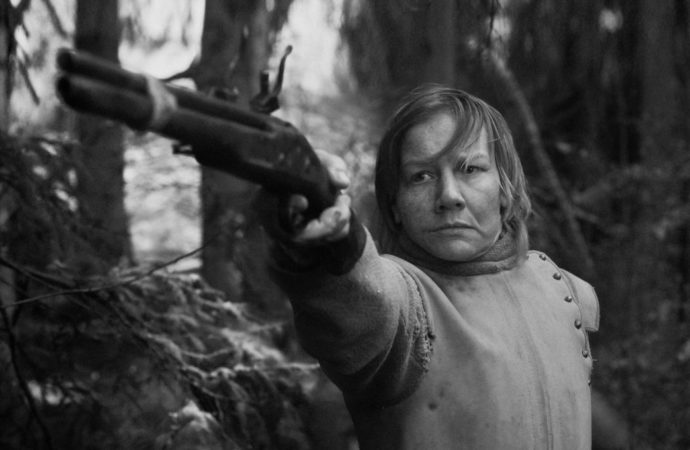
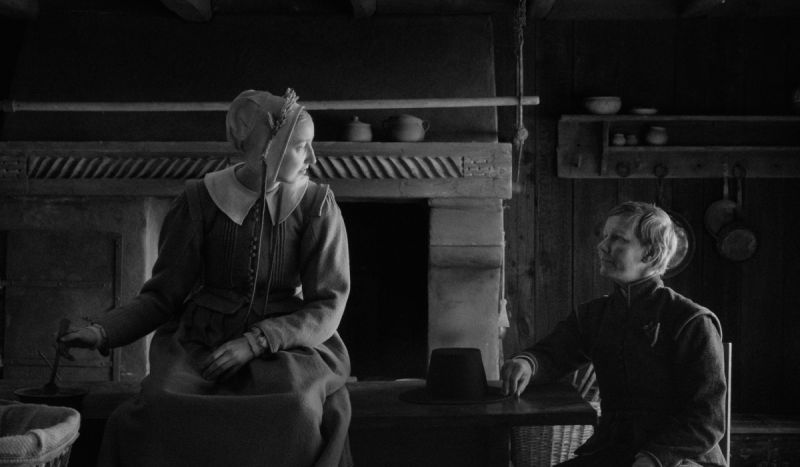
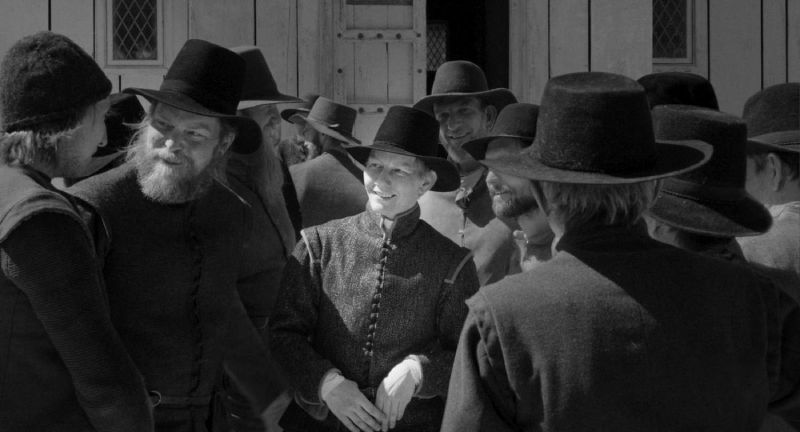
In Rose, his third feature film, Austrian filmmaker Markus Schleinzer takes us to rural seventeenth-century Europe to tell the story of a woman who assumes a male identity and manages to carve out a place for herself in a society that would otherwise deny her virtually any autonomy. Portrayed by the extraordinary and versatile Sandra Hüller, who won the Silver Bear for Best Leading Performance at the most recent Berlinale, Rose defies the conventions of her time, but her pursuit of freedom is neither free of contradictions nor without consequences for those around her.
Following Michael (2011) and Angelo (2018), Schleinzer once again explores the mechanisms of exclusion, power relations, and the moral complexity of characters who resist conventional categorisation. His cinema, characterised by a rigorous gaze and a deliberate rejection of sentimentality, never offers reassuring answers to the questions it poses to the audience.
In this conversation with El Hype, the director reflects on women’s historical exclusion, the construction of masculinity, his collaboration with Sandra Hüller, and the influence of filmmakers such as Michael Haneke, with whom he worked for many years. He also champions a vision of cinema that distrusts moral certainties and the emotional manipulation of audiences, defending grey areas, contradiction, and dialogue as essential spaces for understanding the human condition.
EVA PEYDRÓ: Hello, Markus. Thank you very much for joining us today. It’s a pleasure to talk with you about Rose.
MARKUS SCHLEINZER: We don’t know that yet, because I might just say silly things, but I hope not.
First of all, I’d like to point out that across your three feature films, we encounter characters living within deeply unequal systems, where power determines who has control over their own lives and who does not. Although their stories are very different, do you see a common concern connecting Michael, Angelo and Rose?
I think so. I always like to talk about the so-called outsiders, because I think it’s very interesting to see how we, as a society, treat those so-called outsiders. And it tells us so much about where we are at any given moment and what kind of society we are. And I think this comes in waves.
Sometimes we are a much more open society, and we invite people in because, at times, we need them. In Austria, where I come from, we are what you might call a dying country, because we don’t have as many babies anymore and we need a lot of new blood, so to speak. There are many jobs that our own people don’t want to do.
In a way, we are all outsiders, because we are all different.
We have a huge problem with elderly care. We have a huge problem with hospital staffing. So, of course, we invite lots of people to come in, while at the same time arguing that we don’t want immigrants doing those jobs.
That’s why I’m interested in talking about outsiders, the so-called outsiders, because I always say that perhaps, in a way, we are all outsiders, because we are all different. And perhaps, if they don’t harm us, if those people are different from us but do us no harm, why even discuss it? Why? Why not see it as a win-win situation?
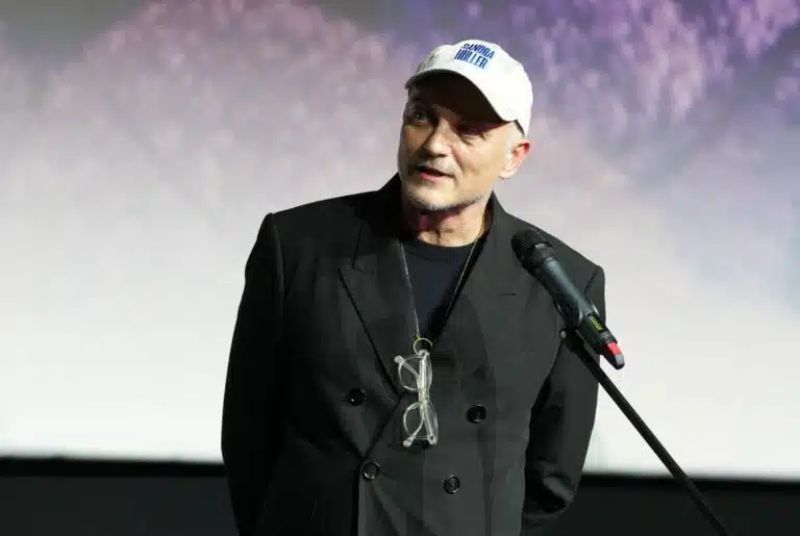
Markus Schleinzer en la presentación de Rose en el Festival de Valladolid, donde obtuvo el Premio del Público ©Seminci
But with Rose, things were different this time, because I had to discover something I hadn’t been aware of before, and it came as a shock to me. Because I realised that the largest group of outsiders in the world isn’t to be found in a foreign country, or among people with disabilities, or among those who want to push the boundaries of social norms and conventions.
The largest group of outsiders in the world is women. That came as a shock to me. And that was the reason why I wanted to make Rose this time.
Rose challenges a social order that denies her almost any autonomy. Yet, in pursuing her own freedom, she also resorts to deception and ends up hurting others. Was it precisely this contradiction that interested you — the possibility that someone fighting against injustice might, in turn, become responsible for another form of injustice?
I’m afraid that happens sometimes, or perhaps even most of the time. I’m afraid this is an ongoing debate: where does my freedom begin, and where does my pursuit of freedom infringe upon someone else’s freedom?
And on the other hand, as a person and as a writer, I very much like the idea of dialectics, of not creating a character who is simply good or simply the opposite. Because I don’t think that’s how we work as human beings.
We are all good, and sometimes we all have our bad sides too. We have to embrace that. And I think we’re living in a time when this kind of dialectic is being lost. Somehow, we’ve lost the ability to disagree, or to agree to disagree, without wanting to kill each other the very next second.
I think social media is still a very young phenomenon, and we still have to learn how to use it and cope with it. But my experience so far is that people react, people ghost each other, people hate. I dislike that very much. It’s as if there were no…
Grey areas?
Exactly, grey areas. So I thought, okay, maybe this is difficult, but we have this character, Rose, who is fighting for her freedom. And of course, she has these blind spots that prevent her from seeing that she’s exploiting Suzanna.
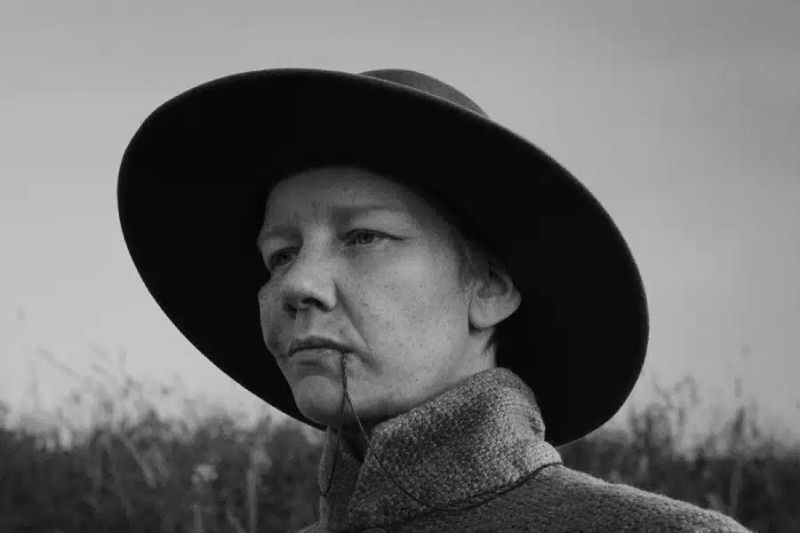
This gives the screenplay an interesting turn, because it gives Suzanna’s character the opportunity to react, to fight for her own identity and her own existence.
And that’s what I call conversation and dialogue. And it’s something I would definitely like to see much more of in today’s society: the ability to have a dialogue and the ability to say, “I agree” or “I disagree”, but that’s okay too.
Sandra Hüller won the Silver Bear at the last Berlinale. You’ve explained that you had her in mind when writing the screenplay. Yet an actor’s performance can also transform the original conception of a character. Did Sandra discover something in Rose, a particular dimension, vulnerability or contradiction that you hadn’t anticipated when writing the screenplay?
I think much more on a personal level. Rose is also about masculinity, in a way. And I had never questioned my own masculinity. Never… I found it so boring to think about what masculinity actually is. I just lived my life and worked. It wasn’t that important to me.
But I have to say, I’m a born feminist, because there were no men in my family. They were either divorced or already dead. So I was always surrounded by women, and we never discussed silly things like “What is a man?” or “What does it mean to be masculine?”
So we both discovered concepts like masculinity, and we found them very funny. Because Sandra said, “It’s so strange, because it’s all about performance.” When a woman enters a room, it’s a woman entering a room, but when a man enters a room, it’s always, you know, like a conqueror. So men like to perform, to play a role. We found that very funny.
There’s a kind of horn in the film that Rose uses to urinate, which we only see once, during the trial. But Sandra insisted on wearing it underneath her costume. And after the first day of shooting, she said she now understood why men walk so ridiculously or sit so ridiculously, because there’s always something in the way.
And we played around with silly things. I gave her a pair of my shoes, so throughout the entire film she was walking in my shoes, which are bigger than her feet. Just wearing those oversized shoes made her walk, you know, like a ship, like a sinking ship. So we had a lot of fun creating this representation of men and masculinity.
And I think there came a point when she didn’t want to suffer anymore. And I could understand that, because when we started shooting the final part of the film, the trial, Trump had just been re-elected. And suddenly all those discussions were coming up again about whether women really have the right to decide what happens to their own bodies, and blah, blah, blah, blah, blah, blah… So we cried a lot. Sandra has a daughter. And once again, the question arose: what will the world be like? What kind of world are we leaving to our children? I mean, is it getting worse? Is it getting better? Sometimes I feel it’s getting worse again.
Why do we have to protest the same shit over and over again? We talked and discussed a lot about the current state of the world, but that was also the reason why we both wanted to make this film and why we both wanted to talk about freedom, personal freedom and empowerment in general.
A good film is something you can breathe in, absorb and reflect on.
You’ve spoken about your distrust of films that emotionally manipulate audiences by telling them how to feel. Where do you draw the line between guiding the audience’s gaze and manipulating their moral response?
That’s a difficult question, because filmmaking always involves directing. Exactly. Because you can never avoid it. You can never make a film without manipulating the audience, because it starts with the camera. I grew up with theatre. My first love is theatre. And when you go to see a play, you can decide where you want to look. And sometimes you might miss the action because you were looking in one direction while the actors were doing something somewhere else.
In cinema, that’s not possible, because, as with Zoom right now, I mean, you only see this and I only see that. Filmmaking is always manipulative. But when it comes to manipulating emotions or offering only one answer or one possibility, that’s what I really dislike, because I believe in an intelligent audience. I don’t believe that the people who come to see my films are idiots who only have one emotion or don’t know how to feel.
And that I have to throw the sound of seven thousand strings at them to say, “Now you have to be sad, and now you have to be tired.” When films become too much like a form of propaganda, that’s something I really dislike as a viewer, and it’s also something I really dislike doing myself. So, of course, it’s a very fine line, because you don’t want to be too preachy either. Films should be an invitation to conversation.
A good film doesn’t end on the screen. A good film doesn’t end when the credits roll. A good film is something you can take home with you. A good film is something you can breathe in, absorb and reflect on.
And personally, the films I like most are the ones that make me angry and move me emotionally, so that when I walk out of the cinema, I think, “Okay, I have to roll up my sleeves. Where can we go? What can we do? What can we protest against? Where can I sign? What should I vote for? Who should I call? Who doesn’t have money? What can I do?”
Those are the films I like most, because they’re like a living creature that speaks to you, that teaches you something you didn’t know, something you hadn’t thought about before. And that’s the intention with which I try, at least I try, to make my own films.
You spent seventeen years working as a casting director with filmmakers such as Michael Haneke, Ulrich Seidl and Jessica Hausner. How did those collaborations shape your own approach to filmmaking? And was there anything you consciously wanted to do differently when you began directing your own films?
Michael Haneke gave me many opportunities in life. I mean, I wasn’t just a casting director; I became something of an assistant. He allowed me to direct on his set. At first, I directed background actors and extras. And when we made The White Ribbon, he gave me the opportunity to direct the children in front of the camera, which was a kind of initiation into becoming a director myself.
But something I felt quite familiar with, both with him, Michael Haneke, and with Jessica Hausner or other directors I had the opportunity to work with, was that kind of language, that cinematic language. The kind Haneke had, the kind Bresson had, the kind Jessica has. That’s something I really like: that particular language filmmakers have, that way of telling a story.
Each person speaks it differently, and I don’t want to compare myself. But I think there’s definitely much more humour in my films than in Michael’s, or even Jessica’s. So we have different approaches because we’re different people. But the language we speak may well be the same.
And what did I learn? I mean, from Michael you can learn that you have to be the first soldier of your film. You have to fight; you have to be the first to fight. If you don’t believe in it, who else will? If you don’t really want it, who else will?
I don’t believe in salvation. I don’t believe that if I just sit around waiting, someone will come along and do it for me. I believe in work, I believe in research. I did a tremendous amount of research for Rose, and still I made a lot of mistakes. I mean, things like the bed you see in the film came out of that research. And I thought it was very clever to use it in a story about keeping a secret and isolating oneself, having that kind of bed you can climb into at night and close the doors.
One big mistake in this film is the coat made of bearskin, which is completely impossible. British soldiers wear those bearskin hats, and making them that way is the only way you can sew bearskin, because the animal’s hide is too thick. You can’t make a coat out of it. Otherwise, I mean, it would be like this [he gestures with his hands, widening his outline], and you wouldn’t be able to move.
I didn’t know that. I thought it was possible. So it’s in the film. It’s a lie. I made a mistake. Next time I’ll know better. But I think that’s the interesting thing about filmmaking: every new subject invites you to learn more.
Time runs out on a conversation filled with unexpected revelations, humour and Markus Schleinzer’s candid reflections on his work and craft. The director of Rose says goodbye, hoping that at least a couple of sentences from our conversation might be worth using — yet another sign of his humility. But as we part ways, what stays with us is his definition of a good film: one that we take home with us, one that continues to challenge us long after we’ve left the cinema.
Nadie ha publicado ningún comentario aún. ¡Se tú la primera persona!