
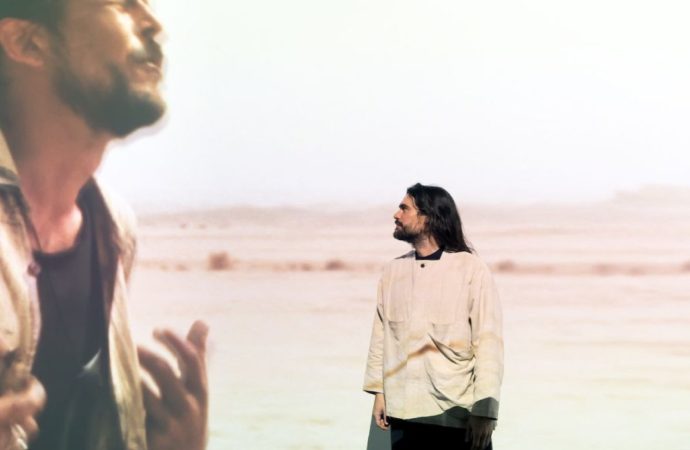

Galician director Oliver Laxe, the filmmaker behind Sirāt, will be one of the leading figures at the 67th Thessaloniki International Film Festival, taking place from November 5 to 15, 2026. The festival has invited him to curate Welcome to the Desert, a programme of seventeen films exploring the presence of the desert throughout cinema history, accompanied by a multimedia installation developed in collaboration with the Reina Sofía Museum.
The desert has long occupied a privileged place in the cinematic imagination. A space of isolation, adventure, spiritual revelation or survival, its landscapes have allowed filmmakers from different eras to explore the relationship between human beings and a territory that seems to resist every attempt at domination.
Laxe’s selection combines classics of film history with lesser-known works.
The programme will bring together seventeen films selected by Laxe, a multimedia installation at the MOMus–Experimental Center for the Arts, an open discussion with the filmmaker and a bilingual publication dedicated to the relationship between desert landscapes and moving images.
Oliver Laxe Returns to a Festival Closely Linked to His Career
Laxe’s presence in Thessaloniki also marks a reunion with a festival that has supported his career since his earliest films. At its 60th edition, he won the Golden Alexander in the International Competition for Fire Will Come (O que arde), which had previously received the Jury Prize in the Un Certain Regard section at Cannes.
The director’s career has been closely linked to the French festival. His debut, You All Are Captains (Todos vós sodes capitáns, 2010), screened in the Directors’ Fortnight and received the FIPRESCI Prize. Subsequently, Mimosas (2016) won the Grand Prize at Critics’ Week, while Sirāt (2025) received the Jury Prize in the Official Competition.
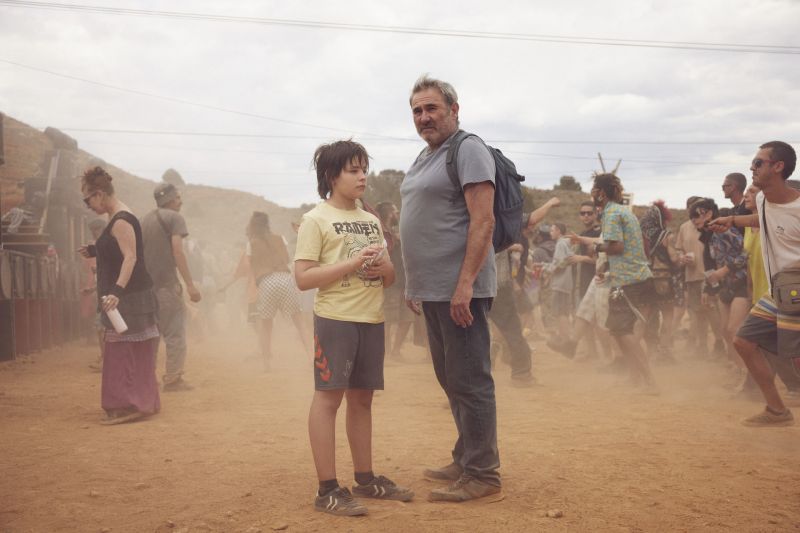
Sirat (Oliver Laxe, 2025).
Laxe’s films are characterised by a particular attention to landscape, sensory experience and characters crossing physical and spiritual territories whose boundaries are difficult to define. This relationship between geography and inner searching provides the starting point for the retrospective organised in Thessaloniki.
Laxe thus joins the festival’s list of guest curators, which has previously included Carlo Chatrian, former Artistic Director of the Berlin and Locarno film festivals; Myriam Ben Salah, an art curator; and Dennis Lim, Artistic Director of the New York Film Festival.
The Desert as Cinematic Territory
Welcome to the Desert explores different ways of representing a space that, beyond its geographical dimension, functions as a metaphor for human existence. The desert can represent the immensity of time, confrontation with nature, solitude or the search for answers in the face of the unknown.
Laxe’s selection combines classics of film history with lesser-known works, ranging from major epic productions to documentaries and experimental cinema.
Among the best-known titles is Lawrence of Arabia (1962), directed by David Lean, whose monumental depiction of the desert landscape has become part of cinema’s visual memory.
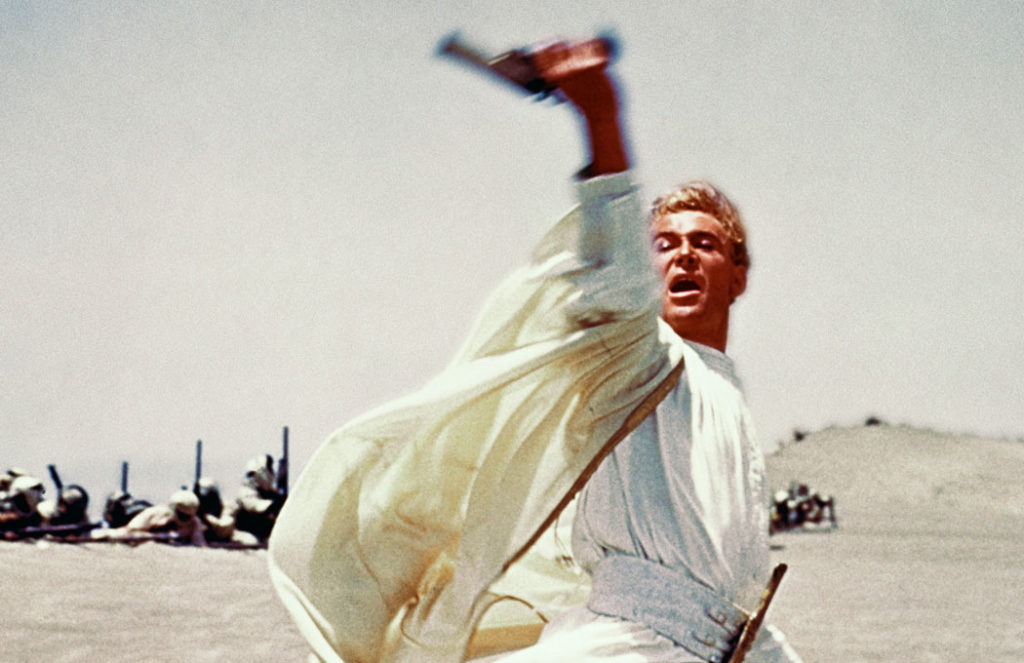
Lawrence of Arabia (David Lean, 1962)
A very different approach can be found in Luis Buñuel‘s Simon of the Desert (1965), a surrealist satire of religious fanaticism that transforms its protagonist’s isolation into a reflection on faith and its contradictions.
The programme also includes Easy Rider (1969), directed by Dennis Hopper, in which the open spaces of America become the setting for a search for freedom shaped by the conflicts of its time.
In Walkabout (1970), Nicolas Roeg uses the Australian landscape to explore the distance between civilisation, nature and time.
From Herzog to Tarkovsky: Landscapes of the Unknown
One of the films closest to Laxe’s cinematic imagination is Fata Morgana (1971), directed by Werner Herzog, a documentary and experimental experience that transforms the Sahara into a territory of almost hallucinatory images.
Also screening is Wake in Fright (1971), by Ted Kotcheff, a story of psychological deterioration set in Australia’s arid and isolated landscapes.
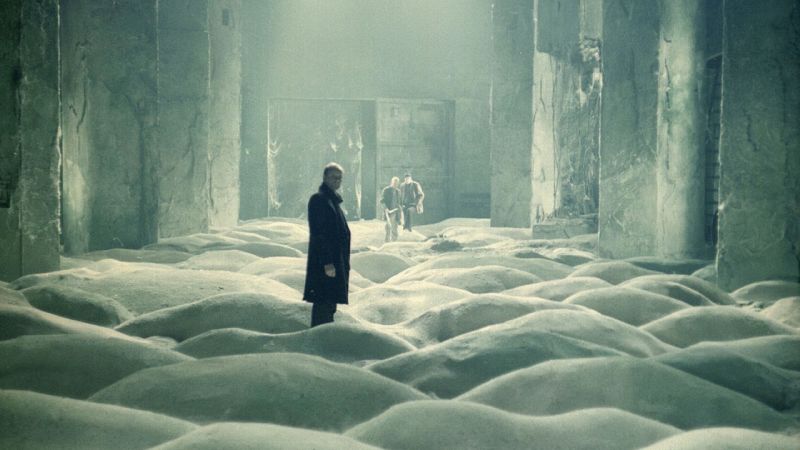
Stalker (Andrei Tarkovsky, 1979)
The selection also includes Stalker (1979), by Andrei Tarkovsky, in which a mysterious territory becomes the setting for questions about faith, desire and the human condition.
Although its landscapes do not correspond to the conventional image of the desert, the film shares the programme’s central idea of an unknown space that forces its characters to confront themselves.
The inclusion of Beau Travail (1999), by Claire Denis, introduces another dimension: the body, discipline and desire within a landscape where emotional tension takes on a fundamentally visual expression.
The documentary Highway (1999), by Sergei Dvortsevoy, explores the struggle for survival of a family in Kazakhstan, while 143 Rue du désert (2019), by Hassen Ferhani, focuses on an isolated café in Algeria.
The selection also features The Naked Island (1960), by Kaneto Shindō, a work exploring the relationship between human existence and an extremely demanding natural environment.
Mimosas and Sirāt: The Desert According to Oliver Laxe
The retrospective includes two films by its curator: Mimosas (2016) and Sirāt (2025).
In Mimosas, Laxe develops a journey with mystical resonances through the mountainous landscapes of Morocco. The participation of non-professional actors and the attention paid to the territory help construct a narrative in which the boundaries between adventure and spiritual experience remain open.
Sirāt, meanwhile, transfers that search to the desert, combining electronic music, movement and a growing sense of threat.
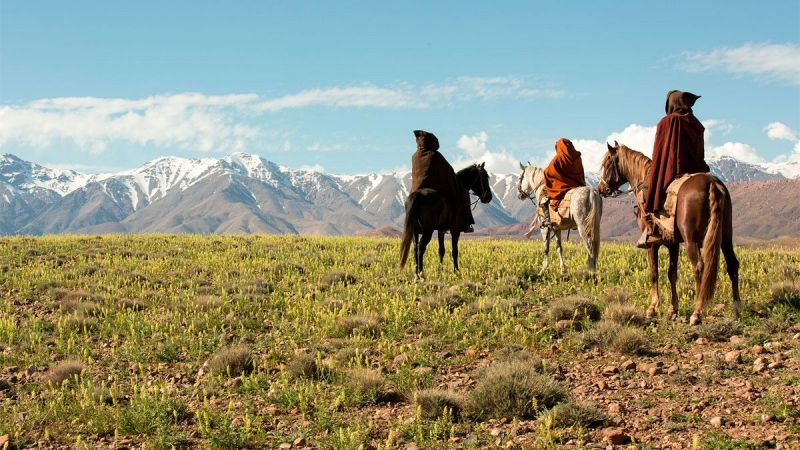
Mimosas (Oliver Laxe, 2016)
The inclusion of both films allows audiences to observe the continuity of certain concerns in the director’s work, as well as his evolution towards an increasingly physical and sensory cinematic experience.
The desert appears not merely as a scenic backdrop, but as an element that shapes the narrative and transforms the characters.
A Reina Sofía Installation at the Port of Thessaloniki
The film retrospective will be complemented by an exhibition developed in collaboration with the Reina Sofía Museum in Madrid and the MOMus–Experimental Center for the Arts.
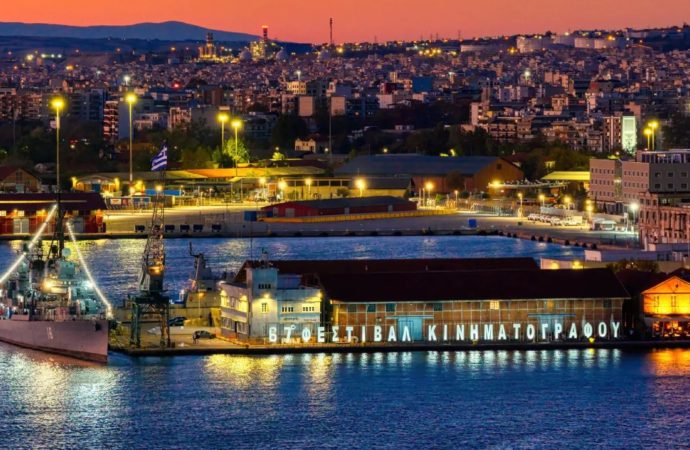
The venue, located in Warehouse B1 at the Port of Thessaloniki, will be transformed into a desert-inspired environment through an installation extending across its different spaces.
The project will be curated by Orestis Andreadakis, the festival’s Artistic Director, with architectural design by Eirini Sapka.
Its central element will be HU / هُوَ. Dance as if no one were watching you, a three-channel audiovisual installation conceived by Oliver Laxe and produced by the Reina Sofía Museum.
The work, co-curated by Julia Morandeira Arrizabalaga and Chema González, draws on visual material and research processes associated with Sirāt.
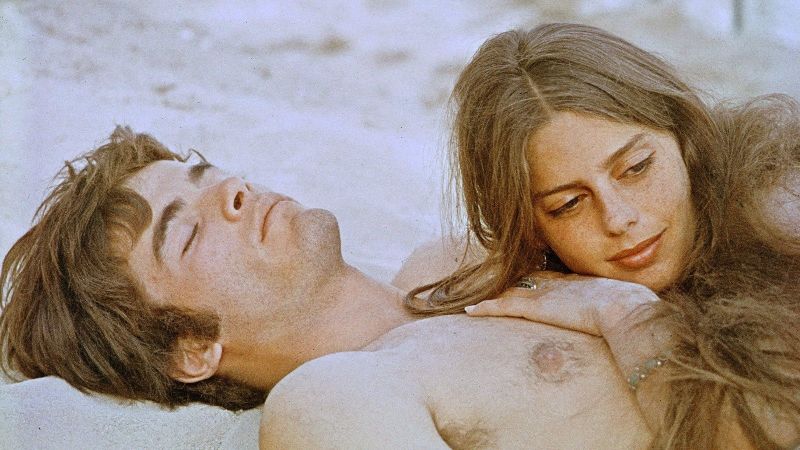
Zabriskie Point (Michelangelo Antonioni, 1970).
The images were filmed by Laxe in Iran approximately a decade ago and depict desert landscapes dominated by the sun, architectural structures, loudspeakers and dancing human figures.
The installation evokes a relationship between geometry, spirituality and movement, recalling traditions that have sought to express the sacred through architectural forms.
It will feature a specially created soundscape by Kangding Ray, composer of the Sirāt soundtrack, whose music establishes a dialogue between the material dimension of sound and its capacity to suggest experiences that are difficult to express in words.
The title also introduces spiritual references. Sirāt refers to the bridge crossing hell towards paradise, while HU refers in Arabic to a primordial sonic manifestation of the divine.
The subtitle comes from a line by the Persian poet and mystic Rumi, whose work explored the transcendence of the individual through music, dance, poetry and prayer.
Cinema, Contemporary Art and Sensory Experience
Laxe’s participation will extend beyond the screenings and installation. The director will take part in an open discussion with audiences, exploring his career and the creative processes behind his films.
The festival will also publish a special bilingual edition entitled Welcome to the Desert, conceived as an extension of the cinematic and exhibition project.
The publication will bring together original essays on the relationship between the desert and moving images, alongside historical texts translated into Greek for the first time. Its graphic design will use typography and page composition to visually evoke mirages and the vastness of the desert landscape.
Thessaloniki’s programme thus proposes an experience that goes beyond the conventional retrospective. The selected films will enter into dialogue with a contemporary installation, a sound composition and a written reflection on one of the most recurring spaces in the cinematic imagination.
Nadie ha publicado ningún comentario aún. ¡Se tú la primera persona!