
Unifrance and the French Ministry for Europe and Foreign Affairs have announced the seven titles selected for the second edition of Tomorrow in Sight. Two feature films, three short films, a series and a documentary make up a selection exploring identity, exile, inequality and the possibilities of resistance through the eyes of a new generation of filmmakers.
How can we imagine the future when the political, economic and social structures that should sustain it seem incapable of providing answers? This is the central question underpinning the second edition of Tomorrow in Sight, the initiative launched by Unifrance and the French Ministry for Europe and Foreign Affairs, which has just announced its seven selected works for 2026–2027.
Established in 2025, the initiative aims to raise the international profile of a new generation of filmmakers whose work addresses the social, political, environmental and cultural transformations of our time. Its distinctive feature is that it extends beyond feature films to include shorts, animation, documentaries and series, recognising that new ways of narrating and representing the world are not confined to the cinema.

Catalina del Rosario in Phoenix.
The aim is not simply to confer a distinction. Over the coming year, the selected works will benefit from international promotion through Unifrance and the French cultural and diplomatic network, with particular emphasis on their presence at festivals and markets and on supporting the development of their creators’ careers.
A Generation Filming Resistance
This year’s selection brings together seven works united by a common concern: how to preserve identity, dignity and hope when circumstances seem to conspire against them.
The jury, comprising five professionals under the age of 35 from different artistic disciplines, reflects this desire to broaden the perspectives from which cinema is viewed. Its members are fashion designer Peet Dullaert, writer Salma El Moumni, author of Adieu Tanger, filmmaker Martin Jauvat , documentary photographer Mathilde Mazars, and filmmaker and visual artist Aliha Thalien.
Their selection presents a panorama in which questions of identity and belonging coexist with migration, economic inequality, family relationships and political engagement. It also highlights the importance of animation and hybrid forms in addressing subjects that live-action cinema cannot always represent in quite the same way.
Congo Boy and Jim Queen: Two Approaches to Identity
The two selected feature films explore, in different registers, the tension between individual identity and social conventions.
In Congo Boy , Rafiki Fariala explores the difficulties of everyday life through a character forced to conceal his origins. For jury member and writer Salma El Moumni, this duality serves as a metaphor for the need to hide who we truly are.
The second feature, Jim Queen, by Marco Nguyen and Nicolas Athané, uses animation and satire to question social codes, identity and the sense of belonging. Produced by Bobbypills, the film represents a more irreverent side of the selection: humour and visual experimentation as tools for addressing contemporary conflicts.
Both films raise questions about individual freedom, although their formal approaches are very different. The first approaches the conflict through drama; the second draws on the expressive possibilities of animation to challenge the rules that determine how we should behave and present ourselves to others.
Exile and Homecoming in Three Short Films
Faux bijoux, by Jessy Moussallem
The film explores the price that a generation aspiring to leave its homeland in search of a better future may have to pay. The jury highlights its treatment of tensions between the Global North and South, and the ways in which aspirations to migrate also take a toll on the body.
Sulaimani, by Vinnie Ann Bose
Through animation, the film explores exile and the different ways of maintaining ties to one’s culture and identity while living far from home. Its approach connects individual experiences with the numerous migration routes that crisscross the contemporary world.
The Tandem, by Edgar Allender
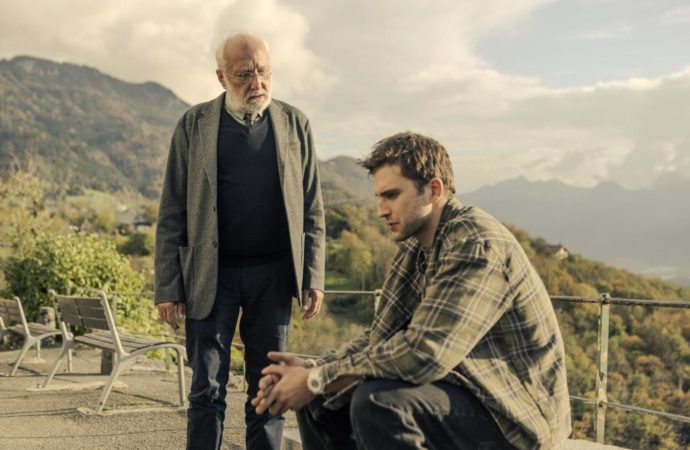
The film revisits a classic cinematic theme: a city dweller returning to his roots. According to Martin Jauvat, its appeal lies in its restraint, performances and sensitivity, which transform a seemingly familiar premise into a moving experience.
The three works explore different dimensions of displacement. In some, leaving means seeking opportunities that one’s homeland cannot offer; in others, distance makes it necessary to rebuild connections with one’s own identity. Returning, meanwhile, offers the possibility of reconnecting with what was left behind.
Phœnix: Politics Enters Television Fiction
The selected series, Phœnix, created by Louis Aubert and Matthieu Bernard and directed by Franck Brett, introduces an explicitly political dimension.
The jury describes it as an ambitious production that combines elements of ensemble drama, thriller, comedy and action cinema to raise a particularly pressing question: how can people become politically engaged and bring about real change in the face of inaction by governments and established powers?
Its inclusion in Tomorrow in Sight confirms that the initiative does not regard television series as a secondary format, but as another space for developing narratives capable of engaging with contemporary debates.
The Cord: Motherhood and Survival in Venezuela
The only documentary in the selection is The Cord, by Nolwenn Hervé, a work that occupies the space between journalistic reportage and creative documentary.
Its protagonist is a mother who runs a kind of family planning centre in Venezuela, where she helps other women carry their pregnancies to term in a context marked by serious shortcomings in the hospital system.




Nadie ha publicado ningún comentario aún. ¡Se tú la primera persona!