
In its final days, the competition at the 83rd Venice Film Festival has brought together, almost by chance, two films that ask the same question from opposite ends of the world: what remains of a person after the State has entered their life and decided, without consulting them, what they are to become.
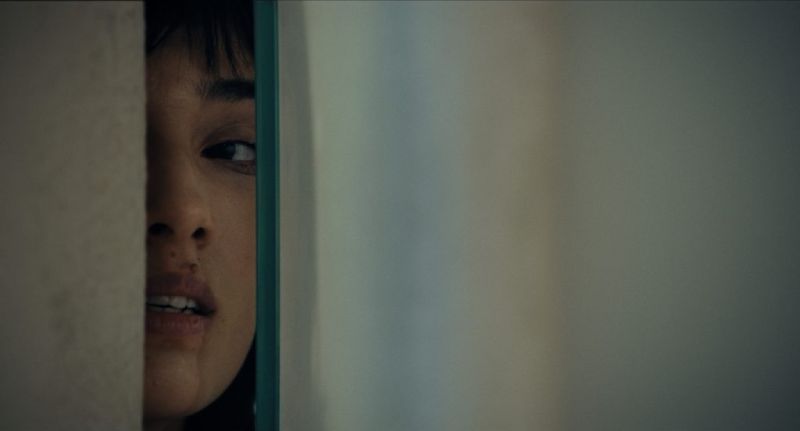
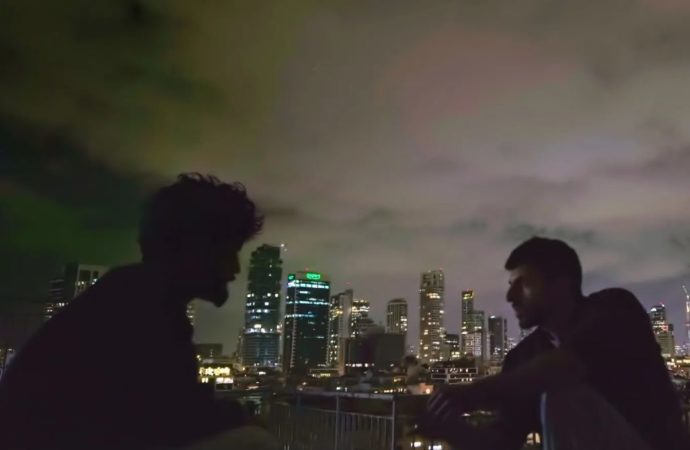
Kami Nour (A Bit of Light) is Ali Asgari’s sixth feature film and his first in the main competition, following appearances in Orizzonti and at Cannes that, after Terrestrial Verses, resulted in the confiscation of his passport and a ban on working. Arash, a doctor who has been arrested and whose practice has been shut down for treating injured protesters, decides to die and devotes his final day to visiting his siblings and his mother to prepare them.
The screenplay is written by Asgari with Shadmehr Rastin — the writer of Panahi’s It Was Just an Accident — while the production, led by Milad Khosravi with Swiss, Italian, Canadian and Turkish partners, was completed under bombardment: after shooting the exteriors in Tehran, the crew had to travel by road to Turkey, a three-day journey, to complete the interiors.
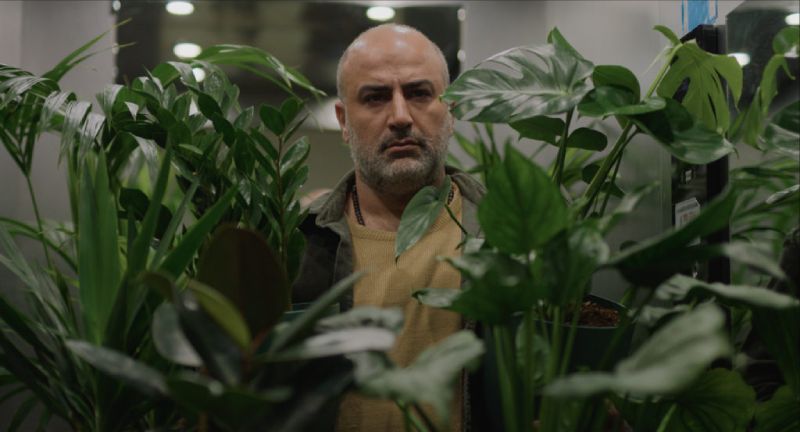
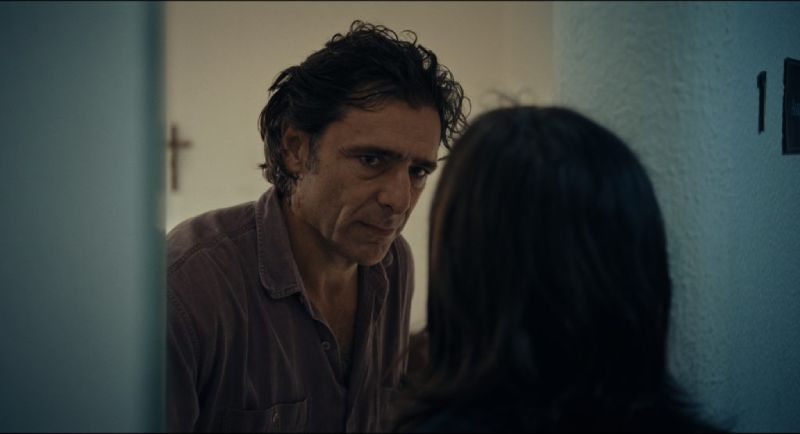
Misagh Zareh in A Bit of Light. © Seven Spring Pictures.
Almost nothing of that emergency remains on screen, and its only trace is also the most eloquent: strips of adhesive tape crossed over the windows, put there by families for fear that an attack by Trump might shatter the glass. The war is never mentioned, never heard, never structures a single scene; it is simply there, diagonally across a kitchen window, like one more domestic habit. This is precisely Asgari’s method, working through subtraction: interiors, a static camera, no music to underline the emotion, eighty-seven minutes with no excess.
What matters most almost always happens off-screen — a conversation in the next room, a ringing telephone, someone crying where we cannot see them — and that off-screen space becomes the exact location of the protagonist’s repressed emotion, as he remains unable to say what he has come to say. Misagh Zareh, the actor from Mohammad Rasoulof’s The Seed of the Sacred Fig, carries the film with a restraint that breaks only in micro-gestures, while the visits gradually compose, without him realising it, the portrait of a life that no longer entirely belongs to him.
The objection is twofold, and by no means minor. Asgari leaves the precise reason for Arash’s decision too vague: repression explains his collapse, but the film avoids naming what ultimately broke him, and that reticence, which undoubtedly protects the director within Iran, leaves the character somewhat unsupported. And the gradual awakening — the bonds between people as the only light still illuminating an existence with apparently no way out — unfolds so slowly that it verges on inertia: the conclusion is reached more through accumulation than discovery. The cautious title had already warned us: not light itself, just a little light.
Ritorno a Buenos Aires. © Fabrizio La Palombara.
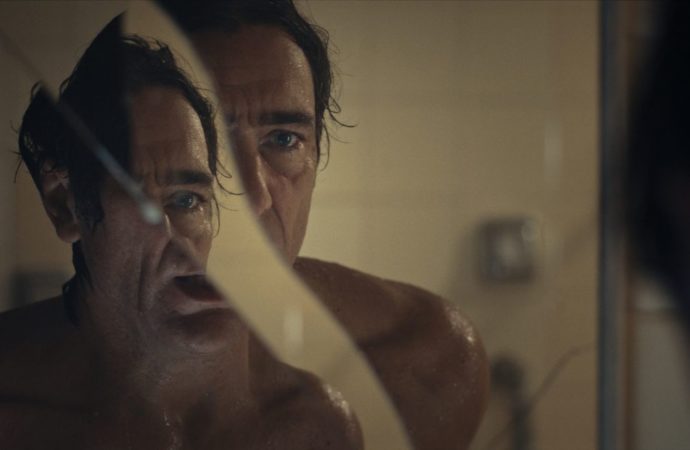
Very different is the approach taken by Marco Bechis in Ritorno a Buenos Aires. Buenos Aires, 2008: Mariano Guerra (Adriano Giannini), an Italian doctor who was abducted, tortured and enslaved during the dictatorship, returns thirty years later to testify against the military and, staying with other survivors, waits for the day of his testimony. Bechis, himself abducted in 1977 and held at the Club Atlético, returns to the territory of Garage Olimpo, his remarkable 1999 film, shifting the focus from the clandestine detention centre at the heart of that feature to the figure of one of its witnesses. It is an Italian-Brazilian co-production shot in Porto Alegre and Turin because, in present-day Argentina, governed by an ultraliberal technocrat whom the director refuses to name, the material conditions for filmmaking no longer exist.
Adriano Giannini in Ritorno a Buenos Aires. © Fabrizio La Palombara.
The film’s most striking achievement lies in its treatment of memory. Bechis rejects the conventional flashback, with its polite close-up and dissolve: here the past is not a place one travels back to, but something that bursts into the room and reaches Mariano wherever he may be. The anguish, the remembered bodies, the guilt of the man who survived while others did not, are filmed with a truth that no verdict can alleviate, and Giannini allows himself to be completely dismantled, without the defensive construction of the accomplished actor who remains in control of his role.
It is, by some distance, the best of the five Italian titles in competition, in a weak year in which only Moretti stands comparison. And even so, the journey from anguish towards possible redemption is not always convincing: there are passages in which the style becomes overloaded and underlines what the scene has already said, when greater austerity — which would not have diminished the subject’s rawness in the slightest — would have made it unbearable in the best possible sense. Of the city in the title, only two drone shots remain: the only Argentina possible, seen from the air, as one looks at something to which one can no longer return.
Nadie ha publicado ningún comentario aún. ¡Se tú la primera persona!