
The 79th Edinburgh International Film Festival, held from 13 to 19 August, once again demonstrated why Edinburgh remains such an important meeting place for cinema, filmmakers and audiences. With ten feature-length World Premieres competing for the festival’s £50,000 prize and ten World Premiere short films competing for £15,000, the programme offered a strong balance of discovery, established talent and cinematic experimentation.
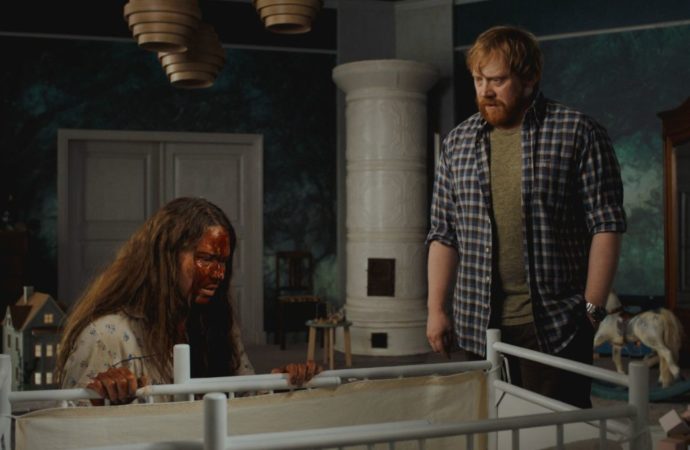
The festival opened with The Incomer, written and directed by Louis Paxton and starring Domhnall Gleeson, Gayle Rankin and Grant O’Rourke. Set on a remote Scottish island, the film combines dark humour with a more tender exploration of survival, freedom and the desire to remain true to oneself. Paxton’s film, which won the NEXT Innovator Award at the 2026 Sundance Film Festival, was an appropriate opening: distinctly Scottish in atmosphere, but universal in its themes. Its dark comedy becomes a way of confronting difficult circumstances, while the landscape gives the story a powerful sense of isolation and freedom.
Beyond the competition, the festival offered audiences an impressive range of films, from celebrated titles and award winners coming directly from Sundance, the Berlinale and Cannes to exciting new releases. The programme also created opportunities to hear from some of the most influential figures in contemporary cinema, including Christine Vachon and Kenneth Branagh.
One of the most memorable events was the celebration of the 30th anniversary of Trainspotting. Bringing the film back to the big screen, accompanied by special events, conversations and a reunion party. It was a reminder of the film’s extraordinary place in Scottish and British cinema and of the impact it continues to have.
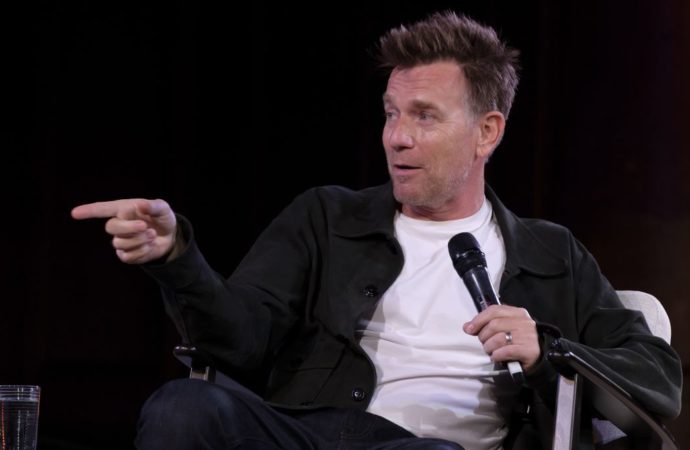
Ewan McGregor’s conversation with Tricia Tuttle, Director of the Berlin International Film Festival, was particularly warm and revealing. McGregor spoke openly about his career, his relationship with Scotland and its culture, and his forthcoming work at Pitlochry Festival Theatre, where he is expected to appear alongside Alan Cumming next summer.
What stayed with me most was McGregor’s encouragement to take risks, to accept the feeling of being slightly afraid and, above all, to remain a dreamer. He spoke eloquently about the relationship between an actor and a director — about trust, dialogue and the importance of truly paying attention to one another. For an actor, being seen and encouraged to do something unexpected can be transformative. His reflections also offered an engaging glimpse into the very different worlds of independent cinema and major productions such as Star Wars.
There is also the possibility of McGregor’s next project being a documentary in which he travels by boat across the Atlantic, from Oban to Rio de Janeiro — a prospect that sounds entirely in keeping with his adventurous spirit.
Among the films that made the strongest impression on me were Douglas Gordon by Douglas Gordon, directed by Finlay Pretsell, and Theodore Schaefer’s The Arrow at Rest at Every Instant of Its Flight.
Douglas Gordon by Douglas Gordon is an intriguing and intimate portrait that moves between art, Scotland, tattoos, dreams and tears. Beneath these specific subjects lies something much broader: an exploration of discovery, discomfort, tenderness, vulnerability and the complicated experience of being human. At the same time, the film raises important ethical questions about the nature of character-driven documentary and the responsibilities involved in portraying another person.
The Arrow at Rest at Every Instant of Its Flight was one of the programme’s most unusual discoveries. Specially curated by producer, screenwriter and former EIFF Director Lynda Myles, it belongs to the kind of cinema that rewards curiosity rather than offering easy answers. Myles has a distinctive eye, and her selections have a sense of style, elegance and, most importantly, faith in the magic of cinema. This was one of those choices that reminded me why carefully curated festival programmes matter.
The awards ceremony, held at Cameo Cinema in Edinburgh and presented by Jason Connery on behalf of The Connery Foundation, provided a fitting conclusion to the festival.
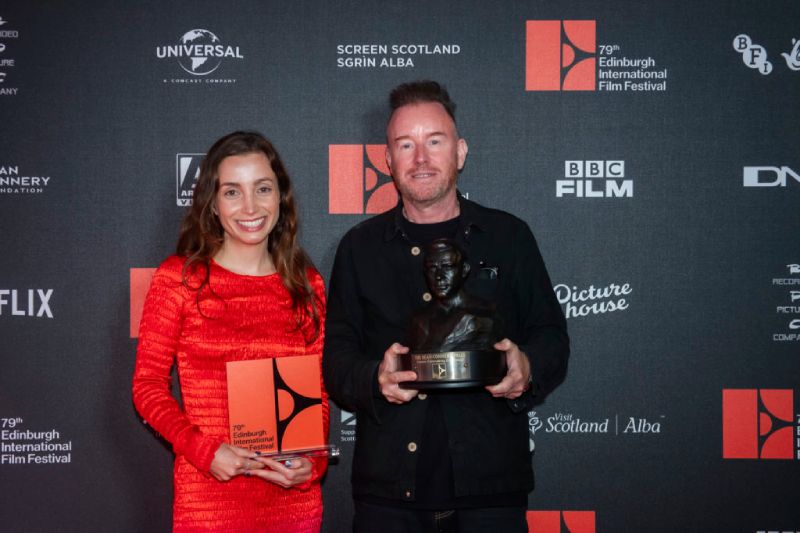
Sindha Agha Thelma Schoonmaker Award Winner, Kieron J Walsh, winner of Sean Connery Prize for Feature Filmmaking Excellence. Photographer: Kat Gollock © EIFF, Edinburgh International Film Festival All Rights Reserved.
Kieron J. Walsh’s Skintown received this year’s Sean Connery Prize for Feature Filmmaking Excellence, decided by an audience vote and funded by The Connery Foundation. Set against the backdrop of music and the 1990s ceasefire in Northern Ireland, the film evidently struck a strong chord with audiences.
The Thelma Schoonmaker Prize for Short Filmmaking Excellence was awarded to Sindha Agha’s Grief Room, also selected by audience vote and supported by The Connery Foundation.
Paul Ridd, EIFF CEO and Festival Director, described Grief Room as “a contained gem of wit, warmth and sadness” and Skintown as “a beautiful, funny and very moving film.” The audience response to both films suggests that the festival succeeded in one of its most important tasks: creating a space where new voices can be discovered and where audiences are invited to participate in that discovery.
Ultimately, the 79th Edinburgh International Film Festival felt like a celebration not only of films but of the people and conversations surrounding them. From the dark humour and emotional freedom of Incomer to the legacy of Trainspotting, from intimate documentary portraits to adventurous new filmmaking, the festival moved confidently between past and future. What makes EIFF particularly valuable is this sense of connection — between Scotland and the wider world, between established filmmakers and emerging voices, and between audiences and films they might otherwise never encounter. In an increasingly crowded festival landscape, Edinburgh continues to offer something essential: the possibility of discovering cinema with a sense of curiosity, intimacy and genuine excitement.
Nadie ha publicado ningún comentario aún. ¡Se tú la primera persona!