
The winners of the 59th Sitges International Fantastic Film Festival of Catalonia have now been announced. The distribution of awards has not been without (some) controversy, as the jury of the Official Fantastic Competition (SOFC), comprising Giona Nazzaro, Valeria Vegas, Andy Starke, Alex Litvak and Merry Colomer, has decided to overlook several films that clearly enjoyed widespread acclaim.
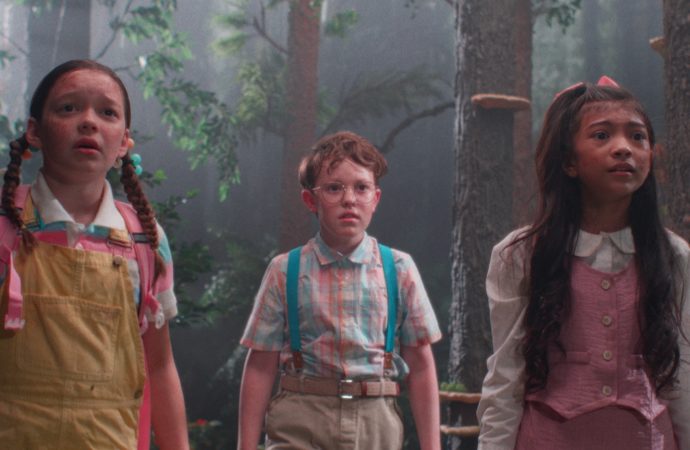
One such film is Wildwood, a visual tour de force from Laika, the stop-motion animation studio. A veritable rollercoaster of thrills and entertainment, it captivated audiences to such an extent that it did, at least, walk away with the SOFC Grand Audience Award for Best Film.
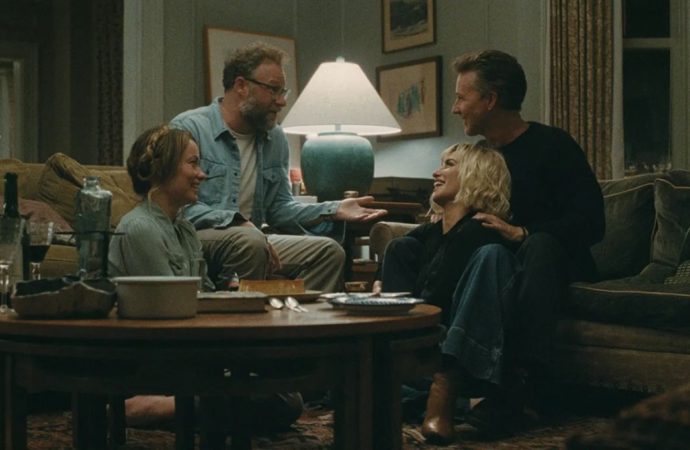
This year also saw a Special Jury Prize, awarded to Drag, by Greg Yagolnitzer and Raviv Ullman. It is a hugely entertaining black comedy in which two sisters break into the home of a rather wealthy painter, only for one of them to suffer the misfortune of falling into the bathtub and putting her back out, making it considerably harder for the two women to escape.
It is a film that could easily have been a contender for one of the other awards in the Official Competition, particularly Best Actress for Lizzy Caplan, whose challenge strikes me as anything but insignificant: she spends most of the film immobilised from the neck down and has to build her entire character using nothing but her facial expressions, delivering moments of slapstick that strongly recall Bruce Campbell at his most gloriously histrionic in Evil Dead II.
She is the guiding light of a film that, while hardly revolutionising the genre (nor, presumably, aspiring to), proves to be a thoroughly accomplished piece of entertainment.
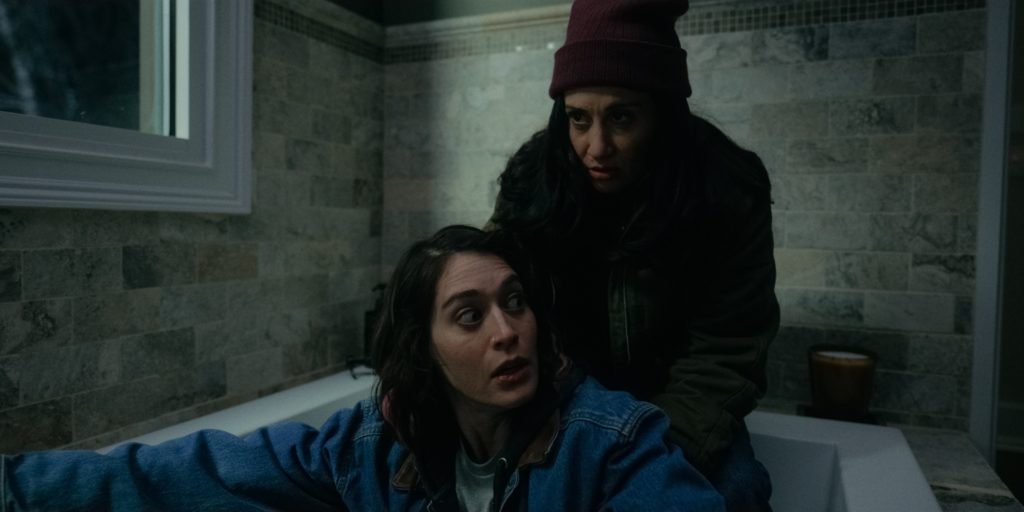
Lizzy Caplan (left) is outstanding in Drag.
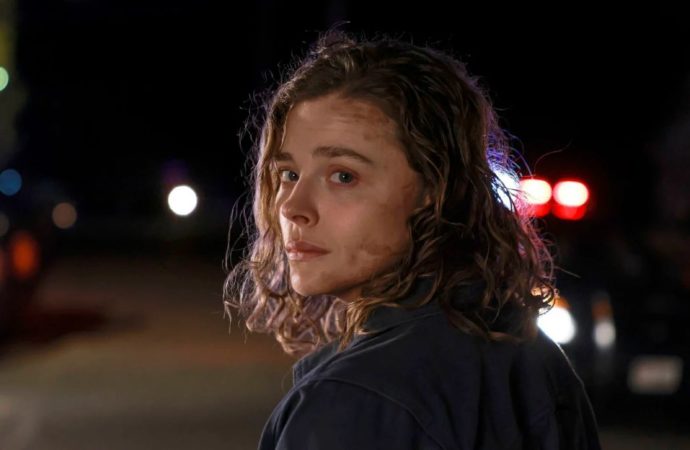
Maika Monroe also delivers a masterclass in Victorian Psycho, a film that is nowhere to be found among the award winners despite convincingly transporting the slasher genre to the Victorian era. Monroe’s tour de force is, in my opinion, extraordinary: carrying almost the entire weight of the film on her shoulders, the young actress embodies the expression “less is more” with a restrained performance full of small but unsettling nuances, such as the gentle, barely perceptible swaying of her head, which manages to instil a sense of unease in the viewer.
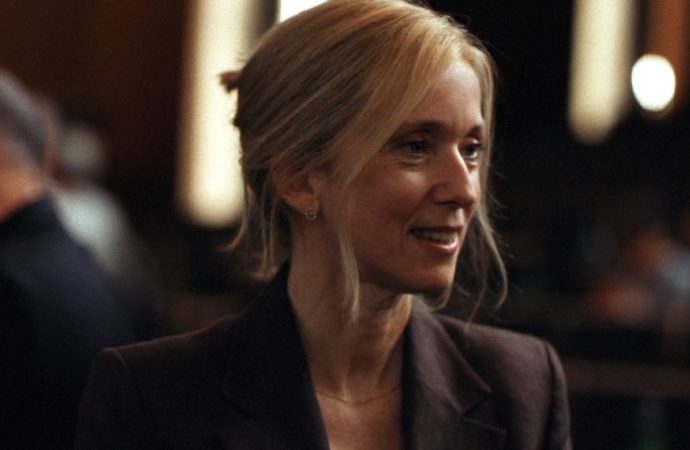
Yet none of them ultimately took home the award. Instead, it went to Italian actress Jasmine Trinca for her role in The Spiral. Had the prize gone to any of the other actresses I have mentioned, I would still be saying here that Trinca delivered one of the finest female performances in the SOFC. So, indeed, this award recognises an excellent performance, a colossal achievement given the complexity of the film’s central character: a mother whose decisions, over the years, inadvertently drag her family ever deeper into a sinister spiral of pain and death.
This is also the only award recognising one of the finest films screened in this year’s Official Competition: a harrowing tale that lends itself to more than one interpretation, with Evil looming over it as a concept inextricably bound to love — in this case, love for one’s family. An undoubtedly surprising film.
At first, he could easily be mistaken for the villain of the piece, but little by little, new revelations allow for a more nuanced assessment, ultimately revealing a character driven by love and revenge in equal measure. It is a very fine performance, there is no doubt about that, and, truth be told, the competition in this category was not particularly fierce this year either.
The previously discussed Drag, Ghost in the Cell, The Birthday Party and The Spiral also boasted excellent screenplays, although these films had already secured their places among the winners. Perhaps one of the more unexpected choices in this category — but one that, in my opinion, would have been no less deserving of recognition — would have been to honour the screenplay for Los Vampires, written by the film’s director, Craig Mitchell. It draws on a real historical event: the filming of Tod Browning’s Dracula during the day while, on the very same sets, a Spanish-language version of the same screenplay was being shot at night with Hispanic actors. From this premise, Mitchell develops an intriguing reflection on art’s need to survive — the Spanish-language version was produced at a time when the arrival of sound threatened the viability of the film business.
Mitchell weaves this theme together with considerable skill, embellishing it with fantastic elements (cinema as a vampire that feeds on souls). It is undoubtedly the strongest asset of a film that never quite manages to distinguish itself in any other artistic area that might have earned recognition at Sitges.
Finally, the Best Cinematography award went to Raphaël Vandenbussche for Titanic Ocean, while Best Music was awarded to the duo Mondo Boys for River, and Best Special Effects went to the Korean film Colony. The complete list of winners, including awards across the festival’s many other sections, can be found here.
Nadie ha publicado ningún comentario aún. ¡Se tú la primera persona!