

The 83rd Mostra crowns May el-Toukhy’s film, while Possible Love takes the Grand Jury Prize. John Malkovich wins a thoroughly deserved Volpi Cup for Wild Horse Nine, while the extraordinary Gaza documentary NAZA has to settle for the Special Jury Prize.
The 83rd edition of the Venice Film Festival concluded with a list of awards that is difficult to separate from the issues that ran through the Mostra itself: the representation of women, Gaza, cinema’s political responsibility and a competition in which several of the most interesting films approached, from very different perspectives, the relationship between the individual and power.
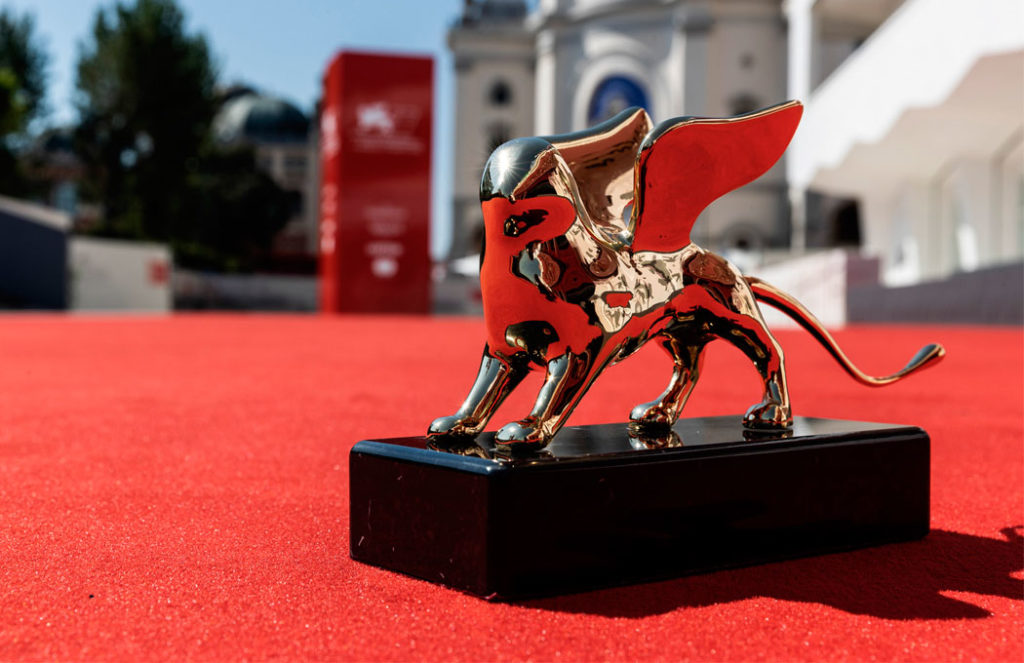
The jury, chaired by Maggie Gyllenhaal and comprising Kaouther Ben Hania, Daniel Blumberg, Francesco Casetti, Xavier Giannoli, Shahrbanoo Sadat and Johnnie To, awarded the Golden Lion to Kvinde Ukendt (Woman Unknown), by May el-Toukhy. The Silver Lion – Grand Jury Prize went to Possible Love, by Lee Chang-dong, while Ilya Khrzhanovsky received the Silver Lion for Best Director for DAU.
But even before the awards were announced, a phrase spoken by Biennale President Pietrangelo Buttafuoco, quoting Giordana Campo, seemed to sum up the position Venice had taken during this edition: “Una mostra non può essere una parentesi elegante mentre fuori la Storia accade.” (A festival cannot be an elegant interlude while History is unfolding outside).
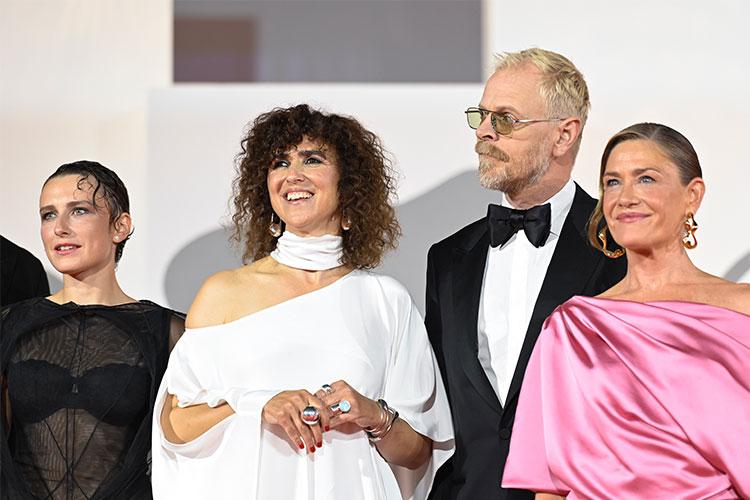
May el Toukhy and the team of Woman Unknown, Golden Lion, at the premiere in Venice.
The phrase takes on particular significance at a time when Europe’s major film festivals are having to decide to what extent their stages can — or should — also become places from which to speak about the world. In this respect, Venice’s institutional stance this year has marked a considerable distance from the climate experienced at the most recent Berlinale.
It would not be accurate to say that political statements were formally prohibited in Berlin: indeed, several prize-winners used the 2026 awards ceremony to denounce the situation in Gaza, and their statements were protected by freedom of expression. But the consequences were revealing. A German minister walked out of the ceremony during a speech by Palestinian-Syrian filmmaker Abdallah al-Khatib, the festival leadership came under intense political pressure and Tricia Tuttle faced reports that she might be dismissed. Hundreds of film professionals subsequently came to her defence.
The difference, therefore, lies not so much in prohibition as in the institutional framework. While Berlin has operated under extraordinary tension over the limits of political discourse — a controversy that had already begun when jury president Wim Wenders stated that filmmakers should stay out of politics — Venice has allowed the relationship between cinema and History to occupy the centre of the festival openly. Wenders himself qu
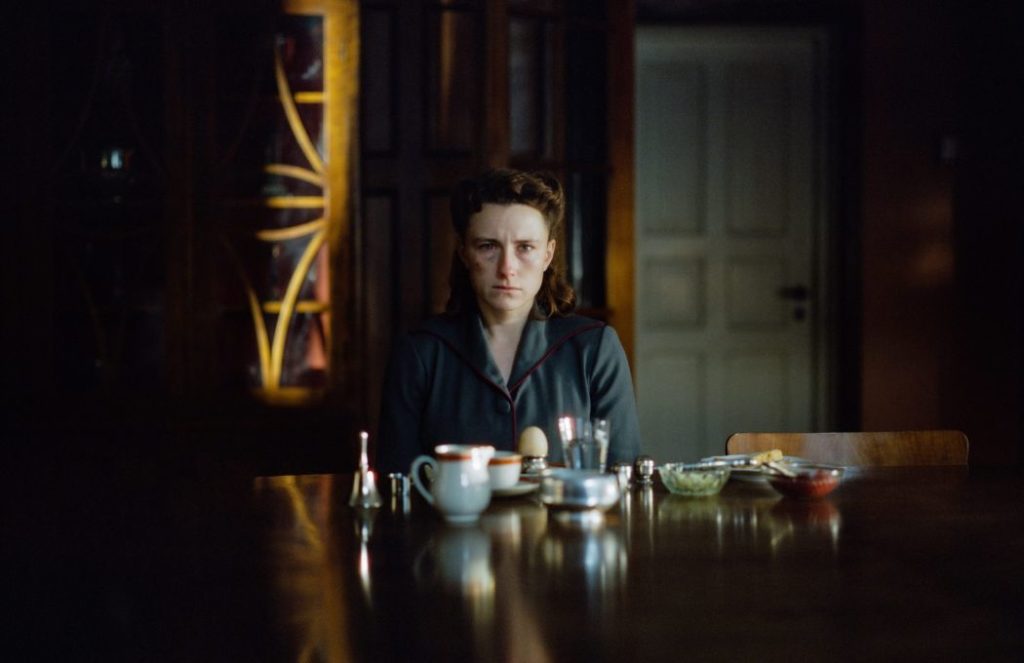
Mathilde Arcel, Best Actress for Woman Unknown (May el-Toukhy, 2026) © Andrejs Strokins.
A Golden Lion with an Inevitable Reading
The Golden Lion for Woman Unknown can also be understood within this context. It was not, in our view, the best film in competition, but its victory is particularly significant. May el-Toukhy was the only woman directing a fiction film alone among the 21 titles competing for the Golden Lion — NAZA is co-directed by Rachel Szor — an imbalance that had already attracted criticism during the festival.
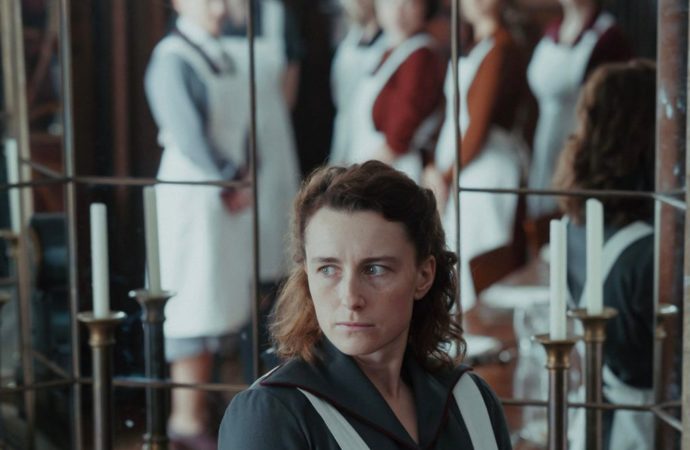
The top prize was accompanied by the Volpi Cup for Best Actress for Mathilde Arcel, in her first leading film role. The double victory made Woman Unknown, set in post-war Denmark and centred on a young woman whose past during the German occupation threatens the social position she is about to attain, the evening’s major winner.
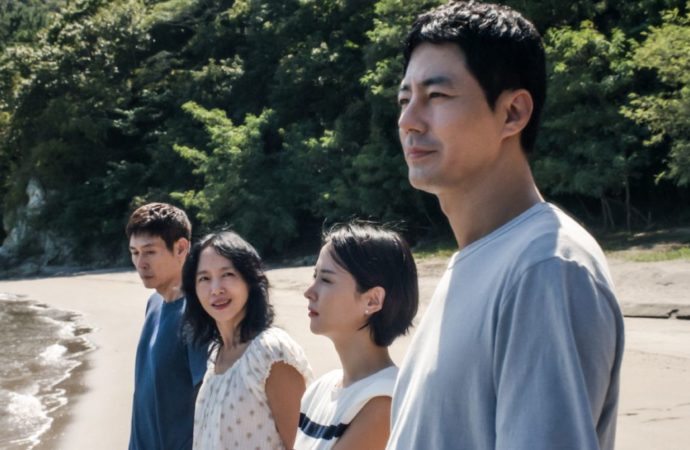
It is difficult, however, not to regret that Possible Love finished one step below. Lee Chang-dong’s return to feature filmmaking after eight years was one of the highlights of this edition and ultimately received the Silver Lion – Grand Jury Prize. Its ability to transform the intimacy of two marriages into an examination of class inequality, desire and resentment deserved even more.
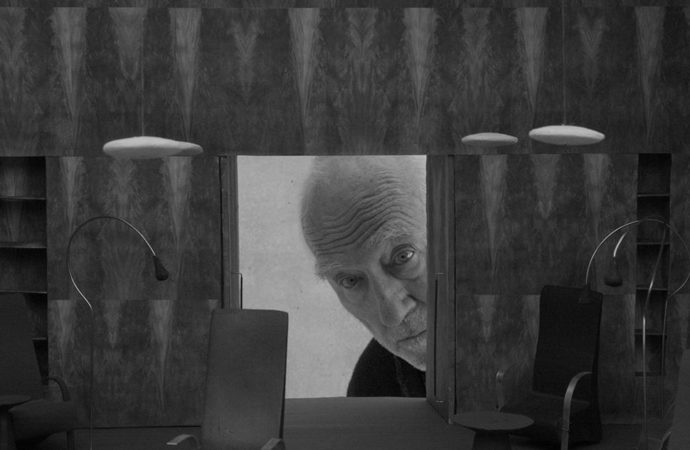
The third major award in the competition went to Ilya Khrzhanovsky, named Best Director for DAU, one of the most formally ambitious projects in the selection.
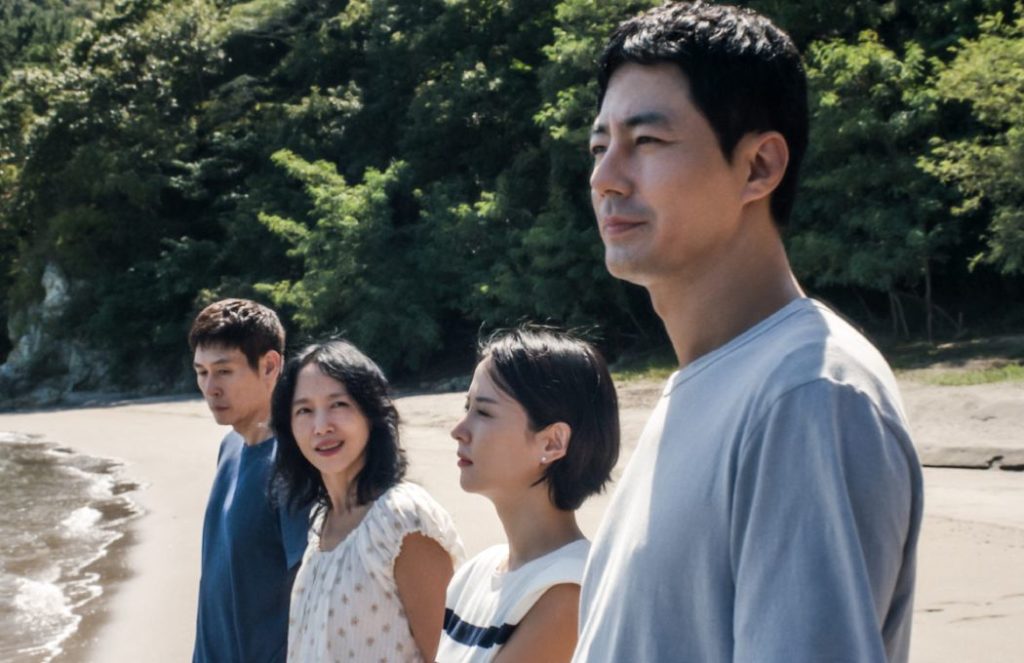
Possible Love (Lee Chang-dong, 2026), Silver Lion – Grand Jury Prize
Gaza, Once Again, Falls Short of the Golden Lion
More difficult to understand is the position reserved for NAZA. The documentary by Yuval Abraham and Rachel Szor received the Special Jury Prize, an important recognition but clearly a lesser one within the hierarchy of the awards.
Gaza has therefore once again fallen short of the Golden Lion. The same happened last year with The Voice of Hind Rajab, by Kaouther Ben Hania, which ultimately received the Grand Jury Prize despite the extraordinary impact it made on the Lido. This year, with Ben Hania herself sitting on the jury, NAZA also failed to receive the festival’s highest honour.
And that is a pity, because this is an extraordinary film. Abraham and Szor draw on testimony from members of Israeli military intelligence to construct an investigation into the mechanisms used to select targets in Gaza and the distance technology makes possible between a decision and its human consequences. The documentary was produced by The Guardian and addresses, among other issues, the use of AI-assisted systems in target designation.
At a festival whose president had reminded us that the Mostra cannot become an elegant interlude while History is unfolding outside, few films responded so literally to that assertion.
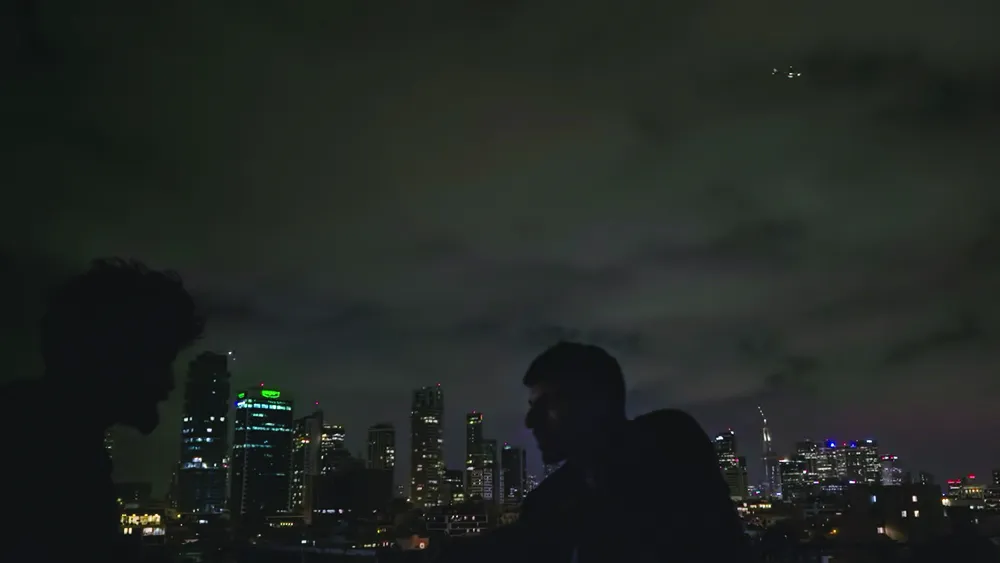
NAZA (Yuval Abraham y Rachel Szor, 2026), Special Jury Prize
Malkovich, an Indisputable Volpi Cup
Among the acting awards, few decisions were as satisfying as the Volpi Cup for John Malkovich for Wild Horse Nine, by Martin McDonagh.
The award is thoroughly deserved. Malkovich creates one of the most complex and memorable characters of this edition and confirms just how formidable he can be when given a text capable of exploiting simultaneously his intelligence, irony and the unsettling ambiguity that has always accompanied his finest performances.
The Volpi Cup also inevitably places him in the conversation for the coming awards season. It remains to be seen how far his Oscar campaign will go, but it is difficult to imagine a performance like this passing unnoticed.
More regrettable is the fact that Wild Horse Nine received no further recognition. McDonagh’s extraordinary political black comedy was among our favourites in competition and deserved a greater presence in the final awards.
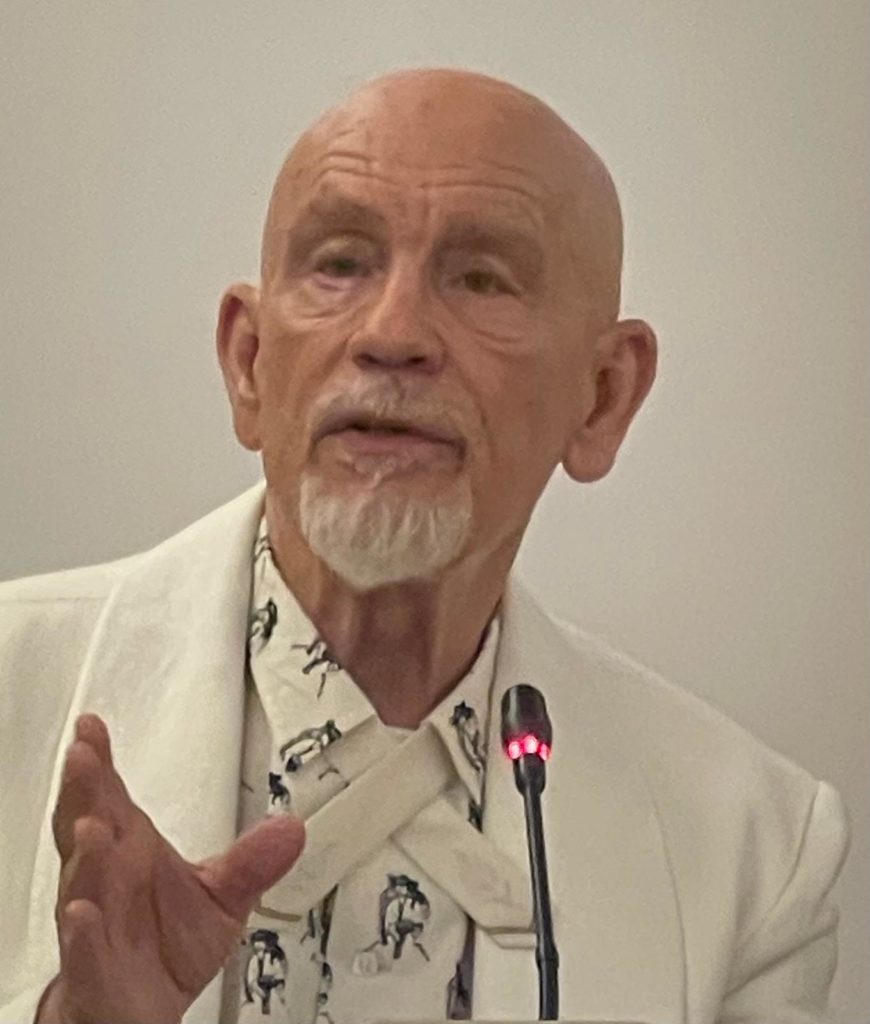
John Malkovich, Best Actor for Wild Horse Nine. © Eva Peydró.
Stéphane Brizé, Alba Rohrwacher and Social Cinema
The award for Best Screenplay went to Stéphane Brizé, Coralie Amédéo and Olivier Gorce for Un bon petit soldat (A Good Little Soldier), another of the competition’s openly political films.
Brizé returns here to the social and anti-capitalist cinema that defines an essential part of his filmography, accompanied by an excellent Alba Rohrwacher. The writing avoids turning economic conflict into a mere backdrop and restores work, precarity and structures of power to their human dimension.
The Marcello Mastroianni Award for Best Young Actor or Actress went to Malou Khebizi for 15/18 (A Place to Heal), by Cédric Kahn. Having seen her in Wild Diamond (2024), Khebizi confirms her ability here with a particularly difficult character: an adolescent with behavioural problems, emotionally unstable and subject to constant shifts in register. Her credibility is all the more remarkable given the actress’s young age.
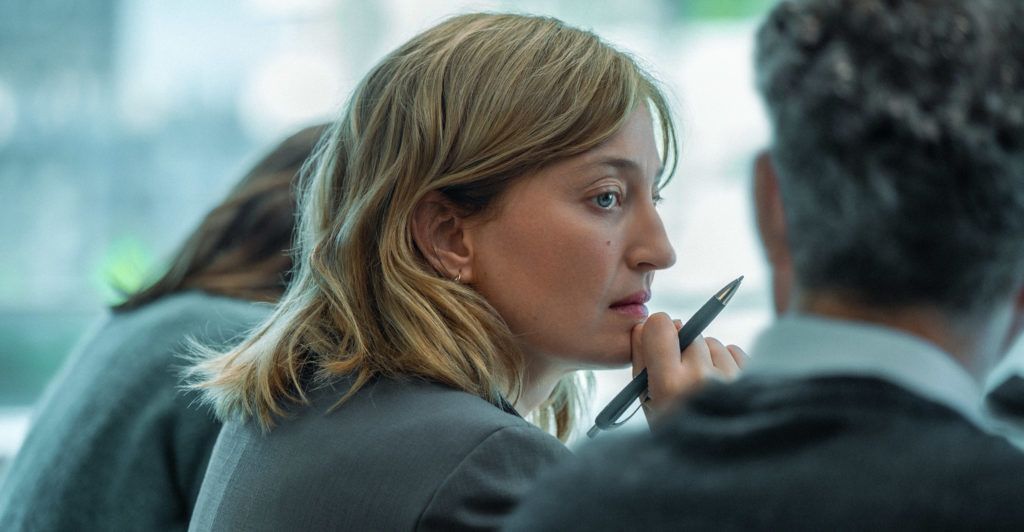
Alba Rohrwacher in Un bon petit soldat (Stéphane Brizé, 2026), Best Screenplay Award. © Christine Tamlet.
Orizzonti Looks Towards Belgium, Greece, Cameroon and Iran
In Orizzonti, the jury chaired by Valérie Donzelli awarded Best Film to Un détour par Diane (Diane in the Loop), by Ann Sirot and Raphaël Balboni, while Jacqueline Lentzou was named Best Director for A Day in the Life of Jo: Chapter Phaedra. The Special Jury Prize went to La Maison du Vent (House of the Wind), by Cameroonian filmmaker Auguste Bernard Kouemo Yanghu.
The latter also received the Lion of the Future – Luigi De Laurentiis Award for Best Debut Film, making it one of the major discoveries of the parallel sections.
Among the Orizzonti performances, Laleh Marzban deservedly won Best Actress for Moragheb (Falling House), by Mohsen Gharaei. Marzban gives an excellent performance as a young woman whose dreams begin to collapse at the same time as her idealised image of her father. For an aspiring model, understanding the reality of being a woman in Iran means discovering that what happens outside the home also inevitably determines what happens within it.
Riccardo Scamarcio received Best Actor for I figli della scimmia (The Children of the Monkey), whose screenplay, written by Tommaso Landucci and Damiano Femfert, also won the section’s screenplay award. Best Short Film went to Quelques instants de bonheur (A Few Moments of Happiness), by Shaden Safieddine Tazi.

Malou Khebizi, Marcello Mastroianni Award for 15/18. A place to heal (Cédric Kahn, 2026) © Vitamin Films
From the Lion of the Future to Venice Classics
The Armani Beauty Audience Award in Venice Spotlight went to Eu Contez (I Matter), by Alina Șerban, while the student jury of Venice Classics chose La lunga notte del ’43 (Long Night of 1943), by Florestano Vancini, as Best Restored Film.
In Venice Immersive, The Pigeon Ring, by Shixin Tao and Yuqi Zhang, received the Grand Prize; Out of the Ashes, by Rory Mitchell and Nonny De La Peña, won the Special Jury Prize; and Empire at Sea, by Peter Flaherty, received the Achievement Prize.
A Festival Within History
Every list of awards is a negotiation between different sensibilities, and Venice 83 is no exception. We can debate whether Woman Unknown was really the best of the 21 films in competition — for us, it was not — regret that Possible Love failed to take the Golden Lion, consider the Special Jury Prize awarded to NAZA insufficient, or wonder why Wild Horse Nine had to settle for Malkovich’s extraordinary performance as its sole recognition.
But something else is harder to dispute: this year Venice has decided not to pretend that cinema exists in a space isolated from the world.
The difference with Berlin is not that one festival allows people to speak while the other legally forbids them from doing so. The 2026 Berlinale demonstrated precisely the opposite: its filmmakers spoke, and some did so unequivocally. What was truly revealing was the institutional and political cost that followed those words.
In Venice, by contrast, the Biennale’s own presidency has placed that responsibility at the centre. And perhaps that is the most important statement with which this 83rd edition comes to an end.
Because a Mostra can be glamour, red carpets, stars and major premieres. But, as Pietrangelo Buttafuoco reminded us, it should not become an elegant interlude while, outside its cinemas, History continues to unfold.
Here you can read all the reviews from EL HYPE’s coverage by its special correspondents, Gian Giacomo Stiffoni and Eva Peydró.



Nadie ha publicado ningún comentario aún. ¡Se tú la primera persona!