
After sketching out my list of favourite films of 2025, I’ve come away even more convinced that it has been a year of cinema at peak creative tension: a landscape where established master auteurs coexist with the most radical voices of the present, where revisited classicism meets political, formal, and spiritual experimentation. This would not be particularly remarkable were it not for the clear correlation between these outstanding productions, their commercial impact, and the recognition they have received. Between Cannes, Berlin, Venice, and the major international circuits, these films have not only set the tone of the year through their festival trajectories and awards, but through their ability to confront the contemporary world from uncomfortable, intimate, or openly subversive positions. This is no longer an exception, but a trend that is consolidating.
My list brings together works that understand cinema as risk, as thought, and as a sensory experience, and which, each in its own way, explain why 2025 will be remembered as an exceptional year for auteur cinema. As I am not particularly fond of rankings, once again the films do not appear in any order of preference. Each can be enjoyed on its own terms and in different contexts, as their merits are not measurable by the same standards, among other reasons.
One Battle After Another (Paul Thomas Anderson)
Starring outstanding performances by Benicio del Toro and Leonardo DiCaprio, alongside Regina Hall, Teyana Taylor, and a brilliant turn by Sean Penn—who must have had tremendous fun playing a role diametrically opposed to himself—the film by the director of Licorice Pizza (2021) adapts Thomas Pynchon’s novel Vineland, following his earlier adaptation of Inherent Vice in 2014. One Battle After Another, the best action film of 2025, has received five Oscar pre-nominations. Read the review.
Sirat (Oliver Laxe)
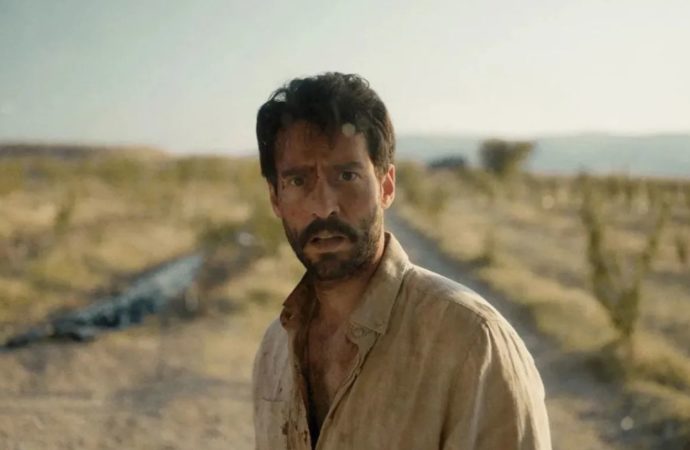
Oliver Laxe won the Jury Prize at the last Cannes Film Festival with a film that is far from easy to approach in terms of its deepest meaning, yet spectacular in its cinematic vision, its characters, and Sergi López’s performance. A profoundly spiritual kind of cinema—drawing inspiration from Buddhism and Islam and unfolding a visual study of detachment—merges with the brutality and materiality of Laxe’s style to create one of the most original and daring films of the season. With Pedro Almodóvar as producer, the film represents a bold bet to propel the career of the director of Fire Will Come beyond the art-house circuit.
Sirat has received five Oscar pre-nominations (International Feature Film, Cinematography, Casting, Original Score, and Sound) and is also competing at the Golden Globes and the Critics’ Choice Awards, surpassing Society of the Snow, which had previously made history with two nominations without securing a win. Read the review.
Sentimental Value (Affeksjonsverdi, Joachim Trier)
Trier co-wrote his latest film with his longtime collaborator Eskil Vogt to tell a story of poisoned inheritances, rich in symbolism and unresolved family reckonings. The house, the stories it contains, its very walls and their successive transformations become, in Sentimental Value, a character in their own right—at times embracing the others with love, at times weighing them down like a burden. Winner of the Grand Jury Prize at Cannes, the film stars Stellan Skarsgård, Renate Reinsve, and Elle Fanning, and has received Oscar pre-nominations for Best Picture, International Feature Film, Director, Screenplay, as well as for its leading performances. Read the review here.
It Was Just an Accident (Yek tasadof-e sadeh, Jafar Panahi)
It Was Just an Accident, winner of the Palme d’Or at the latest Cannes Film Festival, is yet another testament to the singular path of Iranian filmmaker Jafar Panahi — a director who has endured political persecution, imprisonment, and house arrest, while continuing to adapt his work to the severe limitations imposed by the absence of freedom. Co-produced by Iran, France, and Luxembourg, It Was Just an Accident is a lucid and deeply humanist reflection on the post-traumatic stress of the victim and the confrontation with their executioner, when, in freedom, the roles of each may suddenly be reversed.
The film will represent France in the race for Best International Feature Film at the upcoming Academy Awards, surpassing last year’s controversial choice of The Taste of Things (Pot-au-feu), widely seen as driven more by vested interests than by artistic merit. Read the review.
The Secret Agent (O Agente Secreto, Kléber Mendonça Filho)
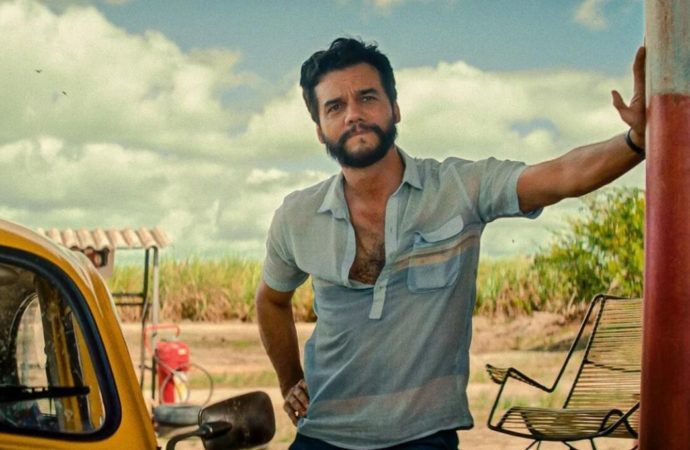
The latest film by the director of Bacurau is set in Brazil in 1977, during the dictatorship that lasted 21 years. The Secret Agent, starring Wagner Moura —winner of Best Actor at the last Cannes Film Festival, where the film also received the awards for Best Director and the FIPRESCI Prize— is an impressive work built around a powerful off-screen imperative.
The Secret Agent is a film of a very particular kind of action, where the existential dimension generates a steadily growing tension through a carefully measured narrative, with death as an omnipresent presence. Mendonça Filho has directed a masterpiece that challenges linear storytelling through an effective combination of cinematic devices, creating an immersive and unsettling atmosphere.
Nouvelle Vague (Richard Linklater)
Richard Linklater premiered a small marvel at the latest Berlinale, starring Ethan Hawke as Lorenz Hart in his final encounter with his former partner Richard Rodgers, with whom he co-wrote some of the most iconic songs and musicals in history. In Nouvelle Vague, the director once again delves into history — this time the history of cinema — presenting a singular kind of making-of of the most famous film of the artistic movement born in the editorial offices of Cahiers du Cinéma. Zoey Deutch, Aubry Dullin, and Guillaume Marbeck breathe new life into the protagonists and into the director of Breathless, alongside a large ensemble cast that brings together the full roster of directors, producers, and key figures of the French film community that would go on to make history. Read the review here.
Sound of Falling (In die Sonne schauen, Masha Sehilinski)
The second feature directed by German filmmaker Mascha Schilinski is an atmospheric cinematic monument that, without affectation or pretension, immerses us in a turbulent century through the portrayal of several generations of women from the same family, all in one way or another anchored to the same place: the Altmark farm by the Elbe River. The four protagonists are singular figures who nonetheless share the imprint of history, pain, and the mystery surrounding life and death. Through their voice-overs —which reveal the hidden folds of a narrative handled with remarkable economy— and across different ages and personal circumstances, they achieve the feat of weaving a coherent and unsettling panopticon. In it, the intrinsic mindset of each era and the cultural roots shaping behaviour overlap with the archetypal reality of gender, its constraints, and its social limitations. Read the review.
Kontinental ’25 (Radu Jude)
Winner of the Silver Bear for Best Screenplay at the last Berlinale, and with actress Eszter Tompa awarded at the Gijón Film Festival, Kontinental ’25 was shot in just ten days using an iPhone. Yet the film’s radical nature lies not in its method, but in the force of its content. Set in Cluj-Napoca, in the heart of Transylvania, the film follows Orsolya, a public official tasked with carrying out evictions. What begins as a routine intervention—the removal of a homeless man occupying a basement—leads to an irreversible outcome that opens an ethical rift impossible to close, confronting her with the human consequences of her work.
From this triggering event, Jude constructs a sharp diagnosis of contemporary Europe, shaped by real estate greed, far-right rhetoric, and a collective moral decay. Through an austere mise-en-scène, piercing dialogue, and his trademark dark humor, the film exposes without concessions the tensions and paradoxes of today’s Europe.
The Stranger (L’Étranger, François Ozon)
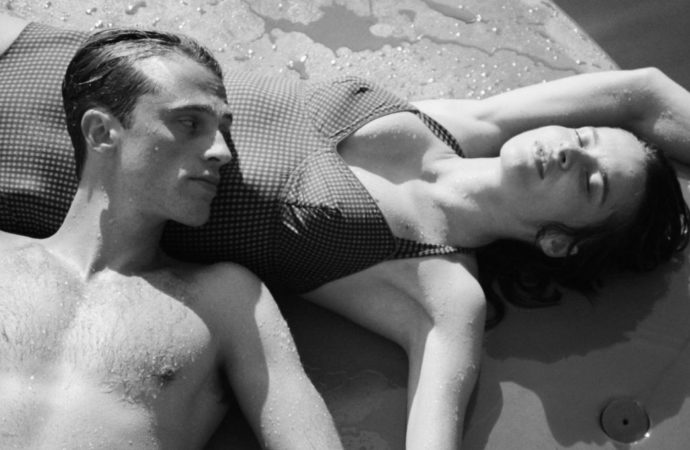
François Ozon adapts Albert Camus’s celebrated 1942 novel alongside his longtime collaborator Philippe Piazzo, offering an interpretation that, rather than domesticating the text, understands it and translates it with remarkable cinematic clarity. Shot in immaculate black and white by Manuel Dacosse, the film preserves the philosophical and moral core of the original work intact. Its aesthetic choice—one that might be read as a temptation toward solemnity or as a safety net when approaching an immortal text—proves, on the contrary, to be deeply organic. Meursault is portrayed by a flawless Benjamin Voisin, who sustains the character’s ambiguity with remarkable precision. Read the review.
The Piano Accident (L’accident de piano, Quentin Dupieux)
Through an influencer obsessed with her followers —who, lacking sensitivity to pain, takes physical risks without limits, played by Adèle Exarchopoulos— Dupieux captures in a black comedy the deranged social drift of our times. The Piano Accident is a fascinating satire: outrageous and delirious in form, but never in substance. Alternating flashbacks that gradually reveal the backstory of the despotic and deeply unlikable Magalie, the film follows her to a mountain retreat where she hides from her followers after an accident during one of her viral videos. Isolation, however, will not prevent the arrival of a journalist (Sandrine Kiberlain), whose information leads to blackmail and triggers devastating consequences.
Silent Friend (Stille Freundin, Ildiko Enyedi)
One of the most compelling films at the 82nd Venice Film Festival was undoubtedly Silent Friend, by Ildikó Enyedi, a work that captivates at every moment through its masterful blend of visual rigor and poetic sensitivity. The Hungarian director constructs a narrative triptych in which three stories, separated in time, intertwine through the silent presence of an ancient ginkgo tree—transformed into both witness and symbol of a profound bond between humanity and nature. Each period finds its own formal language within the same spatial framework: the botanical garden of a university in Germany. Read more.
A Poet (Un poeta, Simón Mesa Soto)
The Colombian director returned to the Cannes Film Festival for the third time in 2025, having previously won the Palme d’Or for Best Short Film with Leidi in 2014. The misadventures of an artist who never stops suffering —and whom those around him dismiss as a complainer and a layabout— are as moving as they are irritating. This study of the artist and of incomprehension, set in Medellín, was presented in the Un Certain Regard section, where it received highly enthusiastic critical acclaim.
With a dark humour that freezes the smile on our faces, Mesa Soto crafts an unforgettable character: sensitive, a has-been, unable to be taken seriously or to regain his footing within a poetic milieu of precarious bohemians, where he nevertheless manages to stand out through his arrogance and resilience. The social critique and the portrait of the artist are rendered with remarkable tenderness and realism.
I Only Rest in the Storm (O Riso e la Faca, Pedro Pinho)
In the present day, a Portuguese environmental engineer travels into Guinea-Bissau, in West Africa, where his personal life becomes entangled in complex relationships while he investigates the mysterious disappearance of his predecessor. The incursions into the postcolonial landscape of Portuguese cinema are remarkable, and this film stands as an outstanding example —deeply rooted in the most orthodox tradition while simultaneously breaking with previous narratives.
Over the course of more than three hours, Sérgio emerges as an iconic yet transgressive character, as we experience firsthand his discoveries and frustrations, which expand beyond the intimate to enter the realm of history. The director of The Nothing Factory premiered the film at the Cannes Film Festival, and it also competed at SEMINCI, although it has yet to receive a release date in Spain.
Yes (Navad Lapid)
The latest film by the director of Ahed’s Knee premiered in the Directors’ Fortnight at the 78th Cannes Film Festival. It is an unflinching work that, over the course of two and a half hours, presents Gaza as a “zone of interest,” a terrifying off-screen presence. Yes was one of the most impactful films screened at the festival, even though its power does not rely on the graphic depiction of genocide or the systematic killing of civilians of all ages and backgrounds, including doctors and journalists.
Only in one section of the film do we see the smoke rising from a lifeless land; instead, Lapid exposes —harshly and without restraint, preceded by an illustration by Joseph Grosz— the perpetual orgy of a society that does not hesitate to organise boat parties, cheering on the distant bombings as a form of entertainment. Read the review.

No one has posted any comments yet. Be the first person!