
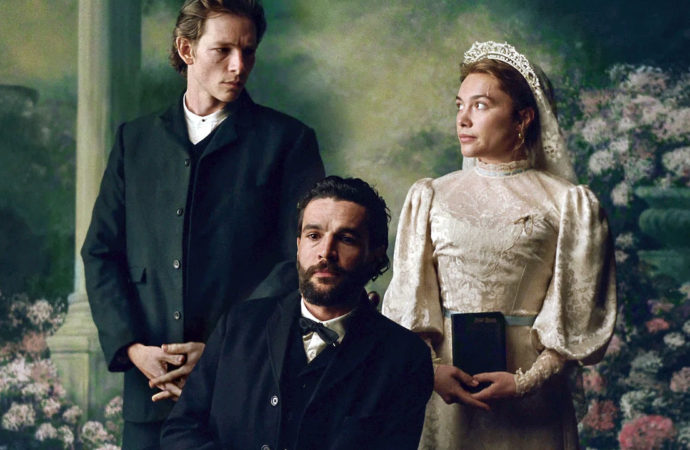
At an international press conference, Zoe Kazan, Christopher Abbott and Mike Faist discussed the new adaptation of East of Eden, exploring the challenges of bringing John Steinbeck’s monumental novel to the screen, its morally complex characters and its enduring themes of guilt and redemption.
There is something almost inevitable about Zoe Kazan’s return to East of Eden. Her grandfather, Elia Kazan, directed the celebrated 1955 adaptation starring James Dean, a film that became an enduring landmark of American cinema. Yet her relationship with John Steinbeck’s novel began independently of that cinematic inheritance. She first encountered the book at fifteen, became fascinated by its portrayal of California and persuaded her parents to take her to Salinas, the landscape that had inspired its author.
Decades later, that youthful fascination has become a seven-episode Netflix series starring Florence Pugh, Christopher Abbott and Mike Faist. During the international press conference held on September 22, Kazan described a literary obsession that has never entirely left her.
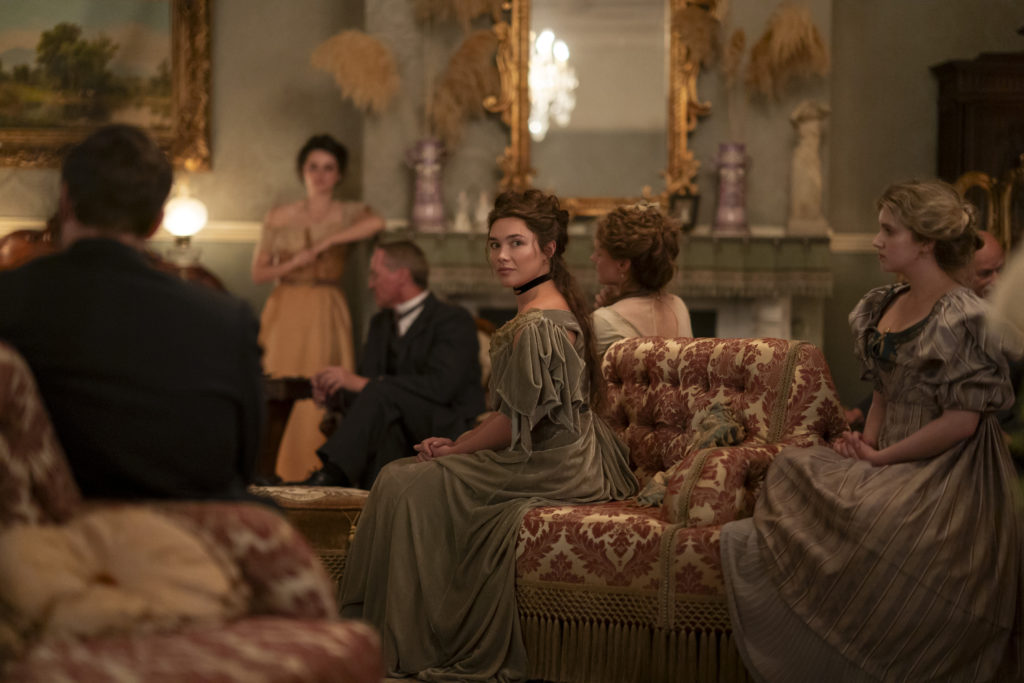
Florence Pugh as Cathy Ames in episode 104 of East of Eden. Cr. Geoffrey Short/Netflix © 2026
Every time she rereads the novel, she explained, she discovers something new. Eventually, she asked her agents to put her forward should the adaptation rights ever become available. Two years later, she had the opportunity to pitch her vision.
But what makes East of Eden relevant today is not simply its multigenerational narrative or its biblical symbolism. For Kazan, its central proposition is the possibility that human beings can change, acknowledge their mistakes and escape the identities imposed upon them by their past.
Beyond the Legacy of Elia Kazan
The 1955 film concentrated on the later part of Steinbeck’s novel, transforming its story of fraternal rivalry into one of James Dean’s defining performances. Zoe Kazan’s adaptation takes a different approach, returning to the book’s expansive structure and its movement across generations.
She believes that television has a natural affinity with the novel. Its chapters vary considerably in tone and perspective, while its intergenerational structure allows individual stories to accumulate into something greater than their separate parts.
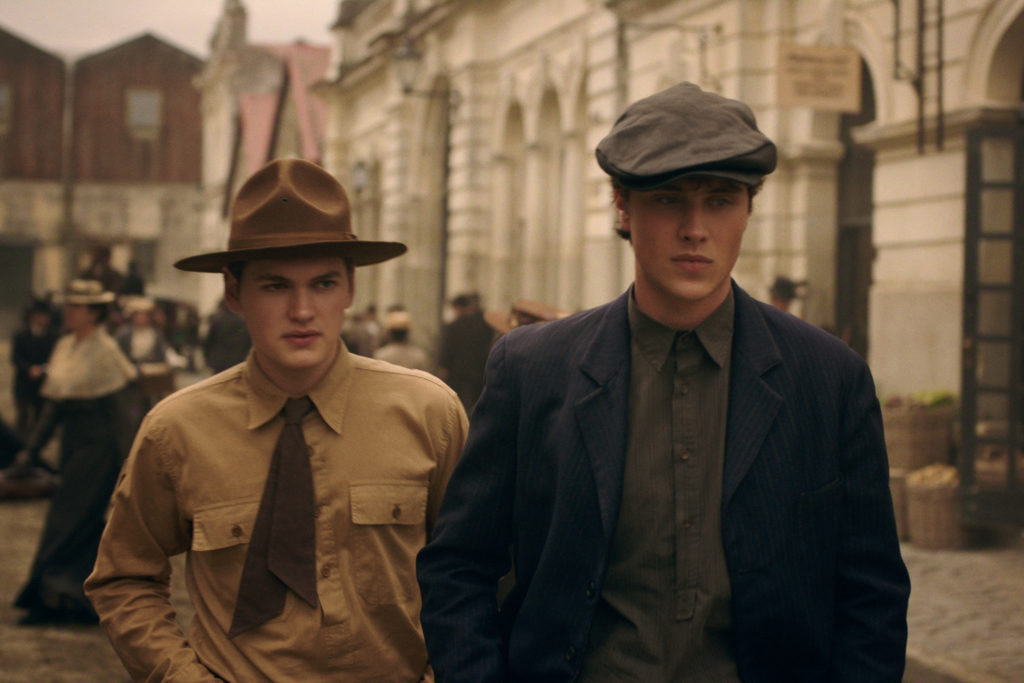
(L to R) Joe Anders as Aaron Trask, Joseph Zada as Cal Trask in episode 106 of East of Eden. Cr. Courtesy of Netflix © 2026
The series also gave her an opportunity to approach Steinbeck’s characters without treating the earlier film as a blueprint. Indeed, Kazan revealed that she had already fallen in love with the novel before discovering her grandfather’s connection to it.
What emerged from the conversation was a filmmaker less concerned with revisiting a family legacy than with pursuing a literary fascination that has accompanied her since adolescence.
The Difficult Art of Sacrifice
One of the most revealing moments of the press conference came when I asked Kazan about the paradox of adapting such an expansive novel: although seven episodes offer considerably more freedom than a feature film, that freedom also makes it difficult to decide what is essential and what must be sacrificed.
Her answer was immediate. The most painful sacrifice was the Hamilton family storyline.
When she first contemplated adapting East of Eden, she believed it would be impossible to tell the story without it. But as the writing progressed, she realised that the narrative needed a central dramatic structure, and that the Trask family provided the novel’s principal storyline.
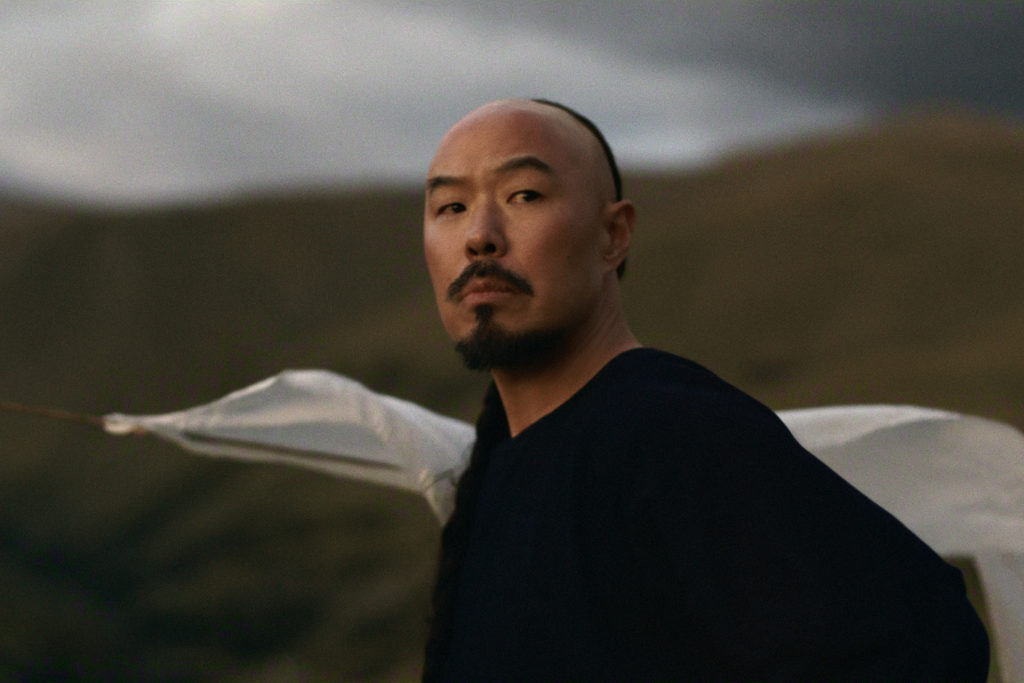
Hoon Lee as Lee in episode 103 of East of Eden. Cr. Courtesy of Netflix © 2026
Characters such as Dessie and Tom Hamilton remained particularly dear to her, even though their stories could not receive the attention she had originally imagined.
Kazan also shared an amusing detail about the project’s beginnings. Arriving home from a job in Australia with almost no time to prepare for her first meeting, she found herself sitting in her father’s car, hurriedly outlining the entire adaptation on a parking ticket. Her original plan consisted of eight episodes, subsequently reduced to seven.
The organising principle she eventually discovered was dialectical. Steinbeck’s novel repeatedly establishes an idea, confronts it with its opposite and moves towards a new understanding. Kazan wanted each episode to reproduce that movement while functioning almost as an independent film.
The first episode, she suggested, resembles an Arthur Miller play. The second moves into territory reminiscent of Carrie or Days of Heaven.
What ultimately unified these contrasting approaches was timshel, the Hebrew expression translated in Steinbeck’s novel as “thou mayest”. For Kazan, this concept had to permeate every storyline, connecting the characters’ struggles with good and evil to the possibility of choosing a different path.
Cathy Ames: Understanding Without Forgiving
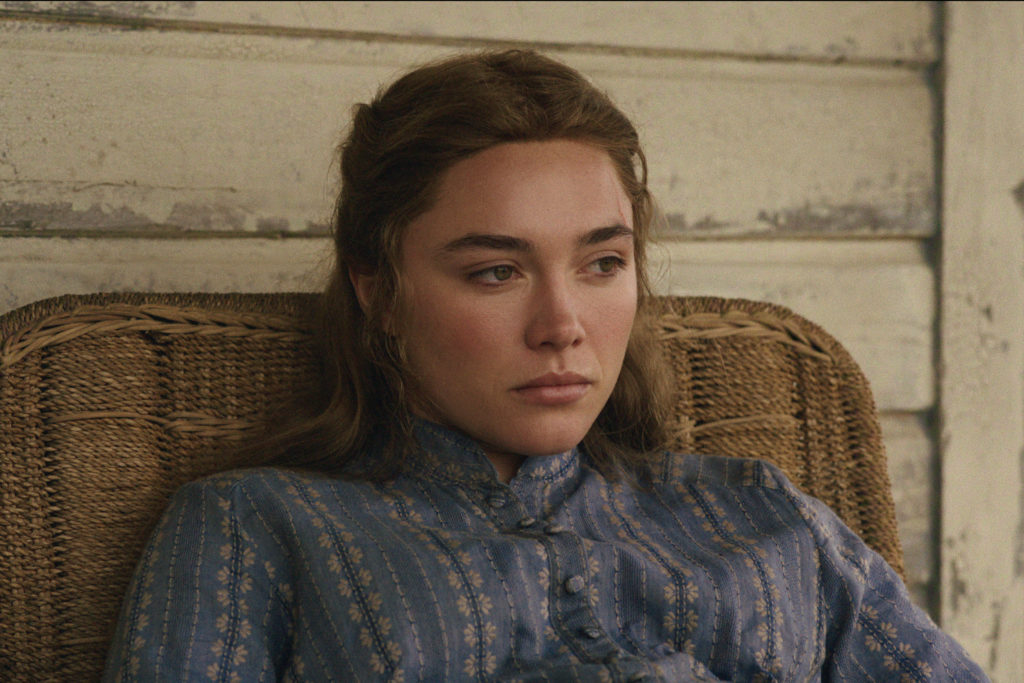
Florence Pugh as Cathy Ames in episode 103 of East of Eden. Cr. Courtesy of Netflix © 2026
Kazan, however, insists that Steinbeck’s own treatment of the character is considerably more ambiguous than that description suggests. The novelist initially presents Cathy in monstrous terms, only to question whether identifying someone as evil has any meaning without examining the reasons behind their behaviour. For the screenwriter, respecting Steinbeck’s intentions sometimes meant moving beyond the cultural limitations of his period.
She spoke openly about the novel’s misogynistic elements and its contradictory treatment of race, particularly its ability to offer a nuanced portrayal of a Chinese American character while simultaneously employing racist physical descriptions. Rather than reproducing these elements uncritically, Kazan wanted to preserve what she regards as the novel’s deeper humanistic impulses.
Pugh was her first and only choice for Cathy. Having seen her performance in Midsommar, Kazan believed she possessed the emotional range required for a character whose contradictions resist easy interpretation.What particularly interested her was Pugh’s ability to approach a character empathetically without necessarily making that character sympathetic. This distinction is essential to the adaptation. Understanding Cathy does not mean absolving her; it means refusing to reduce her to a convenient moral category.
Two Brothers, Two Versions of the Same Wound
Christopher Abbott and Mike Faist, who play Adam and Charles Trask respectively, approached their characters through the contradictions that lie beneath their apparently opposing personalities.
Abbott explained that the brothers recognise aspects of themselves in each other while simultaneously rejecting them. Their relationship combines affection and hostility, making their rivalry inseparable from their emotional dependence.
Their lives also challenge expectations. Charles initially seems better suited to a life of conflict and adventure, yet remains at home, while Adam leaves, experiences war and spends years travelling. For Faist, Charles is particularly tragic because he has grown up believing that something is fundamentally wrong with him.
His jealousy, desperate need for paternal affection and inability to express his emotions eventually become destructive. But beneath his violence lies an enduring sense of shame and a desire to repair himself. Abbott, meanwhile, sees Adam’s apparent goodness as another source of ambiguity. His idealised love for Cathy contains its own darkness, and the hope that initially defines him can become a form of blindness.
The actors also described the creative freedom afforded by Kazan’s scripts. Their first scene together as the adult brothers takes place after a long separation, allowing apparently mundane dialogue to carry years of unresolved emotional conflict. Even an ordinary remark about burning bacon can become an expression of everything the brothers cannot bring themselves to say.
The Radical Possibility of Change
The most personal moment of the press conference came when Kazan explained why she considers East of Eden more urgent now than when she began writing the adaptation in 2020.
She spoke emotionally about a contemporary cultural tendency to define people permanently by their mistakes, rather than allowing for the possibility of transformation.
Are we condemned to repeat the sins of our predecessors, or do we possess the freedom to become something else?
Steinbeck’s novel, in her interpretation, proposes another way of understanding human identity. Our past matters, but it need not become an unbearable burden or an immutable sentence. That possibility is what she hopes for herself and for her children.
It is also what makes the novel’s ancient archetypes —brother against brother, inherited guilt, the struggle between good and evil— continually relevant.
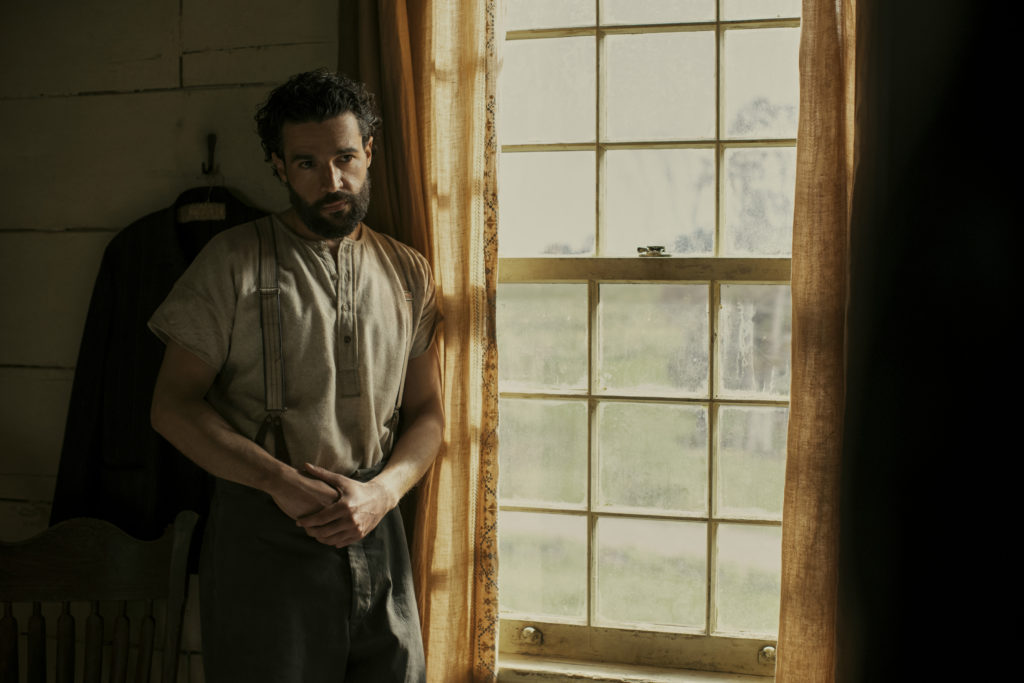
Christopher Abbott as Adam Trask in episode 102 of East of Eden. Cr. Kirsty Griffin/Netflix © 2026
The adaptation does not attempt to resolve every moral contradiction. Kazan recalled discovering, while writing an early draft without consulting the novel, that she had inadvertently reversed the brothers’ attitudes towards their father. Returning to Steinbeck revealed a psychological complexity she had not fully appreciated even after years of rereading.
Such discoveries became an essential part of her creative process. For Kazan, the purpose of adaptation is ultimately not to provide definitive judgments about its characters, but to preserve their mysteries and invite audiences to wrestle with them.
More than seventy years after Steinbeck published his novel, East of Eden returns with the same question: are we condemned to repeat the sins of our predecessors, or do we possess the freedom to become something else? In Kazan’s interpretation, the answer lies in those two deceptively simple words: thou mayest.
East of Eden premieres globally on Netflix on October 1, 2026. This article is based on the international press conference held on September 22, 2026, with Zoe Kazan, Christopher Abbott and Mike Faist.
Nadie ha publicado ningún comentario aún. ¡Se tú la primera persona!